
A loose curb flashing near an active work zone calls for a roof route that respects both the assembly and the facility's access rules. We confirm the point of entry, the roof section above the reported condition, and any equipment or loading activity that affects safe movement. Then we inspect the transition and adjacent water path before setting a repair boundary. A broad industrial plan can describe land use; only the roof walk, drawings, and owner records tell us which system is present and what correction fits.
The Agua Mansa industrial planning area spans portions of Rialto and Colton across San Bernardino and Riverside Counties. This service-area route addresses only its Rialto portion. City planning material describes industrial use as predominant and frames the plan as a development framework. For a property manager coordinating roof work within that geography, the useful details are the assigned site contact, roof plan, gate procedure, and approved work window. A Rialto roof service route keeps the municipality clear when the regional plan crosses jurisdiction lines.
How should a crew approach an industrial roof?
Before arrival, we confirm whether a visitor must check in, whether an escort controls movement, and where the crew can stage tools without blocking operations. The site contact identifies roof access, fall-protection rules, equipment zones, and areas that remain restricted. We record those limits with the inspection route. On the roof, we begin at the reported section, inspect the nearest drain and penetrations, then follow seams toward transitions and perimeter details. If the access route changes, the supervisor updates the work order before moving the crew.
The regional Agua Mansa plan covers 4,285 acres across multiple jurisdictions; that figure belongs to the whole planning area, not Rialto's share. It should not be used to infer the size or type of an individual roof. For the Rialto-side property, we identify boundaries from the owner's drawings and confirm the specific area authorized for work. A commercial-corridor service area has a different planning context, while the same site-specific access check applies. A commercial inspection records observed conditions by roof section rather than treating a district description as a condition report.
What do we check at seams, drains, and equipment?
Industrial roofs can carry long membrane runs, equipment curbs, rooftop piping, vents, and service paths. We do not assume any of those features at a particular building. The first walk checks what is actually shown on plans and visible in the field: open laps, pulled flashing, punctures, loose edge metal, blocked drainage, or prior patches. At a drain, we follow the plane into the bowl and inspect the connection. At a curb, we look for flashing separation and movement. At a seam, we record whether a defect stops locally or continues into another section.
Rialto's adaptation plan counts heat among several citywide hazards and notes that hot days recur. We use that market-level information when arranging a visit, then base maintenance recommendations on the membrane, sealant, and prior repairs actually observed at the property. If the interior shows recurring moisture but the surface path is not clear, infrared moisture mapping can guide selected physical checks. The thermal pattern alone does not close the scope; verified findings define the removal or repair boundary.
What happens when water is entering during operations?
We first protect the affected interior and identify whether water is active, intermittent, or left from an earlier event. A temporary dry-in may be needed before permanent materials or a safe work window are available. The ticket records its location, the method used, and the return condition. On the roof, the crew checks the suspected source and surrounding details instead of patching only the point directly above a ceiling stain. Water can travel along a seam, curb, or low section before reaching the interior.
A localized opening can be repaired when the surrounding membrane is stable and the substrate can support a compatible tie-in. Once unsound material is cleared, we prepare the verified substrate and check the finished repair boundary for a continuous, compatible connection. If wet insulation extends past the apparent leak, attachment is moving, or several seams have released, additional sampling or a larger scope may be warranted. A commercial repair work order can define the confirmed correction; recover evaluation and replacement planning address wider assembly decisions. Each path begins with an observed boundary and states what remains unverified.
How do records support an industrial roof decision?
Keep the roof plan, leak log, previous repairs, photographs, and access instructions under the same property identifier. The condition record should distinguish the visited section from areas that could not be reached. That distinction matters when one shift reports a repaired leak and the next sees new water nearby. The facilities lead can compare dates, material, and location before approving another patch. A photo-backed condition report can capture the route and supporting evidence; a roof asset register can retain the history for later maintenance.
For Rialto projects, the Building Division checks plans and finished construction for consistency with California's requirements and the City's ordinances. The standards cycle effective January 1, 2026 applies to plans filed after December 31, 2025, under the 2025 California Building Standards. Project design and review establish the applicable steps. For a larger capital decision, compare repair frequency, confirmed moisture, perimeter details, equipment phasing, and safe access. A capital review can organize those factors without blending Rialto's portion of Agua Mansa with property records from Colton or either county's other planning areas.
Before a crew arrives, provide the contact who can approve access, any escort instructions, equipment restrictions, and the daily operating window. Before opening a section, we identify what lies below it, select the interior safeguards, and verify the day’s closure detail. At closeout, the work order records completed sections, temporary measures, and the next responsible person. That gives the facility team a clean handoff even when a roof decision crosses shifts or departments.
When a building is part of a wider operating group, the report can use the owner's existing asset ID and work-order number. We keep those labels attached to photos and roof-section notes, while recording the actual system only when plans or field evidence support it. If an adjacent area falls outside the approved access boundary, we mark it as uninspected rather than extend the finding. That prevents a repair authorization for one section from being read as approval for another. A property manager can then route questions to the right operations contact and preserve the difference between an observed defect, a test recommendation, and a future budget item.
Commercial Roofing Questions
Does the Agua Mansa roof route include property in Colton?
This service-area route is limited to the Rialto portion of the regional planning area. The property location and authorized work boundary are confirmed with the owner before inspection.
How do you plan work around a busy industrial site?
We confirm check-in, escort needs, staging, roof access, restricted zones, and the operating window with the site contact. The crew sequence follows those approved limits.
Can a roof leak be patched during the first visit?
A stable, accessible defect may support a local correction. We first inspect the surrounding material and substrate, then state whether a test, dry-in, or broader repair is needed.
Does the plan area's acreage describe one roof?
No. The acreage is for the full cross-jurisdiction planning area. A building's roof dimensions and system come from its drawings or field verification.
What should be attached to the repair ticket?
Include the roof-section label, photo, observed condition, access limit, temporary protection if used, and who owns the next action. Those details make the handoff usable across shifts.
Related Roofing Work
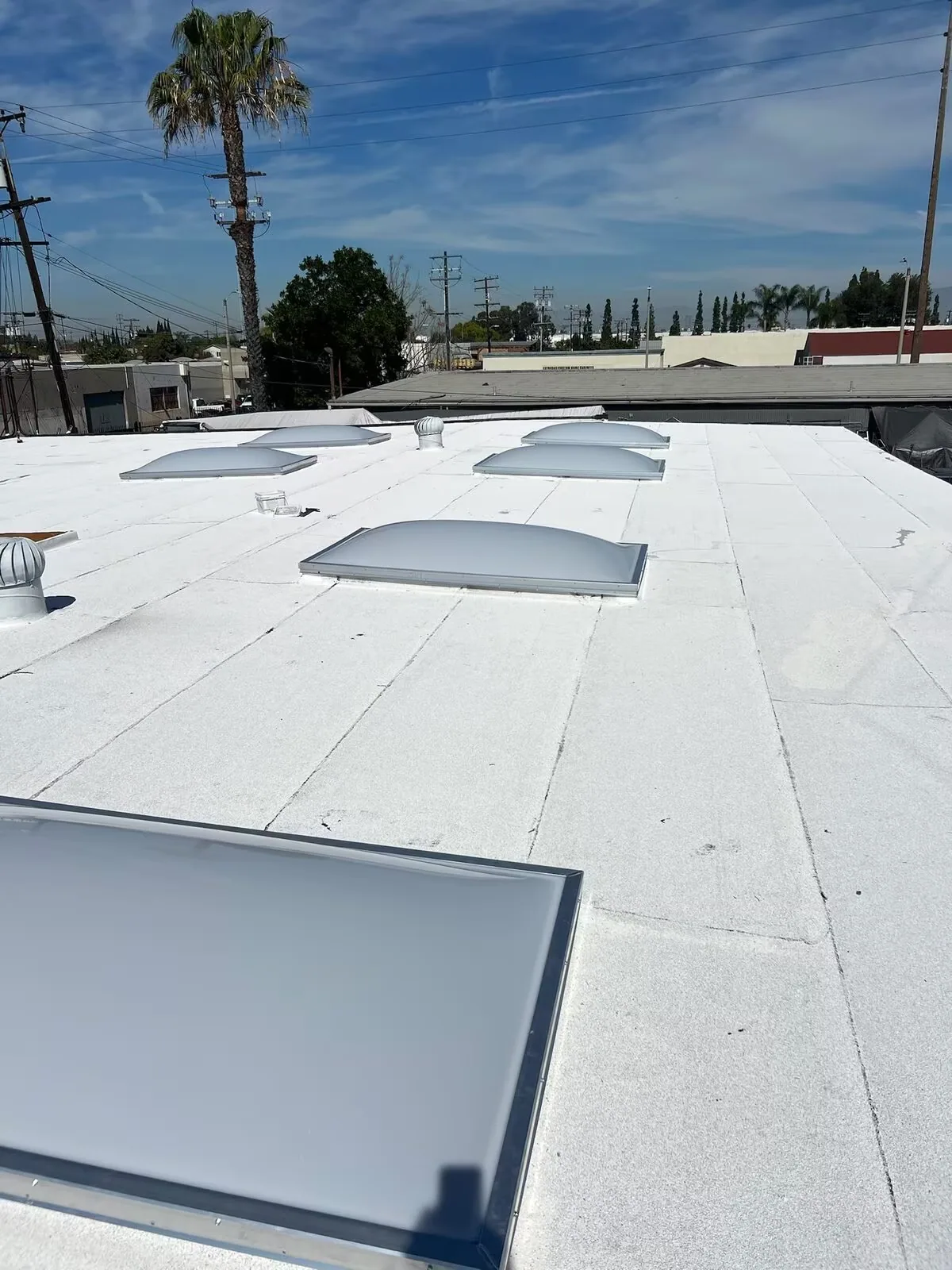
Coordinate a roof route in Rialto's Agua Mansa area
Share the property identifier, roof drawings, reported issue, entry procedure, and approved work hours. We will confirm the authorized section and document a repair or inspection path.