
A 2 a.m. leak call needs three answers first: where is water moving, what sits below it, and who can authorize roof access? We take emergency calls around the clock, including weekends and holidays. The first crew sequence is containment, safe access, and a record of the roof section. We ask the facility contact to isolate equipment or inventory in the wet area, then set a route that avoids active loading and restricted spaces. A temporary dry-in buys time for a permanent repair; the ticket keeps those scopes separate.
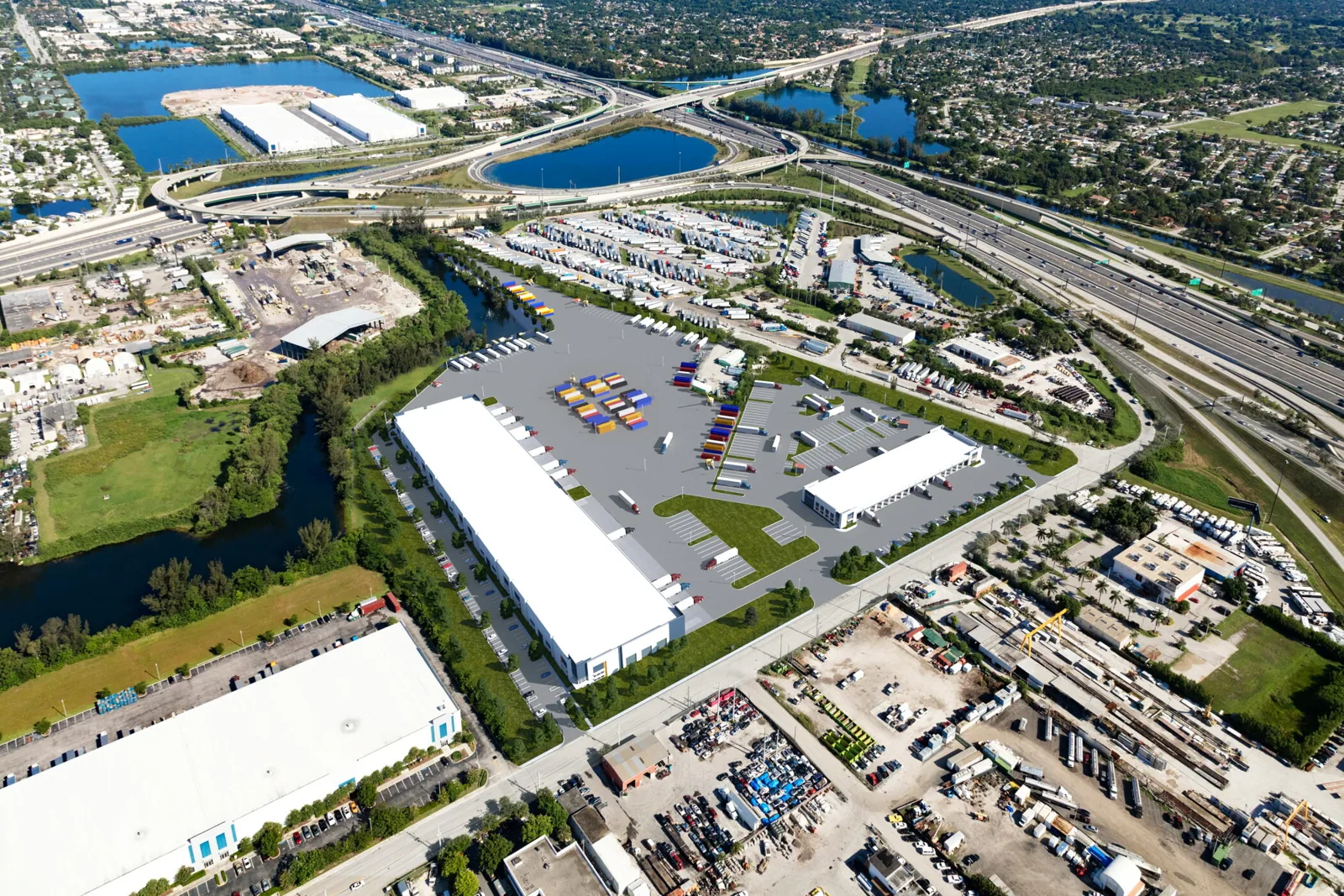
Rialto's circulation update set truck routes intended to bypass residential areas and sensitive receptors, and the City later adopted design and build standards for new or expanded logistics facilities. For an active leak, we confirm the current gate, yard path, wet area, and on-site contact before unloading containment material. The leak investigation follows the water path after the immediate area is contained.
What do we need from the caller?
Tell us the building address, the room or work zone, when water began, and whether it is still moving. Identify electrical equipment, inventory, or production close to the drip. If a ceiling is sagging, keep people away from that area and do not send anyone onto the roof. We need a contact who can authorize access, share the roof hatch or ladder location, and explain any escort or safety rules. Photos from below help us prepare, but the crew verifies the roof condition in person.
On a distribution property, loading can continue after office staff leave. We coordinate the gate, walking path, and equipment staging with security or the on-call manager before entering the yard. If the roof cannot be reached safely, we stabilize the interior where possible and agree on the next access window. That keeps a late-hour response from becoming a second incident. For a warehouse with an active receiving line, the warehouse work sequence can be set around the affected operating area.
What happens before the permanent repair?
Containment can include moving stock, protecting machinery, placing a controlled collection point, or covering an exposed roof opening. We choose the measure from the observed path and the conditions at the building. A tarp or temporary patch should not block a drain or create a new ponding area. We mark the limits of the dry-in and record what still needs permanent correction. Where stock sits below several drip points, we mark each collection area separately and keep a clear path for staff to move away from the affected zone. If the water is reaching a panel, control cabinet, or production zone, the facility contact decides what equipment must be isolated before roof work begins.
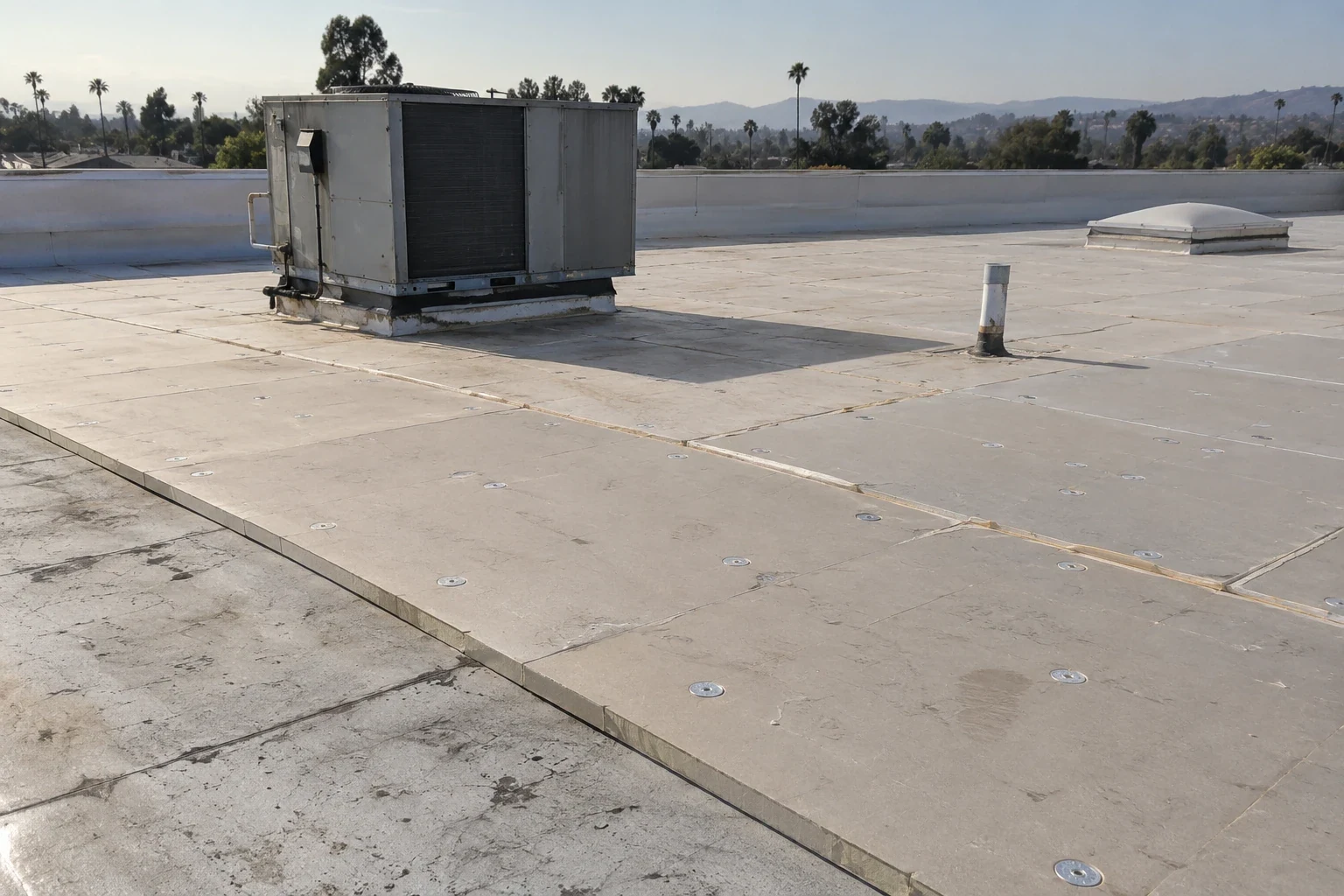
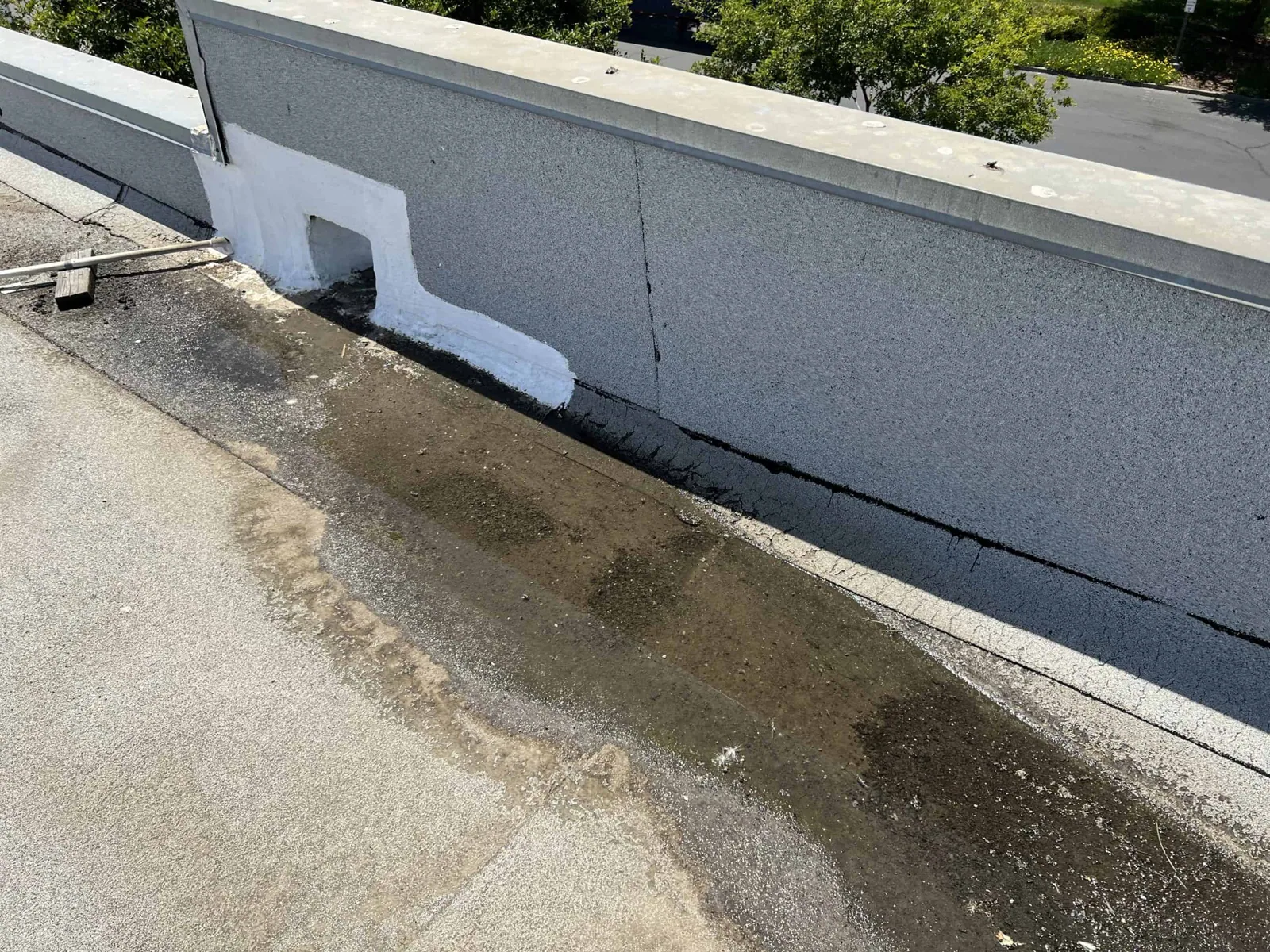
When the roof route is clear, we inspect the area above the wet interior and the nearby seams, curbs, penetrations, and drains. We do not assume the stain marks the entry. The crew photographs the exposed condition and checks whether the deck and insulation appear affected. A temporary cover may hold until daylight or until a compatible repair can be installed. Our planned repair visit then replaces temporary material with a properly prepared tie-in, or expands the work order if the damage extends into another roof section.
How do Rialto operations affect access?
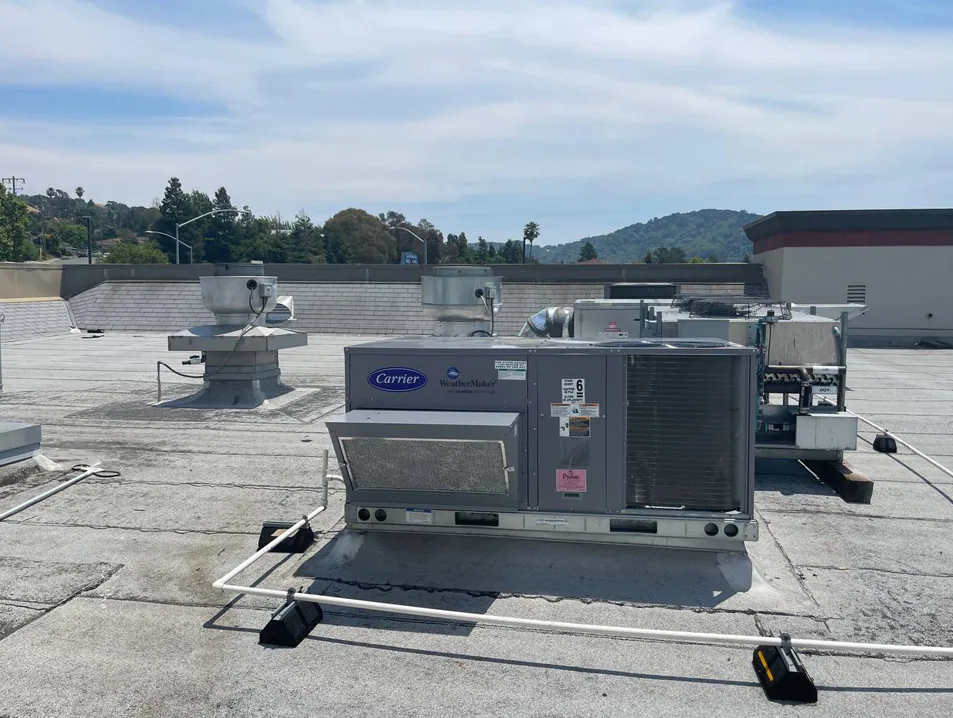
An emergency call is dispatched with the drive-in gate, route to the roof hatch, and a truck location that stays clear of fire access, as provided by the property contact. Rialto's General Plan names commercial corridors, and the Gateway map includes office-park, retail-commercial, freeway-commercial, and industrial-park designations. Before dispatch, we match those area references with the facility contact's gate, escort, vehicle-clearance, and staging instructions. A Rialto commercial-corridor response begins with that approved arrival route.
The Agua Mansa Specific Plan covers land in Rialto, Colton, and two counties. A logistics yard may have a gate sequence and vehicle flow unlike a storefront or office lot. We record the gate, whether a spotter is needed, and the walking path around active loading. Give the crew the roof hatch or ladder location, interior contact, and any bay that must remain open so arrival does not block operations or stall at a locked entrance.
When can the permanent work begin?
Permanent work starts when the roof surface, weather, product requirements, and access conditions support a sound repair. We remove temporary material, prepare the substrate, and connect the patch to compatible, stable membrane. If the opening reveals wet insulation or a loose deck, we document it before covering the area. Some damage needs a larger cutback, flashing reset, or drain correction. The emergency ticket records the original condition and the permanent work separately so the owner can see what was contained and what was actually repaired.
The temporary cover has a limit and a return condition. We set the return visit from the roof surface, weather, and access window, then note which part of the temporary protection must remain until permanent work is ready. The facility lead receives a clear handoff: the affected roof section, the protected area below, the remaining exposure, and the condition that will trigger another response. If wet insulation or a loose deck appears during follow-up, we photograph it and agree on the next scope before widening the work. A condition inspection can record the affected assembly; a replacement evaluation addresses sections that cannot be corrected with a local repair.
What does the emergency record include?
The facility receives the reported location, access route, observed roof condition, containment work, photographs, and any follow-up needed. We note whether the repair is temporary or complete and what roof section remains exposed to review. That record supports the next shift and prevents a temporary cover from disappearing into a general maintenance log. If the building has several leak reports, we tag each area separately so a recurring wet section is not confused with a new call.
Keep the roof plan, alarm or gate instructions, interior contact, and operating restrictions ready when you call. We will confirm a safe arrival, isolate the affected area, and build the response around the actual access window. When conditions require immediate protection, call at any hour. For planned follow-up, an organized roof condition report can carry the emergency findings into the next repair or capital review.
Commercial Roofing Questions
Can someone on site put a tarp on the roof?
Keep staff off an unsafe or wet roof. A tarp can shift, block a drain, or create a fall hazard if it is not secured for the conditions. Protect the interior from below and give us the access and roof information needed to plan a controlled response.
Do you take emergency calls outside business hours?
Yes. Emergency calls are handled at any hour, including weekends and holidays. We first confirm the leak location, active operations, caller authority, and safe access route. The response plan may include containment first and a permanent detail repair after conditions allow.
What if the leak stops before the crew arrives?
We still inspect and record the area that was wet. Water may have entered through a seam or curb and stopped when the weather changed. The condition record separates what we observed from what could not be confirmed and identifies the next test if the entry path remains uncertain.
Will the emergency visit include a full replacement estimate?
The urgent visit focuses on protecting the building and stabilizing the roof. If the observed damage points to broader failure, we can schedule an inspection and define that scope separately. The owner receives a clear line between containment, permanent repair, and any replacement review.
Related Roofing Work
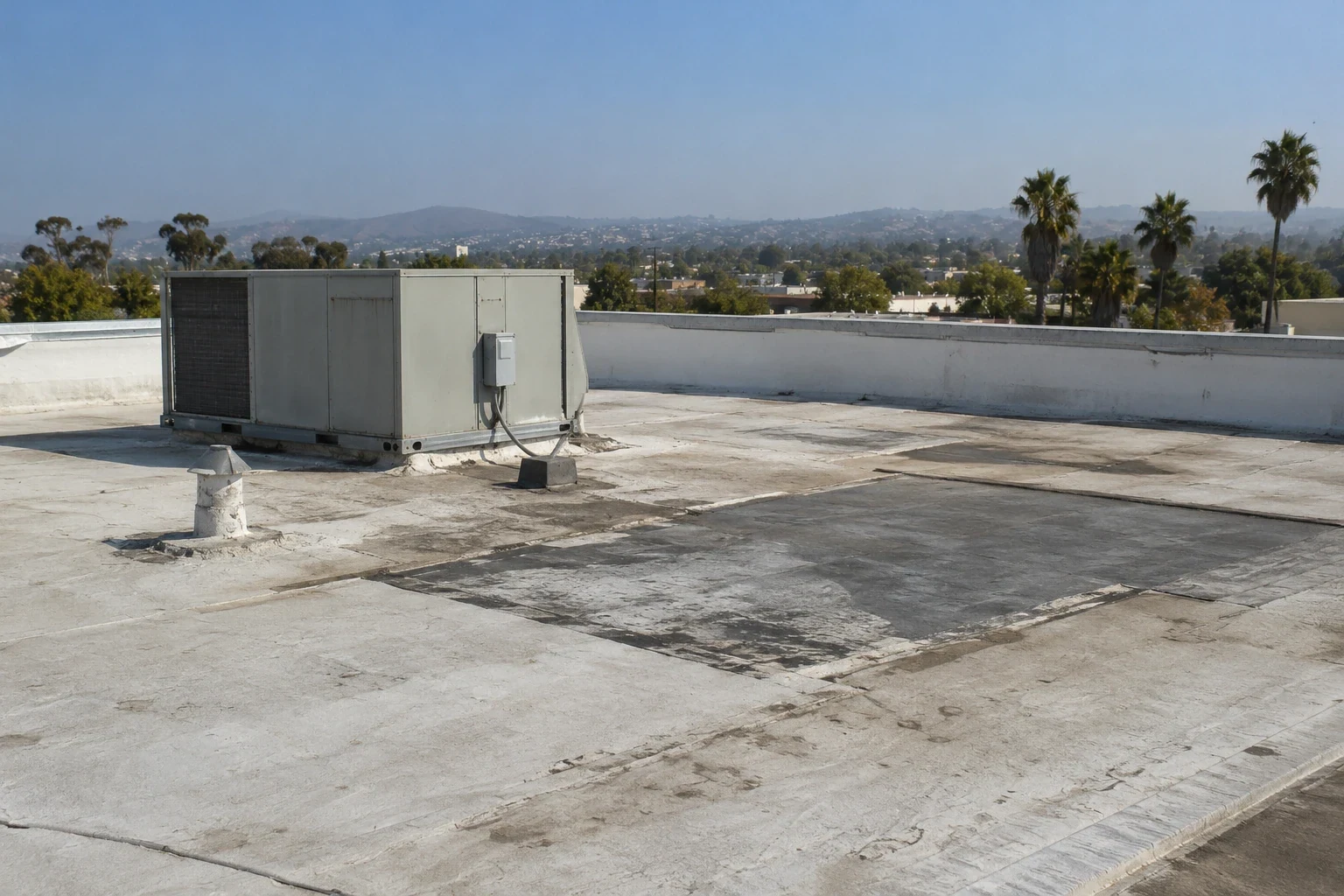
Call with the room, route, and roof details
Emergency response is available around the clock. Share the building address, wet area, active operations, roof access instructions, and on-site contact so we can set the safest first response.