
A condition report is useful only when each observation points to a roof section and a decision. We begin with the building's use, reported leaks, past work orders, and the access window. Then we walk a mapped route and record membrane, seams, curbs, penetrations, drains, edges, and visible interior signs. The facility director receives findings that can become a repair ticket, a monitoring item, or a capital review. A photo without a location does not help the next person find the same condition.
Rialto's General Plan describes commercial areas along Foothill Boulevard and Riverside Avenue, with warehouse and industrial uses clustered near rail lines and elsewhere in the City. On an inspection, we tie each observation to the property's roof section, access point, and operating limits, including loading and equipment movement below. Our condition reporting turns those details into a record the facility team can revisit.
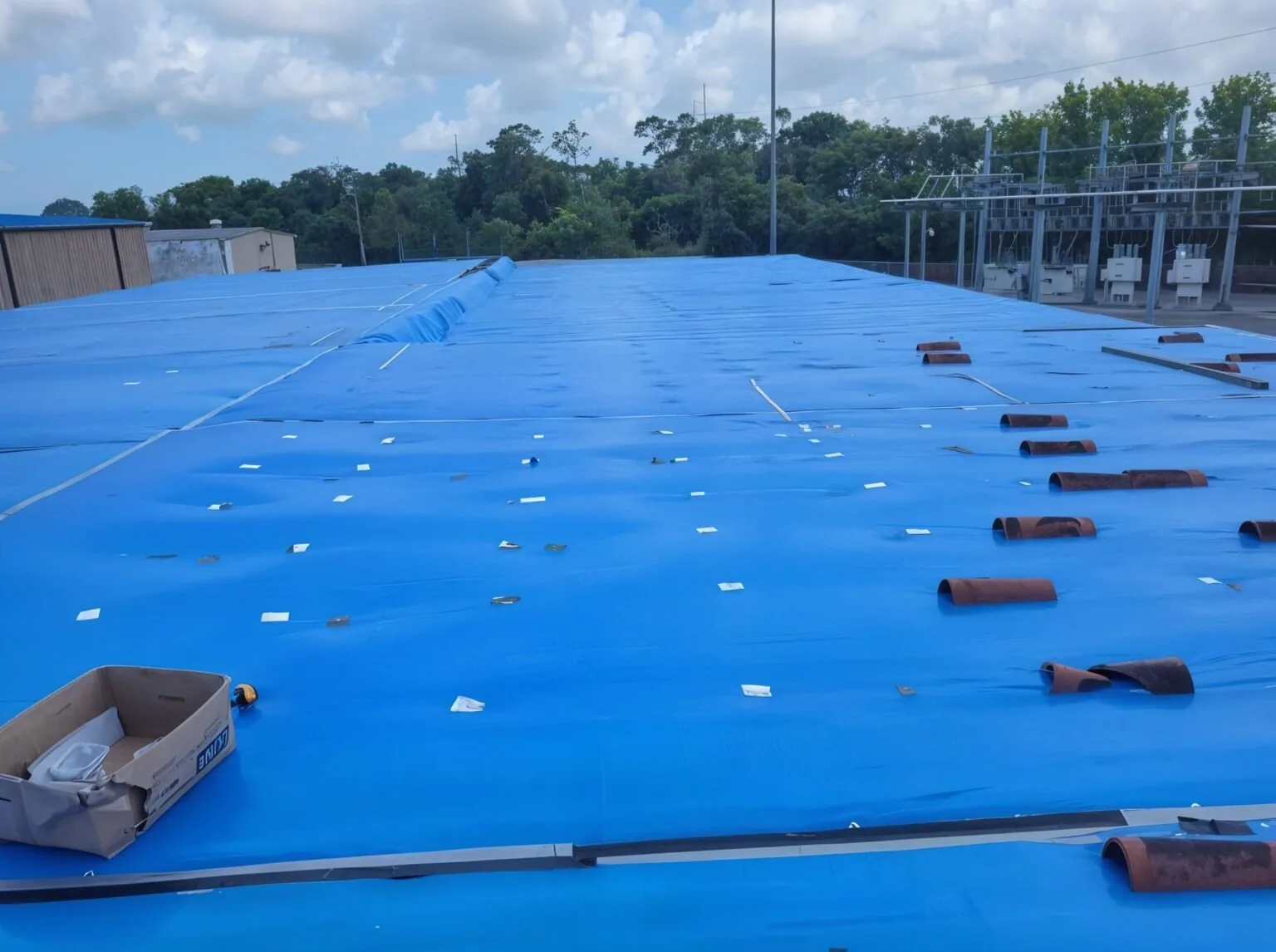
How is the inspection route set?
We review existing drawings, leak tickets, warranty records, and the site contact's access instructions before walking the roof. If the plan is incomplete, we identify the roof sections by visible transitions and confirm the names with the facility contact. The route moves from the access point through drainage, field membrane, curbs, penetrations, and perimeter details. We mark restricted zones and areas where a ladder, hatch, or fall-protection setup changes the sequence. This avoids crossing an operating area without approval.
Rialto's Agua Mansa planning area spans parts of Rialto, Colton, and two counties. For a roof in the Rialto portion, the facility contact identifies the gate, escort, and vehicle path. We mark where the crew can stage and which roof areas cannot be reached during a shift. A Rialto-side Agua Mansa corridor review can keep the local access note with the correct market area.
What do we document on the roof?
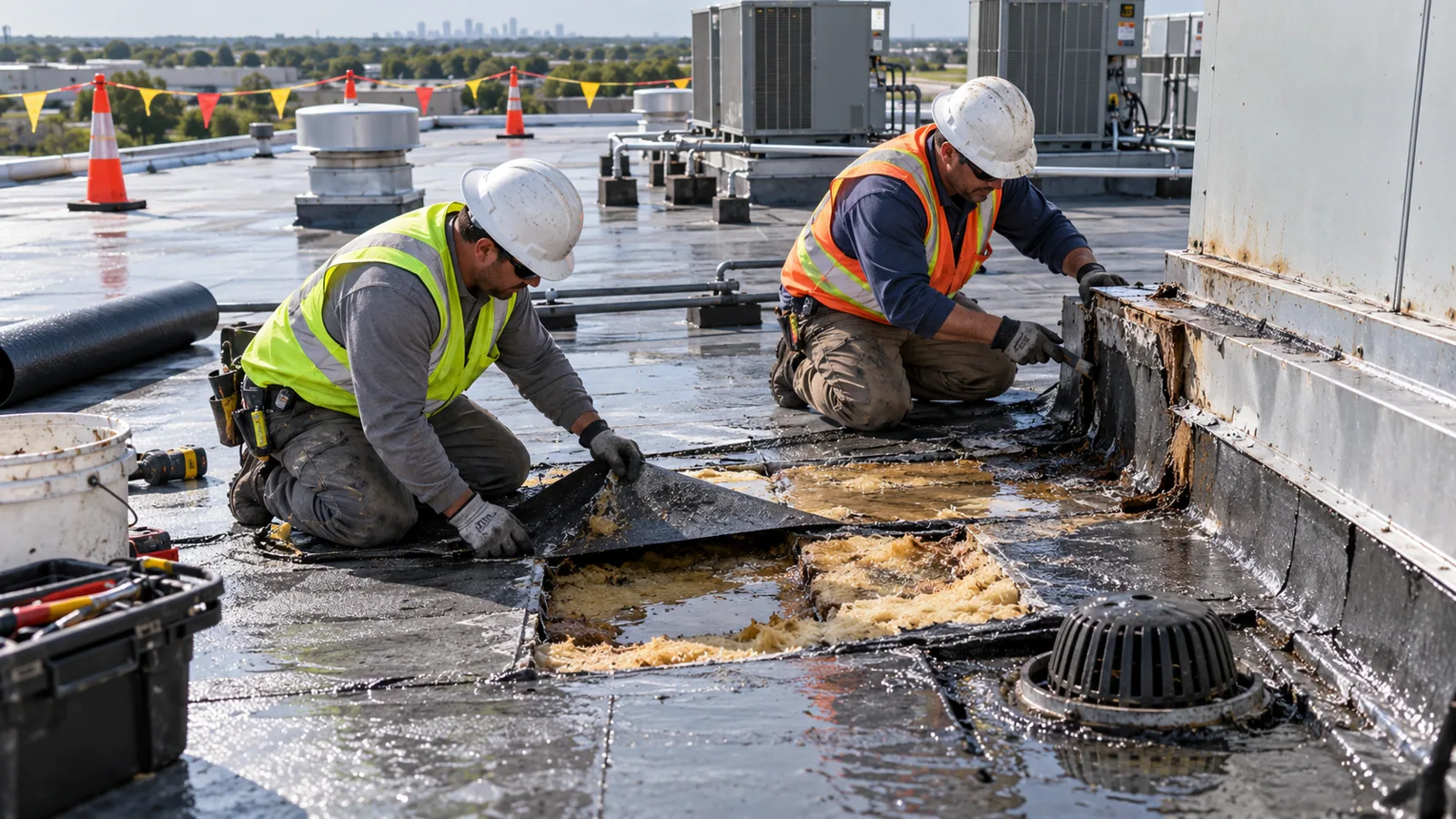
We record seam separation, surface wear, punctures, open flashing, loose edge metal, obstructed drains, ponding, and movement around equipment curbs. We note whether an item is active, repaired, or being monitored. At each drain, we check the path to the bowl and the membrane connection. At a curb, we look at the flashing height, termination, and water path. At an edge, we record metal condition and attachment. We also note whether a repair masks the original detail or leaves a visible edge that can be checked again. On a flat field, we note seam direction and whether repair laps have lifted, split, or remained sound. At metal transitions, we check fasteners and sealant at the joint rather than describing only visible corrosion. A clear location lets maintenance staff compare the same point on a later visit. These observations remain tied to a roof section so a future work order does not repeat the same search.
Rialto's climate adaptation plan names extreme heat and says hot days are regular. During the inspection, we record the exposed membrane, seams, sealant, and prior repairs seen under the roof conditions that day. If the question is whether moisture sits below the surface, a moisture survey or targeted core cut may be the next step. If water is already entering, a leak investigation sets the immediate route.
When should we test below the surface?
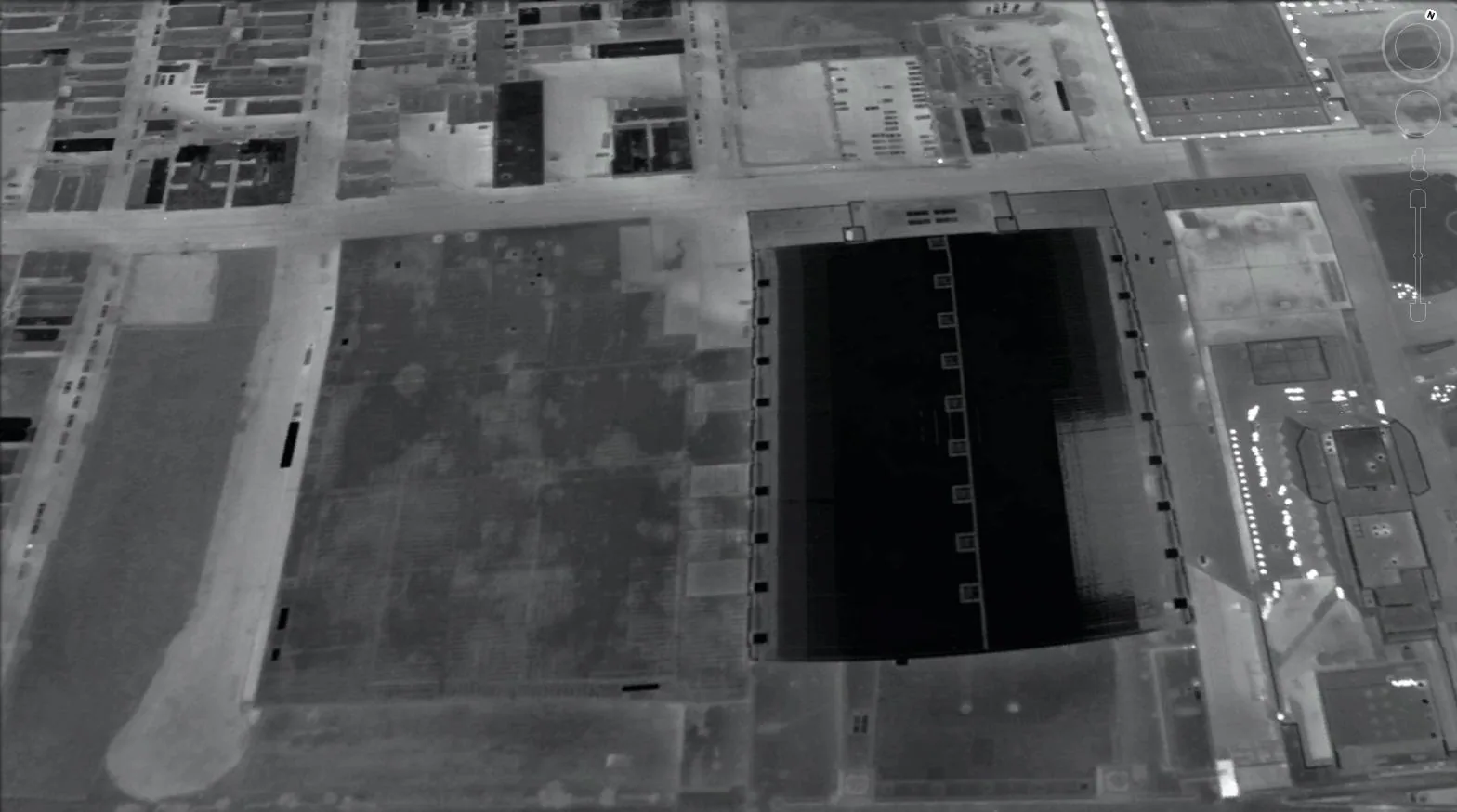
A visual walk can identify suspect areas, but hidden moisture may not be visible from above. We compare stains, seam conditions, drainage patterns, and prior repair history to choose sampling points. Infrared imaging can help identify temperature patterns that merit physical verification under suitable conditions. A core cut can show the actual layers and moisture at a selected point. We explain the reason for each test before opening the roof and restore the opening after it is documented.
Sampling is targeted, not a statistical promise about every square foot. We mark each test location on the roof plan and describe what the result can and cannot decide. If one area is wet, we check whether it aligns with a known leak path or a failed drain detail. The report can then recommend a localized removal, a wider survey, or monitoring. For an owner comparing replacement with a recover, the sample locations should address the assembly questions that change that decision, not simply repeat a standard pattern.

How does the report guide the next work order?
The report separates urgent conditions from maintenance and capital items. It includes the affected roof section, photo references, observed condition, recommended action, and any access or testing limit. We avoid assigning a remaining life from a walk-through when the assembly has not been sampled. Instead, the facility director receives a list of items that can be repaired, monitored, or tested. If a drain is obstructed, the ticket can address it. If the attachment is moving across a section, the scope can include a closer review.
The Building Safety Division identifies January 1, 2026 as the effective date for Rialto's 2025 code cycle. A roof inspection can document the condition that leads to a proposed correction, but permit review determines how the work is approved. We note a design question when it affects the repair plan and keep that question distinct from field observations. A capital planning review can compare the condition record with repairs, building operations, and the timing of planned work.
What should the facility team prepare?
Provide roof plans if available, previous repair tickets, known leak locations, warranty documents, and the name of the person who can approve access. Identify work hours, restricted areas, and any activity that cannot pause. We confirm whether ladders or hatches are available, whether an escort is required, and where tools can be staged. That keeps the inspection route within the building's safety rules and lets us finish the record in the time allotted.
For a portfolio, use consistent roof-section names across the roof register and work orders. The asset management record can group each condition with photos, repairs, and next review dates. On one building, the same discipline helps an on-call manager respond to a new leak without starting from zero. Keep the roof plan version and contact name with the record so another shift can locate the same section and understand what was inaccessible. Schedule a hands-on inspection or discuss a reported condition. We will set the route, record what the roof shows, and leave the facility director with a next action that can be assigned.
Commercial Roofing Questions
Does an inspection include a moisture survey?
A visual walk and a moisture survey answer different questions. We identify suspect areas during the walk and recommend infrared or core testing when hidden moisture could change the repair decision. The report states which method was used and where each test was performed.
Can you inspect while a Rialto warehouse is operating?
We can plan an inspection around receiving and roof access, subject to site safety rules. The facility contact identifies shift traffic, equipment zones, escorts, and any area that cannot be crossed. We then set a route that keeps the inspection separate from active work areas.
What does a useful roof report include?
A useful record names each roof section, locates the observation, attaches photos, and states the next action. We separate repair items from monitoring and tests. If part of the roof could not be accessed, that limit is recorded rather than treated as an inspected condition.
Will the report estimate the roof's remaining life?
We do not assign a lifespan from appearance alone. Remaining service depends on the assembly, moisture, attachment, repair history, and observed details. The report gives the findings that support a repair, recover, replacement, or follow-up test decision.
Related Roofing Work

Build the condition record from the roof route
Schedule an inspection and share roof plans, leak tickets, known access limits, and operating windows. We will map the route and prepare a report tied to roof sections and next actions.