Separate the wet area from the repair area before ordering EPDM material. Water can enter at a seam, puncture, curb, or drain and move beneath the sheet before it appears indoors. We locate the report, check the rubber membrane and nearby transitions, then mark the roof section that can be reached safely. The work order records the visible condition and the next test only when that test could change the boundary.
Citywide land-use mapping shows rail-side warehouse and industrial clusters at Rialto's north end and again in its southern area. The Agua Mansa planning area is a broad industrial corridor that crosses several jurisdictions, with only its Rialto portion relevant to local roof access. A building's location may affect staging and crew movement; the EPDM assembly still needs its own inspection.
What Holds an EPDM Seam Together?
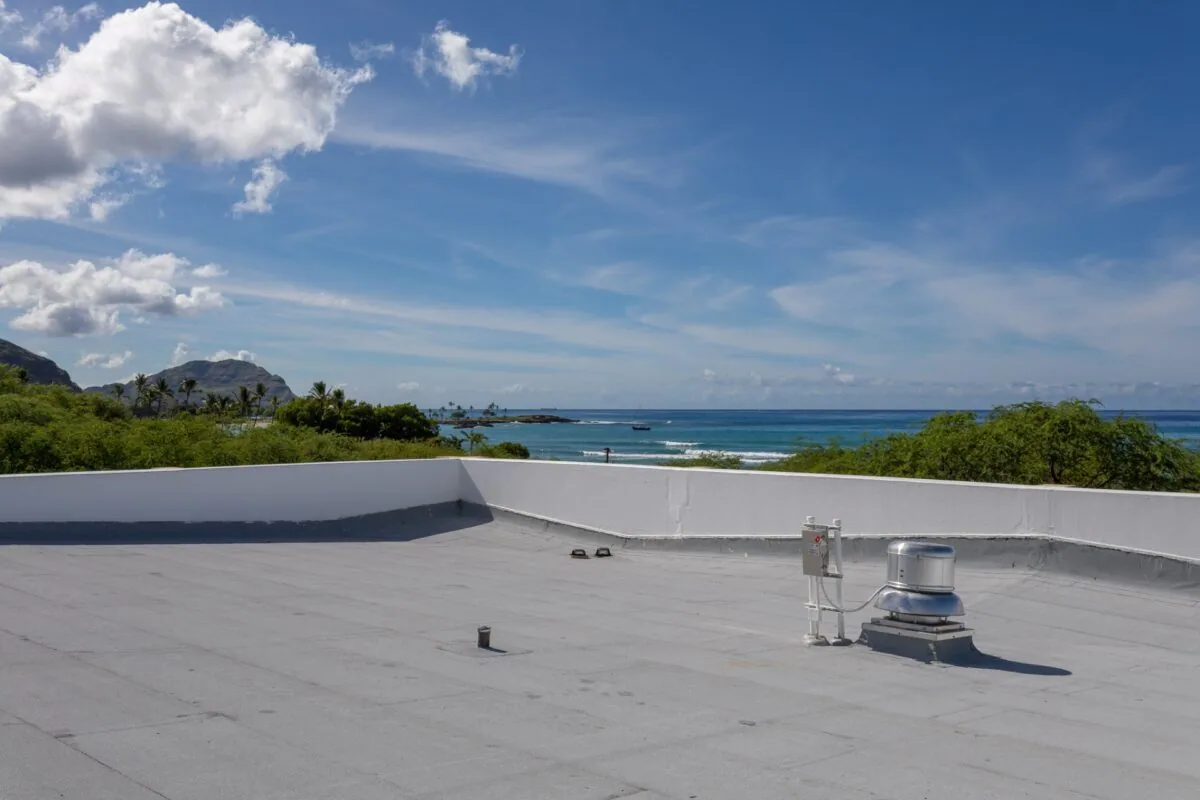
EPDM field seams may use tape or adhesive systems, depending on the design and product. We inspect the edge for separation, contamination, fishmouths, wrinkles, and movement around a patch. A seam that looks closed can still release at its edge if preparation or pressure was uneven. We follow the opening until the material is bonded and stable, then record how much length requires repair.
A repair must use compatible membrane, primer, and seam material. We clean and prepare the existing sheet before applying a patch with enough overlap on sound EPDM. If the opening meets a curb, wall, or another material, the turn-up and termination may need separate work. An EPDM penetration review can capture pipe boots, corners, and curb flashing with the same roof section on the register.
How Does the Sheet Reach the Drain?
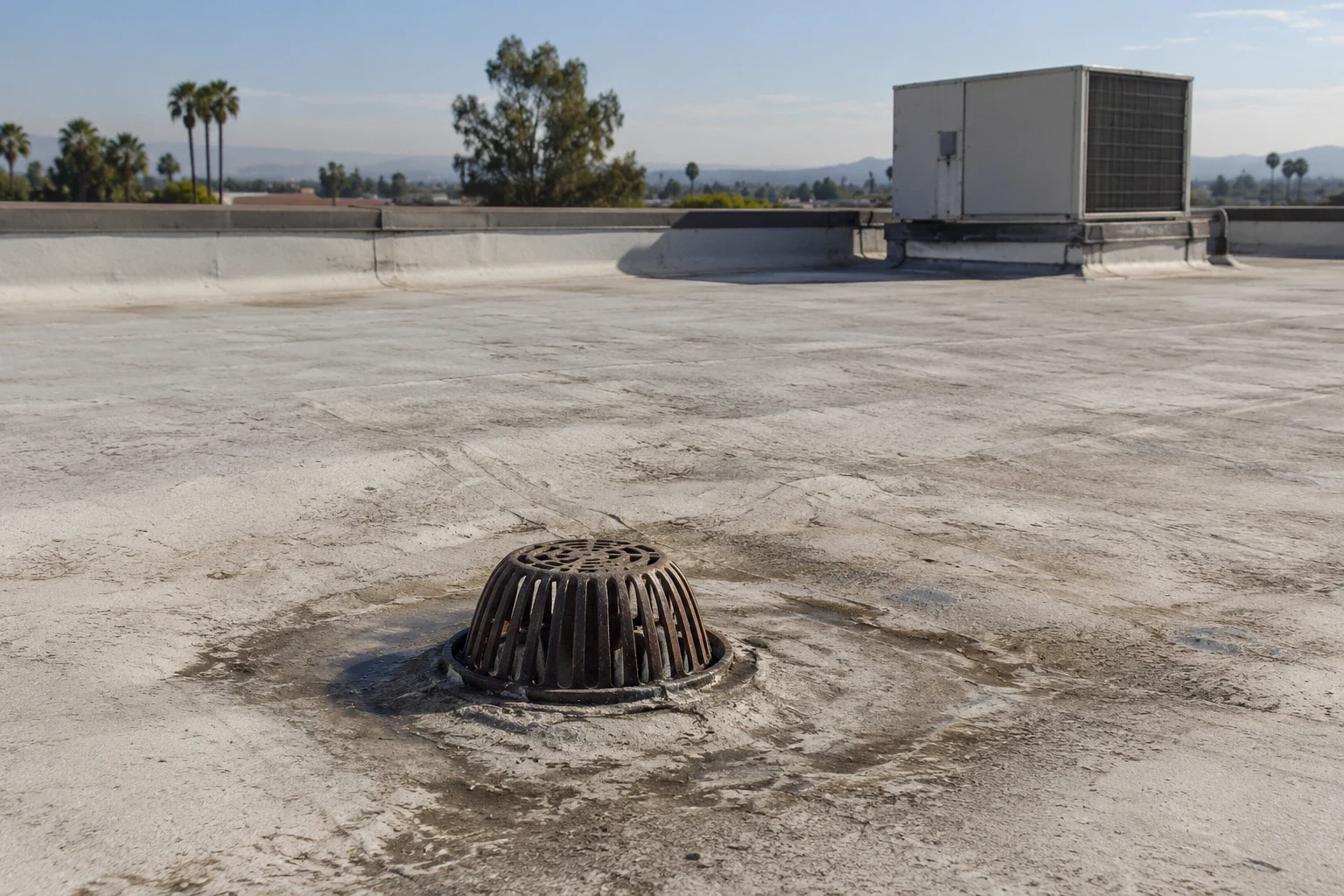
We trace the surface from the reported leak toward a bowl, scupper, or roof edge. The walk checks whether a lap stands proud, a drain flange has released, or water remains because the plane does not fall to the outlet. Cleaning restores flow when debris is the only obstruction. If water stays beside a sound outlet, the assembly may need a different correction than a drain service ticket.
Rialto's climate planning lists extreme heat and says hot days are a regular local condition. We inspect the actual EPDM surface, adhesive seams, flashing, and drain connection rather than predict how an individual roof will perform. A drainage inspection notes the outlet and route. If the wet area extends below the sheet, a test opening can help distinguish a surface issue from wet insulation that requires a wider work order.
What Does the Attachment Tell Us?
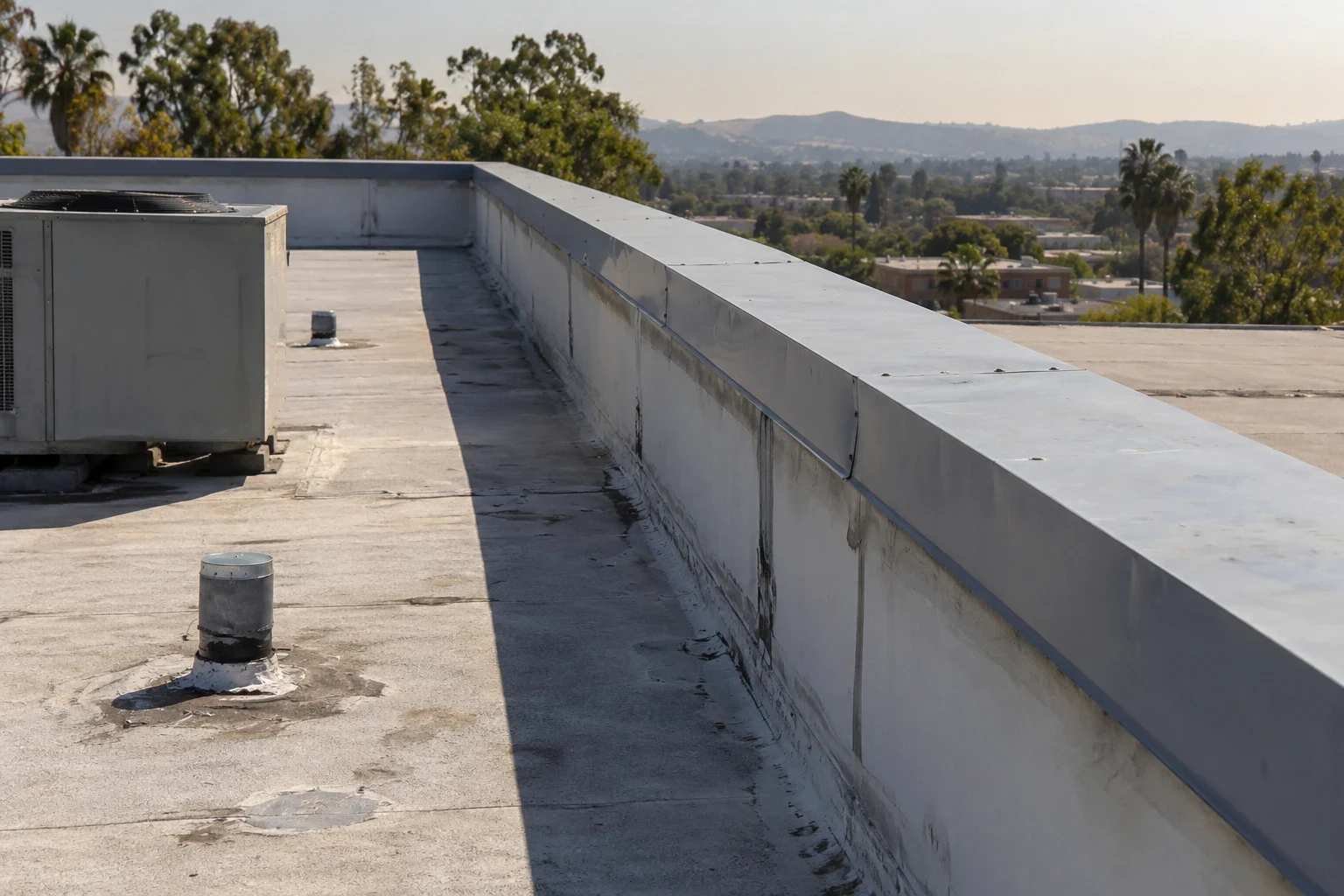
EPDM may be fully adhered, mechanically fastened, or ballasted where the roof design allows. Attachment changes how wind loads and repairs are handled at the field and perimeter. We inspect exposed fastener rows, perimeter securement, adhesive transfer, and any movement around roof sections. A loose sheet at an edge can lead to a larger review even when a central seam remains closed.
Gateway's map includes retail-commercial and industrial-park designations in Rialto. For an EPDM review, the facility's service route and roof records help us identify where to inspect; we confirm the actual membrane and attachment at an exposed edge before defining seam work. A perimeter metal check can capture the termination alongside the EPDM field. The roof register then shows which connection needs correction and which area remains sound.
When Is a Patch the Right Work Order?
A puncture or narrow seam release can be repaired locally when the sheet around it remains flexible, the substrate is stable, and the patch can bond to clean material. We cut away loose edges, prepare the EPDM, install the compatible patch, and check its perimeter. A failed lap that returns after repair, wet insulation, or a soft deck can move the decision beyond the original ticket.
Rialto's Foothill Boulevard and Riverside Avenue are among the City's named commercial areas. Property activity there can affect access timing, but it does not determine whether an EPDM repair will hold. The crew documents the observed layer, the test location, and any condition that widens the work. A repair scope can separate immediate containment from permanent correction; if the membrane is broadly degraded, the owner can compare a TPO assembly with the existing system after the field facts are established.
Can the Existing Roof Support Another Layer?
Recovering over EPDM requires a suitable surface, dry retained layers, secure attachment, and finished elevations that work at drains, curbs, and edges. We check each roof section before presenting the option. If moisture would be trapped or the membrane cannot provide a stable base, removing the affected assembly may be the better defined scope. The owner sees removal assumptions and test limits in the work order.
Plans submitted to Rialto after December 31, 2025 enter the City's 2025 California Building Standards review cycle, effective from January 1, 2026. For an EPDM recover, identify retained layers, edge height, and drain details in the design file, separate from field test results. A recover evaluation examines retained layers; a broader capital review may compare the KEE/PVC system when the specified conditions call for it. No alternate membrane should be selected without matching details to the building.
What Should the Crew Leave in the Register?
Record membrane type, attachment where known, seam locations, drain condition, prior patches, test points, and photographs by roof section. List what was opened and what stayed concealed. That distinction helps a later shift compare the same area without assuming one test represents the full roof. Include the temporary dry-in point if permanent work must wait for material or an operating window.
For work near the Rialto portion of Agua Mansa, we confirm the property's access route and loading schedule rather than carry assumptions from another jurisdiction. A condition report can keep the material, test, and repair record together. Photos, measurements, and a named next action give the facility director a clear handoff into maintenance or a larger capital review.
At shift close, the dry-in line must land on bonded material and leave drains clear. We photograph that edge and mark any area awaiting permanent tie-in. If the roof remains open because of a delivery or access restriction, the ticket identifies the temporary measure and the follow-up needed. This gives the next crew a clear starting point instead of relying on a verbal report.
Commercial Roofing Questions
How do you repair an EPDM seam?
We identify whether the seam uses tape or adhesive, clean the surface, and prepare compatible materials for the tie-in. The work order states the seam length and whether the surrounding sheet or substrate changes the repair area.
Can an EPDM membrane be patched after a puncture?
Yes, when sound rubber remains around the opening and the substrate can support a bond. We remove loose material, prepare the patch area, and check the edges after installation. Wet layers or repeated movement may require a wider scope.
Does Rialto heat affect the EPDM inspection?
Rialto's climate plan identifies regular hot days as a local condition. During the walk, we inspect the membrane, seam edges, flashing, and repair surface that are actually present, then set the next action from those observations.
What information helps price an EPDM recover?
Share the layer history, leak map, roof plan, and access limits. We check moisture, attachment, substrate, drain elevation, and perimeter height before stating whether the existing assembly can remain below a new layer.
When should the facility team request a larger EPDM review?
Several open seams, widespread wet insulation, loose attachment, or recurring water at the same transition can widen the decision. We map those conditions and identify any opening that would confirm the remaining boundary.
Related Roofing Work
Map the EPDM Roof Section
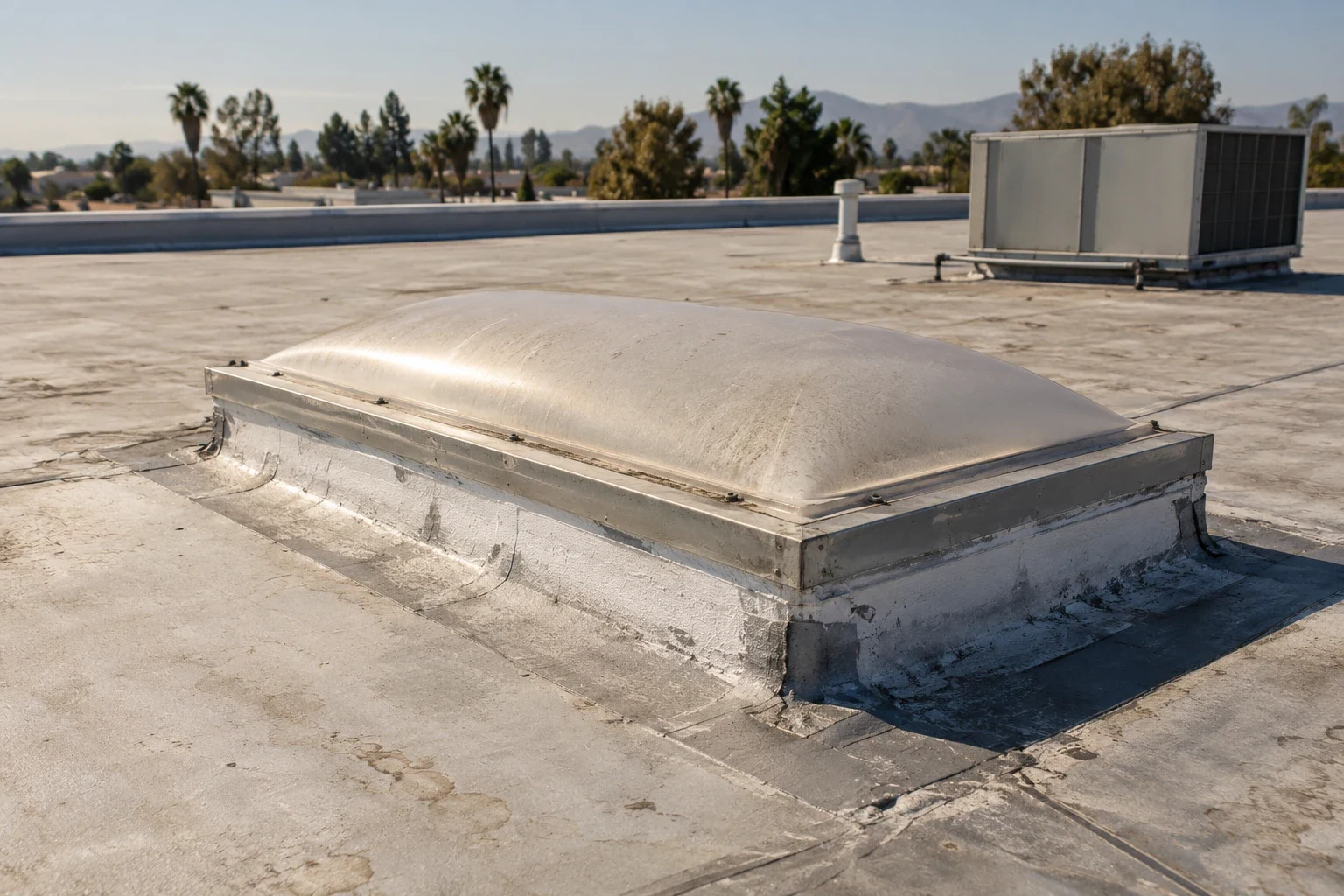
Share the current leak location, repair history, roof plan, and access window. We will identify the membrane and seam condition, then set a repair ticket or a broader assembly review from the field findings.