
Water that remains after the roof should have drained needs a route check before a repair is chosen. We mark the low area, inspect the nearest drain and overflow, and note how the surface feeds each outlet. A puddle can reflect debris, a blocked drain, a low roof plane, or deflection. The work order should say which condition was observed, what still needs measurement, and whether temporary protection is required below.
The Gateway Specific Plan map includes office, retail, freeway-commercial, and industrial-park uses. That zoning context does not explain why water is collecting on a particular roof. The Foothill Central district is a separate City planning geography; it does not define any roof's slope or drain layout. When a work order comes from either geography, we start with the roof map, mark the low area, and trace its water path to the outlet. The building's access route and operating schedule determine how that inspection is sequenced.
Is the Outlet or the Roof Plane at Fault?
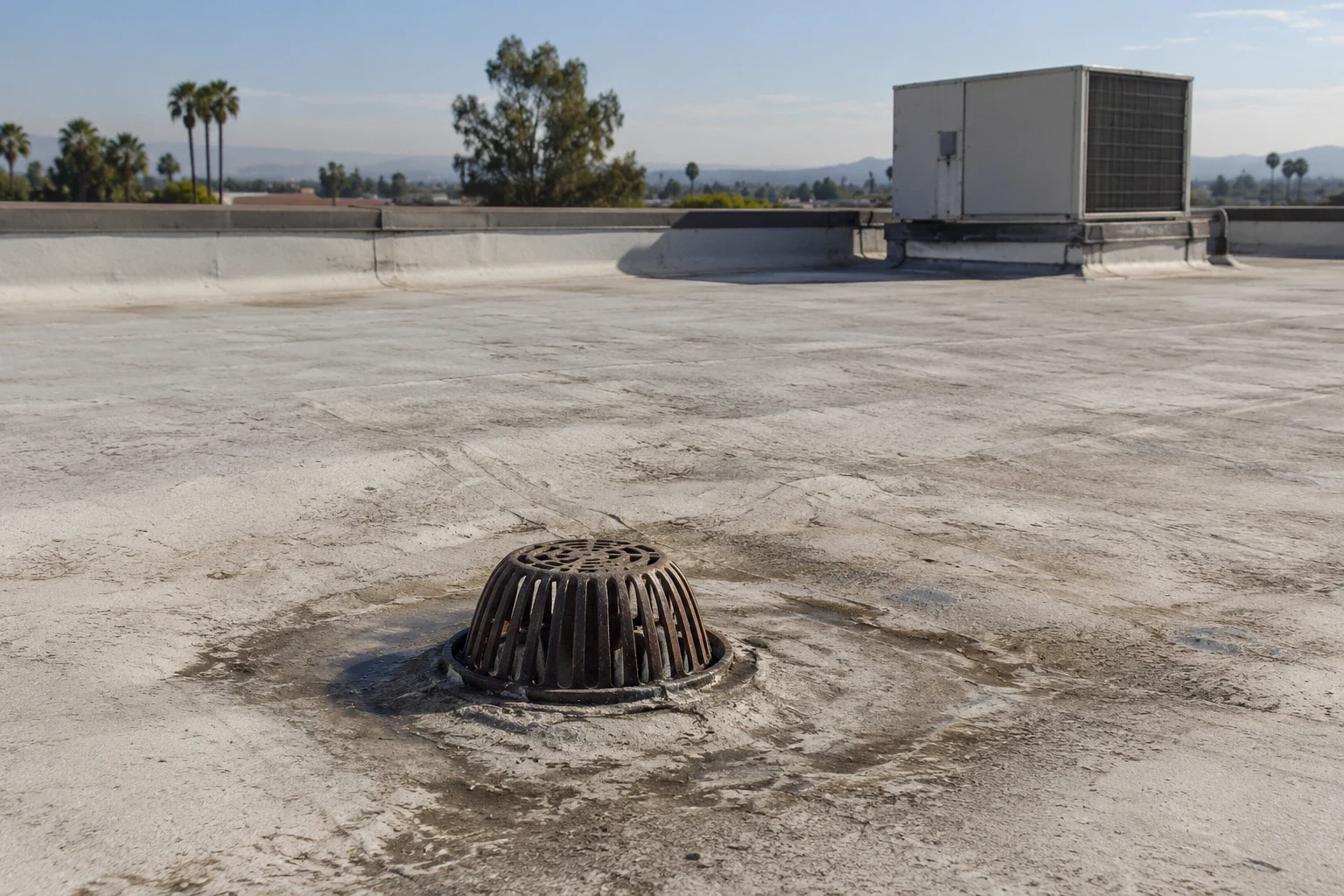
Start at the drain bowl and work outward. Look for debris, a damaged strainer, loose clamping components, a blocked leader, or membrane detached at the bowl. Check the overflow and confirm its path is open. If the outlet is clear, measure the extent and depth of retained water after the site has observed the area. A clear drain does not prove the roof has positive slope; the field shape needs its own review.
Rialto's climate plan includes flooding among City hazards. On a roof visit, record the retained-water locations, observation time, outlet condition, and nearby seam or flashing details. A drain and scupper inspection can document the outlets, while a roof inspection can map low areas and transitions before repairs are priced.
Where Does the Water Travel?
Trace runoff from each high point to the drain, scupper, or roof edge. Mark changes in slope, raised laps, equipment curbs, and repair patches that could redirect flow. Compare the roof map with reported interior moisture and note whether the water remains near the same detail. Photograph standing water with its location and observation time; a single image without context cannot show how long it remained or why it collected.
City planning groups commerce around major street corridors and the Baseline/Riverside intersection. Drainage, however, must be checked against the individual roof plan and observed water path. For a property in this commercial network, we draw its high points, low areas, and outlet locations on the roof map. A Gateway plan-area roof visit records the elevations and water paths that shape the repair boundary.
What Can the Roof Assembly Tolerate?
Water may remain because the roof plane has a low spot, the deck has deflected, insulation has compressed, or a repair has created a ridge. Check for soft areas, open seams, blistering, surface splits, and detached flashing around the pond. If the condition could involve concealed layers, use an approved test opening or moisture survey before choosing an overlay. Record the boundary of each verified wet area rather than extending it by appearance alone.
A moisture survey may help select locations for confirmation, but the report should say what was tested and what remains uncertain. Where a flashing termination or wall transition holds water, a flashing failure review can define the detail repair. An open membrane lap needs a seam repair assessment with a separate tie-in boundary.
Which Corrections Match the Finding?
Clear a restricted outlet when the drain condition supports it, then verify that runoff can leave the roof. Repair a detached drain connection or damaged flashing with a compatible detail. If the low point comes from deck or insulation movement, a patch over the surface will not change the plane. State when a structural or assembly review is needed, and do not represent added coating as a drainage correction without a measured design.
A 2025 municipal update combined the former Foothill and Central planning areas into one plan framework, revising infrastructure and development policies. For roof work in that area, keep the planning label in the property record and define the repair from measured low spots, outlet details, and the approved scope. A repair work order can isolate the confirmed defect. If water remains across multiple roof sections or the assembly is wet, a replacement review can compare removal, drainage redesign, and other project options.
How Should Drainage Work Be Sequenced?
Keep outlets functional while crews clean, open, or repair the surrounding assembly. Protect drain openings from debris and confirm that temporary covers are removed before the section closes. If a drain line or interior leader also needs work, coordinate the trade sequence so a roof repair is not finished over an unresolved outlet. Mark water flow after the correction and record where the roof remains low pending a larger design decision.
When several drains share a leader, confirm which outlet receives the affected roof section before closing a branch or changing a connection. The site contact can identify interior access needed for verification. Record the responsible trade, expected sequence, and any outlet that must remain open during work. That information prevents a temporary blockage from being introduced while the roof repair is underway.
Use a section map to show staging, access, test openings, and tie-in points. A work shift that stops before the drain detail is complete needs a secure boundary and a clear return point. The facility contact should receive the expected closeout time and any path restriction. This keeps drainage work tied to operations and makes a later inspection repeatable instead of starting from a vague report about standing water.
What Should the Water-Management Record Show?
Record the outlet condition, water path, repair performed, verified low area, and any test still needed. Include dated photographs and label each view by roof section. State whether debris was removed, a drain detail repaired, or a larger slope correction left for design. The closeout should distinguish a cleared outlet from a roof plane that still holds water, because those findings carry different next steps.
A condition report can carry the roof map, outlet photographs, observed water area, and unresolved design question in one record. Attach the detail needed to identify the next action, not just an image of the puddle. If a drainage correction is deferred, state who will authorize it and how the low area will be monitored until the work is complete.
District labels may help organize municipal records, while the ponding ticket should stay tied to the building's roof sections and verified drainage conditions. Keep outlet photographs, low-area measurements, and test results with the roof section they describe. On the next visit, compare those records with the corrected water path and identify whether remaining ponding needs a separate design or repair scope.
Commercial Roofing Questions
Does standing water always mean the roof is failing?
No. First identify how long water remains, whether an outlet is restricted, and whether the roof plane or assembly has changed. We record the evidence and separate drainage maintenance from a roof repair.
Can adding a drain fix a low spot?
Only when a design review confirms the outlet location and roof geometry support that change. A new opening does not correct a deflected deck or trapped moisture, so those conditions need separate verification.
Should a roof be coated to cover ponding?
A coating does not correct the cause of water retention. We check compatibility and surface condition, then recommend coating only when the assembly and drainage plan support that scope.
How do you confirm whether insulation is wet?
A moisture survey or approved test opening can help verify the affected area. The record identifies test locations and results rather than assuming that visible water marks show the full extent.
What should we send before an inspection?
Share the roof plan, drain locations, leak reports, prior repair tickets, and access rules. Include when the water was observed so we can plan a useful route and document the condition consistently.
Related Roofing Work

Map the Water Before Pricing the Repair
Send the roof plan, drain locations, photos, and timing of the water report. We will trace runoff and separate outlet repairs from larger slope or assembly questions.