
A tenant's ceiling complaint can send the property manager to the roof before the next lease meeting. We start with the affected suite, the time the water appeared, and the roof section above it. Then we inspect the likely path through drains, seams, curbs, penetrations, and perimeter details. The visit record separates a confirmed opening from a condition to monitor and gives the manager a repair ticket that can be assigned without interrupting every office on the floor.
Commercial land-use context in Rialto includes the Baseline/Riverside intersection and three corridors: Foothill Boulevard, Riverside Avenue, and Valley Boulevard. The Gateway Specific Plan also includes office-park land uses. These are broad planning areas; each property needs its own roof review. A Gateway area service overview provides local context, and a commercial roof inspection maps the actual conditions and access limits.
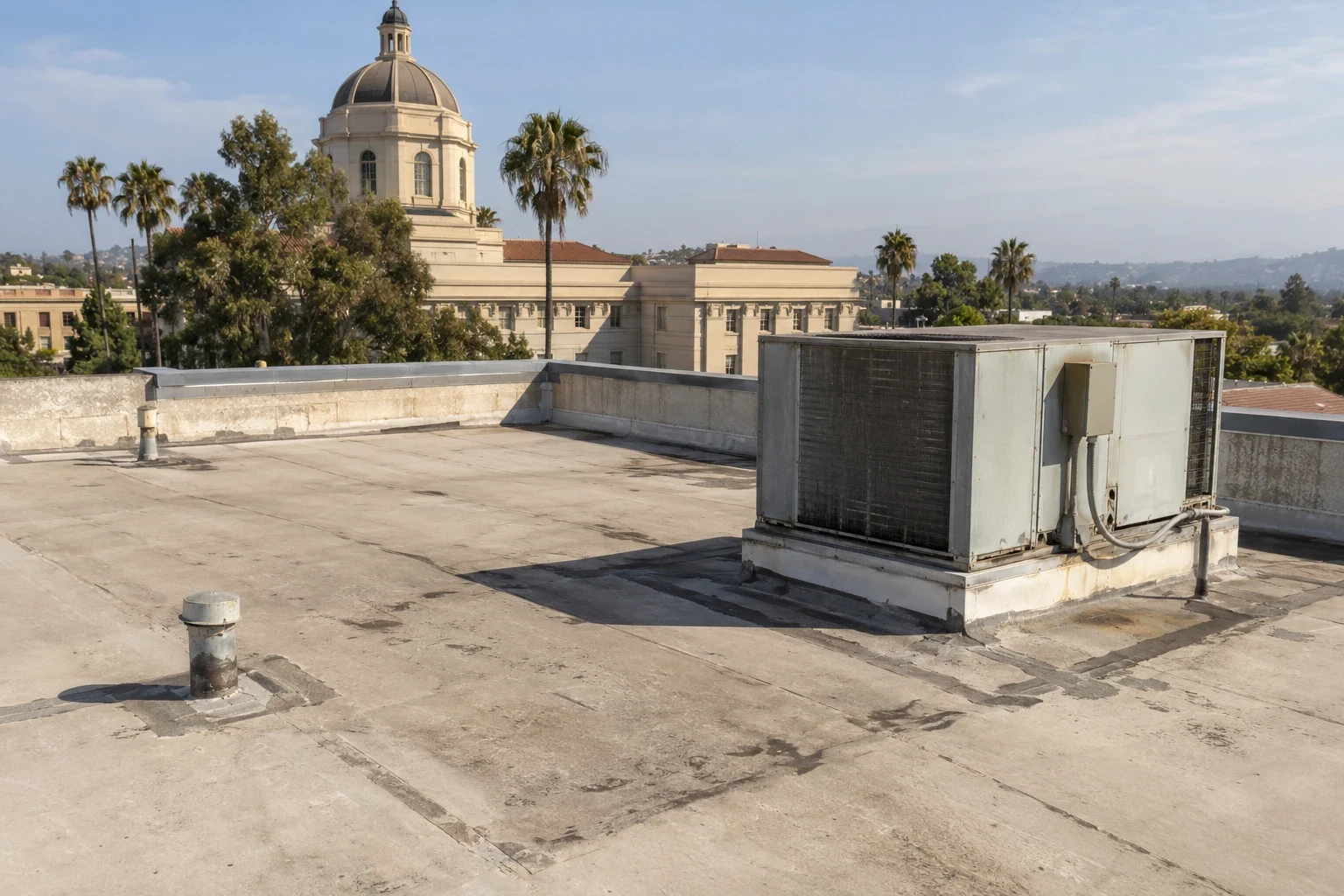
How do we connect an office complaint to the roof?
We ask which room or suite is affected, whether the issue appeared after rain or equipment activity, and what response has already been made. On the roof, we look above and around the reported area. Water can travel along a seam, curb, wall, or drain path before it reaches a ceiling tile. We photograph the likely entry point and the surrounding details so facilities can match the observation to the correct roof section.
Office interiors may include finished ceilings, meeting rooms, electrical spaces, or tenant improvements that need protection during a repair. The property contact identifies access hours, sensitive areas, and who will receive the work notice. We can inspect a medical office roof with similar tenant coordination needs, while a hospital roof assessment may involve a different level of operational coordination. Those uses help frame the conversation; the actual restrictions come from the building manager.
What should be checked around rooftop equipment?
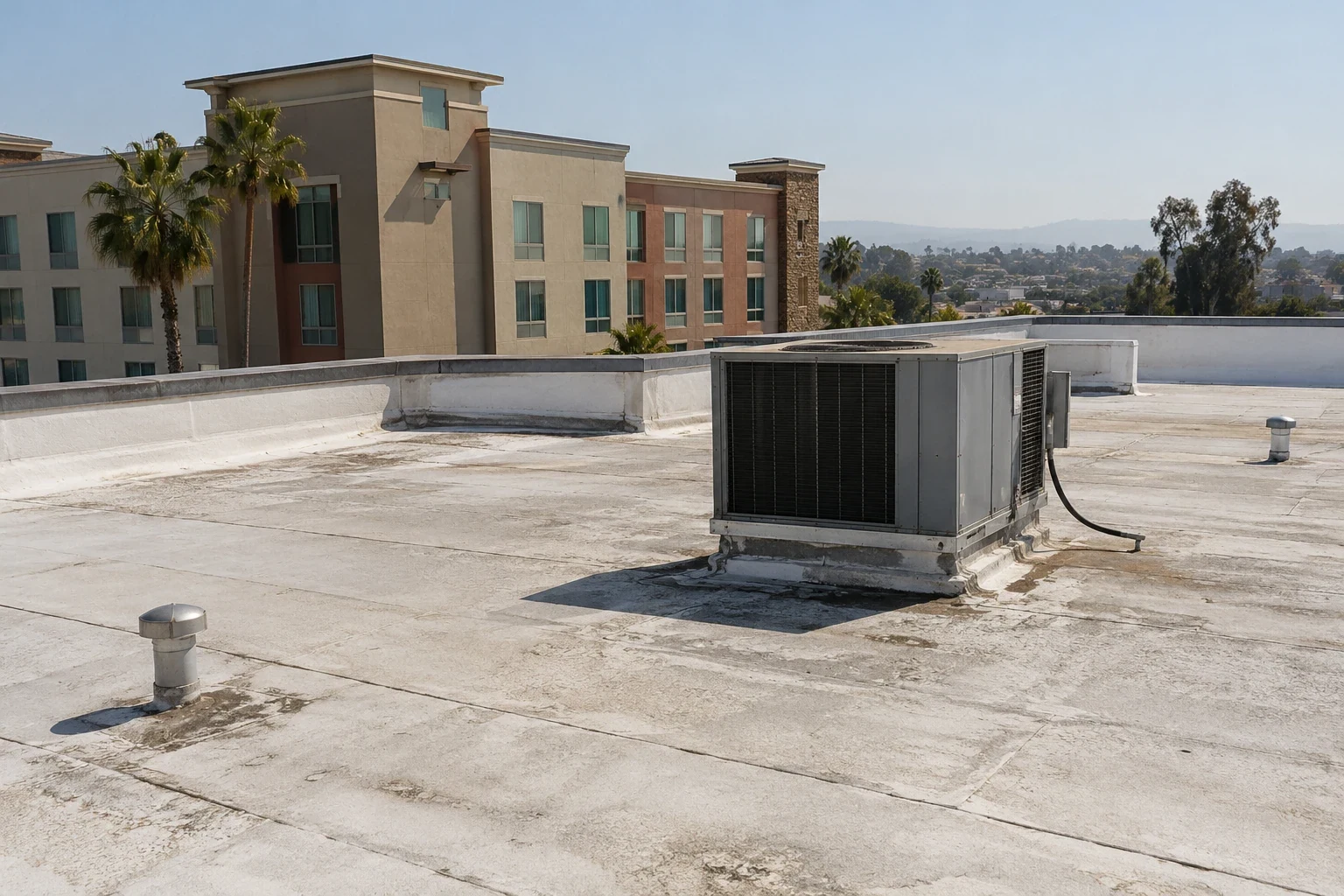
Office roofs often carry HVAC units, ductwork, exhaust, electrical conduit, and service platforms. We check each curb and penetration for open flashing, loose termination metal, cracked sealant, and nearby membrane separation. We also note whether equipment service paths cross a suspected leak area. A roof repair should leave the unit accessible for maintenance and direct water away from the opening, not create a patch that blocks service or bridges a moving joint.
If an access panel needs to be opened or a unit needs protection, we coordinate with the building's facilities contact before work begins. Equipment labels and roof section names should match the existing register where possible. The equipment curb review can define the roof-side detail and identify when another trade should handle the unit itself. We keep roof work and mechanical work distinct in the ticket so the owner can route each item to the right person.
Where can water move before it reaches an office?
Low-slope roofs may collect water at drains, scuppers, valleys, or depressions that are not obvious from inside the building. We map the drain path and inspect nearby seams, walls, and edge conditions. A ceiling stain near an exterior wall might relate to a perimeter detail, while a stain farther inside may align with an upstream penetration or drain connection. We use the roof layout and observed conditions to narrow the work area before opening a finished ceiling.
Rialto's climate plan lists heat, flooding, wildfire, and air pollution among the City's climate hazards and identifies hot days as regular. The plan is citywide context; it does not assign a condition to an individual office roof. During the visit, we record the membrane and drainage conditions present at the building. If pooling or a drain connection is the concern, our drain and scupper service can address collection points alongside the affected roof detail.
Can repairs be scheduled around tenants?
Work can often be sequenced to limit disruption when tenant access, roof access, and interior protection are coordinated. We confirm the work hours, hatch or approved interior access, staging location, and areas that must remain open. If a repair requires cutting or removing material, we identify the ceiling zone below and establish who will clear the space. The crew closes each work area before moving to the next, and the property manager receives a record of completed and remaining tasks.
For a larger project, removal and installation can be separated into roof sections with an agreed dry-in boundary. The schedule accounts for weather exposure, service access to HVAC, and the time needed to protect interior finishes. A phased reroofing plan can help coordinate multiple suites without implying that every tenant can remain in place throughout every task. We discuss the specific work area and notice needs with the property team before mobilization.
How do we choose between a repair and capital work?
A repair fits when the failure is localized, adjacent material remains sound, and the patch can tie into a stable assembly. If leak tickets recur across several sections, moisture is confirmed below the membrane, or the substrate has failed, the owner may need a broader scope. We label areas for repair, monitoring, testing, or replacement consideration and attach the evidence to each choice. A single ceiling stain should not determine a whole-building capital project.
Rialto's commercial corridors include Riverside Avenue and Foothill Boulevard, where office and retail planning geographies meet broader city activity. For any property in those areas, the same roof-section record supports a budget discussion based on actual findings. A capital review can place urgent repairs beside planned work and known access constraints. If replacement is warranted, we compare assembly, removal, insulation, curb transitions, and tenant phasing in a replacement scope.
What information should the property manager keep?
Keep the roof section, suite or common-area reference, photos, work completed, and any limitation from the visit in one condition record. The next manager should know whether a repair was permanent or temporary and what item remains open. We can use existing work-order labels and update them when the plan does not match the roof. That makes it easier to compare annual visits without assuming an old repair covered a nearby detail.
If an office building changes tenants or rooftop equipment, update the roof register with new access instructions and penetrations. A practical inspection route includes drains, perimeter metal, equipment curbs, seams, and known repair locations. The owner can then choose a maintenance visit before the next interior report, or request focused inspection after a specific event. The record stays with the property, not with one tenant's suite or a single manager's memory.
Commercial Roofing Questions
Can you inspect a leak without entering every tenant suite?
Often. We can begin with the affected suite or common area, roof plan, and access route. If interior inspection is needed to trace the path, the property manager can coordinate that specific entry.
Will office repairs require a building-wide shutdown?
Not usually for localized roof work, but equipment, access, and interior protection may require a limited interruption. We define the affected area and coordinate approvals with building operations.
Why does a ceiling stain not match the roof opening?
Water can move along a seam, curb, deck, or other roof layer before appearing indoors. We inspect the path above the reported suite and record the evidence before assigning a source.
What if an HVAC unit blocks the repair area?
We coordinate with facilities and identify which equipment can be moved, protected, or left in service. If a separate mechanical trade is required, the roof and unit scopes are documented distinctly.
Can you provide records for a capital budget?
Yes. We can separate immediate repairs from monitoring, testing, and replacement candidates, with photos and roof-section labels that support the property team's review.
Related Roofing Work
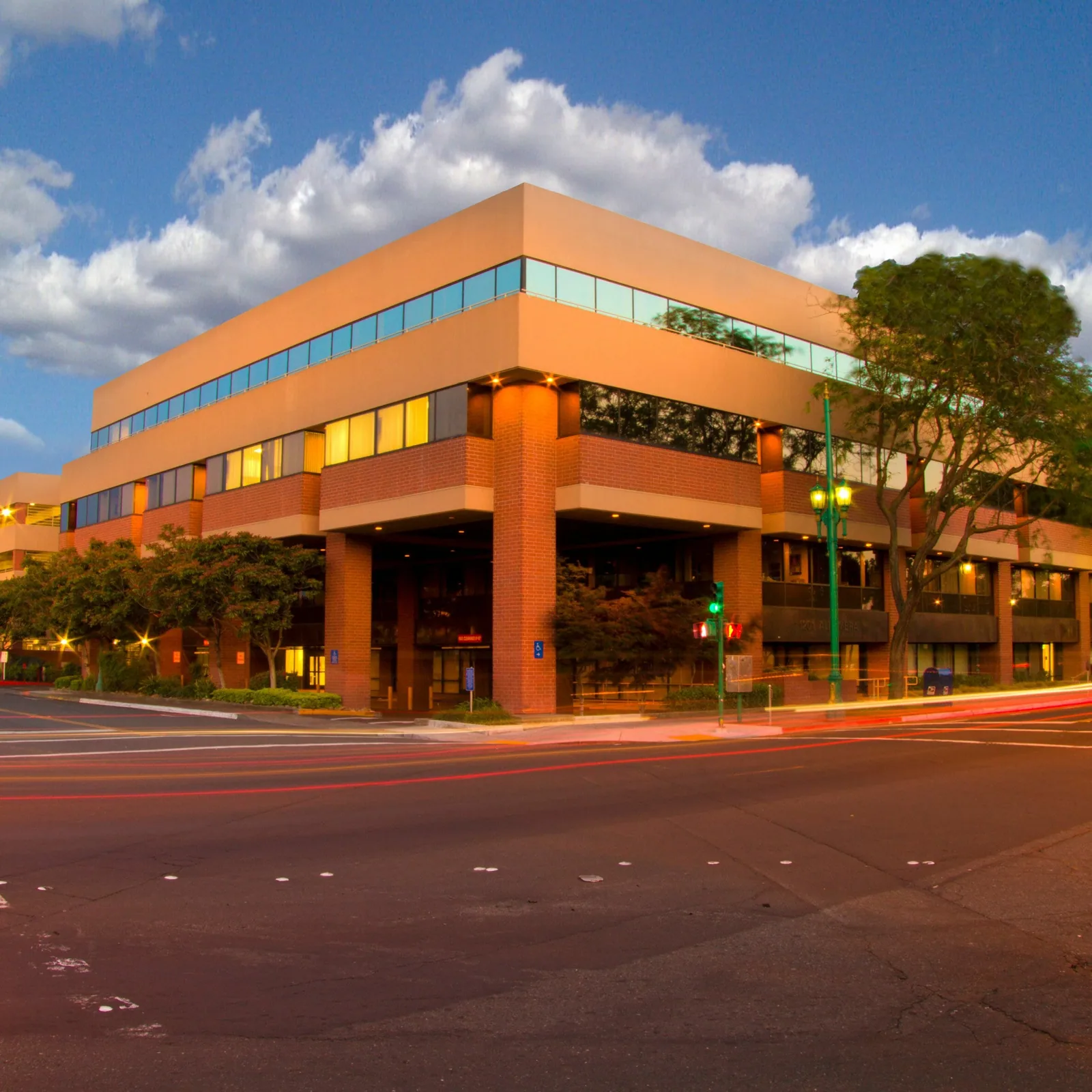
Locate the roof issue before scheduling tenant access
Share the reported suite or common area, timing of the leak, roof records, and tenant access limits. We can map the roof route and identify the first checks for the property team.