An acquisition review changes the roof conversation from a leak ticket to a decision about retained value. We identify each roof section, review available maintenance and warranty records, and inspect seams, drains, curbs, edges, and prior repairs. If the seller's information leaves an assembly question open, we state what a targeted test could resolve. The investor receives a condition record that separates observed defects from assumptions and can use it to compare repair, recover, and replacement exposure.
Foothill Boulevard and Riverside Avenue are among the business areas Rialto's General Plan identifies. The Rialto Commercial Corridors groups the street references as broad planning geography, and the Gateway Specific Plan Area provides a separate map context. Those labels can help sort an asset register, but the acquisition review still needs evidence from the roof itself.
What can a roof review confirm before closing?
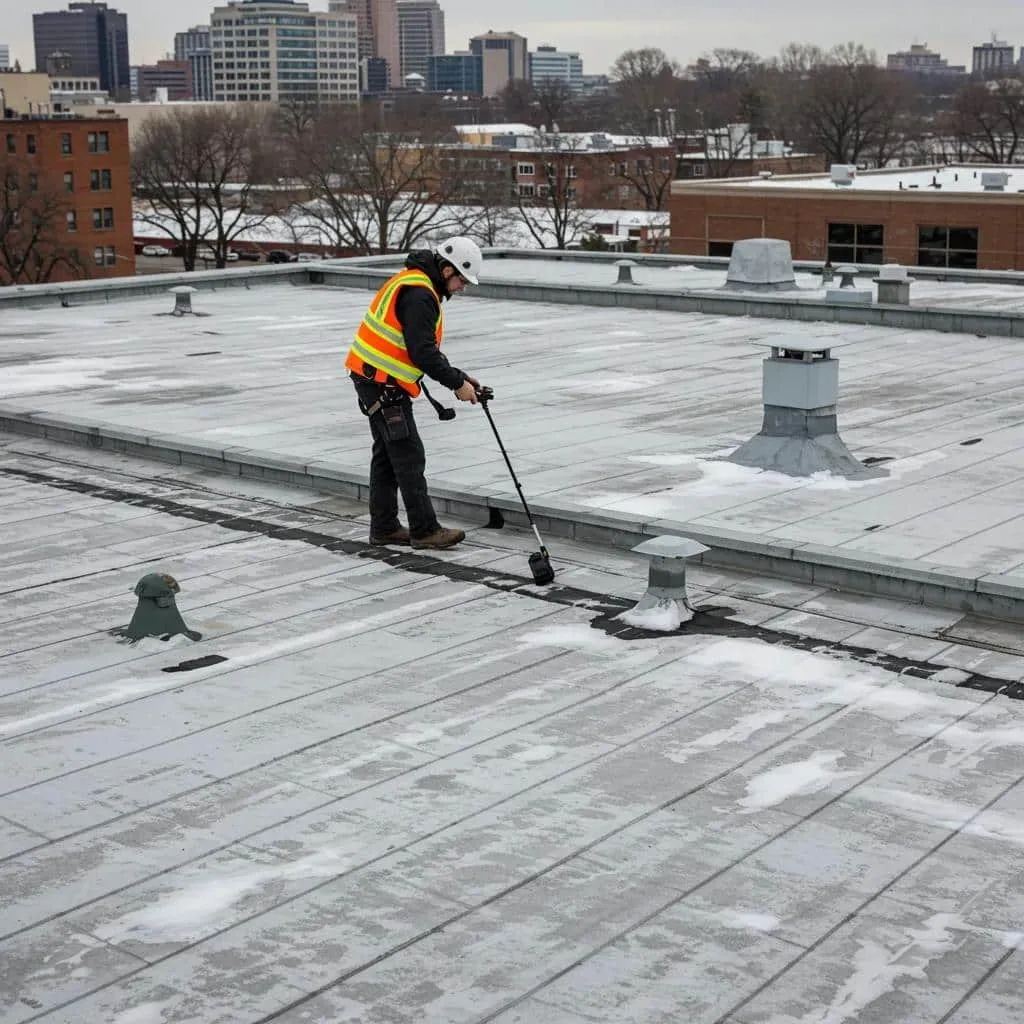
We inspect accessible roof areas and reconcile observations with drawings, maintenance tickets, prior proposals, and any available warranty documents. The report notes visible system type where it can be identified, seams, flashings, drainage, penetrations, ponding, patches, and access restrictions. We separate confirmed conditions from records that were unavailable or could not be verified. An inspection is a snapshot of observed evidence; concealed layers may require sampling before an investment decision depends on them.
A due-diligence roof survey can define the investigation area, test locations, and open questions in a format suited to a property review. If moisture is suspected below the membrane, we can discuss infrared mapping or selected cores based on whether the result changes the scope. The deliverable identifies urgent correction, planned work, and further investigation rather than compressing every observation into one condition grade.
An acquisition team can then separate roof items by decision point. A visible tear may support a repair scope, but a concealed wet layer can require selective testing before the holdback or capital estimate is set. We identify the section and evidence associated with each issue. The buyer can request a second visit only where the answer could change the transaction plan, leaving routine maintenance for the operating budget.
How do we compare unlike roofs across holdings?
Properties may differ in assembly, age, drainage, access, tenant use, and prior repair history. To compare them, we use the same record fields but keep each building's findings separate. The asset manager can see where a repair is urgent, where testing remains open, and where routine work may preserve a serviceable roof. We do not infer a common defect from shared ownership or a similar building label.
A multi-property roof program can set consistent names for sections, tests, photos, and closeout. The investor can then view each property against a common decision framework while preserving its unique assembly and access record. For an asset with warehouse use, the property-management workflow may add tenant response and work-order coordination. The investment file should still show the tested locations, the evidence found, and the limits of each inspection.
What does Rialto's building mix mean for screening?
Planning material places industrial and warehouse use on both the north and south sides of Rialto, with some areas close to rail corridors. For an investor, that map is context for asking about delivery routes, rooftop equipment, and long drainage paths; it does not establish the assembly or condition of an individual asset. We verify the roof and record operating limits with the property contact.
Rialto's climate adaptation plan identifies extreme heat and flooding among citywide hazards and describes hot days as regular. For capital review, those statements are planning context. They do not quantify a specific roof's remaining life or imply that damage has occurred. We note the membrane and sealant condition observed during the inspection and connect any recommendation to a visible defect or a test result. This gives an investment committee a clear distinction between local backdrop and property-level evidence.

How do repair, recover, and replacement compare?
A localized repair is considered when the source is bounded and the adjacent assembly can accept a proper tie-in. A recover may retain eligible layers if moisture, attachment, and transitions support a new system. Replacement becomes more relevant when wet insulation, unstable substrate, or repeated failures affect multiple sections. We show the basis for each option and identify which test could change the recommendation. An owner can then weigh near-term work against capital planning using the same scope assumptions.
Cost and timing respond to removal, deck correction, staging, access hours, detail count, and tenant coordination. Our commercial roof inspection establishes the field record. A replacement scope then separates demolition, substrate work, insulation, membrane, and perimeter details. If the existing layers appear eligible, a recover assessment can document its conditions before the investor treats it as a lower-cost alternative.
What should transfer to asset management after acquisition?
Keep the roof plan, photo record, sample locations, open repair tickets, warranties, and access restrictions with the asset file. The transition should identify who owns a follow-up test and which condition needs action before another inspection. If operating staff change, the new contact should be able to locate each roof zone without reconstructing the diligence process. A clear handoff protects the usefulness of the inspection after the transaction closes.
For Rialto assets, planning-area names can help locate the property within the City's commercial or industrial geography. They do not replace a current roof register or closeout file. A capital plan can carry verified defects, monitoring items, and unresolved questions into the owner's investment sequence. That makes the next bid or budget discussion traceable to the initial finding rather than an unqualified estimate of future replacement need.
An acquisition team can work on a short diligence clock, so we mark the roof zones reached and the areas that remained out of view. If one targeted opening could answer a material question, the report names its location and restoration method before the buyer approves that test. Estimated allowances remain separate from measured repair quantities. The next owner can then carry the open item into lease, capital, or maintenance planning without presenting it as an observed defect.
How are roofing scopes coordinated with project teams?
Transactions often have a short window for inspections and follow-up work. We confirm access, escort arrangements, tenant notices, roof drawings, and the person who can authorize sampling. If a general contractor or property manager is already planning improvements, we map roof tie-ins and sequencing so other work does not obscure a known defect. Any change in scope is tied to the condition that prompted it.
Our report can help the buyer, seller, asset manager, and general contractor work from the same roof boundaries. It names the evidence, the corrective action, and any decision still waiting on testing or approval. Where a roof system choice is part of the capital plan, a selected assembly is evaluated against substrate and detail requirements, not chosen by its label alone.
Commercial Roofing Questions
Can a roof inspection replace destructive testing during diligence?
It can answer visible-condition questions, but concealed moisture or deck condition may require targeted openings. We identify where sampling would change the investment scope.
How do you report a roof with incomplete maintenance records?
We list the documents reviewed, record what is visible, and mark unknown layers or repair history separately. The report does not convert missing records into a condition finding.
Can you estimate capital work across several assets?
We can compare properties using consistent fields after each roof has its own inspection record. The work plan then separates confirmed repairs, testing, maintenance, and replacement candidates.
What if a recover appears possible before the roof is opened?
We document the conditions that must be verified, including moisture, attachment, substrate, and transitions. The recover remains a scenario until those checks support it.
What roof information should go in the closing file?
Keep the roof plan, photos, test locations, open work orders, warranties, access rules, and follow-up owner. Those records let the operating team continue from the diligence findings.
Related Roofing Work
Build the roof review into the investment timeline
Share available roof plans, maintenance records, access contacts, and transaction timing. We can define the inspection scope, note any tests that matter, and deliver property-level findings for the capital review.