
After a fire response, keep people out of the affected roof zone until access is released. We inspect for heat effects, smoke deposits, suppression water, and exposed openings, then separate emergency protection from permanent repair. The first work order records which areas are safe to approach and what remains under review. A roof that looks intact from the ground may still have damaged membrane, insulation, flashing, or support beneath the visible surface.
Rialto's adopted climate material places wildfire in the same citywide hazard discussion as heat, flooding, and air quality concerns. That planning context is not evidence of a fire at any individual property. The Gateway Specific Plan Area and Foothill Central Specific Plan Area are broad Rialto planning geographies, not facility targets. The assessment follows the condition and the authorized access route after the incident response team releases the area.
What Must Be Protected Before Inspection?
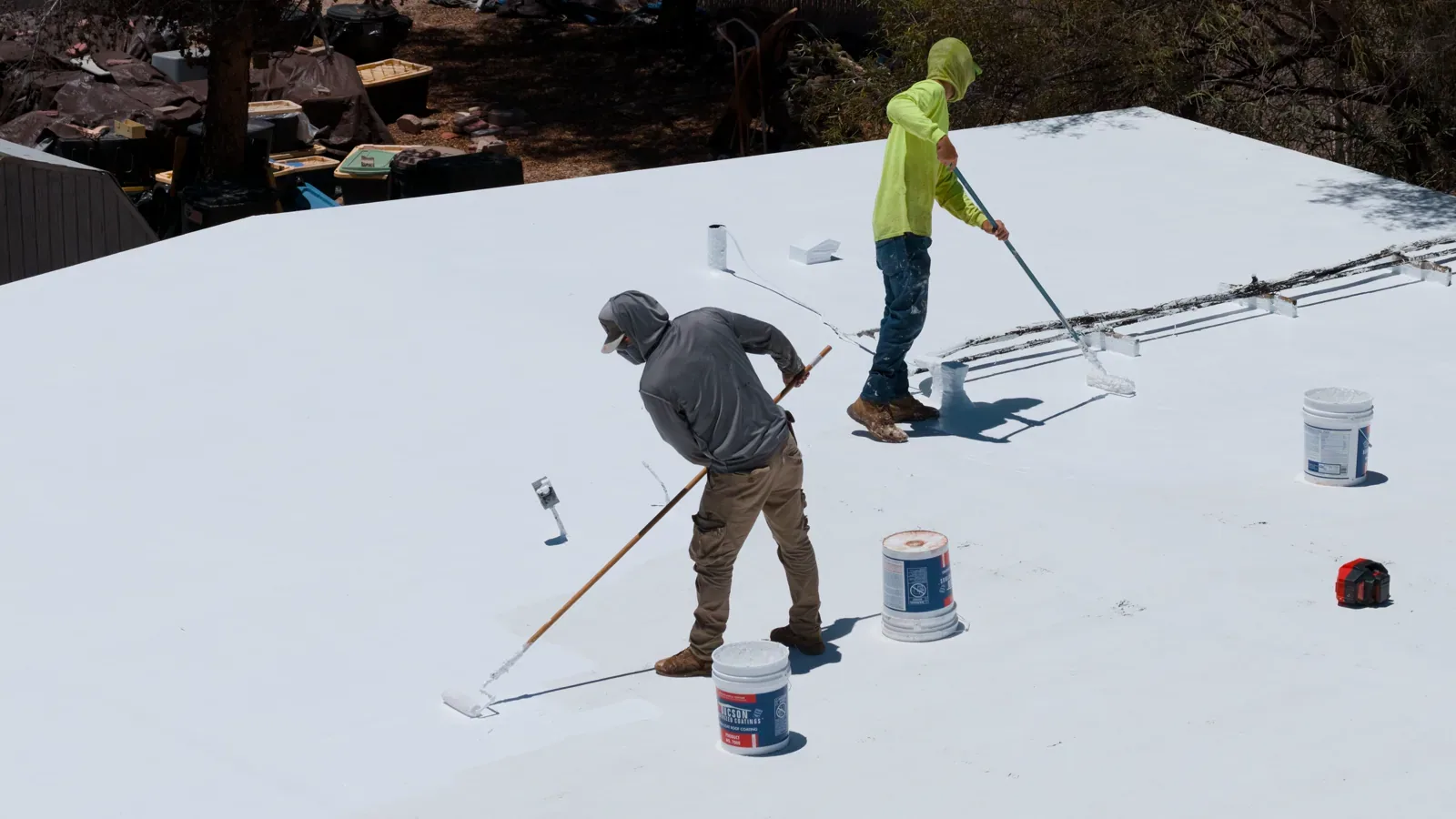
Confirm that the fire response has ended and that the building representative has approved roof access. Check whether an opening, damaged edge, or removed equipment leaves the assembly exposed. Install temporary protection only where it can be secured safely and without covering an unstable detail. Keep people clear below loose material and record the boundary of any restricted room or roof section.
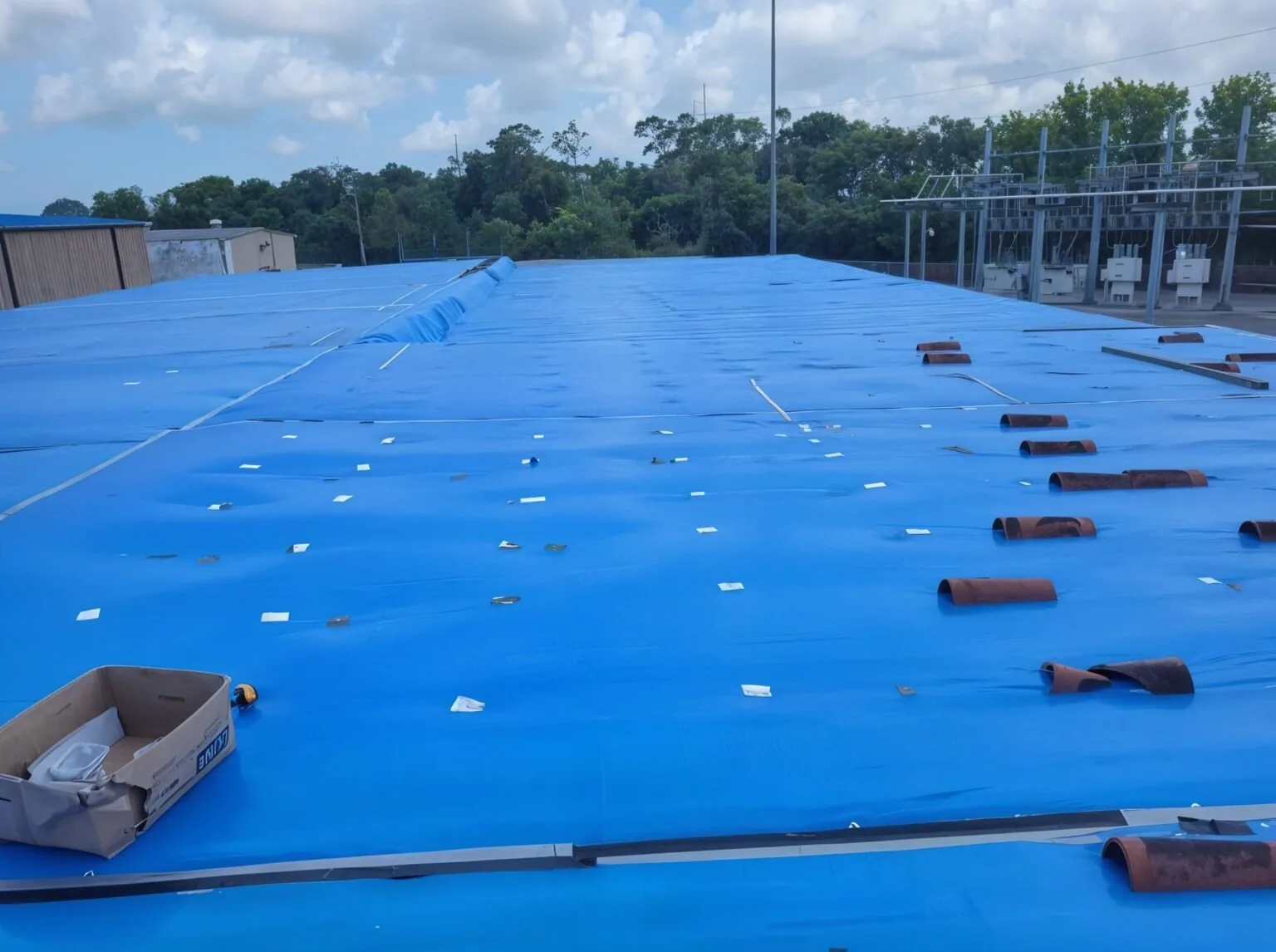
Suppression water can enter through openings and travel away from the affected area. Protect interior contents under the property's procedures, then record where water appeared and when. A temporary dry-in response can limit exposure while a roof inspection maps heat, smoke, and water impacts. Do not mark stabilization as a permanent repair unless the final detail has been completed and checked.
What Does Heat Exposure Change?
Inspect membrane, coating, flashing, edge metal, and nearby penetrations for distortion, blistering, shrinkage, splits, loose laps, or loss of attachment. Heat can affect materials differently depending on their type and exposure. Identify the roof system before choosing a repair product. Mark the affected area and compare it with undamaged sections, but do not assume that a visible discoloration is structural damage or that an unchanged surface is fully sound.
The City's climate plan also notes recurring hot days; that planning context does not determine fire exposure or roof damage at a particular property. That fact gives local context, not proof that heat caused a fire-related roof condition. The inspection records what changed at the building. A moisture survey can help select areas for testing, while a heat and UV review can separate longer-term surface wear from the incident-related scope.
How Should Smoke and Residue Be Assessed?
Smoke residue can affect surfaces, rooftop equipment, and openings even where direct flame did not reach the roof. Record deposits, odor reports, damaged seals, and any material removed during the response. Coordinate cleaning or replacement with the appropriate building team and product requirements. Do not apply a new coating or patch until the substrate is suitable and compatible with the selected repair detail.
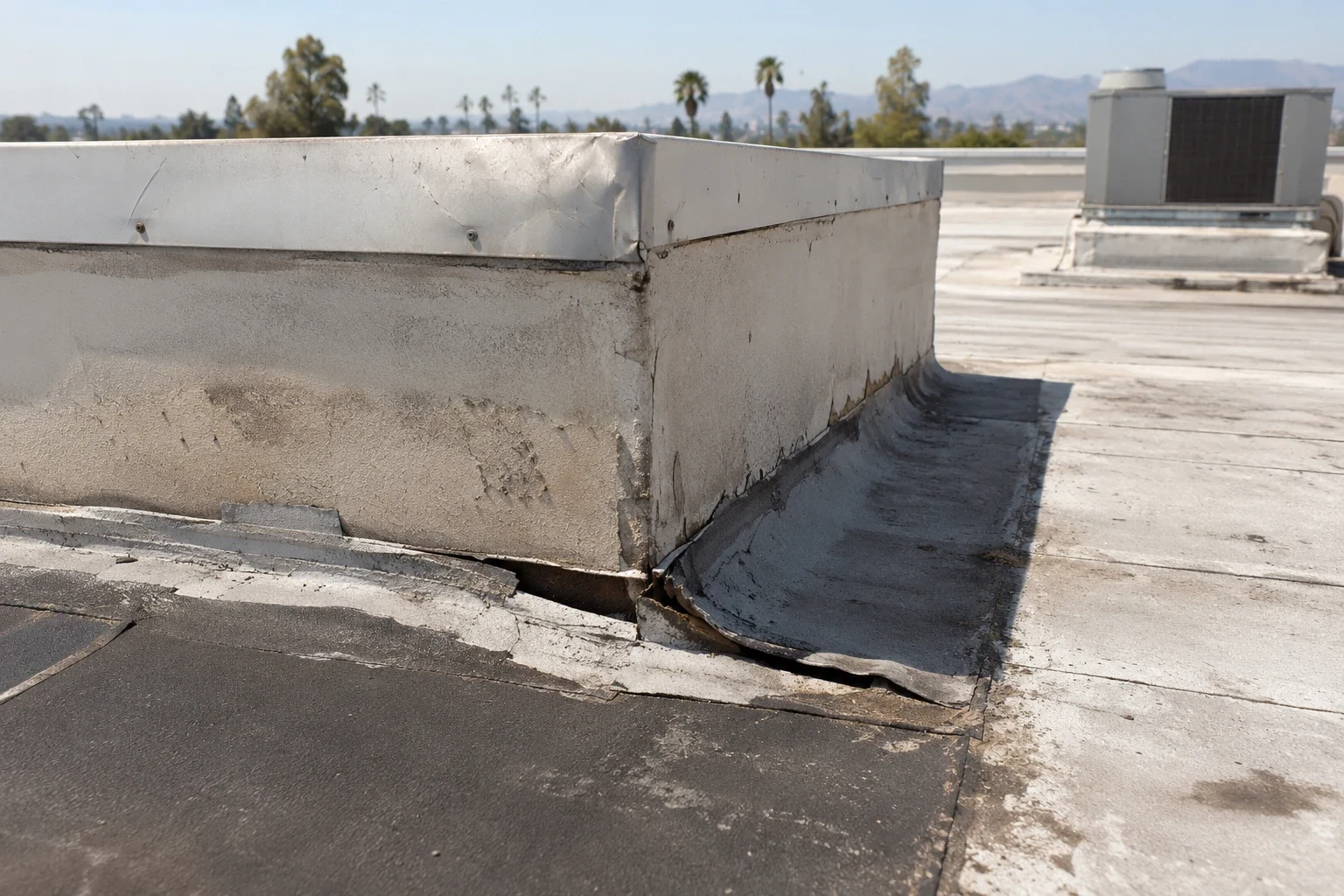
Inspect around curbs, ducts, vents, skylights, and roof-to-wall transitions where residue or heat may have affected sealant and flashing. A penetration flashing inspection can document those transitions. Keep the incident map distinct from normal maintenance observations, then use the same roof-zone labels for follow-up so the team can compare the pre-repair and completed conditions.
Where Did Suppression Water Travel?
Trace water from the affected roof section toward drains, seams, low areas, and interior reports. Check for saturated insulation, loosened membrane, damaged drain connections, or water held beneath a surface. Record what is confirmed and what requires an approved opening. An exterior dry-in does not establish that concealed layers are dry. Keep the suppression-water route separate from damage attributed to direct heat until the inspection supports a combined repair scope.
In Rialto, the commercial-use map includes a Baseline/Riverside junction and business corridors along several named streets. Those designations are separate from a building's fire-incident record. Those streets do not indicate a particular building's response needs. A Gateway-area roof visit still uses the property plan and affected-section map. A ponding-water review can address retained water when the roof path shows a separate drainage issue.
Which Materials Can Be Repaired?
Remove charred, distorted, loose, or contaminated material only to a boundary that can support a compatible repair. Check the substrate and attachment before tying in a new membrane or flashing. If equipment supports, edge metal, or insulation are affected, list those items separately. The scope should define removal, temporary protection, replacement components, tie-in, and any test that remains open before the assembly is covered.
The City adopted its Foothill Central plan in 2025 after consolidating earlier planning boundaries, with updated land-use and infrastructure direction. That district context is separate from the repair specification. Match the detail to the installed assembly and project requirements. A repair work order can document localized correction, while a replacement review can compare broader damage and system renewal when multiple sections are affected.
How Should the Recovery Work Be Sequenced?
Coordinate roofing work with the authorized incident contact, building staff, and any other trades assigned to inspect utilities or structure. Confirm which roof sections can be opened, where debris will go, and what area below must stay clear. If the site remains occupied, set a notice and access window before staging. At the end of each shift, identify the secured section, remaining opening, and next trade or inspection step.
Proposed construction in Rialto passes through municipal review and inspection under applicable state codes and local ordinances; the project scope determines the approval path. Confirm any review needed for the proposed repair or replacement and keep approvals separate from the incident condition record. A condition report can hold photographs, test points, and repair tickets in one file. The property contact should know which findings await approval before the crew expands work.
What Should the Recovery Record Preserve?
Record the damage source as observed, the affected roof sections, temporary measures, material removed, repair performed, and remaining tests. Attach photographs of the original condition and finished details, labeled by roof zone. Note whether suppression water was found below the surface and what verification remains. If an area could not be accessed, list it as uninspected instead of implying a complete review.
Closeout should give the building representative a next action, whether that is a further opening, a repair visit, or a capital review. Use Gateway or Foothill Central only to orient a service record; describe fire effects from the inspected property and incident documentation. Those planning areas help describe the service context, but they do not identify a damaged property. The work record should remain specific to the authorized site and its roof.
Commercial Roofing Questions
Can the roof be inspected before the fire area is released?
No. We wait for the authorized site representative to confirm access and identify restricted areas. The first roofing visit then follows the approved route and records any section that remains unavailable.
Does smoke damage mean the membrane must be replaced?
Not by itself. We inspect the membrane, seams, flashing, substrate, and affected transitions, then determine which materials can support a compatible repair and which need further testing.
How do you separate fire effects from suppression-water damage?
Map visible heat or residue impacts separately from wet areas and interior reports. Testing can confirm concealed moisture, and the report keeps those findings distinct until the scope is supported.
Can a temporary cover stay in place until a full repair?
It can be used when the material and attachment are suitable for the exposed area. We label it as temporary, note who will check it, and set the return action for permanent correction.
What records help with the final repair scope?
Provide the roof plan, access release, incident area map, response notes, prior repair tickets, and any inspection findings. We tie each observation to a roof section and note test limits.
Related Roofing Work
Map the Released Roof Area
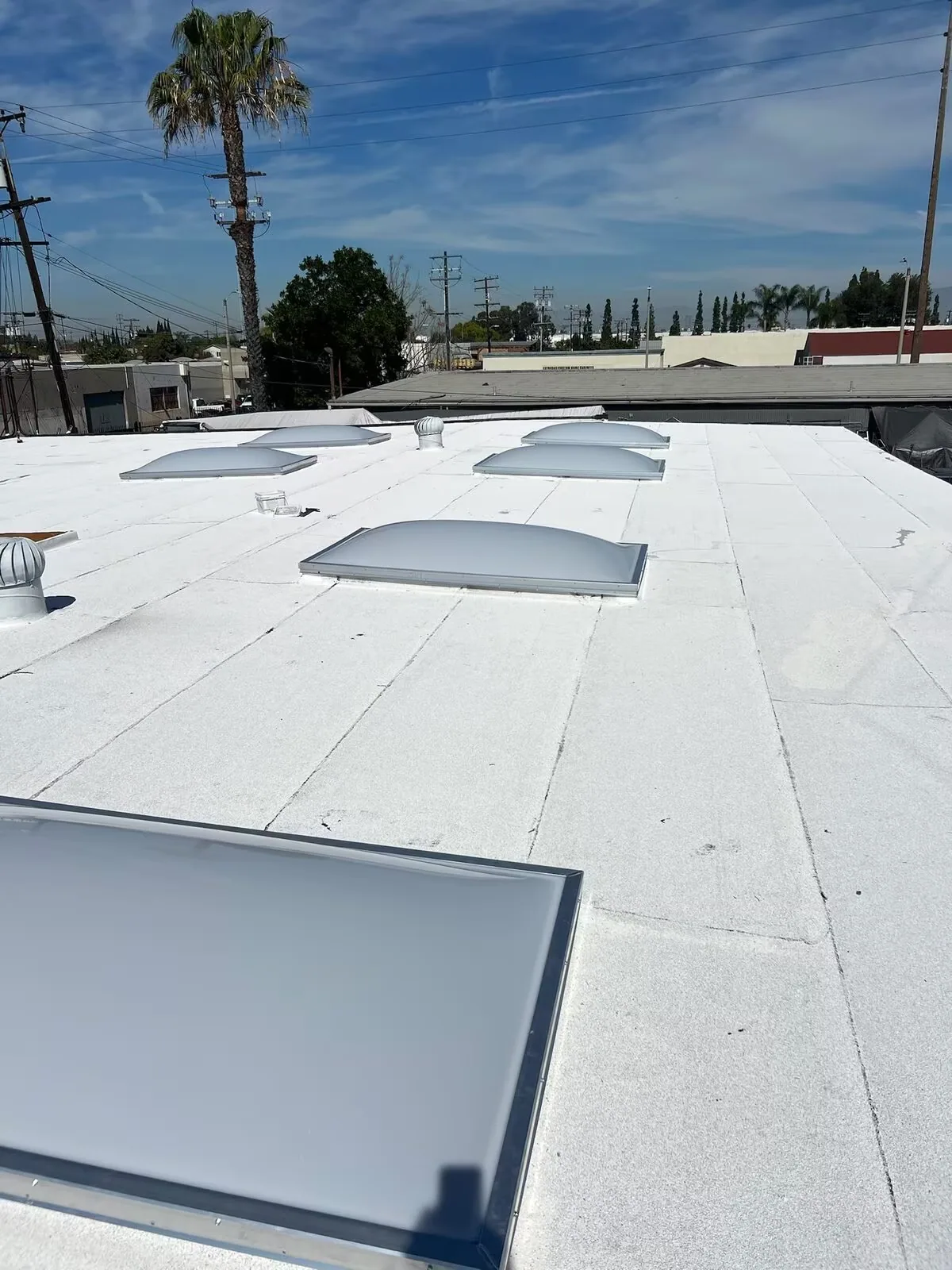
Share the incident boundary, access release, roof plan, and suppression-water or interior reports. We will inspect the authorized sections and separate temporary stabilization from permanent repair.