
A portfolio manager facing five open leak reports needs one status view, but each address still carries its own assembly, access rule, and next decision. We set a consistent record format, then inspect and prioritize each building on its own evidence. The program can show which tickets are contained, which repairs are approved, and which roofs need testing or capital review. It should never flatten different conditions into one portfolio-wide conclusion.
Rialto Commercial Corridors groups several city streets for broad planning context. The Agua Mansa Industrial Corridor crosses jurisdictions, so only the Rialto portion belongs in a local building program. Those geography labels can sort assets, but site access, roof type, and operating schedule come from each property's records. A Rialto corridor overview can accompany the portfolio map while individual scopes remain tied to the owner-authorized locations.

What should be standardized across the portfolio?
Use a common minimum record: property identifier, building name, roof sections, system where verified, inspection date, findings, photo labels, work status, access rules, and next owner. Keep the same terms for repair, monitor, test, and capital review. Then allow a property-specific field for operating limits or equipment. A shared format makes comparisons easier without pretending that every roof has the same design.
We can align reports to the owner's maintenance software or asset IDs. If the system uses a different building label from the roof plan, resolve that before the first route is logged. A roof asset register can hold each property's history. A condition report can supply photo-backed observations for the same record. Keep the map version and the person who confirmed names with the file.
The General Plan groups commercial nodes along the Foothill and Riverside routes, on Valley Boulevard, and at the Baseline/Riverside junction. It identifies rail-adjacent industrial and warehouse zones as well as such uses in northern and southern areas. Use those distinctions to sort portfolio records, then verify every address against the owner's register before assigning an inspection.
How should inspection timing differ by roof?
Set the next visit from observed condition, repair history, roof use, and any open question that could change the scope. A roof with recurring water entry may need a near-term return; a stable section with a completed repair may follow its planned maintenance cycle. The program should show the reason for each date. Avoid assigning the same interval across every address merely because they share one owner.
Rialto's climate planning treats high temperatures as one of several community hazards and notes recurring hot days. For a multi-property schedule, that context can inform seasonal planning; it cannot determine a roof's condition. Diligence Notes should still describe the conditions recorded at each inspected assembly. A hands-on inspection can update the register; a preventive maintenance visit can address agreed upkeep items and note any finding that needs a separate repair scope.
If a roof has wet insulation, movement, or failed attachment, the date of its next check may be driven by the recommended test or correction. Document the responsible party and what closes the action. A delayed task should not disappear from the program view when a later site visit is scheduled. Keep it open with its current status and decision owner.
How do property teams route findings into work?
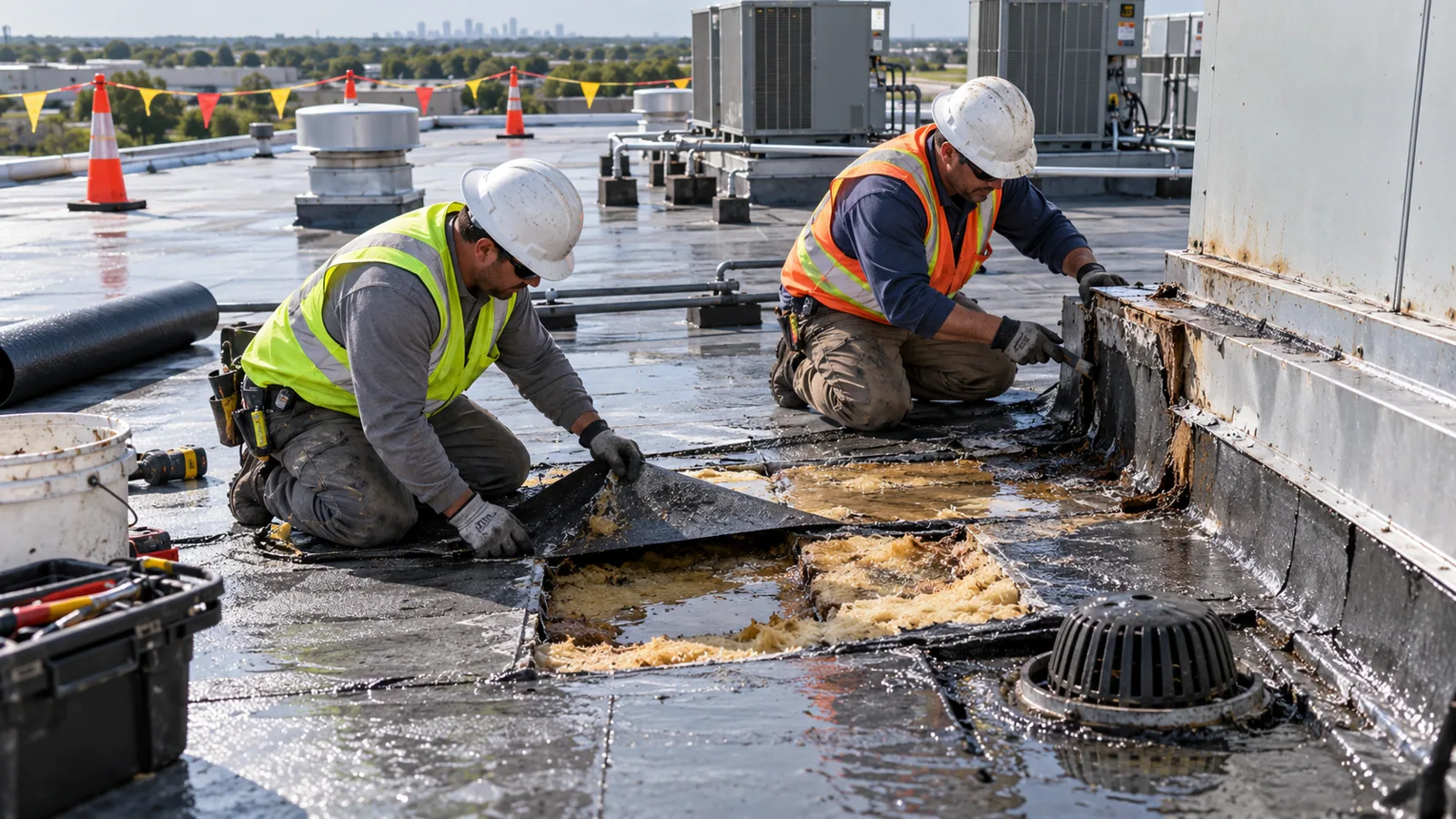
Each finding needs an assigned person, approval step, and work boundary. A loose edge at one building may be a small correction; a drain issue elsewhere could require cleaning and membrane review. The shared program can sort items by urgency, but the work order should describe the actual roof section and preparation. List what remains inaccessible or unconfirmed so the next crew does not inherit a broader assumption.
A repair scope can close a confirmed defect. Repeated leaks or several wet areas may call for testing or a replacement assessment. For work on a property in the Rialto portion of the Agua Mansa corridor, the owner can keep a Rialto-side corridor record with the access plan. The geographic label does not substitute for a site map, gate instructions, or an approved work window.
We separate containment from permanent repair. If water control has been completed but the final tie-in is pending, list the temporary measure, return condition, and follow-up contact. A portfolio dashboard can summarize status, but the property file needs enough detail for a different manager to understand what actually happened at the roof.
When should a property move into capital review?
Repeated repairs, widespread deterioration, confirmed wet materials, or a system that cannot be corrected locally can justify a capital comparison. Keep the underlying reports with the proposal and show whether additional testing is needed. The review can separate urgent containment from design, replacement planning, and optional work. That helps the owner use one meeting agenda without forcing every property onto one funding year.
A capital planning review can compare current condition, operating impact, access, and scope assumptions. For a recover option, the program should list retained layers and test evidence. For replacement, identify drains, equipment, edges, and phasing. Public construction review also affects portfolio timing. Rialto routes proposed work through its Building Division, where submitted plans and construction are checked under the applicable state code and municipal rules. Confirm approvals for each proposed scope before fixing a project date.
Keep local development facts within their limits. The City lists proposed and requested projects in Rialto, but a proposal is not proof that a completed asset belongs in a client's portfolio. Add buildings only when the owner confirms their inclusion and supplies the relevant records. This maintains an accurate baseline as properties are acquired, sold, or operated under new management.
What should the portfolio update show each month?
Keep the summary focused on actions: new leaks, active containment, approved repairs, overdue decisions, completed work, and roofs awaiting test results. Show each property's last visit and next due date. Link the summary line to its report and work order so the manager can reach the field detail quickly. A count without a route or record reference is not enough to direct the next visit.
At review meetings, identify changed conditions and the decisions needed from ownership. If a repair was deferred, state the current risk and interim measure. If the recommendation changed after sampling, retain both the earlier observation and new result. A condition record can preserve that history, while an asset register holds the property's recurring maintenance details.
Before a monthly review, gather current tickets, access changes, repair closeouts, roof plans, and new equipment penetrations. Confirm that each field supervisor uses the same labels but does not reuse another property's map. After the meeting, assign an owner and date to each open action. The program remains useful when responsibilities change because decisions are tied to a location and record, not only a person.
Commercial Roofing Questions
Can one inspection program cover different roof systems?
Yes. The reporting structure can be common while each system, section, and test remains distinct. We record the roof type only when plans or field evidence support it.
How do you rank multiple active leak reports?
We compare current water entry, exposure, safety, operating impact, repairability, and access. Each priority remains attached to its property record and assigned owner.
Can the program use our work-order numbers?
Yes. Provide the current numbering and property identifiers. We can carry those into reports so the roof record matches the facilities team's workflow.
What if some properties cannot be accessed?
The record marks them as uninspected and lists the missing access or approval. Their condition stays open until an authorized route is available.
Does one local climate fact set the schedule for every roof?
No. Citywide climate context can inform planning, but the next visit follows each roof's condition, maintenance history, and open questions.
Related Roofing Work
Set a portfolio view that keeps every roof distinct
Share the property list, roof plans, ticket format, access rules, and open repair decisions. We will establish a consistent record and a property-specific first inspection route.