
Before the next receiving shift begins, a Rialto, CA facility director needs to know whether the roof route is clear and which open items need attention. A scheduled maintenance visit starts with the roof register, recent leak tickets, and the access window. We walk each named section, clear agreed drainage points, check seams and penetrations, and record changes that could affect the next work order. The visit is not a quick look from the hatch. It is a repeatable check that gives the next shift a usable condition record.
Rialto's planning map distinguishes its named commercial corridors from rail-adjacent and other warehouse or industrial zones. For maintenance scheduling, use those broad area types only as filters; set the task list from each roof's record. The Gateway Specific Plan map shows office-park, retail-commercial, freeway-commercial, and industrial-park categories; Agua Mansa is a separate plan that crosses local boundaries. Those mapped boundaries help separate service requests; they do not establish a maintenance interval. At each Rialto property, the facility contact sets the route and work window from its roof access and operating calendar. We set each inspection route with the facility contact and keep maintenance findings attached to the correct roof section. For work tied to Rialto commercial corridors, the maintenance plan follows the building's actual roof and operating conditions.
What should the maintenance route cover?
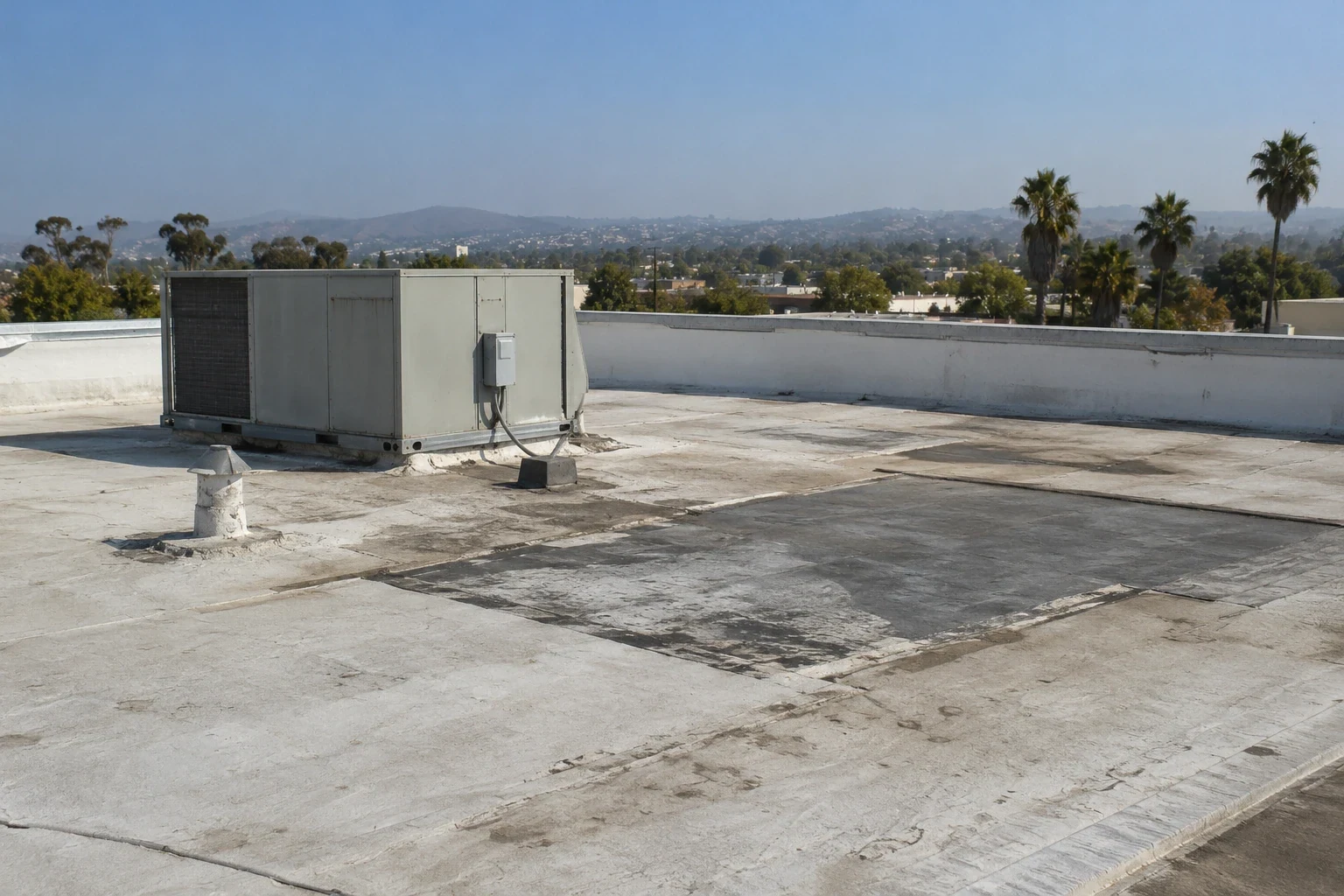
Start at the access point, then walk the route in the same direction each visit when conditions allow. We look across the membrane for loose patches, open laps, punctures, surface wear, and material that could obstruct a drain. At curbs and penetrations, we inspect flashing terminations and changes in height. At edges, we check the connection between membrane, metal, and wall. The route notes what was reached and which area needs a closer visit, so a manager can compare one inspection with the next without relying on memory.
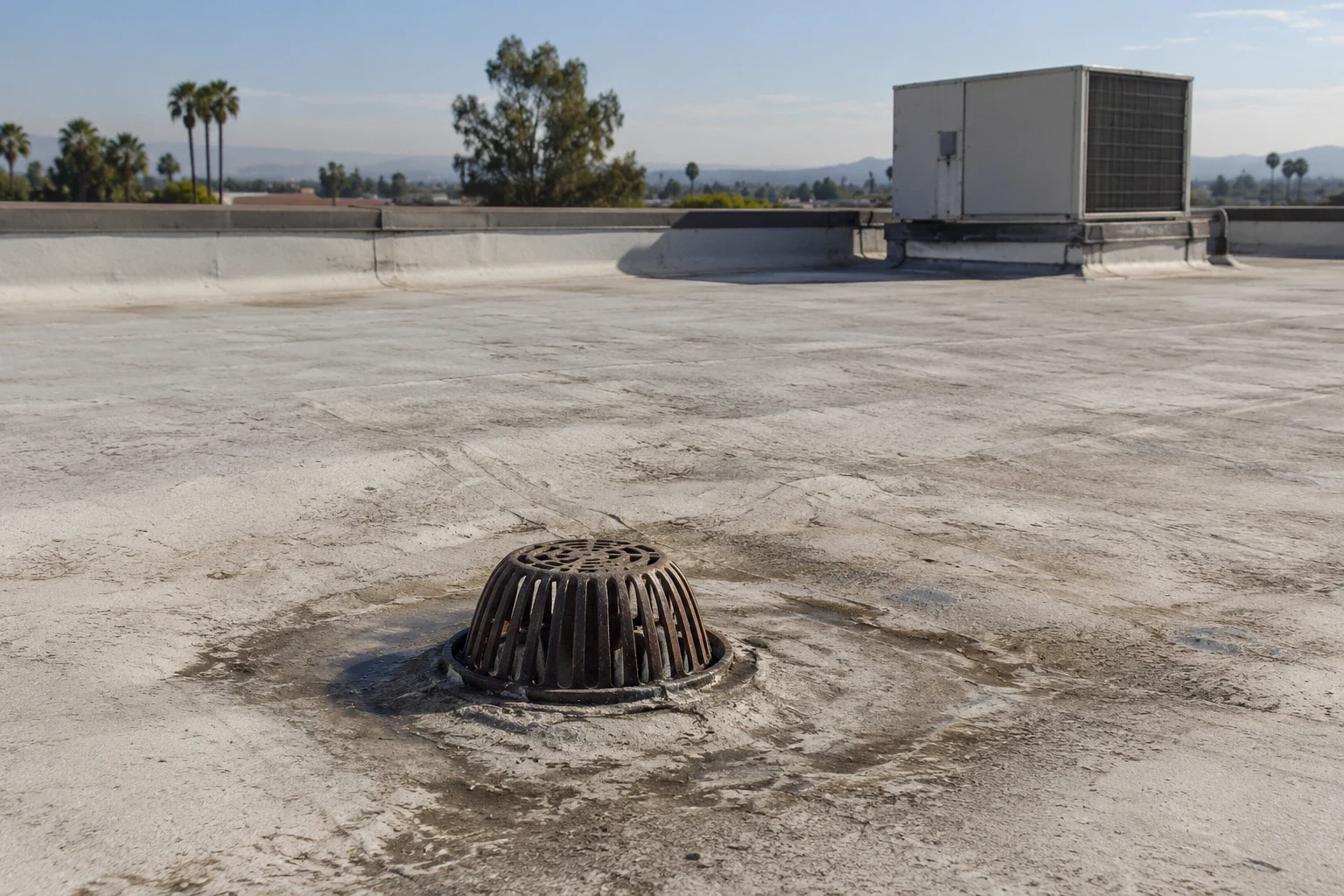
Drainage gets its own pass. We remove agreed debris from drain bowls and scuppers, look for loose strainers, and trace the path toward the outlet. A cricket may direct water around equipment or a roof opening; if its shape has been altered by repairs, we record the ponding or flow pattern rather than assuming the drain alone is responsible. Our drain and scupper work can address a detail that needs correction. A recurring low spot should be mapped to its roof section and compared with the surrounding slope before adding material or changing an outlet.
Which details deserve another look?
Earlier repairs are useful landmarks. We compare each patch edge with the prior ticket and check whether the surrounding membrane has moved, pulled, or become brittle. A patch that remains sound can stay in the record as a stable detail. One that has lifted needs a prepared repair, not another layer pressed over dust or loose material. We also check around rooftop equipment, support legs, and utility penetrations where maintenance trades may have changed access or disturbed flashing since the last visit.
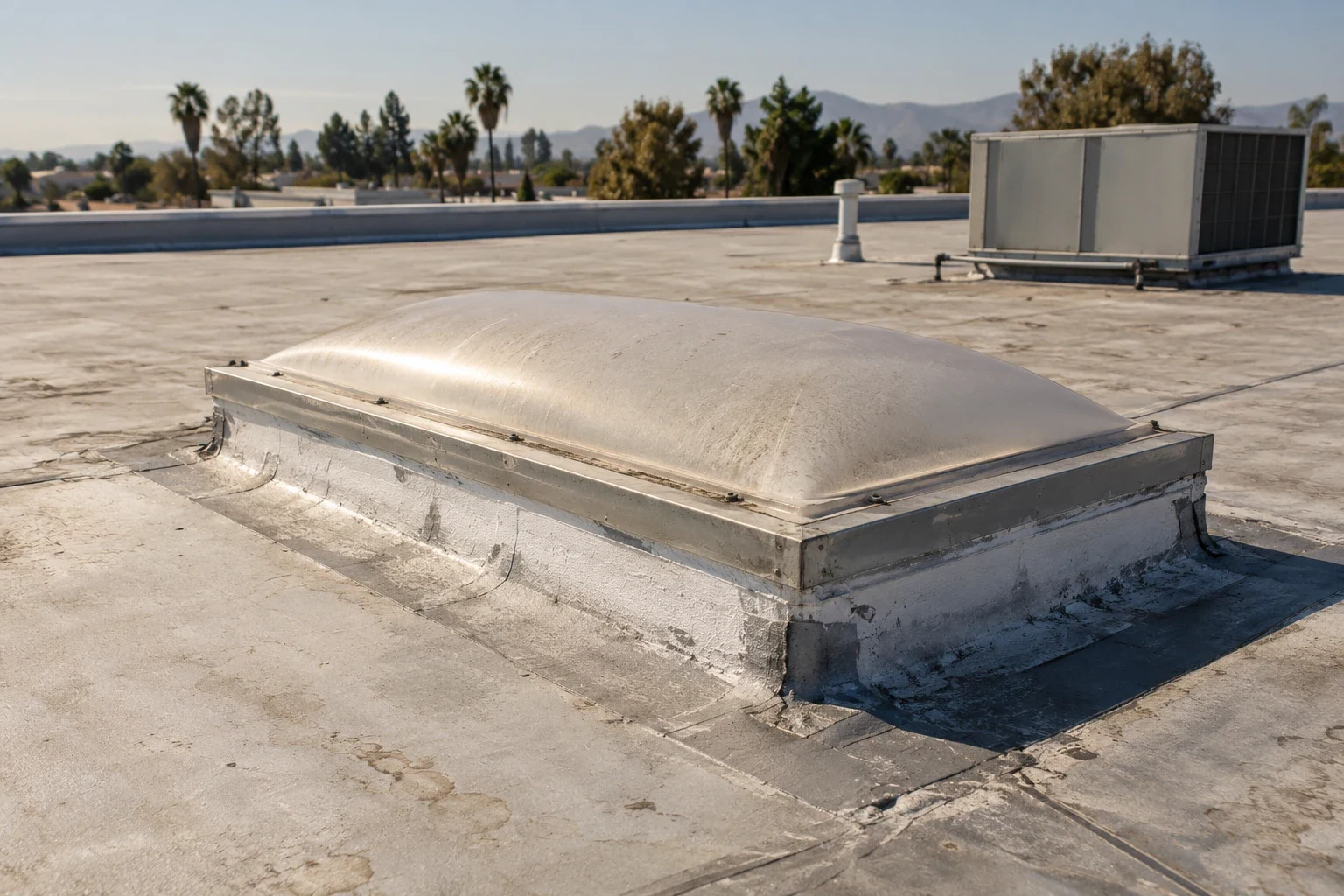
Skylights, pipe penetrations, curbs, and wall transitions need careful observation because they interrupt the membrane field. We look for separated sealant, open corners, loose counterflashing, exposed fasteners, or an unsealed gap at the base. A maintenance walk can identify a condition, but a repair ticket should state the location and action instead of leaving a general note such as “check flashing.” For a specific opening, our skylight and penetration flashing work can set a repair boundary around the actual transition. Metal edges and coping can also be checked through edge and gutter maintenance when movement or water marks show at the perimeter.
How should Rialto visits be timed?
The City's climate document notes recurrent hot weather as one citywide consideration. A maintenance visit records actual surface and sealant conditions rather than inferring them from that planning note. For roof maintenance, that local context makes the visit window and surface condition worth recording, especially when crews handle exposed patches, sealants, or coating repairs. We check the product instructions before applying repair materials and keep planned maintenance separate from emergency containment. The plan does not set the condition of a particular roof; the inspection record comes from the actual seams, drains, membrane, and flashing found at that building.
Operations shape the calendar as much as weather. We ask when forklifts, delivery vehicles, customers, or tenants use areas below the work. The facility contact identifies the approved hatch, ladder, escort, and staging location. A clear work window lets us carry tools to the right section without crossing an active lane or interrupting a scheduled load. If a site has multiple roof sections, the manager can group visits by access route and operating zone. The same building contact should receive the day’s observations before the crew leaves, so immediate hazards are not buried in a later portfolio review.
What belongs in the maintenance record?
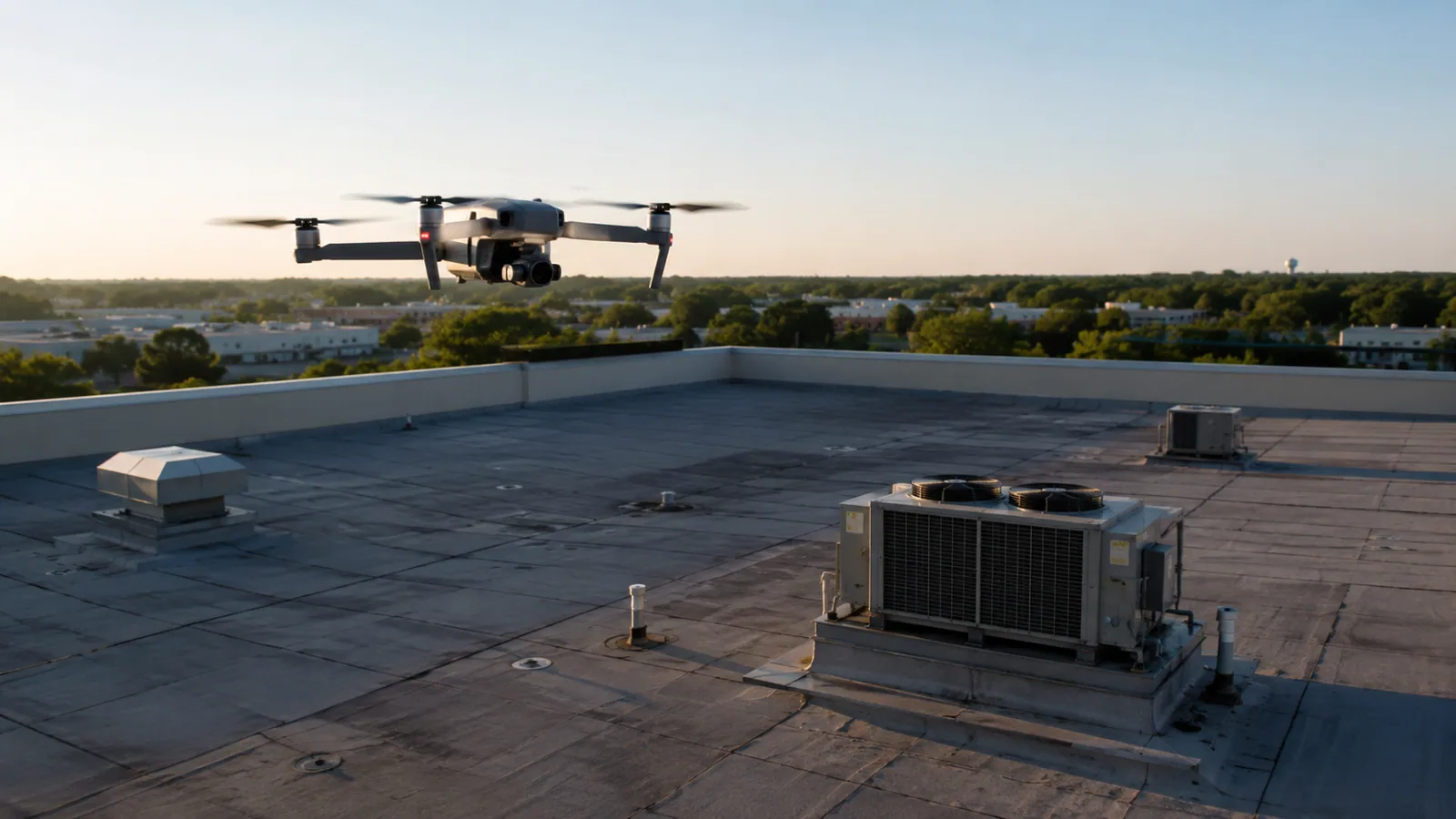
Each work order should name the roof section, access point, observed condition, and action taken. We attach photographs with a location note, identify any drain or detail that could not be reached, and list items for a separate repair estimate. If water is present below a suspected opening, we mark the wet area and avoid turning a maintenance ticket into an assumed replacement quantity. A roof condition report can collect those records with prior repairs, images, and follow-up dates so another shift can find the same detail.
A useful schedule separates routine tasks from work that changes the roof assembly. Cleaning a drain and documenting a lifted flashing corner are different actions, even if both appear on the same inspection route. We sort findings by urgency, access requirement, and consequence if they remain open. When a condition needs closer testing, our hands-on roof inspection can map the assembly and define sampling points. For a Rialto warehouse, the section labels can match the warehouse roof plan used for receiving and equipment access. That makes the record useful to operations, maintenance, and capital review.
When does maintenance become a larger scope?
A recurring repair at the same seam or drain deserves a comparison with the previous ticket. If only one detail has failed and nearby insulation remains sound, a planned repair may be appropriate. If wet areas appear across separate sections, attachment is moving, or flashing repairs keep reopening, the roof may need a broader inspection before another patch is priced. We show which findings are confirmed and which need a core cut or other field check. An owner can then compare repair, recover, and replacement using the same roof boundaries and operating assumptions.
Rialto routes construction submittals through its safety division for local review under applicable California codes and municipal ordinances. The current California standards cycle began in Rialto on January 1, 2026; filings received after December 31, 2025 are subject to that edition. If maintenance identifies a correction that needs design or permit review, we flag that step before the work window is set. Routine cleaning and condition logging do not replace that review when the proposed scope requires it. Schedule a maintenance inspection or discuss an active leak; share roof plans, repair tickets, access rules, and operating hours so we can build a first route around the facility.
Commercial Roofing Questions
What should a maintenance visit include beyond drain cleaning?
The route should also cover seams, flashing, penetrations, edge details, prior patches, and roof access. We record each finding by section, then separate routine work from a repair that needs material preparation or a larger opening.
Can maintenance prevent every leak?
No maintenance schedule can promise that result. Repeated checks can identify an open detail, blocked drain, or changed repair before it becomes a larger work order. We state what was observed and leave concealed conditions for the appropriate test.
How does maintenance work around Rialto warehouse operations?
The facility contact sets the route around receiving, vehicle movement, and roof access rules. We group sections by safe entry point, keep tools out of active lanes, and send the inspection notes to the person responsible for the next shift.
When should a recurring maintenance item become a repair scope?
A repeated seam opening, wet insulation, moving edge, or drain connection that no longer holds needs a defined repair boundary. We compare the current condition with prior tickets and explain whether a local correction or further inspection should come next.
Related Roofing Work
Set the next roof maintenance route
Schedule a maintenance visit or discuss an active leak. Share roof plans, recent tickets, access instructions, and operating windows so we can map sections and set the first inspection route.