
A loose edge needs a controlled inspection before the next weather window. We identify the affected roof section, secure any exposed opening, and check the path below for water or debris. The first work order separates temporary protection from permanent correction. We do not treat a report of wind as proof that every edge or sheet has failed. The roof walk maps what moved, what remains attached, and what needs testing before repair limits are set.
Rialto's Gateway Specific Plan and Foothill Central Specific Plan Area are separate planning references; neither sets a wind-damage boundary for the roof being inspected. These references locate the market, not a wind-damage boundary. Those are broad planning places, not evidence of a particular wind event. We connect the local setting to access and building operations, then base the damage scope on the roof and details actually inspected.
What Needs to Be Secured First?
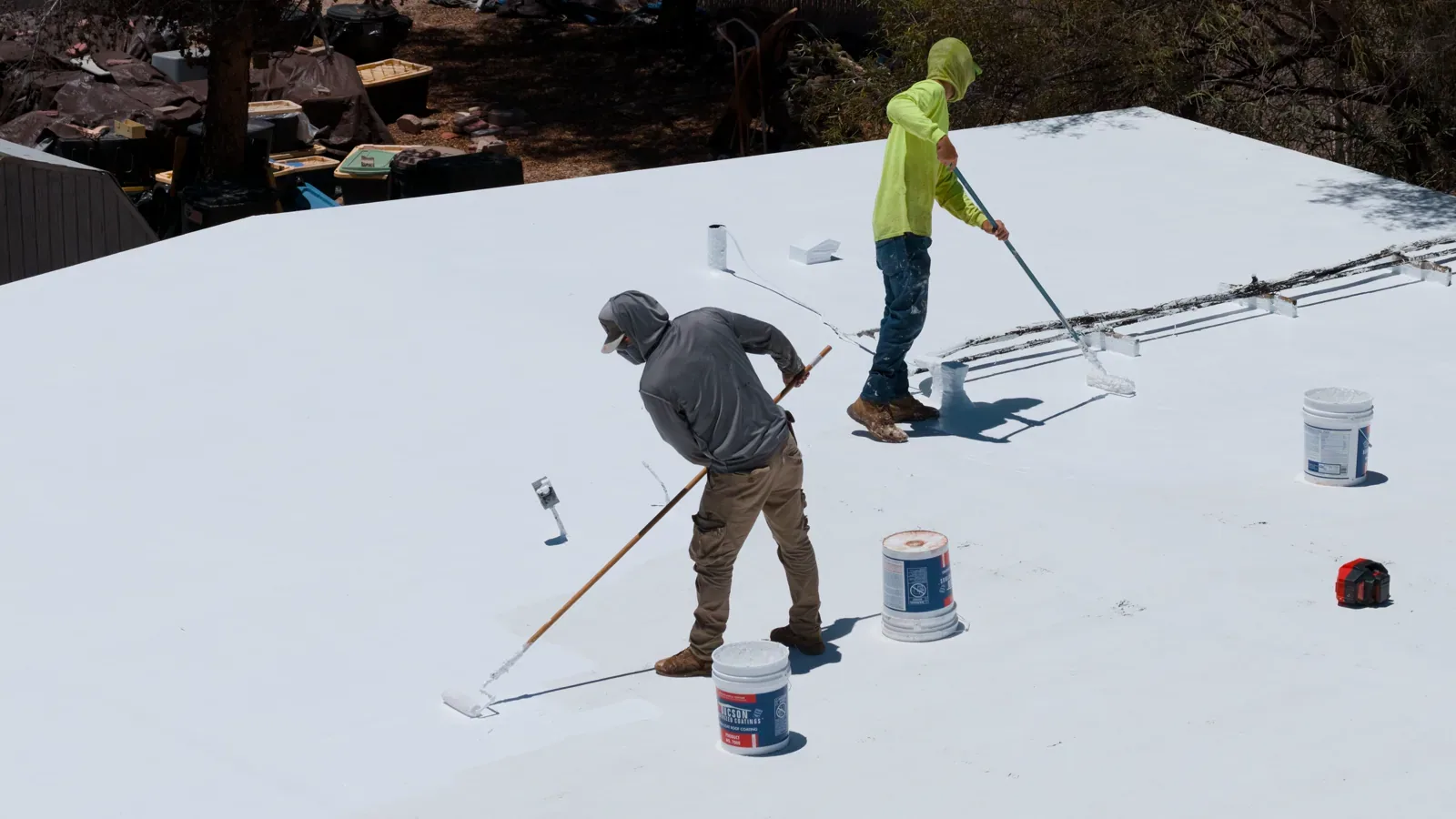
From the ground, look for displaced metal, loose membrane, damaged coping, or debris that could fall. Keep people away from the area below a suspected edge failure and follow the property's safety plan. Do not climb onto a roof with loose material or unsafe access. The facility contact can identify the reported side and any interior water, while the roofing crew chooses a safe route and establishes fall protection before close inspection.
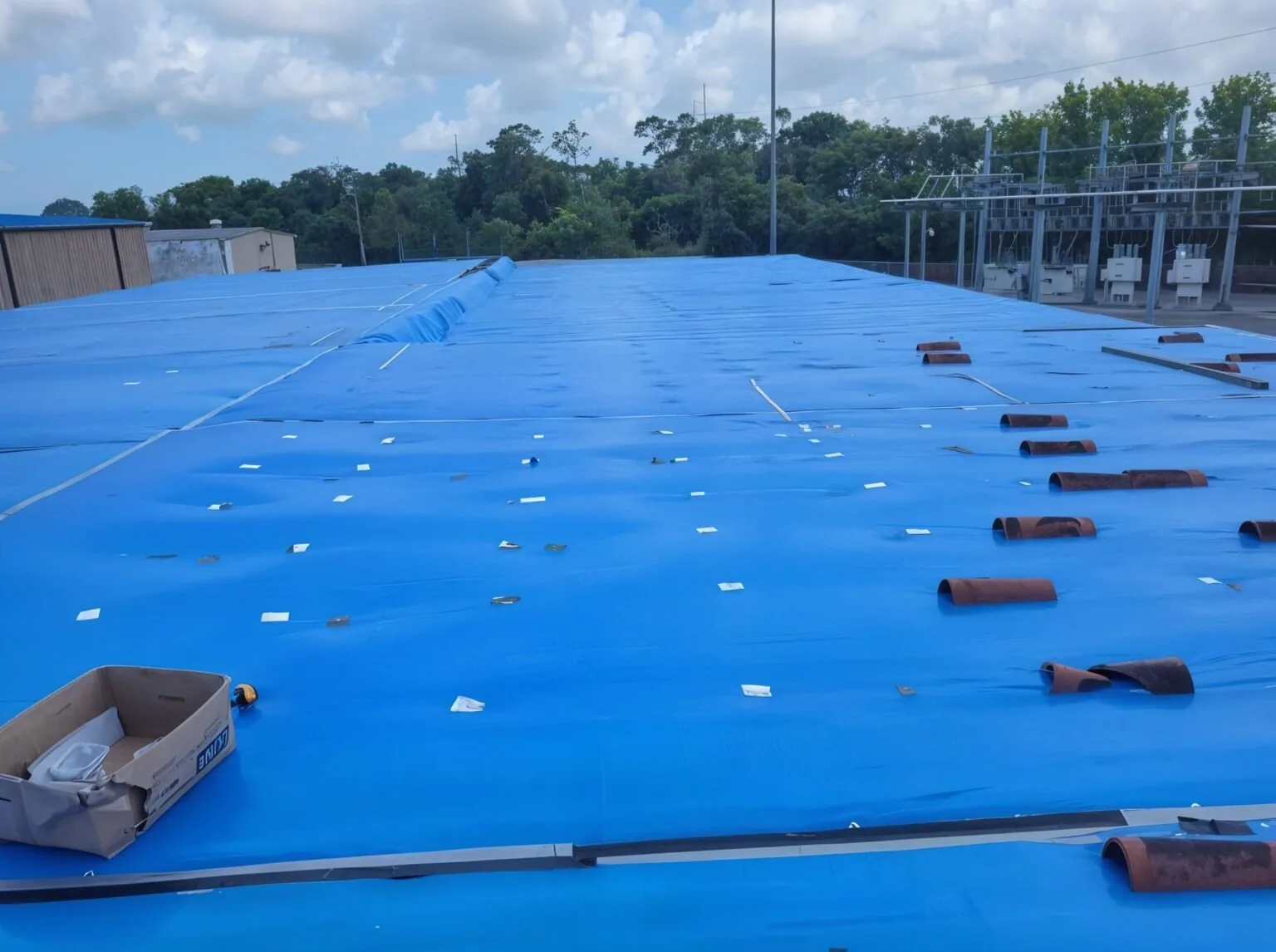
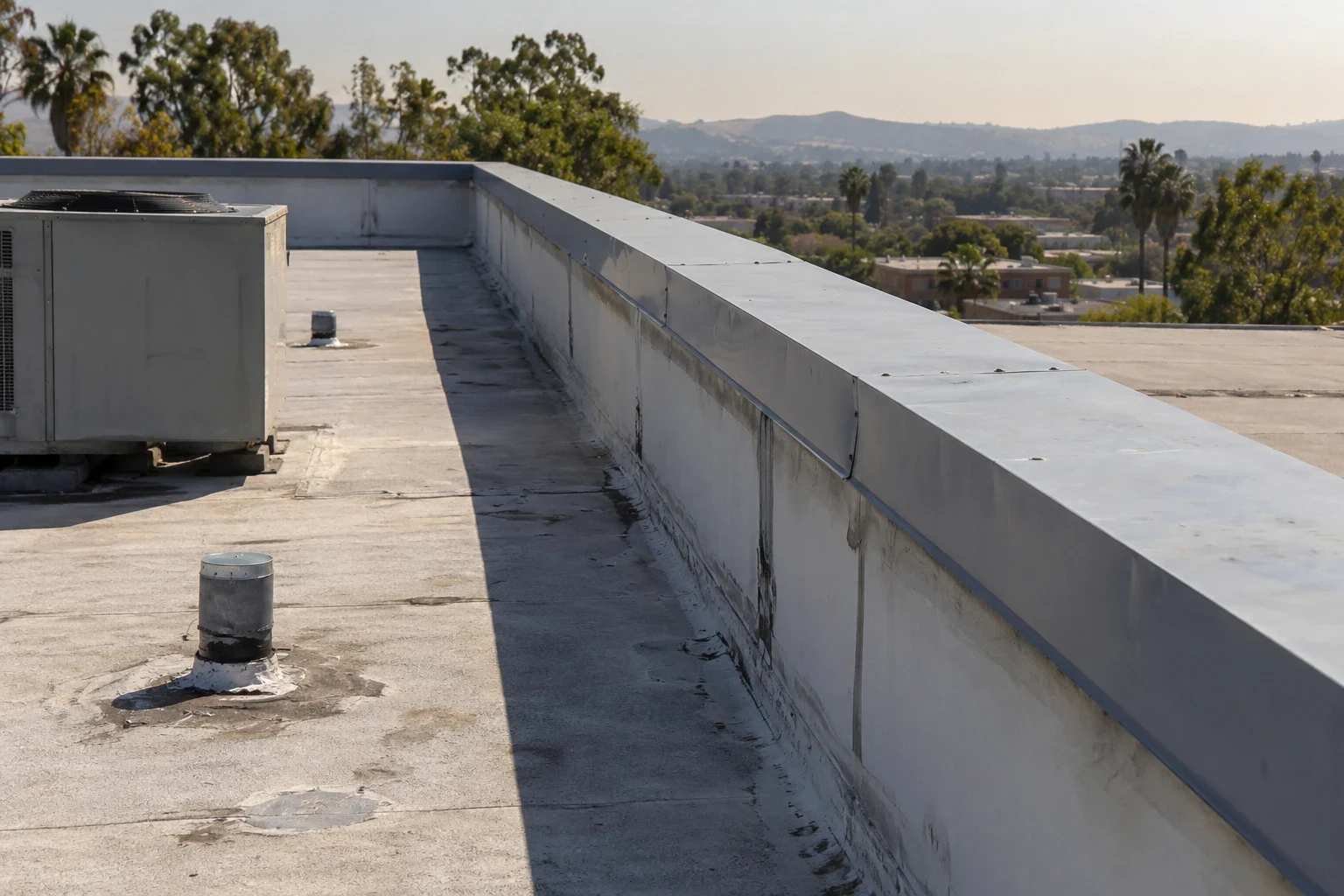
Once access is approved, inspect the perimeter, corners, seams, penetrations, curbs, and roof-mounted equipment. Check whether the edge metal remains fastened and whether membrane termination has lifted or split. Photograph each condition with a roof-zone label. A temporary protection response can isolate an exposed area, while a roof inspection records the remaining assembly condition.
How Far Does the Lifted Detail Extend?
Follow a loose edge until the material is firmly attached and the transition is sound. Check for a fastener row that has backed out, a termination bar that has moved, or flashing separated at a wall. A small visible flap may connect to a longer hidden separation. Mark the start and stop points and inspect the adjoining section instead of placing a patch over a loose boundary.
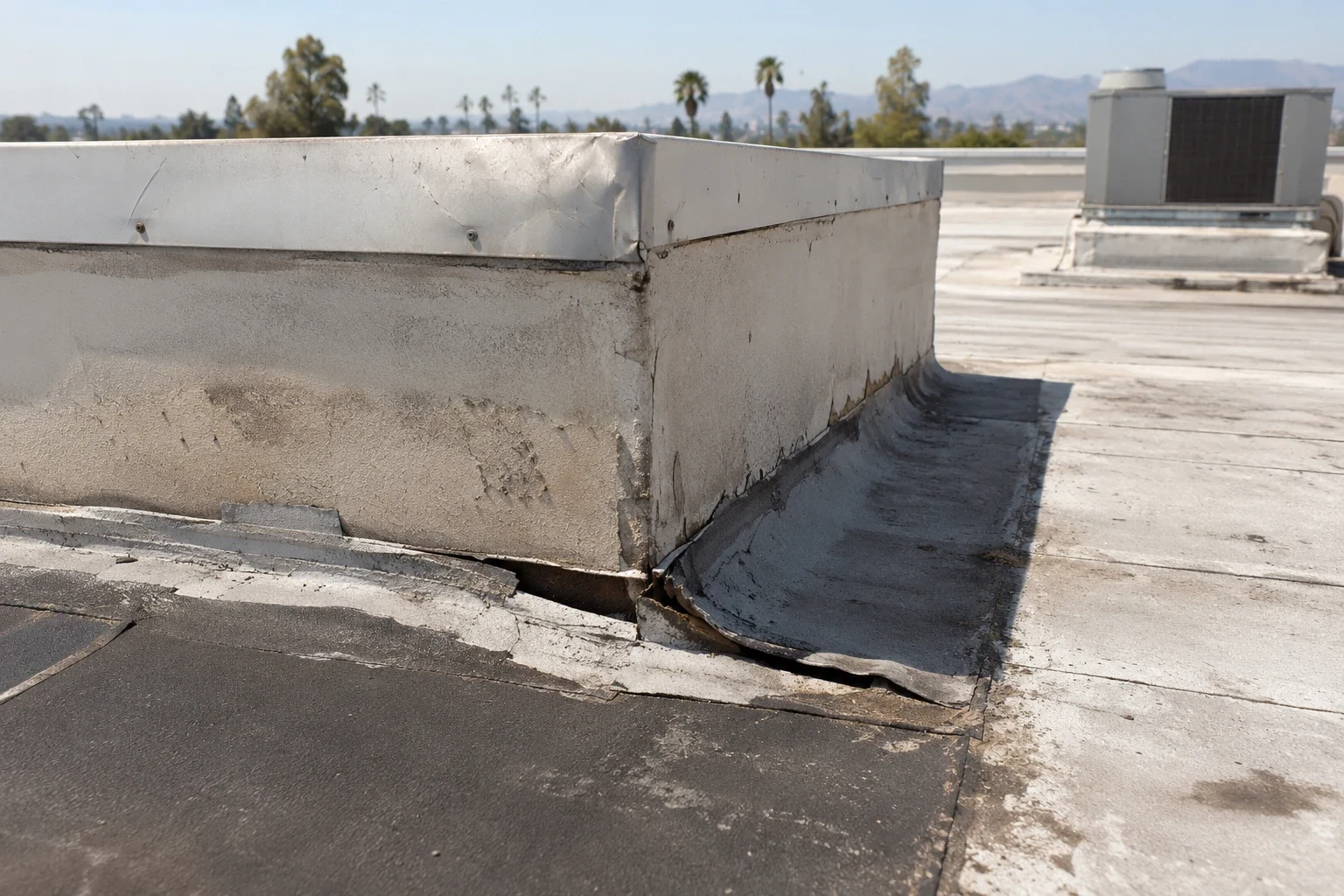
At a parapet or curb, confirm how the metal, membrane, and counterflashing meet. If the repair crosses an older patch, test the surrounding surface for secure attachment before tying in new material. A edge-metal review can include loose coping and perimeter transitions. When an open lap is the primary condition, a seam failure assessment helps define a separate repair ticket and map the affected run.
Where Did Water Travel After the Opening?
Wind can move or lift roof details, then rain may enter at a seam, curb, edge, or penetration. Trace the interior report against the roof plan and drainage direction. Water can travel before it appears on a ceiling, so inspect the connected membrane and adjacent transitions. Record a dry interior separately from a repaired exterior condition. If insulation may be wet, identify the test location rather than assuming the surface repair resolves concealed damage.
Rialto's climate plan identifies flooding among citywide hazards, but that planning context does not tell us whether a particular building has taken on water. The site evidence decides. A leak-tracing visit can connect the interior report with the roof path. If the opening is a puncture or impact point, a puncture repair review can isolate that distinct failure type.
What Belongs in the Permanent Repair?
Remove loose material to a sound boundary, prepare the substrate, and use a compatible repair detail for the existing assembly. Secure the edge or flashing as designed before closing the surface. The work order should identify materials, repair limits, adjacent details checked, and any area left outside the confirmed scope. If attachment or deck condition is uncertain, pause before covering it and obtain approval for a test opening.
If sheet metal or coping has moved, check the fasteners, laps, cleats, and wall termination as one connected detail. Replacing a short piece without checking its return can leave the same opening in place. Record the material removed and the new tie-in points. If a substrate is not firm, stop and obtain direction before the repair is concealed.
Valley Boulevard and the Baseline/Riverside junction appear in Rialto's commercial planning context; the wind inspection still follows the affected roof and its nearby transitions. These planning references do not set repair requirements for a particular property. The selected detail follows the installed system, project documents, and observed condition. A replacement review can compare a larger scope when damage reaches multiple sections, while a condition report can keep repair tickets and photographs in one roof register.
How Should the Crew Sequence the Work?
Set a work window that accounts for access, staging, material handling, and the area below the roof. If multiple edges are affected, divide the work into sections and secure each transition before moving the crew. Keep drains open and prevent debris from entering the system. At the end of a shift, record the completed boundary, any temporary dry-in, and the next safe tie-in point so the roof is not left in an unclear condition.
Rialto's 2025 action folded earlier planning areas into the Foothill Central plan and revised how that district addresses circulation and infrastructure. That district context does not set any building's entry procedure. A Foothill Central-area visit follows the site's approved access instructions. Use a phased work sequence when operations continue below affected sections.
When Is the Roof Ready for a Follow-Up?
Closeout should show the damage found, the area secured, the permanent repair, and any test that remains open. Label photographs by roof section and include the attachment or flashing detail that was corrected. If the work stopped before a final tie-in, state the protection in place and the return condition. The manager should be able to distinguish a temporary measure from a completed repair without relying on the crew's memory.
Set the follow-up interval from the work performed and the condition left under observation. A repaired flashing return may need a visual check after the next service cycle, while an unresolved moisture area may require an approved opening. State who will request that check and which roof-zone label to use. This keeps the repair history tied to a practical next action.
Keep the roof plan, repair ticket, and inspection notes aligned. A later check should revisit the repaired edge and nearby transitions, especially if the original movement extended beyond the visible point. Broad references such as Gateway or Foothill Central help place the service area, but the condition record stays property-specific. Schedule follow-up from the actual repair finding, not from a generic assumption about the entire roof.
Commercial Roofing Questions
Can a roof be patched while material is still loose?
First secure or remove the loose material and establish a stable boundary. A patch placed over movement can separate again, so we inspect the attachment and transition before selecting the permanent detail.
Does wind damage affect the whole roof?
Not necessarily. We map visible and related conditions by section, then test areas where attachment or concealed damage could change scope. The work order distinguishes confirmed repair from uninspected roof area.
What should staff do if water appears inside after wind?
Follow the building's safety procedures, protect contents, and report the room and time. We trace the roof path, document temporary containment, and identify whether hidden moisture needs confirmation.
Can you inspect damaged edges during operating hours?
We coordinate access and the area below with the facility contact. Work pauses if the route or fall-protection setup is not safe, and the inspection record states which edges remain unvisited.
When is replacement a better decision than edge repair?
A larger review may be warranted when multiple roof sections show movement, attachment loss, or recurring entry. We verify the affected area and compare the repair map with broader assembly condition.
Related Roofing Work
Secure the Roof Section and Set a Repair Route
Share the reported edge or leak location, roof plan, access restrictions, and any temporary protection already in place. We will map the inspection route and define the permanent repair boundary.