
A repair work order starts with the area that must be isolated before the next shift starts. A wet ceiling tile, loose edge, or open seam tells us where to begin, not how far the roof has failed. We identify the building area below, choose a safe roof route, and inspect the surface above the report. The work order records the leak path, membrane condition, flashing, drains, and prior patches. That gives the facility director a repair ticket tied to a location and a next check.
Rialto adopted Ordinance 1703 in 2025 with state design and build standards for new or expanded logistics facilities. When a repair falls within that type of project, we place the applicable review step on the schedule and record the observed membrane, substrate, and work zone in the ticket. With freight operations below, we coordinate the roof route and crew window with dispatch. A Rialto commercial-corridor roof route starts with the property's loading conflicts and authorized access window.
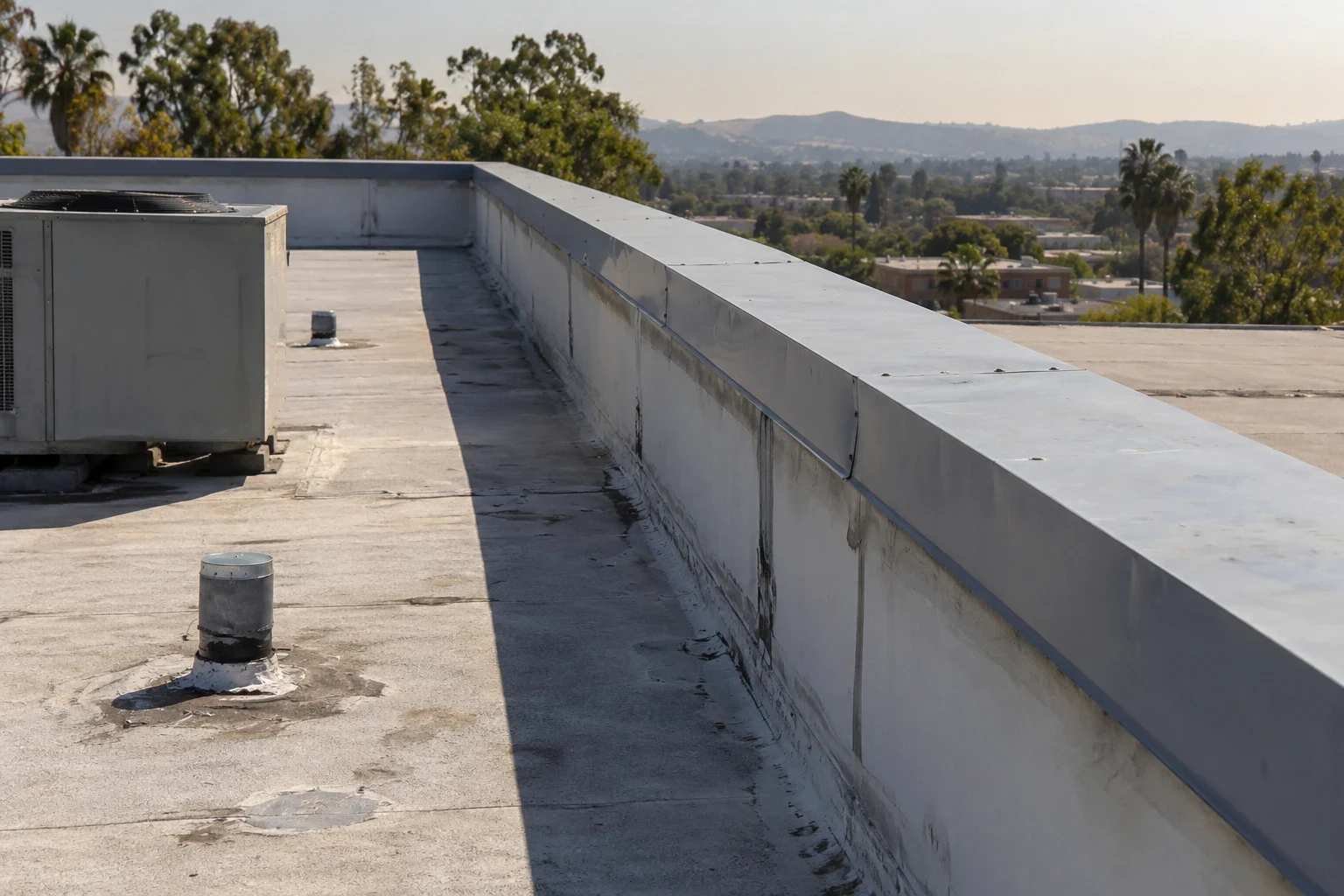
Where does the water travel?
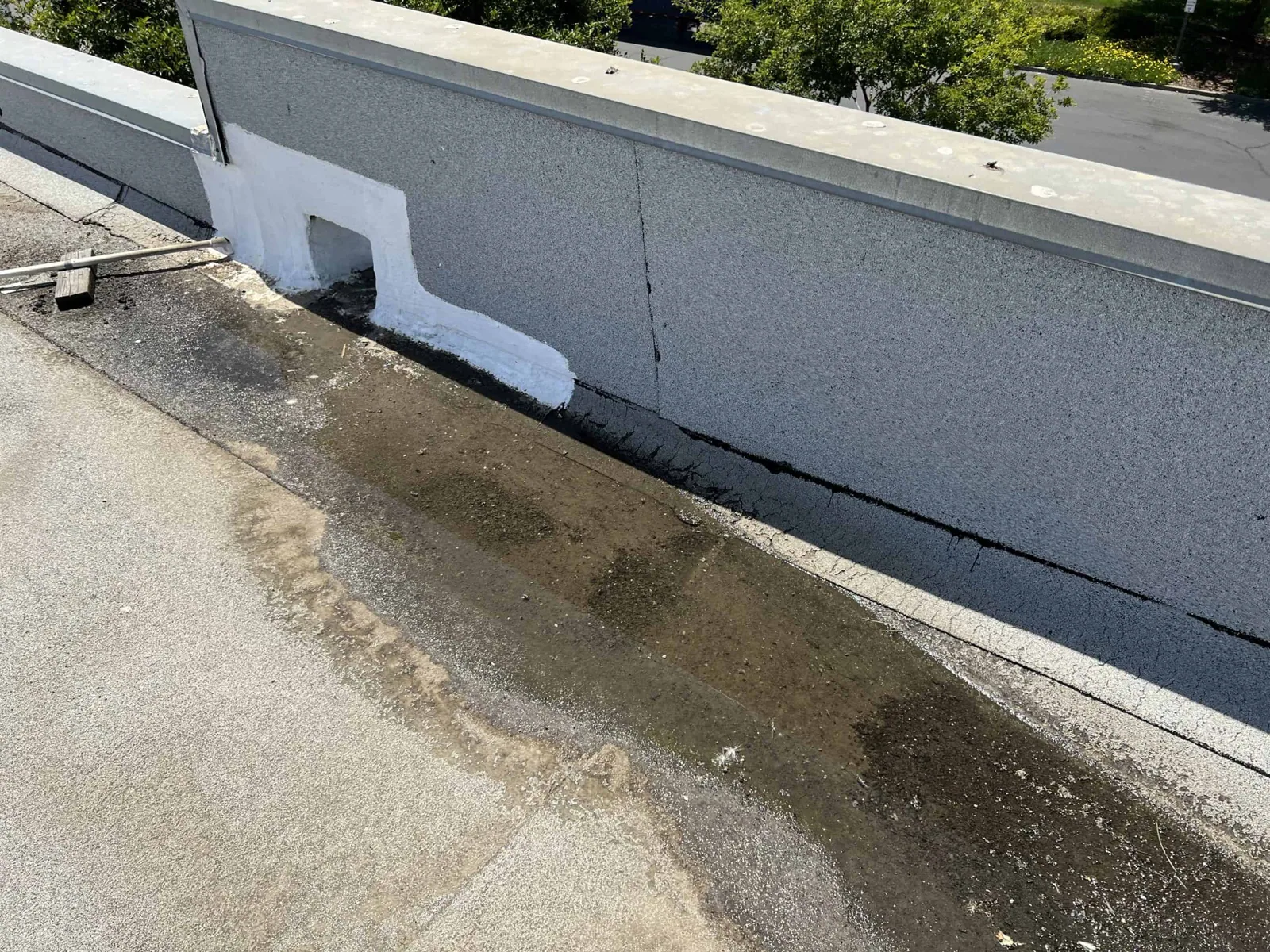
Water can enter at a seam, curb, penetration, drain, or perimeter detail and move before it appears inside. We compare the ceiling report with the roof plan and trace the wet area across the assembly. A change in slope or an obstructed drain path can redirect water. At a curb, the membrane termination and counterflashing may need attention even when the field membrane looks intact. We inspect those transitions before selecting a patch material. A leak-tracing visit is useful when the entry point is not clear.
The repair boundary matters as much as the repair method. We mark the seam length, flashing return, drain edge, or puncture that needs correction and note the adjacent roof section. If a patch crosses incompatible materials or covers loose membrane, the same movement can reopen the detail. The condition record explains what was removed, what was cleaned, and how the new material ties into sound membrane. When the defect is a recurring seam opening, a separate seam failure review can help document the pattern and surrounding attachment.
Which details need the same visit?
A focused repair should include the related details that can send water back into the same area. We check nearby penetrations, pipe supports, curbs, coping, and fastener lines while the roof section is accessible. If a drain bowl is clear but the surrounding membrane is detached, clearing debris alone will not restore the connection. If an edge has lifted, we inspect the metal and securement before applying a surface patch. The repair ticket records each item as completed, deferred, or requiring another scope. We pair the work with its preparation method, tie-in length, and any adjacent feature that needs monitoring, so follow-up stays tied to a measurable roof location.
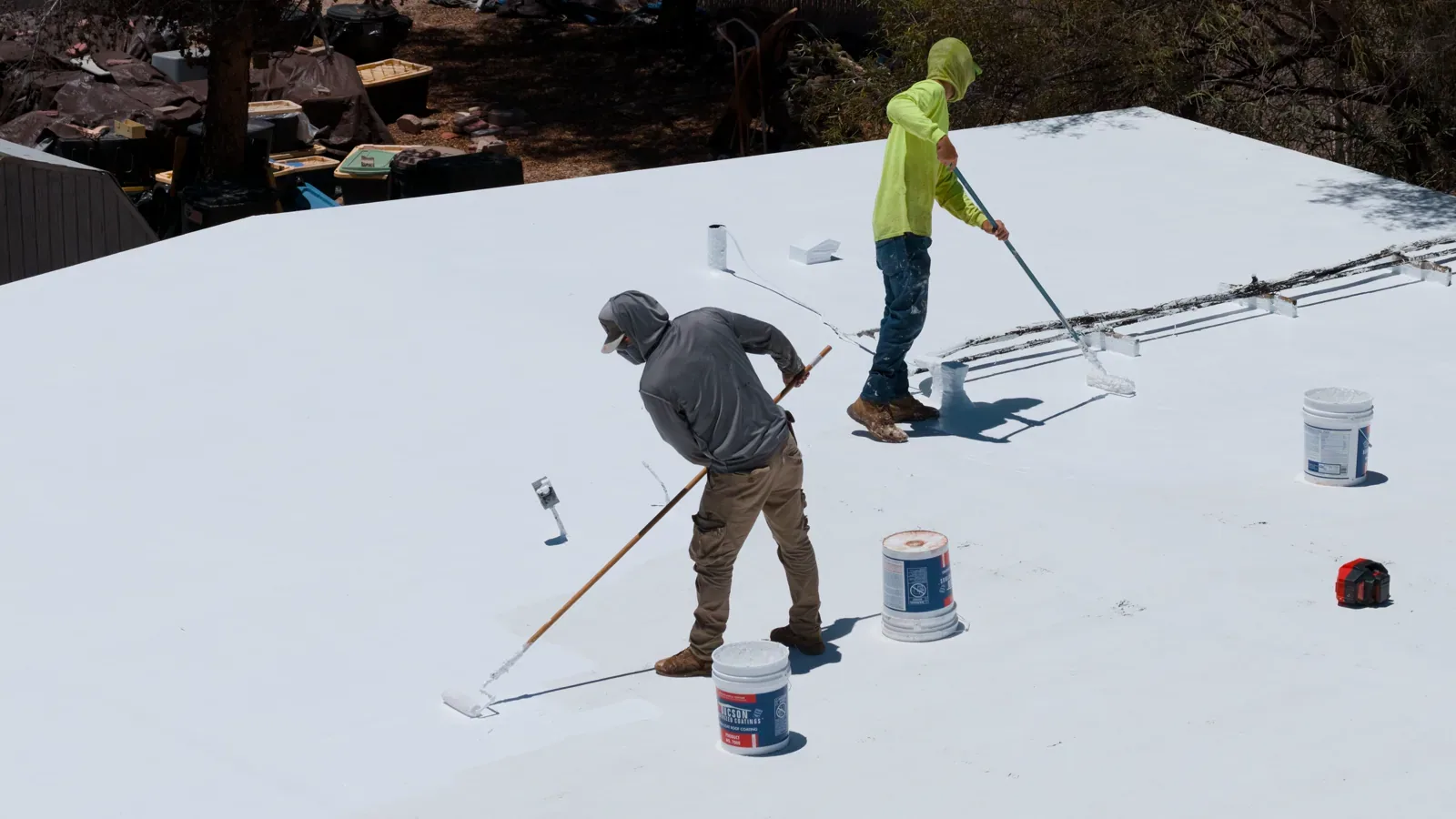
Rialto's climate plan lists extreme heat among City hazards and says hot days are regular. The selected product has application limits, while the existing membrane may respond differently from the new patch. We check product instructions, substrate, surface preparation, and work window. If a coating is a candidate, our coating restoration assessment checks adhesion and assembly compatibility before it covers the leak.
How do we keep the work area controlled?
A repair on an active facility has two routes to plan: roof access and the path below. We confirm ladder or hatch access, fall protection, equipment movement, and any areas that cannot be blocked. On a warehouse, the work zone may sit above inventory or a receiving lane. We coordinate containment before removing wet material and keep tools and debris in a defined area. The facility contact gets the expected arrival window, roof section, and any interior protection needed before the crew starts.
The Gateway Specific Plan identifies office-park, retail-commercial, freeway-commercial, and industrial-park uses in Rialto. Along Riverside Avenue or Valley Boulevard, we set the crew sequence from the building's active use, deliveries, and access rules. We confirm that route with the facility lead before moving tools to the roof. If active water is moving through the roof, emergency containment can protect the interior while a permanent repair is scoped.
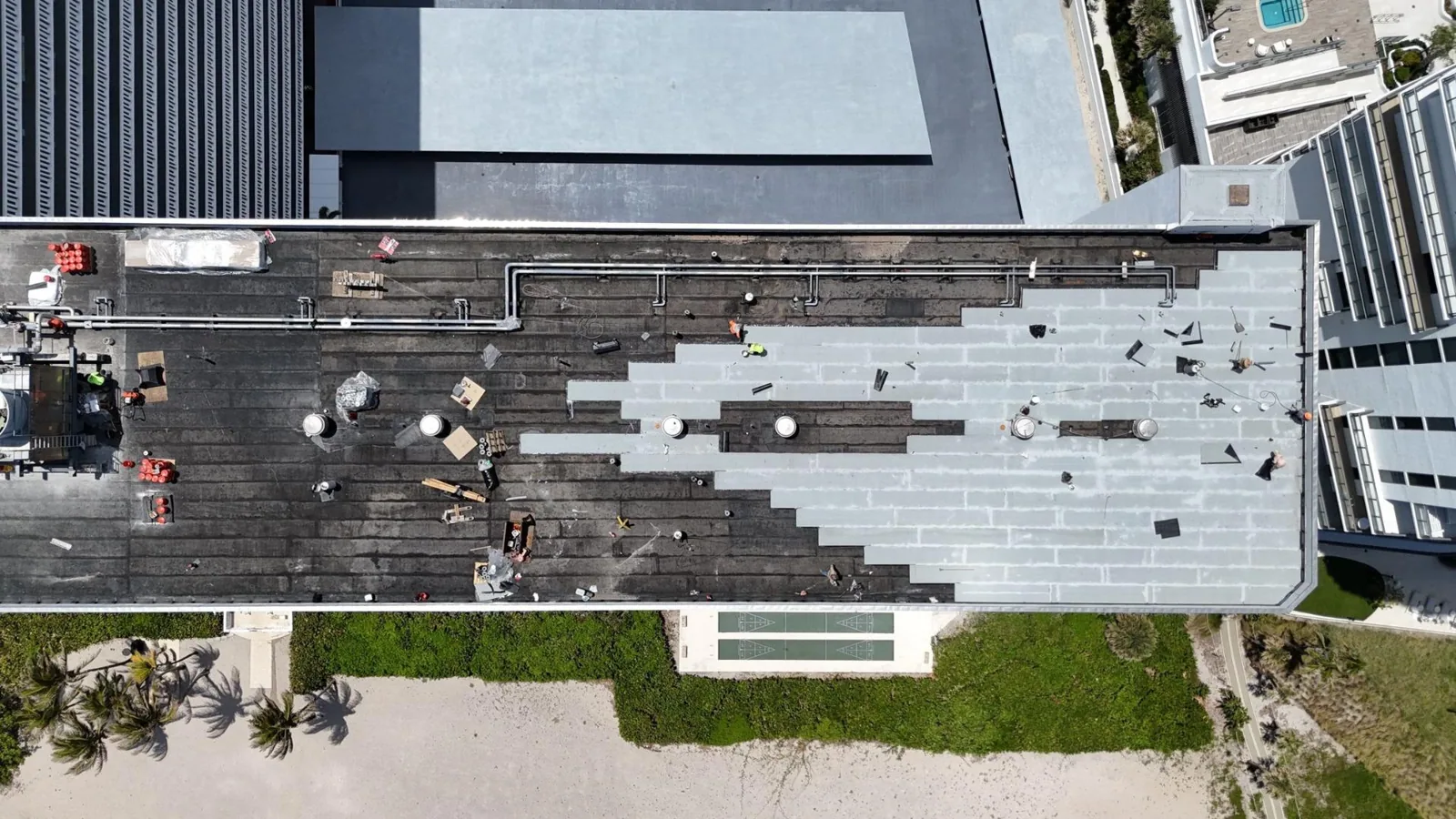
When does a repair become a larger scope?
One isolated puncture with dry surrounding insulation is a different work order from multiple wet sections and repeated seam openings. We track repair location and recurrence, then compare the record with the current inspection. If the roof has widespread moisture, unstable attachment, or deterioration across several details, we show the owner where patching stops being the useful choice. A full replacement review can then use the same measured roof areas, rather than assuming that every section needs removal.
Rialto states that the 2025 California Building Standards apply to permit applications and plans submitted after December 31, 2025, effective January 1, 2026. The City's Building Division checks construction against code and ordinances through review and inspection. We identify when the repair scope requires permit confirmation and record the detail being corrected. For non-permitted maintenance, we still document compatible materials, preparation, and drainage. A clear record supports the next capital review and gives the facility team a direct answer when a leak report returns.
What belongs in the closeout record?
The closeout should connect the original report to the work performed. We include the roof section, observed condition, repair materials, photographs, and any remaining issue that needs monitoring. If the leak stopped after containment but the permanent tie-in is pending, the record says so. That distinction keeps an interim dry-in from being mistaken for a final correction. A condition report can bring individual repair tickets into one roof register for maintenance and budgeting.
For the first visit, share the location of the interior report, roof plans if available, previous repair notes, access rules, and any operating window. We will map the inspection route, isolate the affected roof section, and prepare a repair scope based on what the assembly shows. Rialto commercial corridors and industrial areas have different access patterns, but the work order remains specific to the building and the roof. Schedule an inspection or discuss a leak that is active now; the next step is a clear route, a safe work area, and a repair decision the facility director can track.
Commercial Roofing Questions
Can the repair stop at the ceiling stain?
The stain is a reference point, not the repair boundary. We trace above it and check drains, seams, penetrations, and transitions that can carry water sideways. The scope ends at sound membrane and stable detail, with the observed entry path recorded for the facility team.
What if the same leak returns after patching?
A repeat report calls for comparing the prior ticket with current roof conditions. We check whether the patch edge lifted, water bypassed the detail, or the wet area expanded. If the cause is broader than the original work, the new record explains the added area before another repair is authorized.
Can Rialto repairs be scheduled around receiving?
Yes, when the access plan is set with the facility contact. We confirm truck routes, loading periods, roof access, and the area below the repair. A defined work zone can keep the crew out of an active lane and help the manager choose an appropriate repair window.
How do I know whether to repair or replace?
We compare recurrence, moisture extent, attachment, and the condition of the deck and details. A repair remains appropriate when the defect is localized and the surrounding assembly is sound. Widespread failure or moisture may call for a replacement scope, which we document separately from immediate containment.
Related Roofing Work
Put the roof condition on the work order
Schedule an inspection or report an active leak. Share the interior location, past repair tickets, roof access rules, and building schedule so we can set the first inspection route.