
Sort the work ticket by what the roof shows: a failed seam, puncture, flashing gap, standing water, or a damaged area after an event. We confirm where the symptom appeared, trace the roof section above it, and document immediate protection separately from permanent correction. Rialto's adopted climate plan identifies extreme heat, wildfire, flooding, and air pollution as citywide hazards, while describing hot days as a regular condition. This is municipal planning context, not a roof-level forecast. The field inspection determines what condition exists at the property.
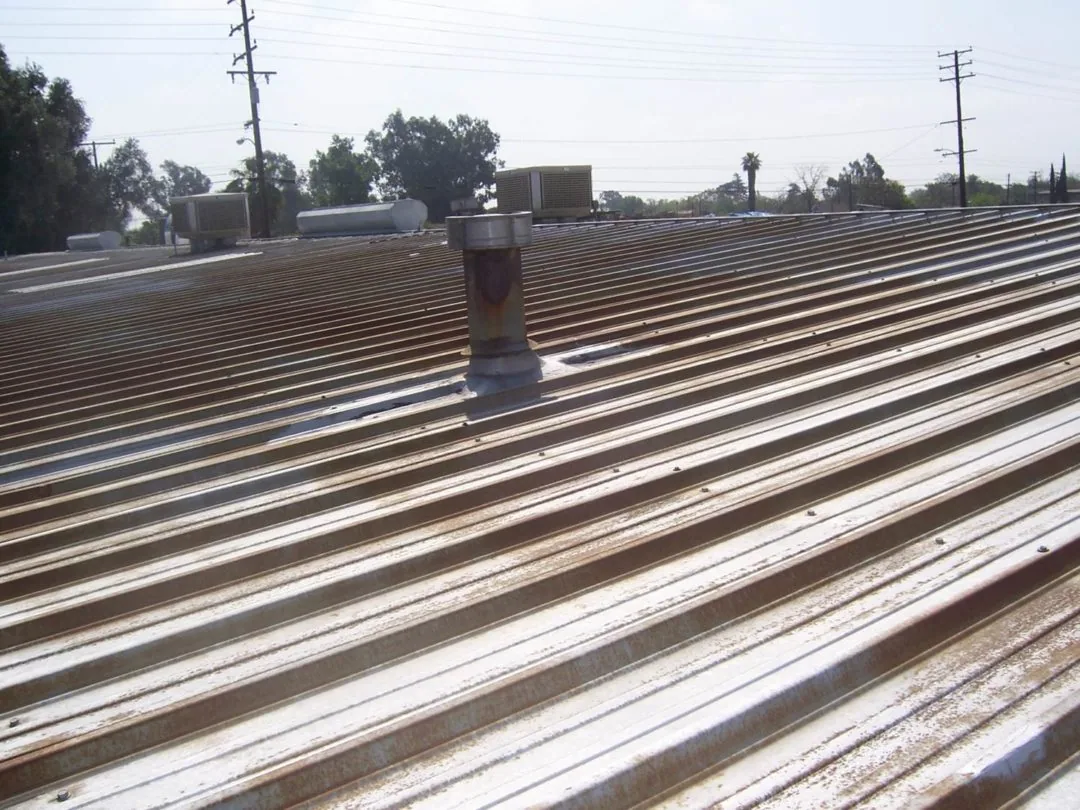
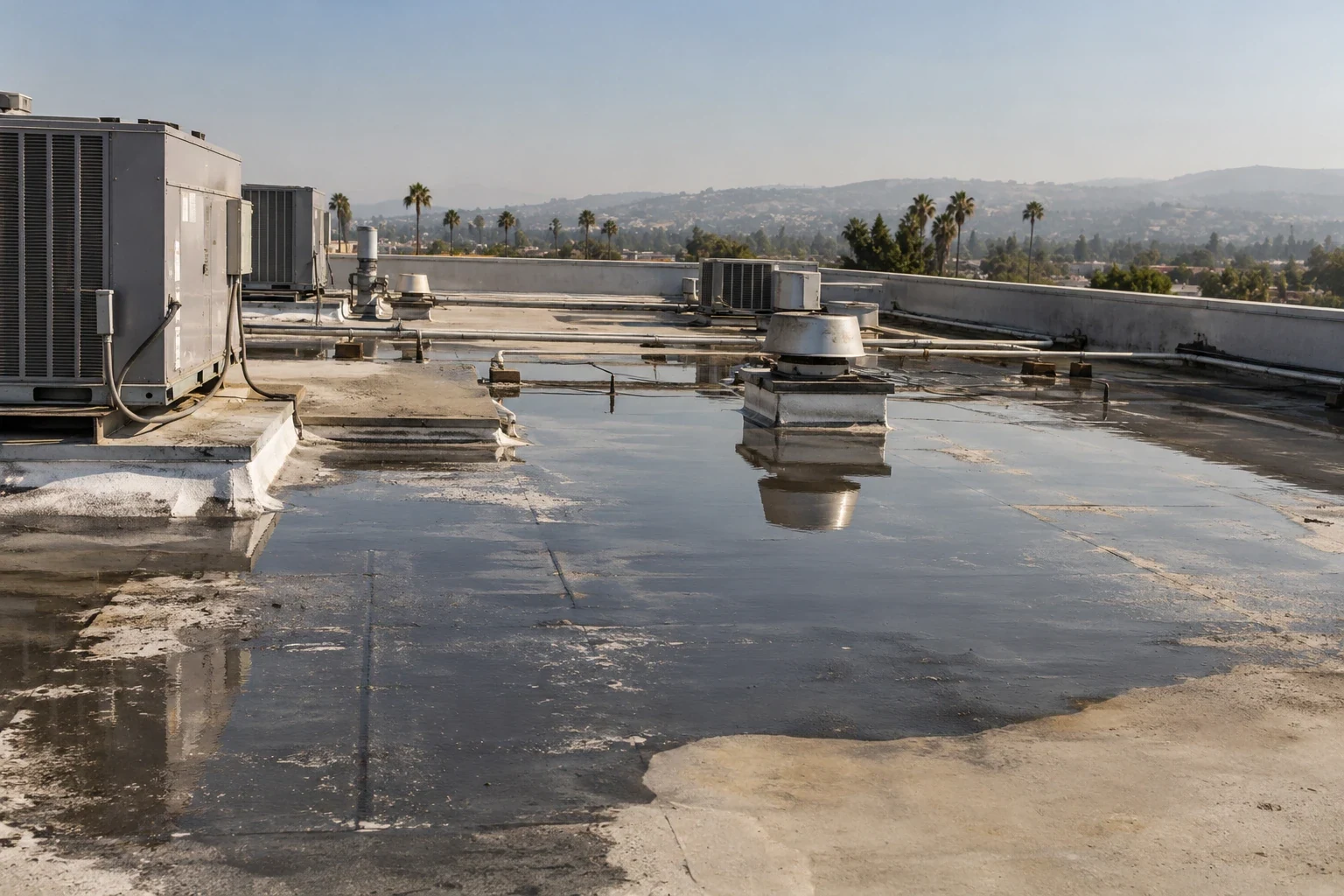
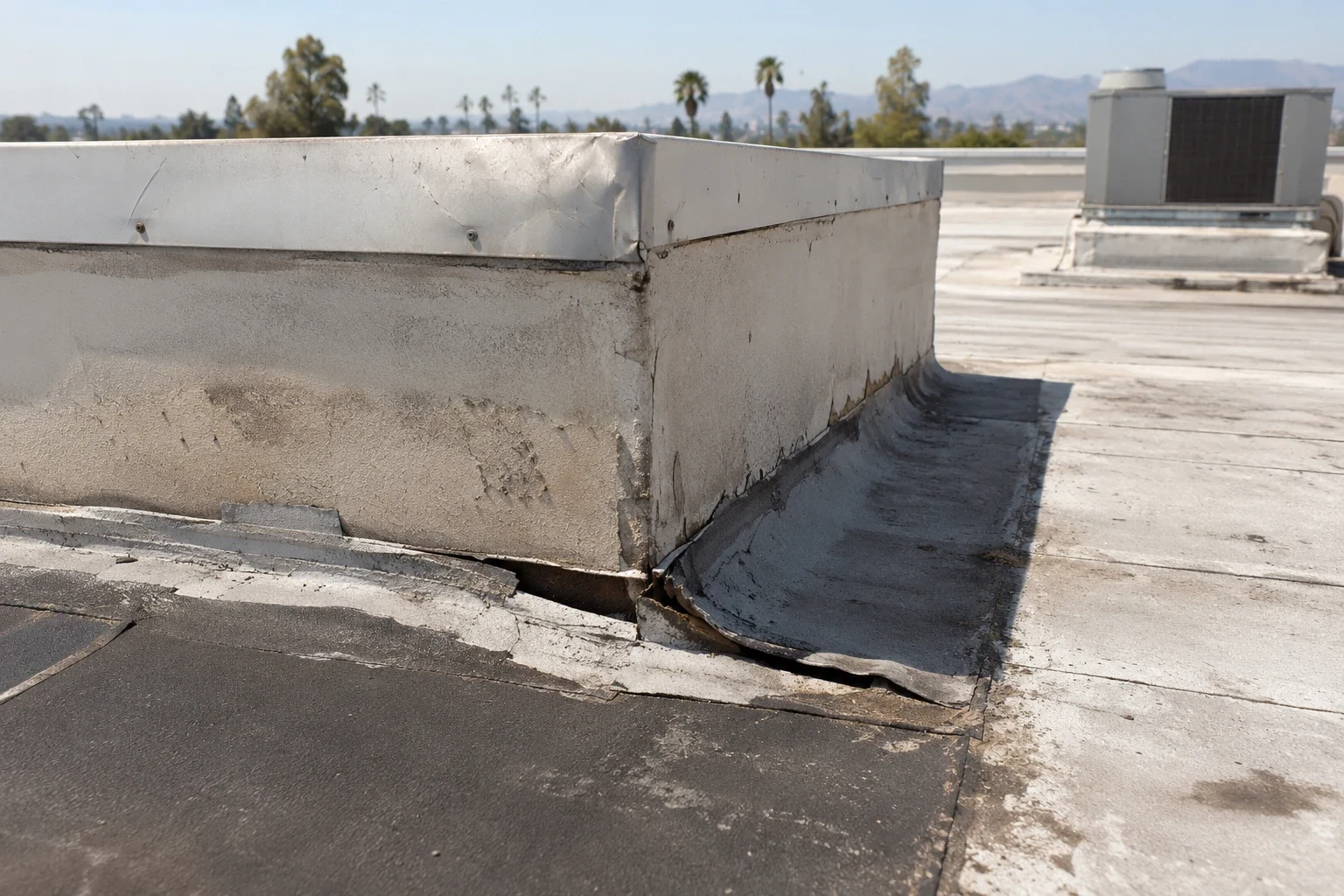
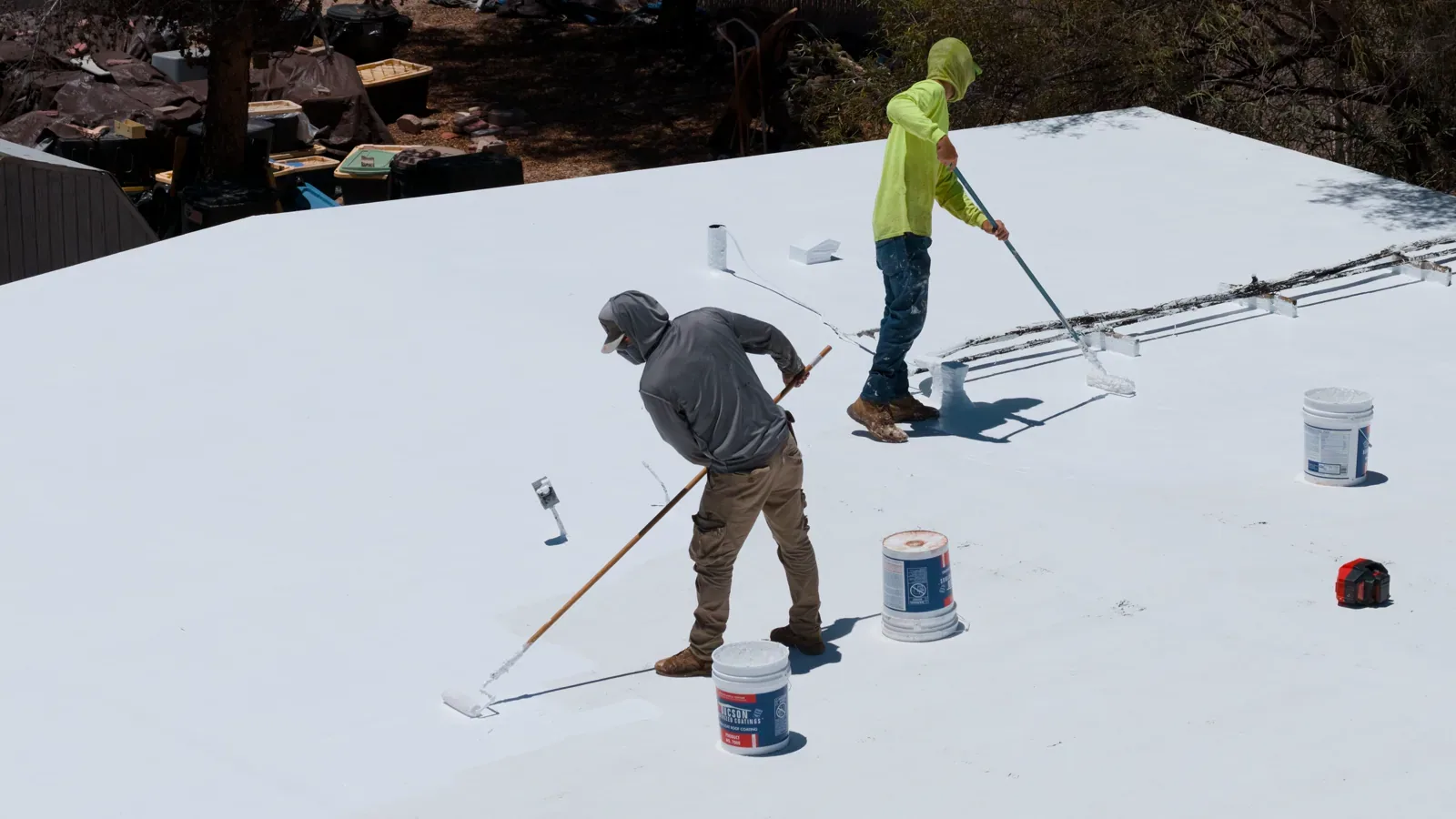
What failure needs a focused repair?
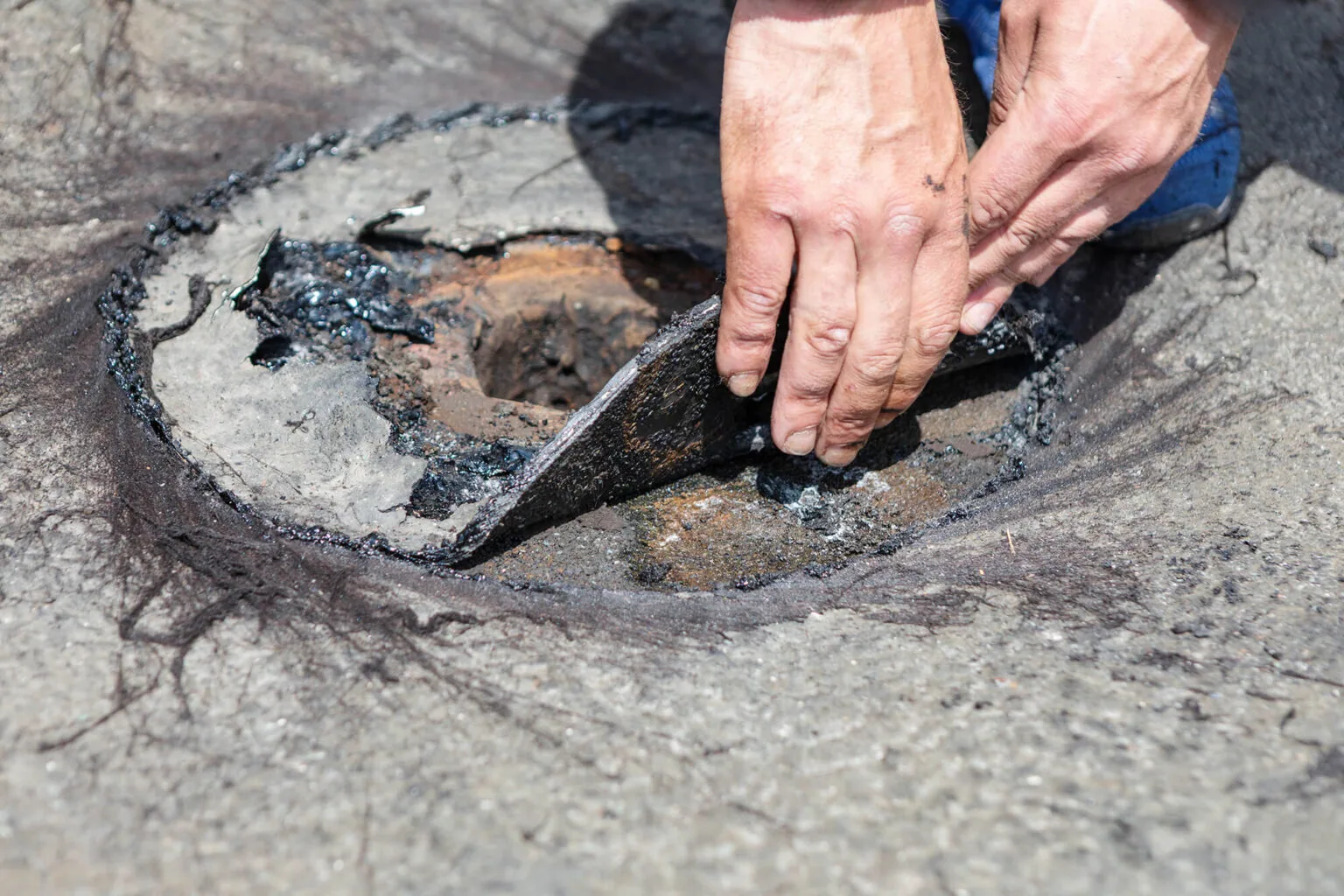
A flashing failure calls for a check of the wall, curb, or penetration transition. A seam repair starts with separation length and the condition of material around it. For a membrane puncture, we inspect the opening and substrate before setting the patch boundary. A ponding-water review traces drainage and checks whether retained moisture could change the scope.
How do we protect the building first?
When water is entering, we identify the affected room, protect the area below where appropriate, and establish a safe roof route. A leak repair visit documents the likely path and the repair needed. If the opening cannot wait for a regular schedule, emergency service can handle immediate containment and record what remains. We label temporary protection as temporary so a later shift knows which permanent work is still due.
What changes after heat or storm exposure?
The City of Rialto's climate plan includes extreme heat and flooding in its hazard discussion, but it does not predict the condition of a particular roof. We inspect actual seams, sealants, flashings, attachment, and drainage. A heat and UV damage review records surface changes visible during the visit. A wind-damage inspection checks edge details and displaced materials. A storm damage scope separates observed impact from unrelated prior wear.
When does a repair need a wider check?
A local correction fits when adjacent material is stable and the defect has a clear edge. Repeated failure, concealed moisture, loose attachment, or deck concerns may require testing or a broader scope. A roof inspection can record accessible details, while a targeted test helps establish what remains hidden. Rialto's climate projections are modeled at city scale rather than for individual roofs. We use observed roof conditions and owner records to set the repair boundary and next approval.
Commercial Roofing Questions
Does Rialto's climate plan predict roof failure at a property?
No. It identifies municipal hazards and modeled heat context. We inspect the roof section and base repair recommendations on its documented condition.
Should temporary containment be included with a permanent repair?
We record both, but as separate actions. The ticket shows what protected the building and which correction remains for approval or a later visit.
How do you decide whether water damage is limited?
We trace the likely path, inspect adjacent seams and transitions, and identify testing if concealed moisture could widen the boundary.
What should a damage report include?
Use labeled photos, roof-section location, visible condition, access limits, work completed, and the next action. That record keeps the repair tied to field evidence.
Request a Roof Assessment
Share the affected area, roof records, access instructions, and any active leak information. We will set a safe inspection route and record the immediate and permanent work.