
Start a modified-bitumen work order by identifying the layer that opened. A split cap sheet, loose lap, or failed flashing can expose the roof differently, and the visible cut may not mark the full wet area. We locate the report, inspect the surface and transitions, and confirm whether an approved test is needed below the membrane. The first record separates immediate containment from a permanent repair.
Rialto's General Plan identifies commercial areas along Foothill Boulevard, Riverside Avenue, Valley Boulevard, and Baseline Road near Riverside Avenue. Industrial and warehouse uses appear in both northern and southern parts of the City, often near rail lines. Those operating settings affect access and staging, while the assembly inspection determines whether the roof is SBS, APP, or another bituminous system.
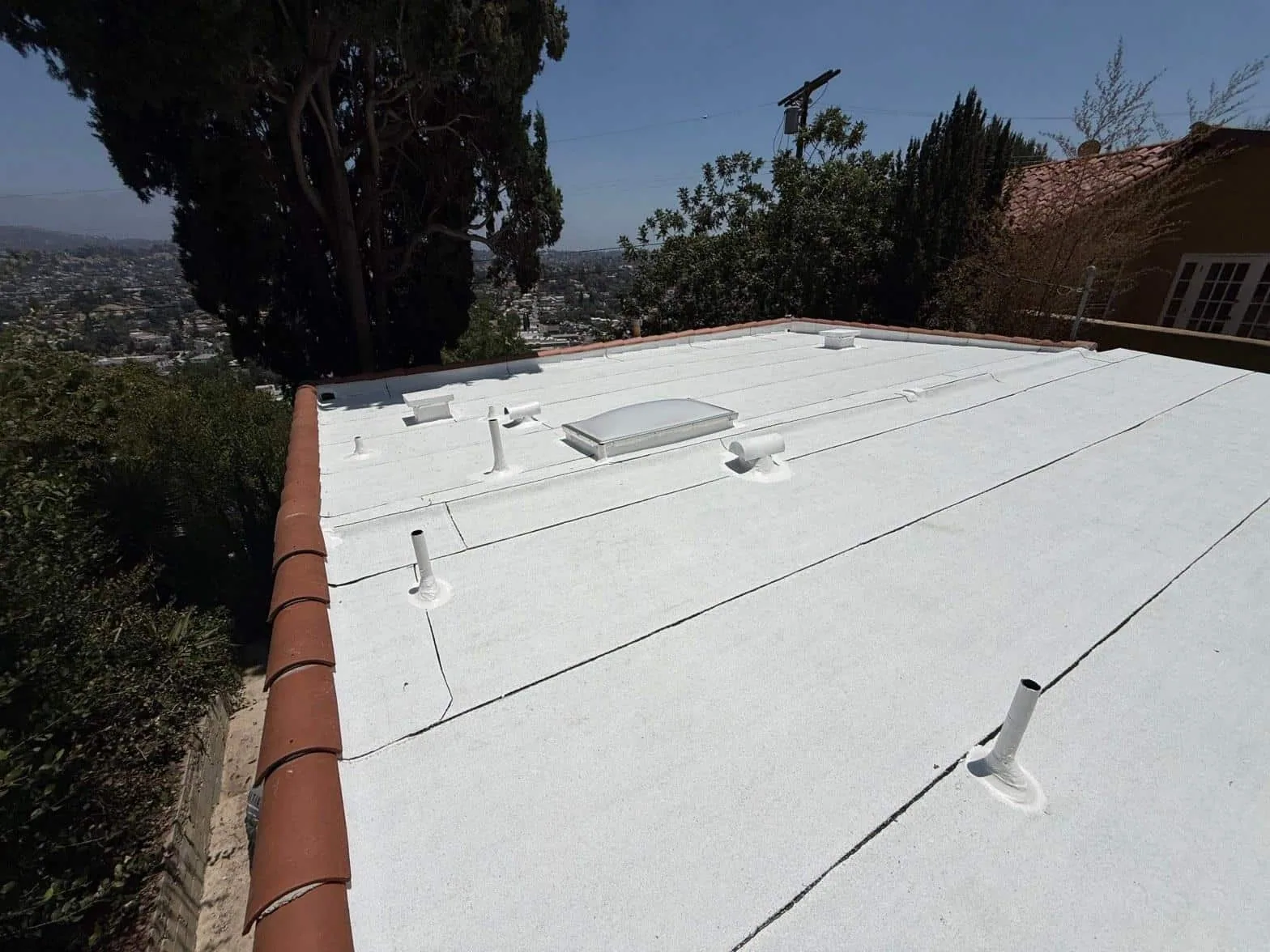
Which Layer Has Released?
Modified bitumen roofs use reinforced sheets with bitumen and surfacing selected for the designed assembly. We check the cap sheet, laps, base layers where exposed, and flashing returns at curbs or walls. Blisters, splits, displaced surfacing, and open seams are recorded by roof section. A patch laid over an unstable surface can conceal the opening without giving the new material a sound bond.
Application method matters. A torch-applied detail, cold-applied material, or self-adhered sheet has different preparation and fire-control requirements. We verify how the existing assembly was installed when records or field evidence allow, then select a compatible method. A flashing inspection can include the vertical turns where a roof sheet meets a penetration. The ticket identifies any hot-work control and access condition before work is scheduled.
How Does Water Cross a Lap?
Water can enter through a lifted lap, run along a base flashing, and appear inside beyond the original opening. We compare the leak report with roof slope, seams, drains, and penetrations. At the suspected detail, we check whether the sheet is bonded, whether surfacing has broken, and whether insulation below feels firm. A small test opening can clarify the layer condition if the answer would change the work boundary.
Rialto's climate plan names extreme heat among the City's hazards and states that hot days are regular. We connect this citywide context to what is visible at the roof, such as a split lap, cracked flashing, or a repair that has lost bond. A drain and scupper check traces runoff to the outlet. The crew records the water route and isolates the affected section instead of enlarging the scope based only on an interior stain.
When Can a Patch Remain Local?
A local repair is appropriate when the surrounding sheet is attached, the substrate is stable, and the defect has a clear edge. We remove loose surfacing, prepare the lap or flashing, and install compatible material across sound membrane. The finished repair should lie flat and direct water toward the outlet. If a test finds wet insulation or deck damage past the opening, the work order states the added quantity and why the boundary moved.
The Agua Mansa Specific Plan is a broad industrial planning area spanning portions of Rialto and other jurisdictions. For the Rialto portion, operations may require delivery coordination, but the cross-jurisdiction plan does not set the repair method for a particular building. We isolate the area, protect the work below, and sequence removal within the approved window. A repair scope keeps measured work distinct from an allowance that depends on concealed layers.
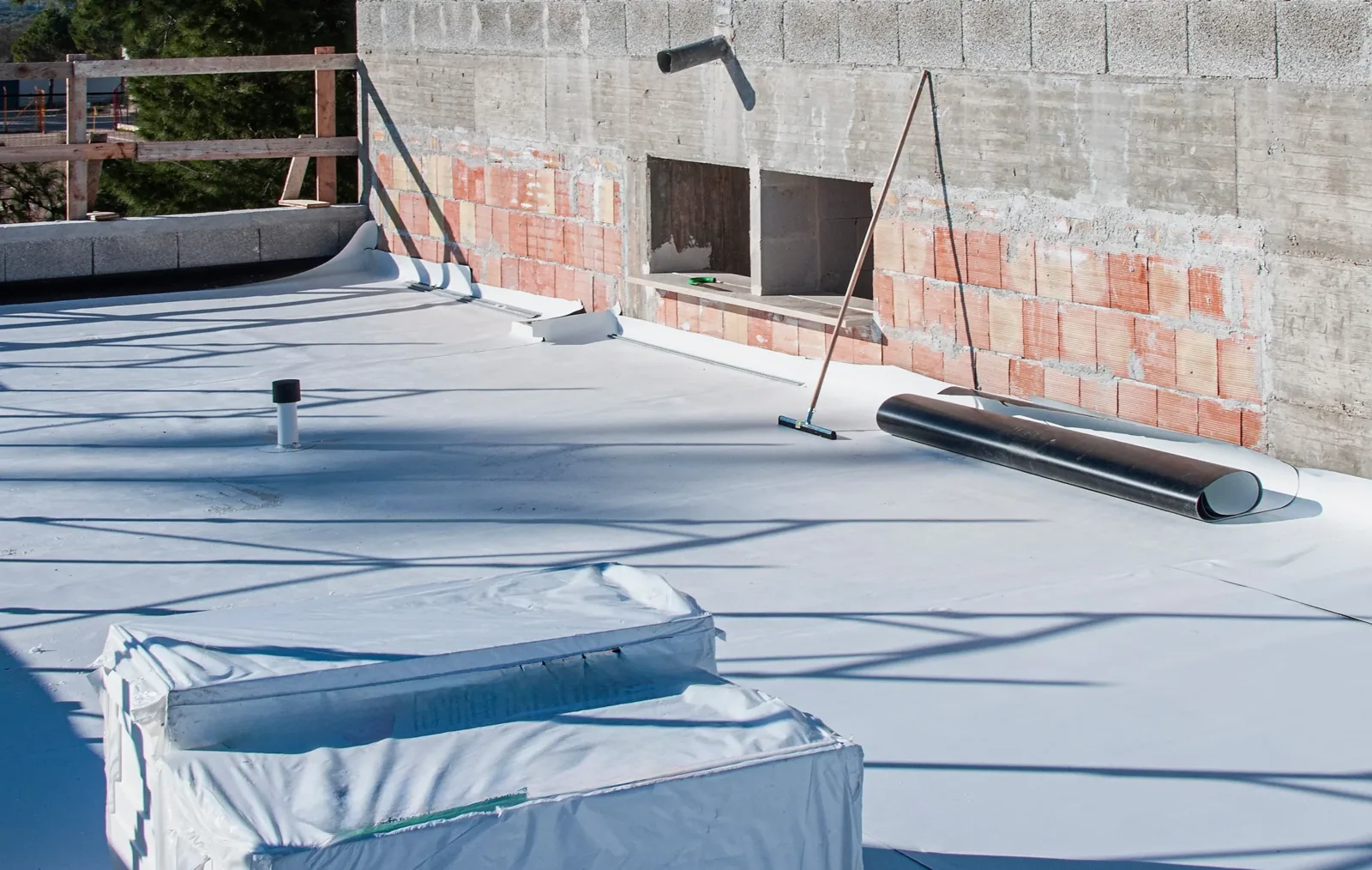
What Must Be Sound Before a Recover?
A recover is possible only when the retained assembly is suitable for another layer. We check moisture, layer count, attachment, deck support, drain elevations, curb heights, and edge terminations. Open seams and wet insulation cannot simply disappear beneath a new cap sheet. If the roof fails one of those checks, removal may be needed to reach a stable substrate and rebuild the water path.
Where the existing assembly is a multi-ply system, a built-up roof assessment can compare its layers and surfacing with a modified-bitumen repair. A silicone coating review is another option only when the surface and drainage support it. The work order describes adhesion, moisture, and termination checks that will govern the decision. We keep the comparison tied to the roof section inspected.
What Moves the Replacement Schedule?
Removal depth, sheet layers, access, hot-work requirements, substrate repair, and daily close-in capacity influence crew sequence. A large section may need staged tear-off, temporary protection, and a defined dry-in line at each shift. We list the area that can be completed and closed, then identify weather or delivery conditions that could change the sequence. That gives the facility director a schedule tied to the work, not an assumed full-roof production rate.
Rialto applies the 2025 California Building Standards to permit applications and plans submitted after December 31, 2025, with the edition effective January 1, 2026. We flag the applicable design and permit review before the scope is finalized. A recover evaluation or replacement plan should state insulation, membrane, flashing, and drainage details. For a building near the commercial corridors, access remains specific to its entrance and operating window.
Hot work also needs a controlled zone and the required fire precautions. We confirm what the facility requires before starting, keep combustible material away from the application area, and state how the work section will be checked at closeout. If access limits shorten the shift, the roof is divided into areas that can be safely closed before the crew leaves.
What Should the Roof Register Keep?
Record the modified-bitumen type where known, surfacing, repair location, material used, and photographs of the completed tie-in. Mark any test opening, exposed layer, area not accessed, or condition left for another phase. A later crew can then distinguish a repaired lap from a new split and avoid repeating the same search. The work order also notes who approved the temporary dry-in and when permanent closure is due.
A roof condition report can keep those findings with the property record and capital review. Rialto's Foothill Central Specific Plan combined the former Foothill Boulevard and Central Area geographies, so planning context may change while the roof file remains tied to the actual building. Share the roof plan, leak location, repair history, and work window. We will map the inspection route and state what the next crew must confirm.
Commercial Roofing Questions
How can we tell if the roof is SBS or APP modified bitumen?
We compare available records with the exposed sheet, surfacing, and installation details. If a prior overlay hides the original assembly, we identify what remains uncertain and use an accessible edge or approved opening before choosing a repair material.
Can a split cap sheet be patched?
A patch can work when the surrounding sheet is attached and the substrate is stable. We prepare the damaged area, tie compatible material into sound membrane, and check the finished edge. Moisture beyond that area can widen the work order.
When does a modified-bitumen roof need a recover review?
Repeated openings, broad surfacing loss, or wet insulation can move the decision beyond spot work. We check the layers, attachment, deck, and finished heights before comparing a recover with removal.
What should be addressed at a roof-wall turn?
We inspect the base flashing, termination, counterflashing, and the connection to the field sheet. The work order should state which materials are loose or open and where the tie-in reaches sound assembly.
How do Rialto permits affect a roof replacement?
The City's 2025 California Building Standards apply to permit plans submitted after December 31, 2025. We identify the review step that fits the proposed work and keep it distinct from the roof conditions confirmed in the field.
Related Roofing Work
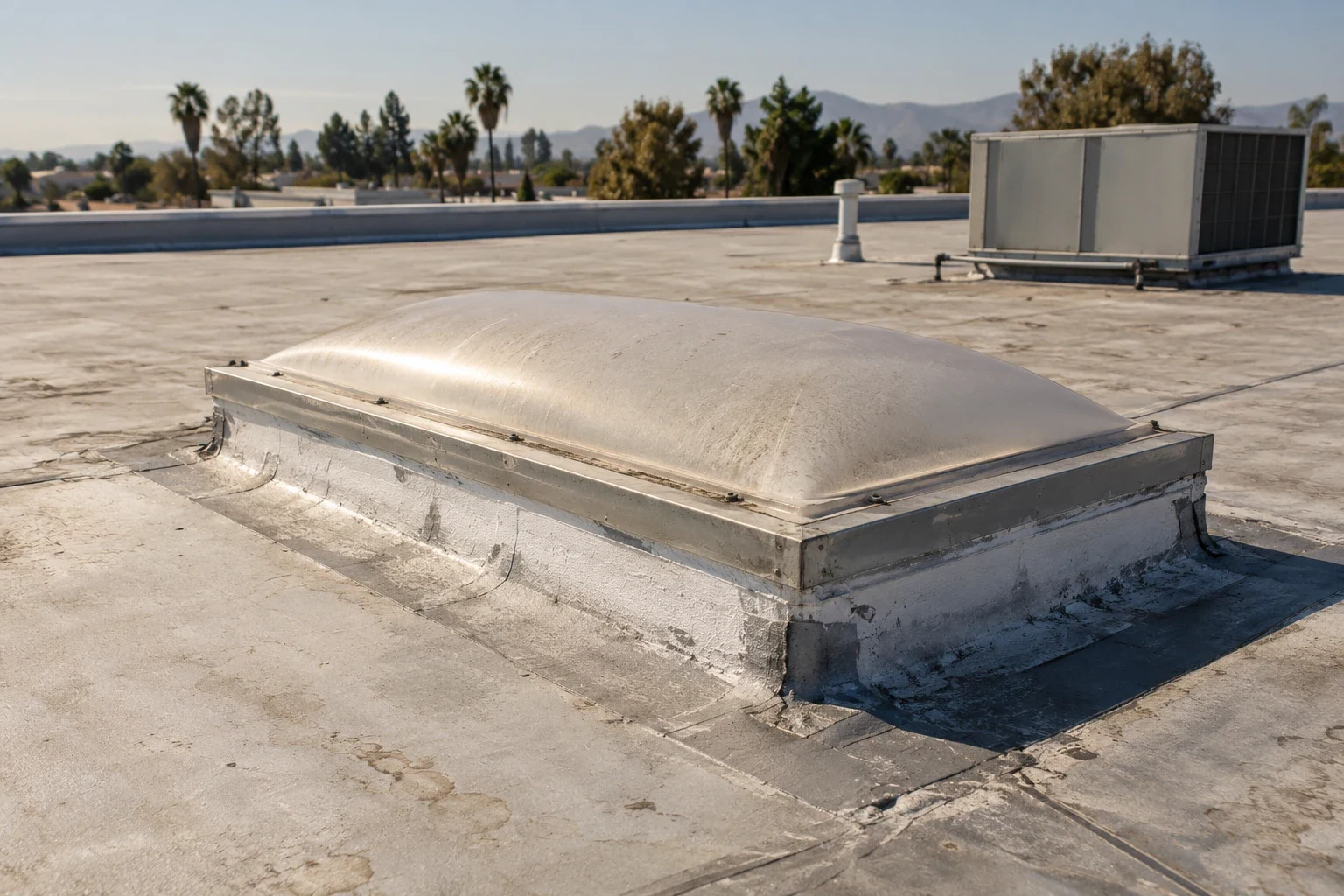
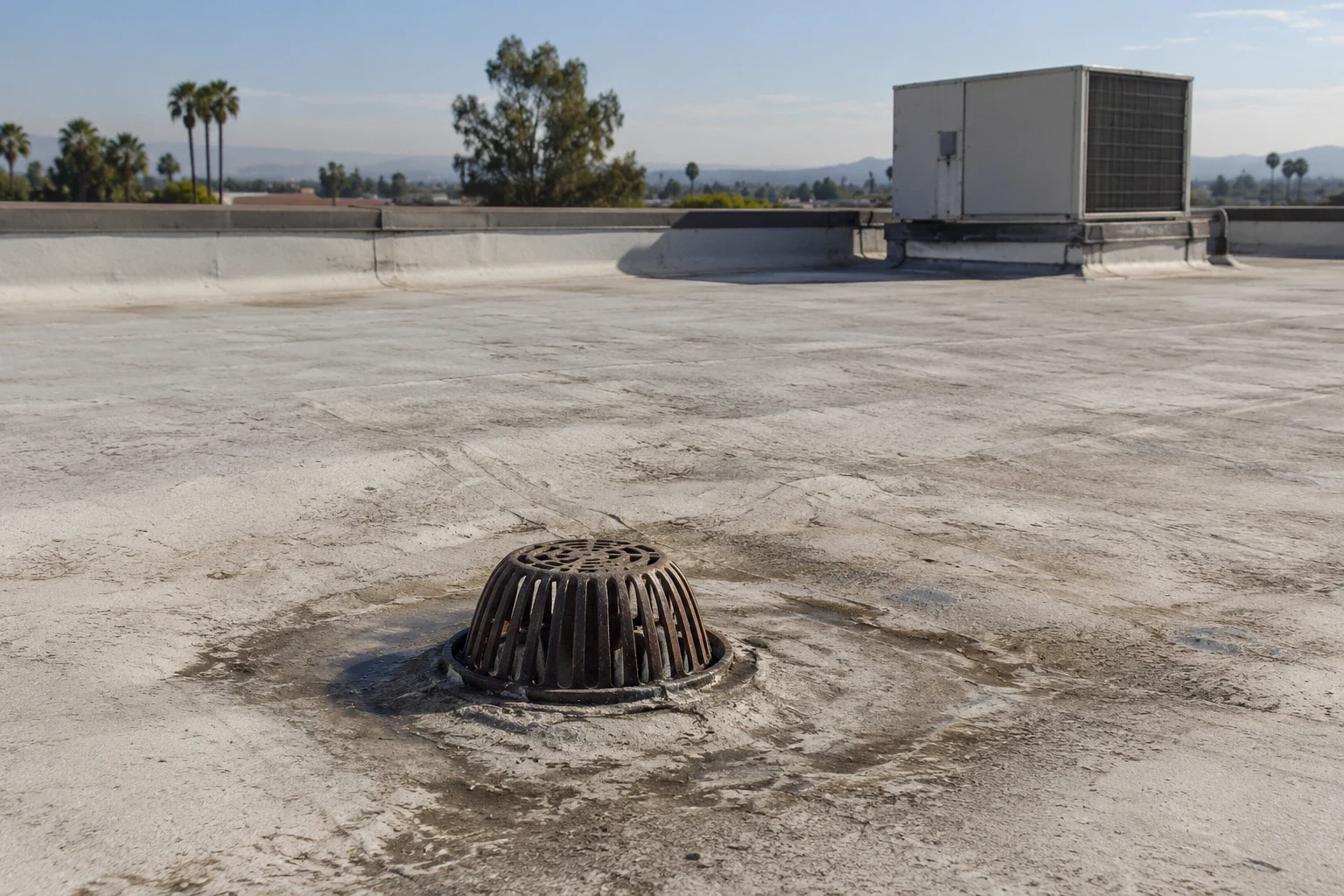
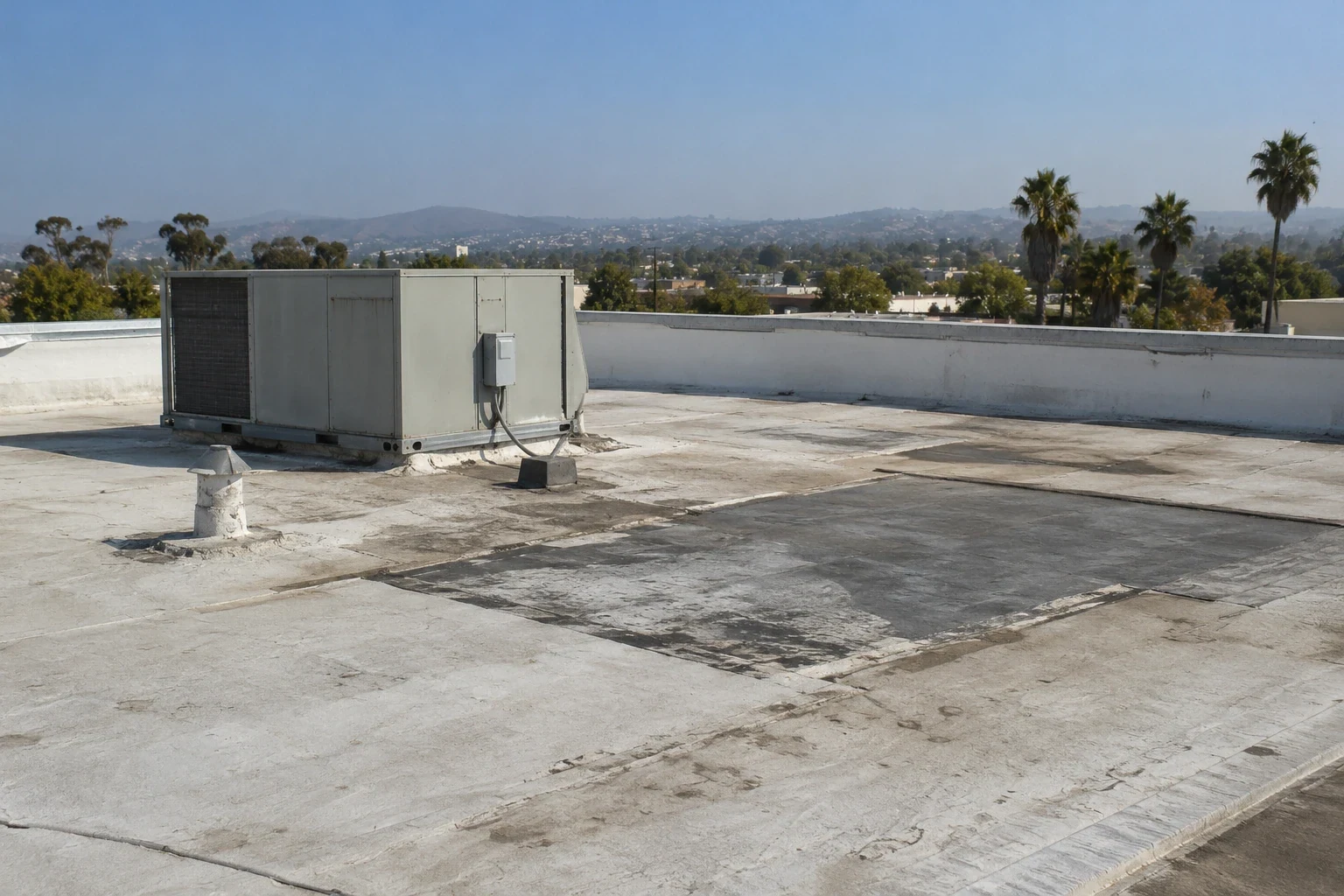
Set the Bitumen Roof Work Order
Share the leak area, roof plan, prior repair tickets, and approved access window. We will identify the layer and transition involved, then prepare a measured repair or replacement scope.