
A skylight or pipe penetration interrupts the roof field, so a small opening can demand more attention than a broad membrane area. Water may travel along a curb, follow a fastener, or appear inside away from the entry. We trace the reported leak, identify the roof assembly, and examine the opening, curb, and surrounding membrane. The repair plan addresses the transition that is failing instead of treating every stain as proof that the skylight needs replacement.
Rialto's commercial corridors include Foothill Boulevard, Riverside Avenue, and Valley Boulevard, alongside industrial planning areas. Building use and access vary by property. Our commercial roof inspection records conditions around each opening, and this corridor service-area overview describes our broad local focus.
How do we follow water back to the opening?
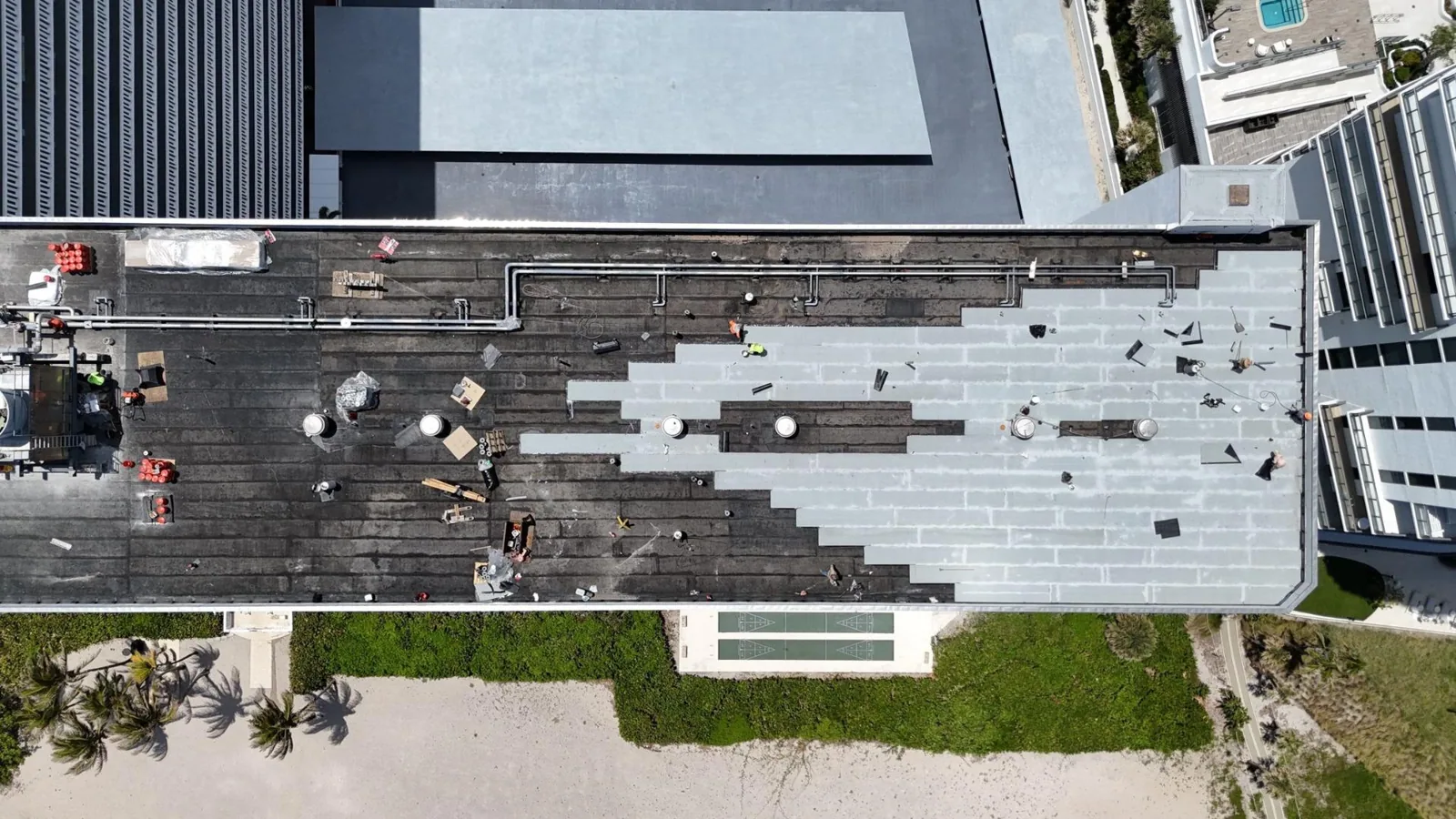
Interior evidence starts the investigation but does not map the roof defect. We ask where water appeared, when it was noticed, whether rain or equipment use changes it, and what repairs were tried. On the roof, we inspect the skylight frame, curb corners, counterflashing, sealant joints, nearby seams, and membrane beyond the stain. For a roof with several sections, we label the location against a drawing or set a repeatable reference with the facility contact.
Debris, a drain, a low spot, or an upslope seam can change the water path. At an industrial property in Rialto's portion of the Agua Mansa corridor, receiving periods or an escort schedule may affect access. We record those limits before setting the work sequence. If evidence suggests a broader wet area, an infrared moisture survey can help select points for physical verification. We also note whether a leak was active during the visit or whether the investigation relies on prior reports. That distinction prevents a dry inspection window from being mistaken for proof that the entry has stopped.
What do we inspect at a skylight curb?
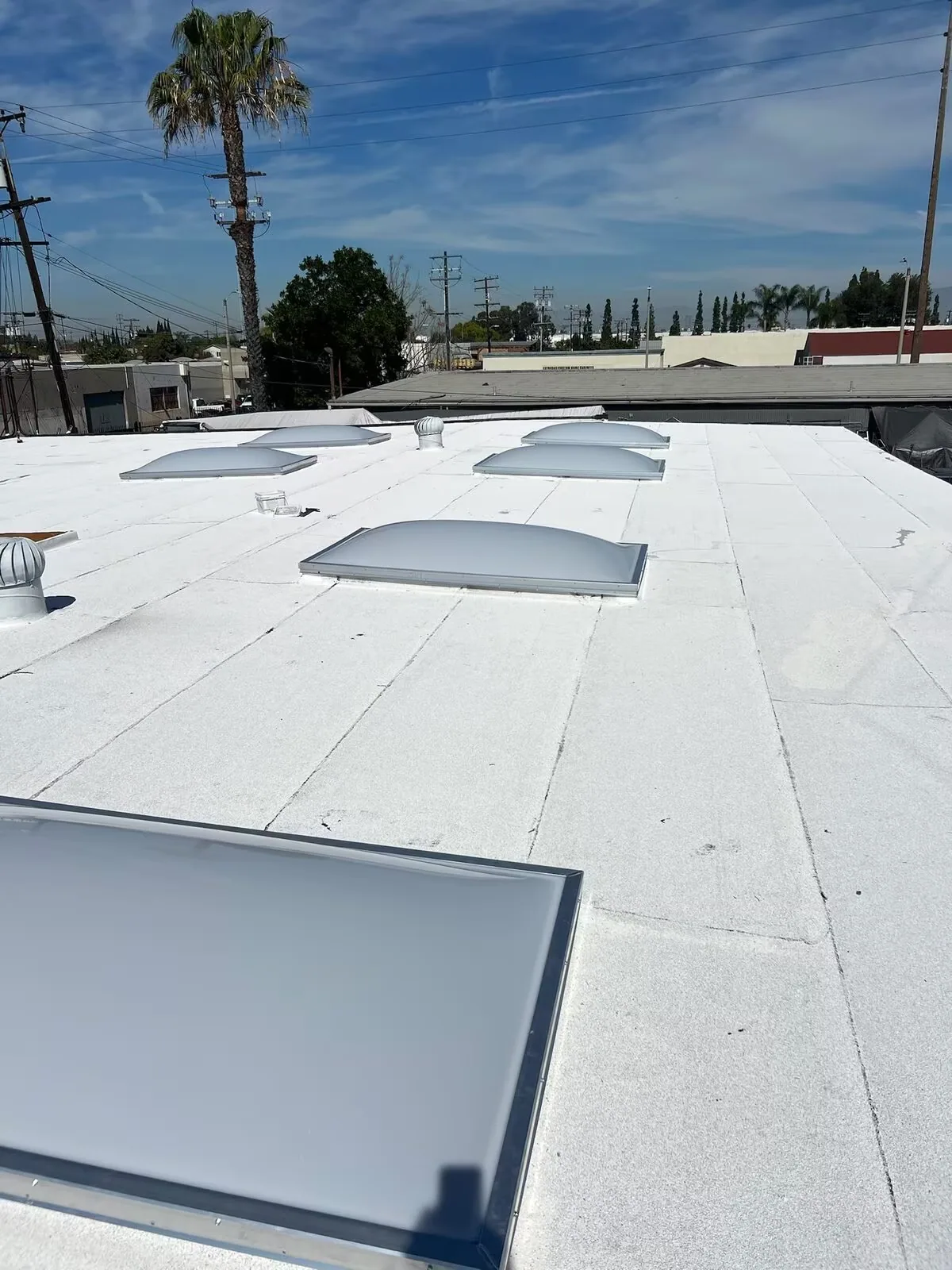
The curb forms the raised transition between roof field and skylight. We check corners, flashing height, open laps, loose metal, failed sealant, and signs water passed behind a termination. The frame and glazing matter too: roof flashing cannot fix a cracked panel or failed skylight component. We distinguish an interface repair from work that calls for a skylight specialist.
A patch must bond to the membrane or compatible flashing. We confirm the system where records or visible markings allow, prepare the bond area, and select a detail suited to the assembly. A shifted curb, soft substrate, or layers of prior flashing may call for a larger correction. Our commercial roof repair ties the recommendation to the observed condition. At corners, we pay attention to how the flashing turns and terminates, since a neat-looking surface can still leave a gap beneath an overlapping layer. The record identifies each corner or side that needs follow-up, rather than grouping every observation under a general skylight note.
How are pipes, conduits, and equipment openings handled?
Pipes, conduit bundles, posts, and equipment curbs have different shapes. We check whether the boot or field flashing fits, its upper termination sheds water, and movement has pulled the detail loose. A crowded bundle may need a designed transition instead of a slit boot stretched beyond its fit. Cables and lines remain identified, and the work area is coordinated with the equipment contact. If an active line limits access to the base of the penetration, we document the obstruction and arrange the right contact before attempting work.
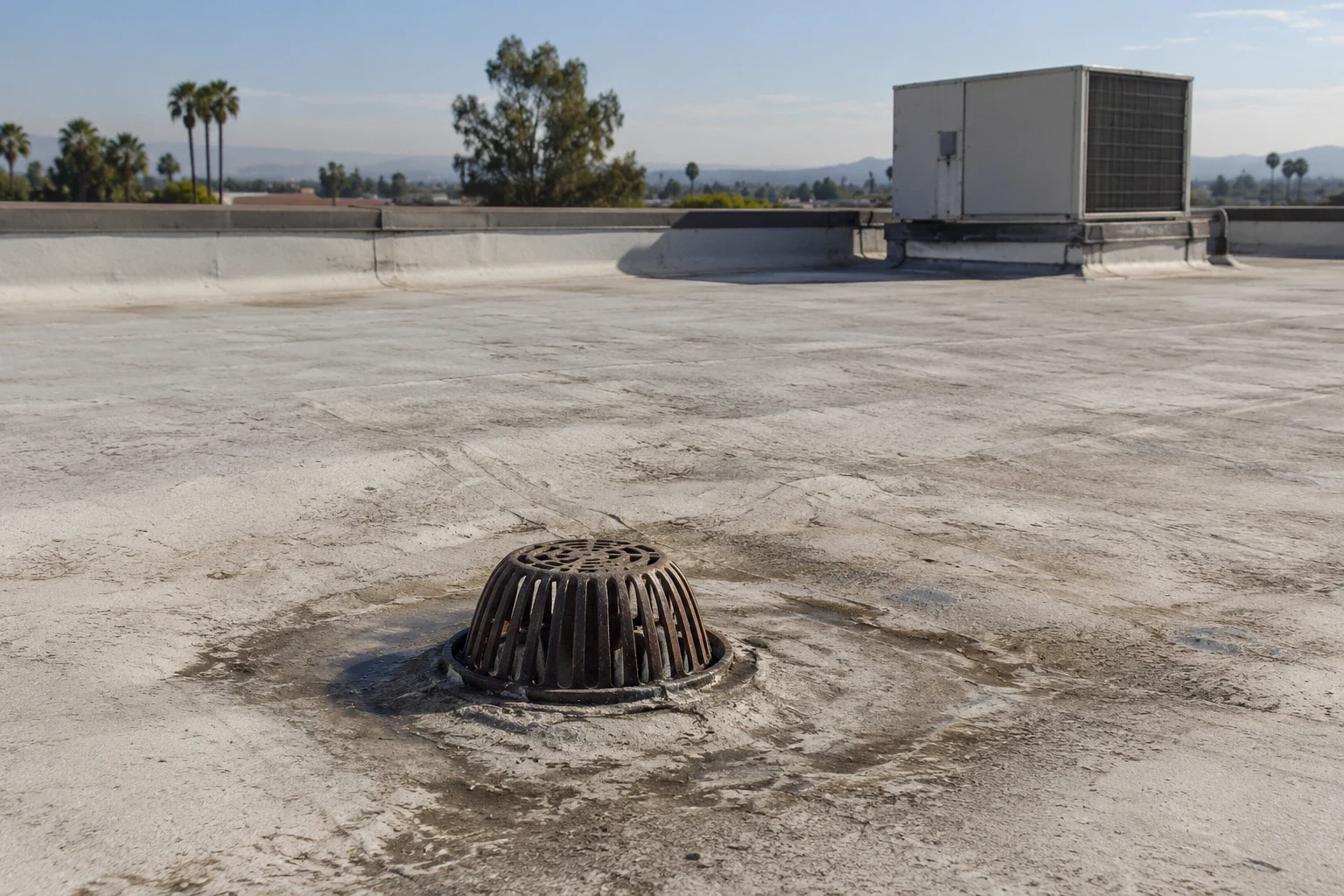
Beside a seam, drain, or wall, we assess the combined water path. A good boot will not correct backup at an obstructed drain or an uphill seam failure. Rialto's climate plan notes that hot days are a regular local condition, but that is not a roof-level forecast; we record actual surface and sealant conditions during the visit. For a wider membrane issue, leak repair or a drainage review may be the appropriate scope.
When is a localized repair enough?
A local repair fits when the opening and adjacent roof remain stable, the entry path is identifiable, and the new detail can bond to sound membrane. We remove failed material, prepare the substrate, install flashing or a patch, and finish the upper edge to shed water. The crew checks the laps and termination; photographs and a location note help the facility team revisit it.
Skylight replacement may be warranted if the frame or glazing has failed, the curb has deteriorated, or prior alterations left no sound tie-in. A localized repair may also be unsuitable if moisture extends into insulation or several openings reveal a broader problem. Our replacement evaluation or recover assessment can compare options over the same roof area. We identify what is visible, what remains concealed, and which test could change the recommendation.
How do we plan work around an operating facility?
Before mobilizing, we confirm roof access, check-in, work hours, equipment shutdown needs, and areas to keep clear. A skylight may sit above production, inventory, offices, or public space. The facility contact identifies interior protection and notification needs. We agree on access and material staging, and whether the area below needs an exclusion zone. Any planned opening or test is discussed first, with the roof secured at shift end. We also confirm who can authorize a temporary interruption and who will receive a closeout note if the work uncovers a separate issue.
Rialto's Building Division checks construction against California codes and City ordinances through review and inspection. Permit needs depend on scope and project conditions, so the owner should confirm them with the City when approval may be required. The final record states the location, work completed, limitations, and any follow-up item.
What should the next inspection revisit?
Include skylights and penetrations in the roof's regular observation route. Maintenance staff can watch for open seams, displaced counterflashing, cracked sealant, debris, and interior water after a weather event. This does not replace a roof walk where access and fall protection are required, but it helps staff report a change promptly. Photos taken from a safe, consistent viewpoint can help staff describe whether the condition has changed since the last review.
We record each opening by roof section, material, nearby drainage, and repair date when known. A later visit can compare the same corners and terminations. Similar failures at several openings may point to a detail, movement, or broader roof condition worth investigating. Stable points can be monitored, confirmed localized defects repaired, and hidden or repeated conditions tested further. If a facility changes equipment or adds a new penetration, the roof record should be updated so the opening becomes part of the same inspection route.
Commercial Roofing Questions
Can a skylight leak be repaired without replacing the whole roof?
Often. If the curb, nearby membrane, and tie-in surface are sound, a localized flashing repair may resolve the entry. Concealed moisture or wider deterioration can change that scope.
Does water inside below a skylight prove the glazing is leaking?
No. Water may travel along a curb, seam, or roof layer before appearing indoors. We compare the interior location with roof conditions before choosing a repair.
Can you flash a group of pipes or conduit together?
That depends on spacing, shape, movement, roof system, and access. A crowded group may need a designed curb or coordinated detail, so we inspect its configuration first.
Will you work while the facility remains open?
We can plan around operating hours after confirming access, staging, safety controls, and equipment coordination. The facility contact identifies restricted areas and interior protection needs.
When should a flashing repair be checked again?
The completion record identifies the repair point and any follow-up condition. Revisit it at the next roof review or after a reported leak or visible change, using the same reference and photos.
Related Roofing Work


Review the roof opening and reported leak
Share the roof section, opening type, reported water location, and access requirements. We can inspect the skylight or penetration detail and recommend a repair scope based on what is visible.