
A ponding report leaves the facility director with a decision: clear debris, repair the outlet, or investigate the slope. We map the low area, inspect the drain bowl or scupper, and trace the route water should follow. Then we compare the finding with the roof plan and nearby curb or seam details. The work order names the obstruction or failed connection, the correction, and any roof area that needs further review.
Rialto's adopted Climate Adaptation Plan includes flooding among the City's climate hazards and says hot days are regular. That citywide planning context does not establish drainage conditions at one property. The roof itself determines the repair. Rialto planning distinguishes commercial streets such as Foothill and Riverside from warehouse and industrial patterns near rail service. That backdrop does not show the slope or outlet condition on the roof being inspected. On either type of property, receiving schedules and roof access can affect when we clear, inspect, or open a drainage detail. A Rialto commercial-corridor visit begins with the actual roof map and the facility's approved access route.
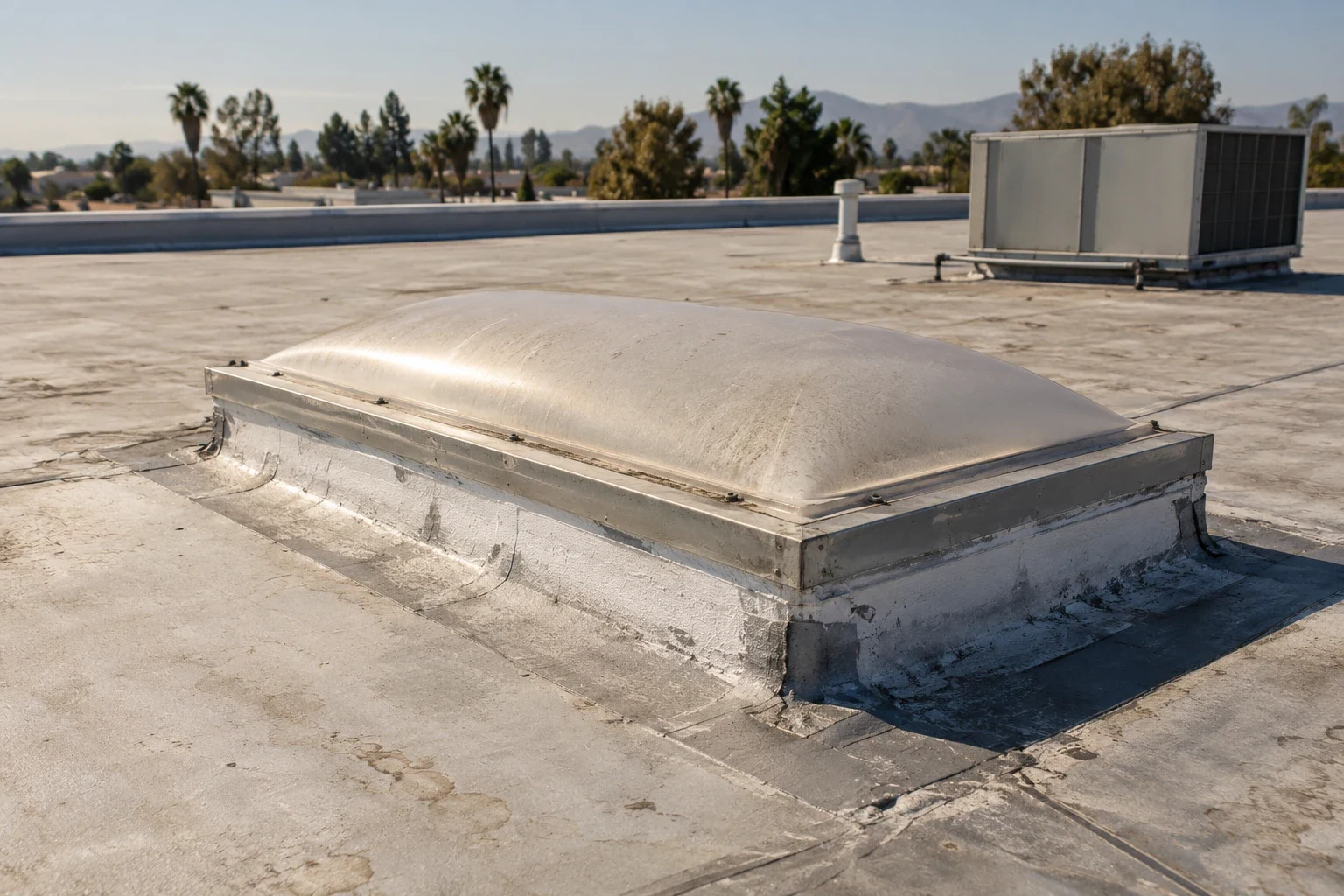
What does the outlet need to show?
At a roof drain, we check the bowl, strainer, clamping ring, surrounding membrane, and any visible connection to the drain leader. A loose strainer can admit debris, while a separated membrane at the bowl can send water below the surface even when the opening looks clear. We note whether water is trapped at the outlet, whether the field slopes toward it, and whether prior material has raised the surrounding surface. A clear photograph should show the drain and the roof area that feeds it.
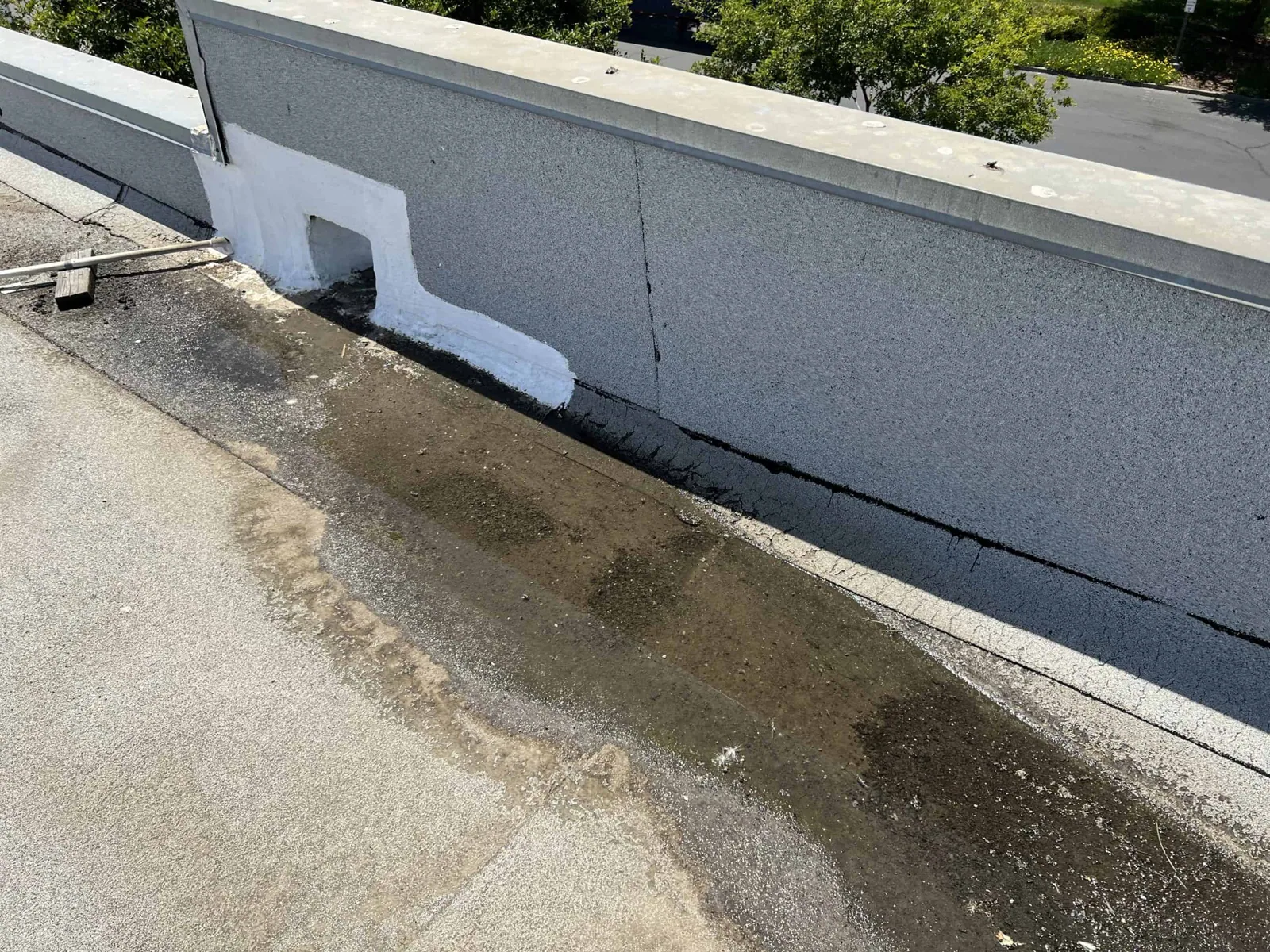
A scupper needs a different route. We inspect the opening, metal throat, flashing, and exterior discharge point, then look for staining or obstruction along the path below. If the scupper sits above the roof surface, a low area can remain behind it even when the outlet is open. A hands-on roof inspection can map the nearby membrane and edges when the drain is one part of a wider condition. The repair ticket should identify a drain, scupper, or leader by section so the maintenance team does not repeat the search at the wrong outlet.
How is the water path traced?
We start at the ponding mark and follow the roof plane toward each outlet. A level or straightedge can help identify a reverse slope, while a plan review shows whether later curbs or repairs changed the route. We also inspect crickets and saddles that direct flow around equipment. If a cricket has settled or a patch creates a ridge, water can divide into a second low area. We mark those contours and identify whether the correction needs debris removal, a membrane detail, or a slope adjustment.
Water near one drain may have arrived from an adjacent section. We inspect the connecting channel, seams, penetrations, and transitions before recommending a localized repair. A wet ceiling below does not always line up with the roof outlet that failed, so we compare the reported room with the path through the assembly. For standing water with a suspected entry point, a leak-tracing visit can document the interior and roof findings together. If the opening needs urgent containment, we can separate that work from the permanent drain correction.
Which drainage correction fits the finding?
Debris removal is appropriate when material blocks an otherwise sound outlet. A loose strainer or failed drain connection needs a mechanical correction and compatible membrane tie-in. If a drain bowl is set too high or the surrounding roof slopes away, the scope may need a larger correction than cleaning. We state what will be opened, what material will be replaced, and how the new membrane connects to the existing assembly. The owner sees separate work for surface cleaning, outlet repair, and slope changes.
At edges, water can escape through a scupper, gutter, or downspout only if those transitions remain open and secure. We check the receiving point below for visible obstruction and note where the flow path cannot be reached from the roof. A gutter and perimeter review can address a damaged metal transition alongside the roof work. We do not seal a scupper closed or build a coating ridge across the drainage path. The final detail keeps the intended outlet open and gives the facility contact a maintenance point to recheck after the next service visit.
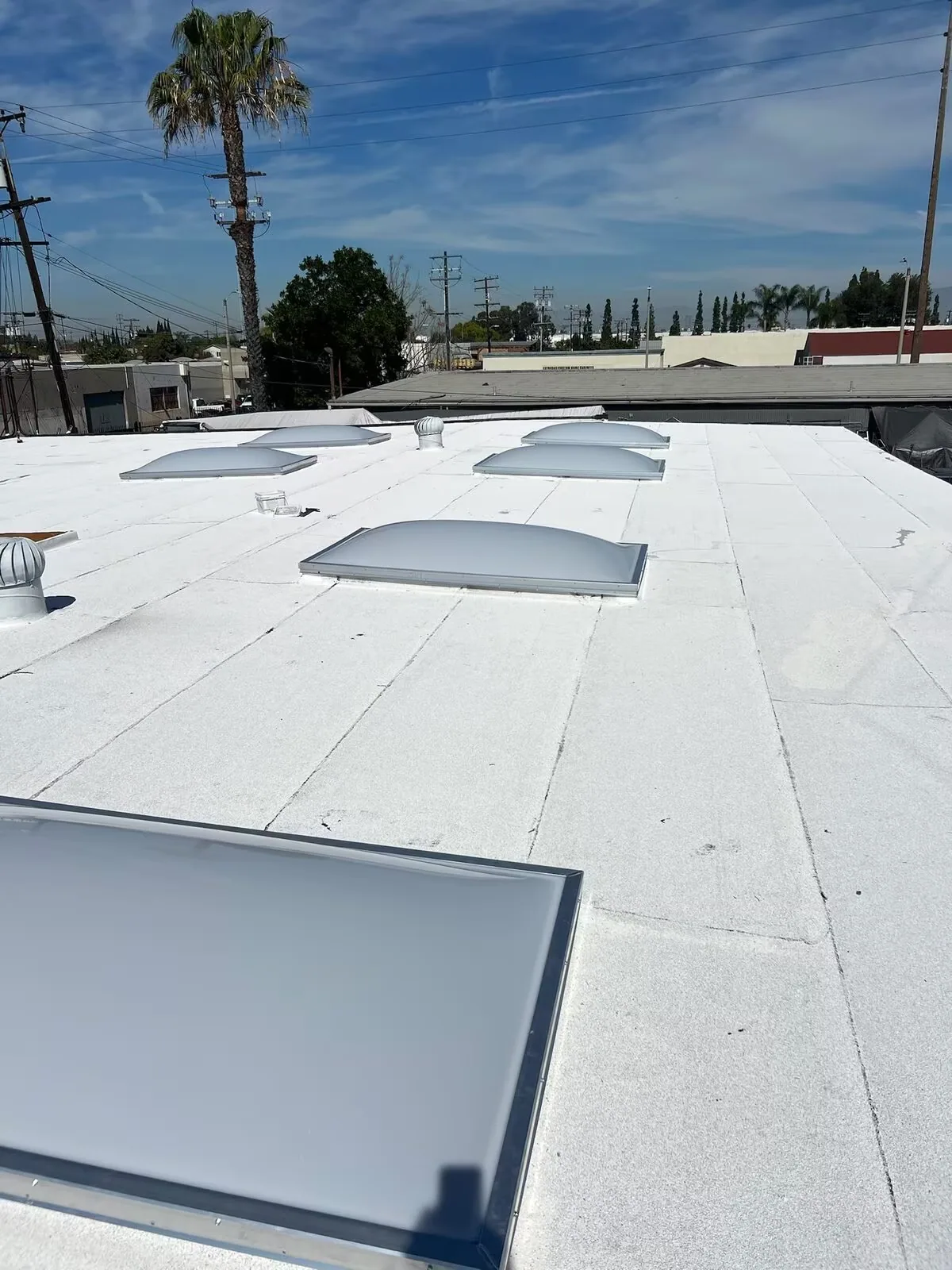
How do Rialto properties affect the work window?
Gateway's plan supports a mix of office, storefront, highway-commercial, and industrial-park uses. Drain performance must be checked on the actual building rather than inferred from its district. A roof drain at an office property may require coordination around occupants and rooftop service trades; a warehouse outlet may sit above active loading or inventory. We ask the facility contact which doors, lanes, and equipment zones must remain clear. The inspection route records the drain location, the path used to reach it, and any restriction that changes how debris or removed membrane can be carried.
The Agua Mansa industrial plan crosses municipal boundaries and includes Rialto land; confirm the property address before assigning the correct route and access contact. Where a roof lies in that area, we set arrival and staging with the property's gate and operating rules. Rialto's circulation plan directs designated truck movement away from residential areas and sensitive receptors. Crews still confirm the property's approved gate, check-in, and equipment path before mobilizing. We schedule noisy or open-roof work in a defined window, protect the area below, and close the section before leaving. A warehouse roof route can account for receiving and material movement under the affected drain.
What should the closeout record include?
Closeout should show the outlet before and after work, the surrounding roof section, any membrane removed, and the correction completed. We label whether ponding was caused by debris, an outlet connection, reverse slope, or a detail that needs more investigation. If a section could not be reached, it remains a follow-up item rather than a completed check. A roof condition report can keep outlet photos, repair tickets, and maintenance dates with the building's roof register.
Cost and timing follow access, the number of connected areas, the drain or scupper type, and the amount of membrane that must be opened. A slope correction can affect a larger section than cleaning or replacing a strainer. We state those differences in the estimate and keep concealed conditions separate until inspection exposes them. To start, share the roof plan, recent leak locations, drain history, and operating schedule. Schedule a drainage inspection or discuss active water; we will trace the low area, identify the outlet, and set a work order the facility team can revisit.
Commercial Roofing Questions
Why does water remain after a drain is cleared?
The outlet may be open while the roof slope or membrane connection still holds water. We trace the low area to the bowl, scupper, or nearby cricket and check for a reverse slope, raised patch, or separated flashing before choosing a correction.
Can a coating correct ponding around a drain?
A coating follows the existing roof contour. We inspect the outlet and slope first, then address the drainage cause before coating a section. A raised coating edge can obstruct flow, so the detail has to remain open and accessible.
How do we know if a leak starts at the drain?
We compare the interior report with the drain bowl, membrane connection, surrounding seams, and water path. If the source remains unclear, a controlled opening or leak trace can narrow the repair boundary before material is removed.
What information helps plan drain work at a Rialto facility?
Send the roof plan, outlet locations, prior tickets, access instructions, and hours when receiving or service trades use the area below. We can map the drain route and schedule debris handling without blocking an active lane.
Related Roofing Work
Trace the low area to the right outlet
Schedule a drain inspection or report active water. Share roof plans, outlet history, interior leak locations, access rules, and operating hours so we can set the first route.