
An opened lap changes the repair route. We identify the membrane system, mark where separation begins, and inspect how far the weak bond continues before preparing a patch. A seam can lift at a corner, curb, drain, or earlier repair and still look closed from a distance. The work order should state what is loose, what remains bonded, and whether nearby attachment or insulation needs confirmation.
Rialto's Gateway Specific Plan Area includes commercial and industrial designations, while the Foothill Central Specific Plan Area updates a separate broad part of the City's planning framework. These areas help orient a service visit but do not predict a seam failure. We trace the roof section, examine the detail, and plan access from the property and crew sequence.

How Much of the Lap Has Separated?
Mark the full length of the visible opening, then probe the seam where the assembly and conditions allow. Check corners, intersections, patches, and changes in plane because separation can start where the sheet turns. Record whether the failure is a narrow unbonded channel, a lifted edge, or a wider split. Do not install a cover strip until the surrounding membrane is clean and stable enough to accept it.
Rialto's climate plan says hot days are a regular city condition and identifies extreme heat as a hazard. That citywide information does not prove a membrane has softened or a weld has failed. The inspection records the seam material, surface condition, and repair history found at the building. A roof inspection can map the lap, and a moisture survey may guide tests if water could be beneath it.
Is the Sheet Still Secure Beside the Seam?
A seam repair can reopen if the sheet moves or the substrate beneath it is unstable. Inspect nearby fastener rows, adhesive release, membrane tension, and the perimeter. At a curb or penetration, follow the flashing into the field sheet and verify that the transition remains attached. Photograph the seam and adjacent attachment separately so the repair scope does not confuse a surface weld with a broader assembly problem.
Where moisture is suspected, choose a test point that answers the repair question. A localized wet area may need removal before the seam is closed; a broader pattern may change the project. The repair assessment can state the repair boundary. If movement includes edge metal or termination, a perimeter detail review can capture that connected issue.
Where Could Water Travel From the Opening?
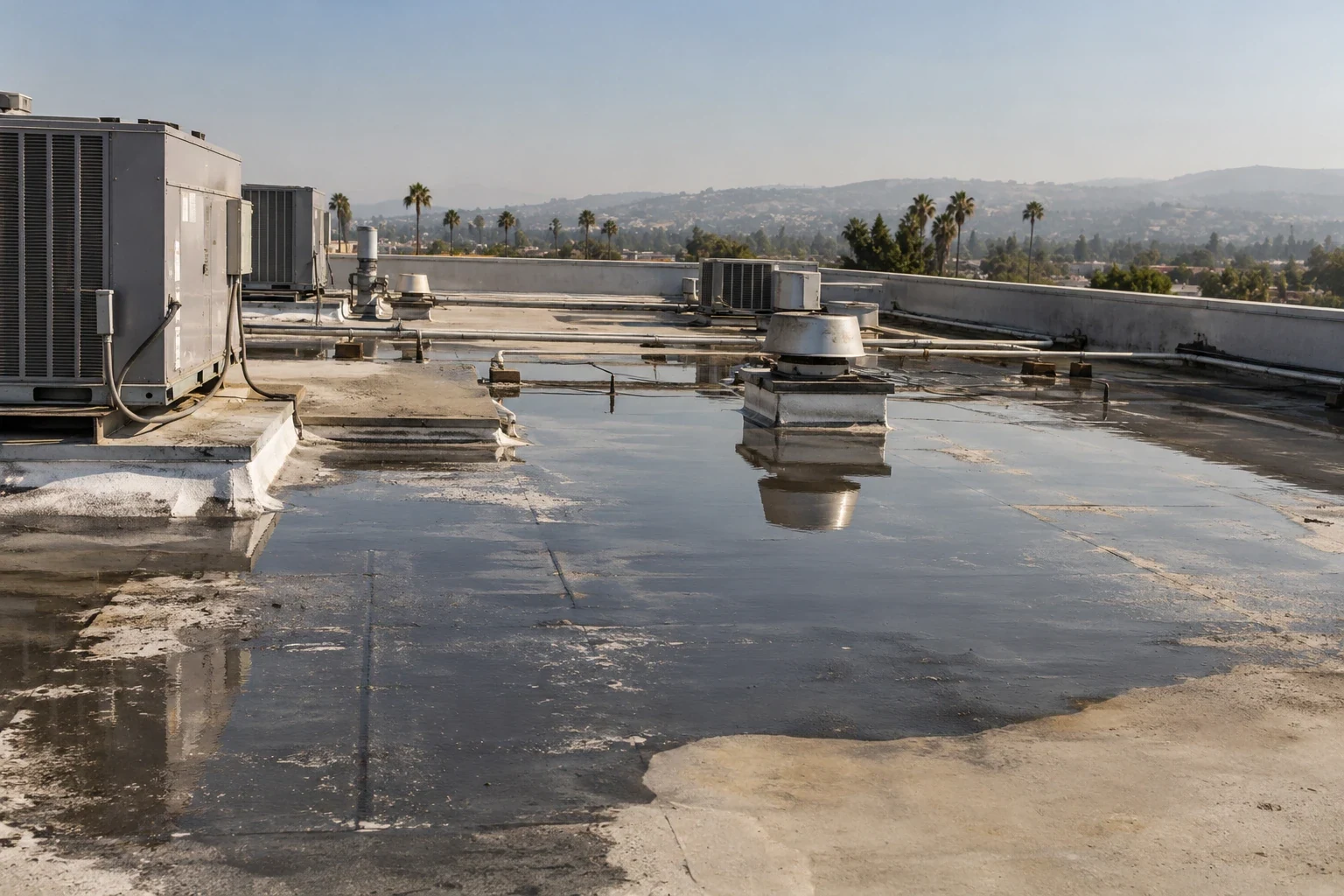
Trace the seam against the reported leak and the roof's drainage path. Water may follow a sheet lap or deck flute before reaching the interior. Check the low side of the opening, nearby drains, wall returns, and other transitions that intersect it. Mark a suspected route separately from a confirmed entry point. If interior materials are wet, note the affected location and any protection the building has already put in place.
The General Plan identifies Rialto commercial corridors along Foothill Boulevard, Riverside Avenue, Valley Boulevard, and near Baseline Road and Riverside Avenue. Those streets are planning references, not a statement about a particular property. A commercial-corridor service route still uses the roof plan and confirmed access points. A puncture inspection can isolate a separate impact opening near the seam.
Which Seam Repair Fits the Membrane?
Use a repair method compatible with the membrane and its joining method. A hot-air weld, adhesive-bonded strip, or other detail is not interchangeable across systems. Prepare the surface as specified, remove contamination, and extend the tie-in onto sound material. Test the finished edge and record the repair location. If the sheet has become brittle or the seam is split across a larger field, do not hide the condition under a small patch.
Rialto's Building Division checks projects against applicable California codes and City ordinances through plan review and inspection. A repair may have a different approval path from replacement, so confirm requirements for the proposed work. A TPO seam review or PVC membrane check can help identify system-specific details before the work order is finalized.
When Does the Seam Point to a Larger Scope?
One short opening with firm substrate and intact surrounding attachment may remain a local repair. Repeated separation along multiple seams, wet insulation, or sheet movement across the field can warrant more investigation. Compare the current finding with prior repair tickets. The report should explain whether the defect is isolated, what test remains, and what condition would make a broader repair or replacement the better scope.
Rialto adopted the Foothill Central Specific Plan in 2025, combining older planning geographies and updating land use, mobility, and infrastructure policies. The district is context for the service area, not evidence of a roof assembly. A replacement review can compare sections with repeated failures. If a penetration or wall termination joins the same lap, a flashing repair review can keep the connected detail visible in the project file.
How Should the Crew Close the Repair?
Define preparation, repair length, tie-in points, inspection checks, and temporary protection before the seam is opened. Stage material so the crew can close the section within the approved window. Keep debris out of drains and secure the roof at every pause. If an opening exposes wet layers, stop at the approved boundary and document the added condition rather than extending removal without authorization.
At closeout, label the repair on the roof plan and capture the finished lap from both ends and across its center. Record the system, materials, test result, and any adjacent seam being monitored. Give the facility contact a clear return point if a later check is needed. That makes the work repeatable and lets a future inspection distinguish a repaired seam from a new opening nearby.
What Should the Seam Record Preserve?
Keep the original report, section map, separation length, repair method, photographs, and open items together. Note whether the seam was probed, welded, adhered, or left for further testing. Record any substrate or attachment concern that could not be resolved during the visit. If temporary containment remains, state who will check it and when a permanent correction is expected.
Use consistent roof labels on future inspection routes and maintenance tickets. Broad local references like Gateway or Foothill Central do not replace the building's own roof plan. The closeout should tell the manager where the seam is, what work was performed, and what finding changes the next decision. That is how a recurring lap problem becomes a trackable condition rather than an unlocated leak report.
Commercial Roofing Questions
Can a small open seam be repaired without replacing the roof?
Yes, when surrounding sheet and attachment are sound and the repair can tie into stable material. We verify those conditions and state what remains outside the confirmed boundary.
Why does a repaired seam open again?
The substrate or sheet may still move, the repair may not have reached sound material, or water may be entering at a connected detail. We compare the new condition with the prior ticket before repeating the repair.
How do you check a seam on an occupied building?
We set an access route, protect the area below, and identify where the crew can work. The inspection record notes any seam that could not be reached during the approved window.
Does a roof inspection include moisture testing?
A visual inspection maps suspect areas. If hidden moisture could change the scope, we recommend targeted verification and mark each test location separately from the visible seam failure.
What should the repair ticket say?
Include roof section, seam length, system, preparation, tie-in detail, test result, and follow-up item. A labeled photo gives the next crew a clear location for comparison.
Related Roofing Work
Mark the Seam Before Choosing the Repair
Send the roof plan, leak location, system information, and repair history. We will inspect the lap and surrounding attachment, then set a compatible repair boundary.