
Before a BUR repair ticket is written, establish which roof layers are still attached and which area can be reached safely. A worn cap surface may sit over stable plies, or water may have entered below the visible opening. We map the reported zone, inspect the surfacing and transitions, and identify the test that would change the decision. The facility director receives a work order tied to the assembly, not just the stain location.
Rail-adjacent industrial and warehouse designations appear in both the northern and southern portions of Rialto's General Plan. The Agua Mansa plan is a large industrial corridor spanning several jurisdictions; only its Rialto portion belongs in a local work route. Receiving activity and access rules affect staging, while the roof's actual plies, drains, and perimeter determine the repair method.
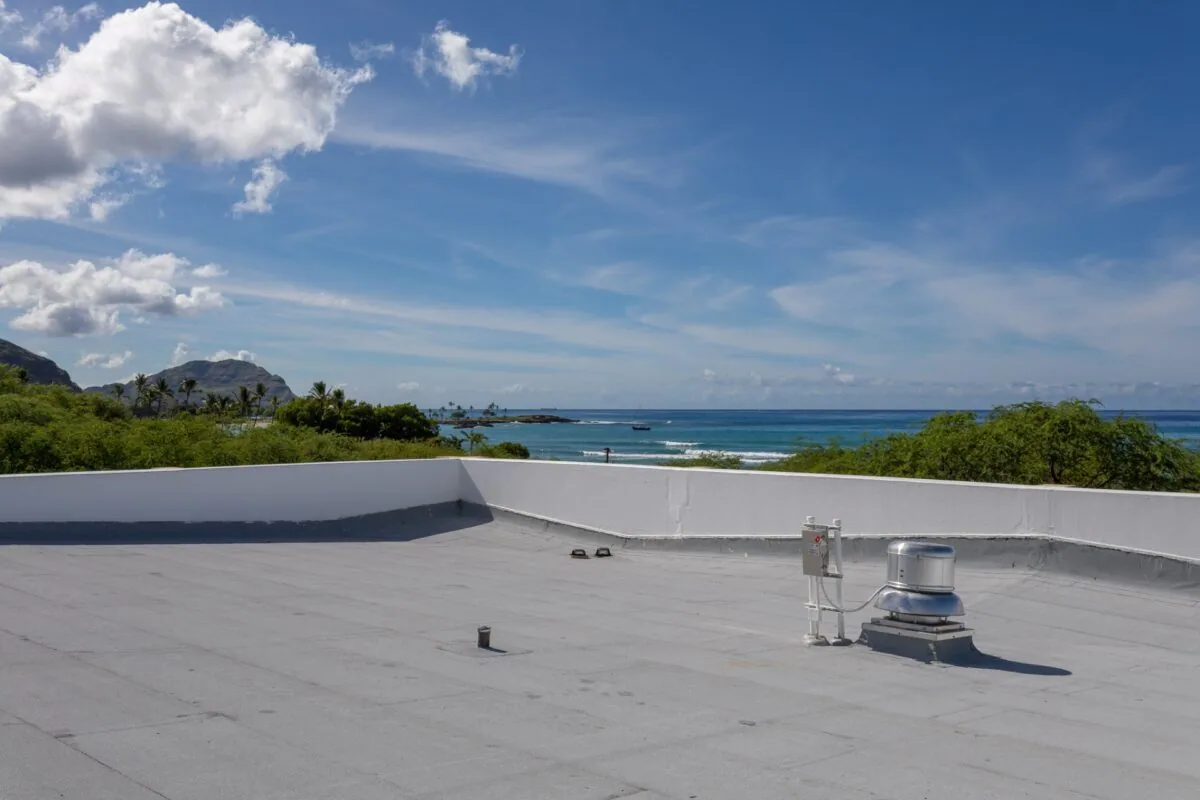
What Does the Cap Surface Tell Us?
Built-up roofing combines multiple bitumen-saturated plies with surfacing such as aggregate or a cap sheet. We check for displaced gravel, exposed bitumen, cracks, blisters, open laps, and areas where water remains. A surface defect may be local, but repeated splits or loose surfacing can point to movement below. We mark each condition on the roof section and avoid using the surface alone to describe concealed layers.
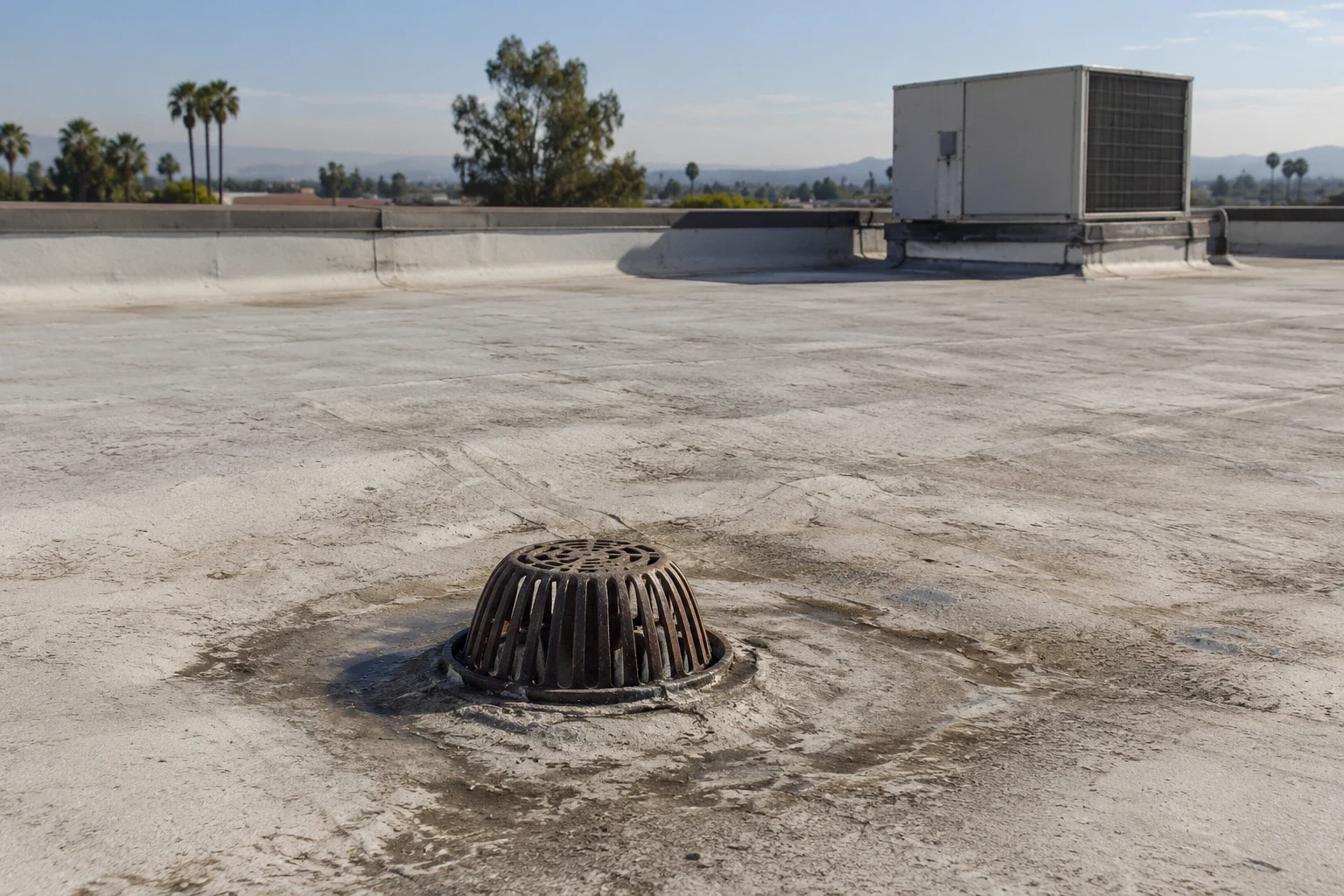
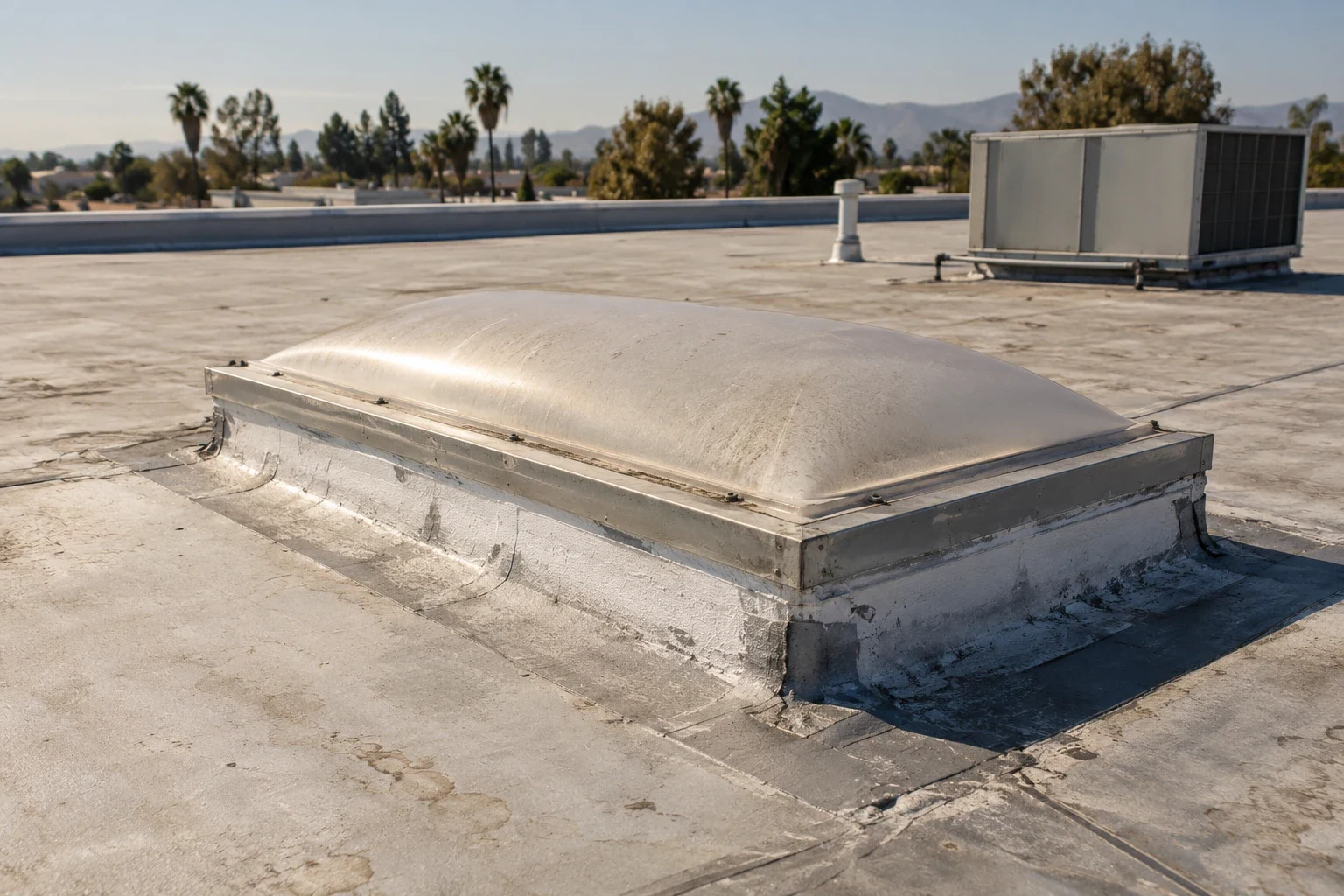
At a drain or wall, the BUR field turns into a separate detail. We inspect the bowl, clamping area, base flashing, and termination to see where the water path leaves the horizontal surface. A drain and scupper inspection can record outlet work apart from cap-sheet repairs. Where the roof joins a curb or pipe, a flashing check traces the plies and surfacing around that opening.
When Does a Test Opening Help?
Moisture can travel between plies and spread beyond the point where water entered. We compare ceiling reports, roof slope, seam openings, and repair history before choosing a test location. A core or approved test opening shows the layers and moisture at that spot. It does not sample every roof section, so we record the location and the decision the result can settle.
Rialto's climate plan identifies extreme heat, wildfire, flooding, and air pollution among City hazards and notes that hot days are a regular condition. We tie that context to the visible BUR condition, such as a split lap or exposed bitumen, rather than predict a roof failure rate. A moisture survey can help screen for areas that merit physical confirmation. The work order separates readings from confirmed wet layers.
How Is a BUR Repair Built Back?
A small opening can be repaired when surrounding plies are stable and the substrate accepts a new bond. We remove loose material, prepare the surface, install compatible bitumen and reinforcement, then restore the cap layer and surfacing. The tie-in should shed water and leave no exposed edge that can catch runoff. The crew records material, preparation, and repair size so the next visit can identify the same location.
Hot-applied, cold-applied, and self-adhered products carry different handling and application requirements. The existing assembly and project specifications guide the method. A modified-bitumen assembly also uses layered bituminous sheets, but its reinforcement and seams differ from a traditional BUR build-up. We do not substitute one system's repair method for the other without checking compatibility and substrate condition.
When Should the Work Extend Beyond One Area?
Repeated wet sections, loose plies, unstable surfacing, or a soft deck can make a spot repair too narrow. We measure the condition that was exposed and compare it with adjacent material. If the test confirms moisture beyond the planned area, the ticket lists the added removal and rebuilding rather than folding it into an undefined allowance. That keeps the owner involved when the work changes from a patch to a section repair.
Foothill Central combines two former Rialto planning areas into one adopted specific-plan geography. A property in that broad area may have a different access sequence from an industrial building near rail lines, but neither setting establishes roof condition. A commercial repair scope can isolate sound sections. When several layers or drain transitions need renewal, a replacement review may provide a clearer work order.
Can Another System Go Over the Plies?
Recovering BUR requires dry, attached layers and adequate height at drains, curbs, and perimeter edges. We check the existing surface and deck before recommending another assembly. If water is trapped between plies or attachment has released, covering the question can move the failure rather than correct it. The scope shows which areas were checked and where removal may be required to reach a stable base.
A foam roof review may be relevant when design conditions favor a different continuous surface, but it requires a sound, prepared base and detailed edge transitions. A recover assessment compares retained layers, moisture, and finished height before added material is considered. Cost and timing shift with tear-off quantity, substrate repairs, access, and how much roof can be closed during a work window.
What Should the BUR Register Carry Forward?
List the roof section, known layer sequence, surfacing, drain locations, repair dates, test points, and photographs. Separate opened layers from assumptions based on drawings. If an area could not be reached or remained concealed, note that boundary. A later crew should be able to distinguish a repaired ply from a new opening without relying on a general description of the roof.
For a Rialto permit plan filed after December 31, 2025, the governing edition is the 2025 California Building Standards, effective from January 1, 2026. The condition record can keep field observations with the work order and design review. For work along the Rialto commercial corridors, the facility contact confirms loading and roof-access constraints. The record states the next action, who needs to approve it, and what evidence would change the scope.
During removal, we identify each exposed ply, note where surfacing or bitumen changes, and check whether the deck remains suitable for the next layer. The crew does not close a roof section until the temporary edge and drain route are controlled. If a concealed condition changes the quantity, the work order records the exposed evidence and the approval needed before the next area opens. This creates a clear handoff between removal, rebuilding, and final closeout. We identify any temporary cap and the inspection required before the next shift.
Commercial Roofing Questions
How do you tell whether a BUR leak reaches the insulation?
We trace the reported path, inspect the cap and flashing, and select an opening only when the result could change the repair boundary. The record identifies the test location and the layers exposed there.
Can loose gravel be replaced without rebuilding the roof?
Sometimes. We check whether surfacing loss exposes stable plies or whether the underlying bitumen and reinforcement are also damaged. The work order separates surface restoration from any repair to the assembly below.
What changes the cost of a BUR repair?
The number of layers to remove, wet insulation, deck condition, access, drain details, surfacing, and hot-work controls all affect the scope. We list measured work separately from conditions that remain concealed.
Could a BUR roof be recovered?
A recover needs dry, attached layers, a stable deck, and workable heights at curbs, drains, and edges. We verify those conditions before comparing another layer with selective removal.
When is replacement more useful than repeated BUR patches?
If plies have separated across roof sections, moisture is broad, or the deck cannot support a reliable tie-in, a replacement review may be more useful. We map the affected zones and show the field findings behind that option.
Related Roofing Work
Put the BUR Layers on the Roof Register
Share the leak map, roof plan, prior repair tickets, and access window. We will inspect the plies, drains, and transitions, then set a work order with a measured repair boundary or larger-system recommendation.