
Water at a wall transition can pass behind flashing before it appears inside. We identify the reported area, inspect the roof section above it, and trace the membrane termination, metal, and counterflashing as a connected detail. The work order should name the failed component and the boundary of sound material. A bead of sealant over a moving joint is not a complete repair plan.
Rialto's land-use map recognizes a commercial node where Baseline meets Riverside, alongside business streets such as Foothill, Riverside, and Valley. These designations orient the address but do not locate a flashing defect. The Gateway Specific Plan map combines commercial and industrial categories; neither label establishes the condition of an individual roof edge. Those broad places give local context, but do not establish the detail installed on any particular roof. We inspect the actual transition and its drainage path before choosing a correction.
Which Transition Is Letting Water Through?
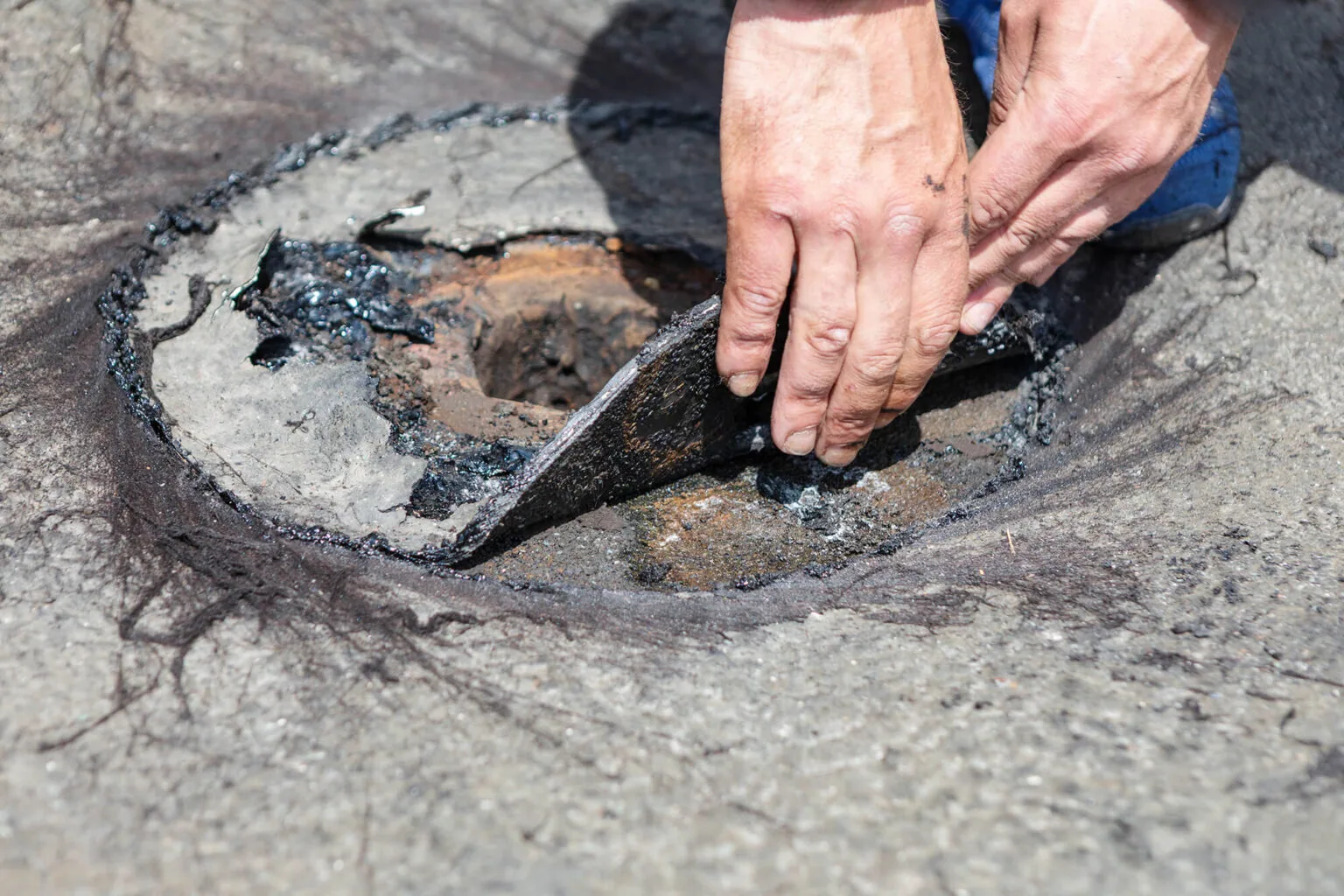
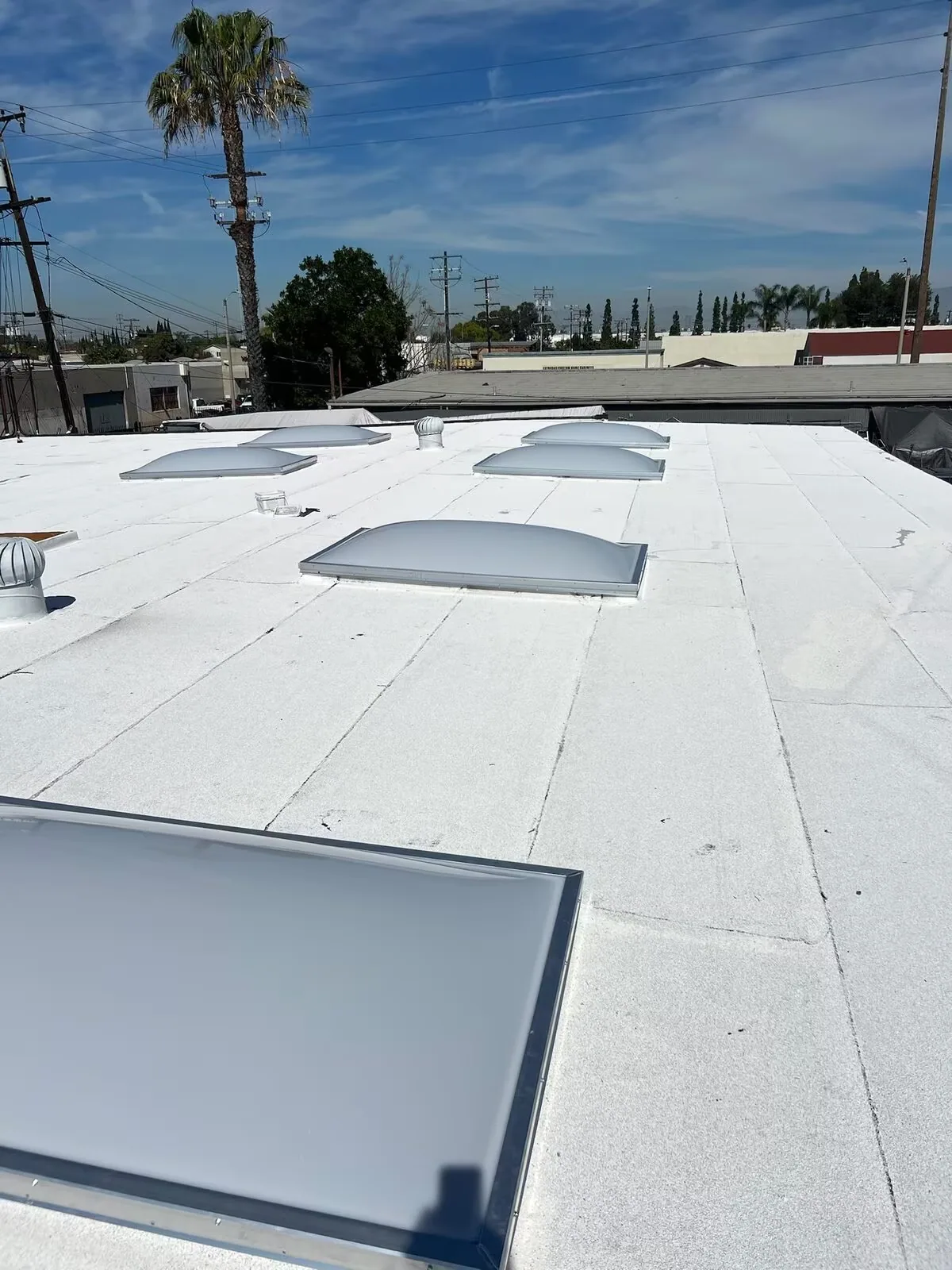
Locate the leak report, then inspect nearby curbs, parapets, equipment supports, skylights, drains, and wall terminations. Check for open joints, loose metal, failed fasteners, separated sealant, or a membrane edge that has lifted. Follow the water path rather than assuming the nearest flashing is responsible. Photograph each connection and note the roof section so the repair scope can be reviewed without repeating the same search.
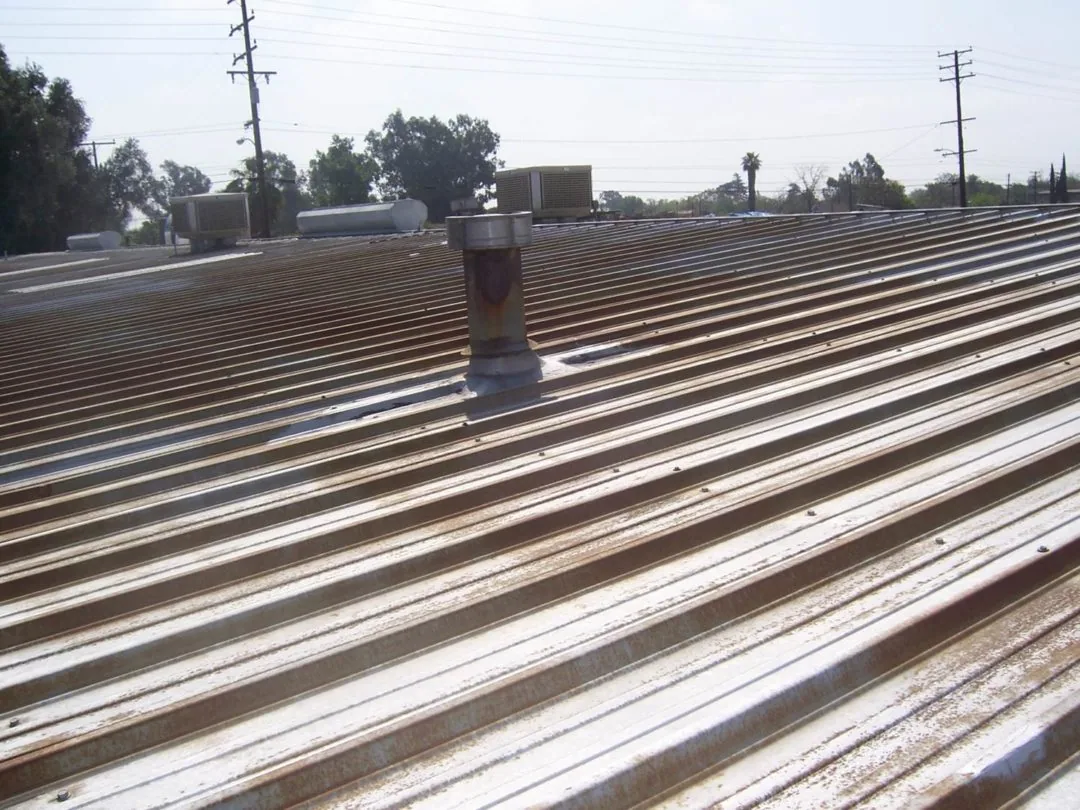
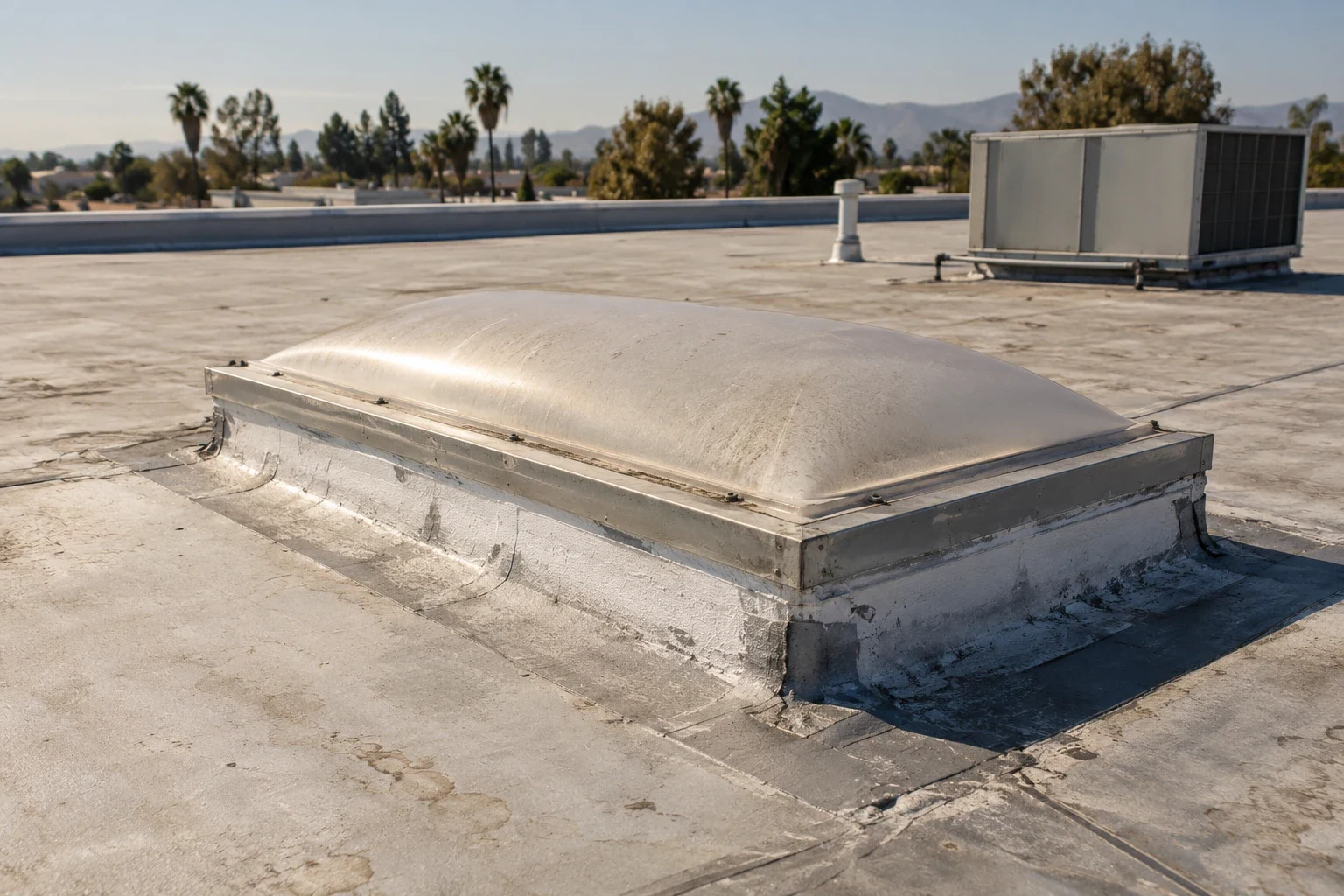
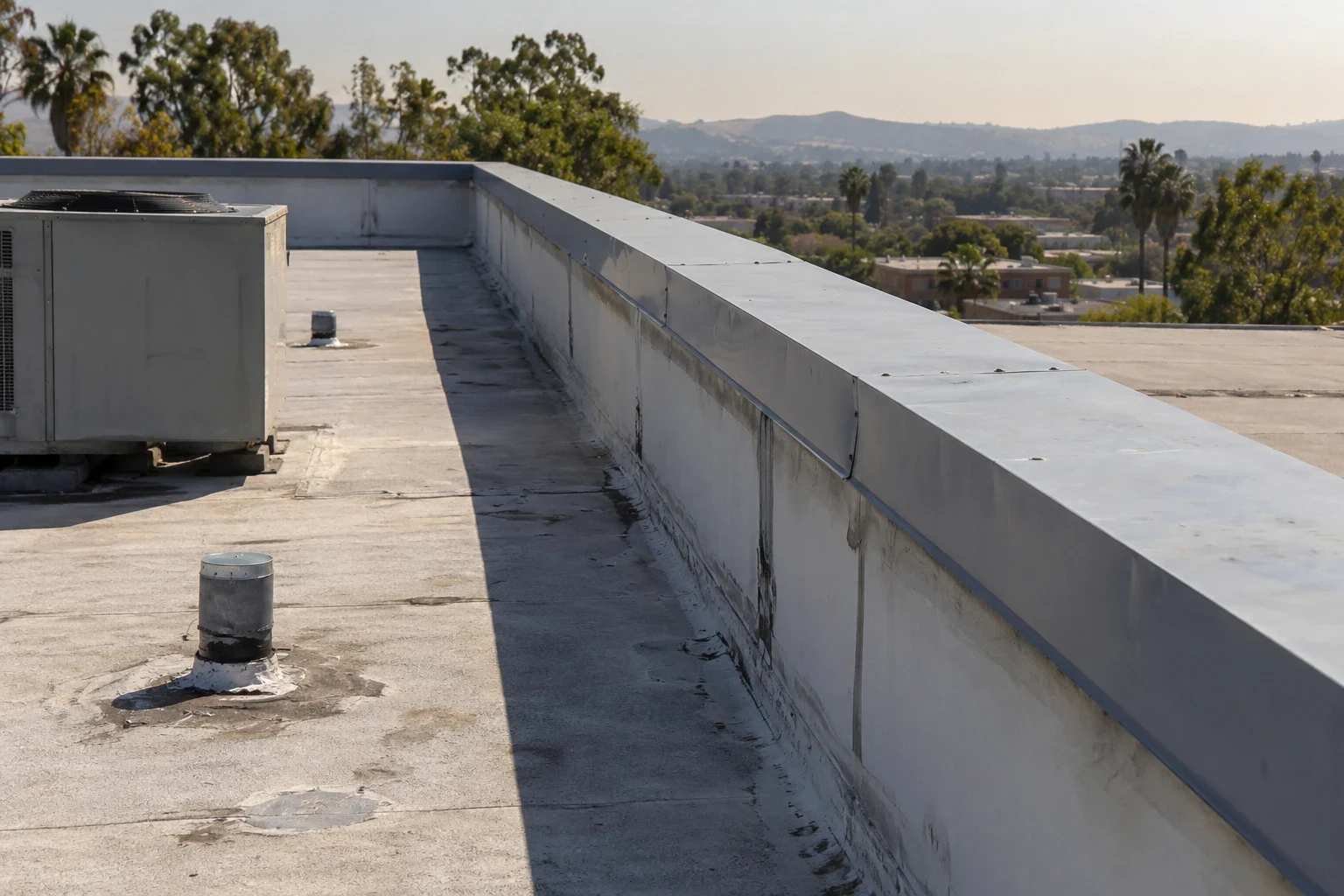
At a curb, verify the flashing height and termination. At a parapet, examine the membrane return and coping connection. At a drain, look at the clamping area and nearby field sheet. A penetration and curb inspection can isolate related details. If the metal itself has shifted, a coping and edge review can include securement and adjacent membrane.
What Does Sound Flashing Need to Show?
Check that the metal remains secure, the substrate is firm, the membrane ties into a stable edge, and the termination resists water entry. A visual surface seal does not tell us whether the material beneath it is loose or wet. Identify corrosion, movement, open laps, fastener pullout, or prior layers that prevent a compatible tie-in. Mark any concealed condition that could change the scope before covering the detail.
Rialto's climate plan treats extreme heat as a citywide hazard and reports that hot days are regular. The roof inspection still records the actual sealant and flashing condition at the property. The city's planning context does not predict a specific joint failure. A roof inspection can record the observed transition, while a moisture survey may help target confirmation when water could have moved behind the flashing.
How Far Should the Repair Extend?
Remove loose sealant and failed metal only to a boundary that can receive a stable repair. Check the adjacent membrane and substrate for sound attachment. Extend the work when a lap, fastener line, or wall return has also failed, but keep confirmed damage separate from areas awaiting a test. The ticket should state the removal limit, replacement material, fastening or termination method, and any edge that remains under observation.
In 2025, Rialto issued an updated Foothill Central framework that consolidated prior planning areas and revised policies for land use, circulation, and infrastructure. That broad district context does not set the repair boundary. A Foothill Central area visit still follows the roof's measured condition. If the opening follows a lifted lap as well as flashing, a seam failure review can give that connected defect its own inspection record.
What Should Happen Below the Failed Detail?
Before opening a flashing assembly, protect the room or equipment below under the building's procedures. Identify the interior report and keep temporary containment distinct from permanent work. If a wet area grows or the roof remains open between shifts, mark the temporary dry-in and who will inspect it. The property contact should know which access route or room is affected and when the crew expects to restore normal use.
A flashing leak can appear away from the entry point. Trace the route along deck, insulation, or wall construction and record where evidence stops. Do not promise that replacing one visible piece resolves a concealed path until the repair has been checked. A leak investigation can establish the route, and a wind-related roof assessment may help when the metal or termination has moved.
Which Repair Method Fits the Assembly?
Match the flashing detail to the membrane and project requirements. Metal replacement, membrane flashing, compatible sealant, and reinforcement serve different conditions. Confirm preparation, fastening, and termination requirements before selecting material. The proposal should not use one generic detail at every curb and parapet. If incompatible layers or wet substrate are present, identify the removal or test needed to create a sound tie-in.
Gateway's map spans several office, retail, highway-commercial, and industrial park uses. Those district categories are context only; the repair boundary follows inspected flashing and membrane details. Building use may affect access and staging, while the flashing repair remains a roof-level decision. A coating restoration assessment can address a broader surface plan when suitable, but it should not conceal a failed termination. The work order records which details were corrected and which remain for separate review.
When Does Flashing Failure Signal a Larger Problem?
One detached curb may be a localized repair. Similar failures across several roof sections, wet insulation, soft decking, or repeated leaks at different walls can indicate a broader assembly issue. Compare the repair history with the current inspection and test concealed conditions that change the recommendation. Show where repair remains appropriate and where the owner needs a larger replacement or capital review.
Rialto's City building staff review construction against California codes and local ordinances. Permit requirements depend on the proposed project, so confirm them before a larger work phase is scheduled. A replacement review can use the same detail map to compare options. The recommendation should include access constraints, removal boundaries, and how the building will be protected while transitions are open.
What Belongs in the Flashing Closeout?
Record the location, failure type, material removed, replacement detail, fasteners or termination used, and any follow-up check. Include photographs before removal and after tie-in, each labeled by roof section. Note whether moisture or substrate condition was verified and what remains uncertain. If the repair stops at a temporary dry-in, write that status directly so it is not recorded as a completed permanent detail.
Use the same roof-register label on the work order and future inspection route. Broad Rialto references such as Gateway and Foothill Central describe planning areas, not the condition of any particular flashing assembly. Keep the recommendation tied to what the crew saw. A later visit can then check the corrected transition, nearby seams, and drainage without confusing an old defect with a new report.
Commercial Roofing Questions
Can sealant alone repair loose flashing?
Only when the detail is sound and the selected sealant is compatible with the assembly. If metal, membrane, or substrate has moved, we correct that condition before sealing the joint.
Why does a roof leak appear away from a curb?
Water can travel along the deck or wall before showing indoors. We trace the report, inspect connected transitions, and mark where evidence ends rather than assigning the nearest curb by assumption.
What should be included in a flashing repair ticket?
Name the transition, removal limit, replacement material, termination method, and any test that remains open. Include labeled photographs so the property team can locate the repair later.
Can flashing be repaired during normal building operations?
Usually, when the site contact approves access and the area below is protected. We define the work zone and return route before removing a detail that could expose the roof.
When should repeated flashing repairs lead to replacement review?
If failures recur across sections or tests show wet layers and unstable attachment, a broader assembly review may be justified. We document those findings before expanding the scope.
Related Roofing Work
Trace the Failed Transition
Share the leak location, roof plan, prior flashing repairs, and access window. We will inspect the connected details and define a stable repair boundary.