
A repeat leak can leave a facilities director with two work orders and no shared roof map. We connect each building, roof section, observed condition, and next action in one register. A record should show what was inspected, what was repaired, and what still needs a decision. It should also identify access limits so a later visit does not mistake an unviewed area for a clean one.
The General Plan places warehouse and industrial uses near rail service and in multiple parts of Rialto. Asset records can use those area categories without assuming that nearby buildings share one roof condition. The City's commercial index names Foothill, Riverside, and Valley corridors and the Baseline/Riverside node. Use those labels only when they help managers sort property records. For a portfolio that spans different property types, location labels help sort records, but each roof needs its own assembly information and inspection route. The Rialto commercial-corridor review gives a broad map reference while the register stays tied to the properties included in the owner's request.

What belongs in the roof register?
Start with a property identifier, building name used by the owner, roof-area label, access point, and current plan version. Add system type only when it has been confirmed by drawings or field review. Then log each finding with a date, photo reference, location, severity, and disposition. Mark an item as repair, test, monitor, or capital review. Keep open questions visible rather than converting them into a material or failure claim.
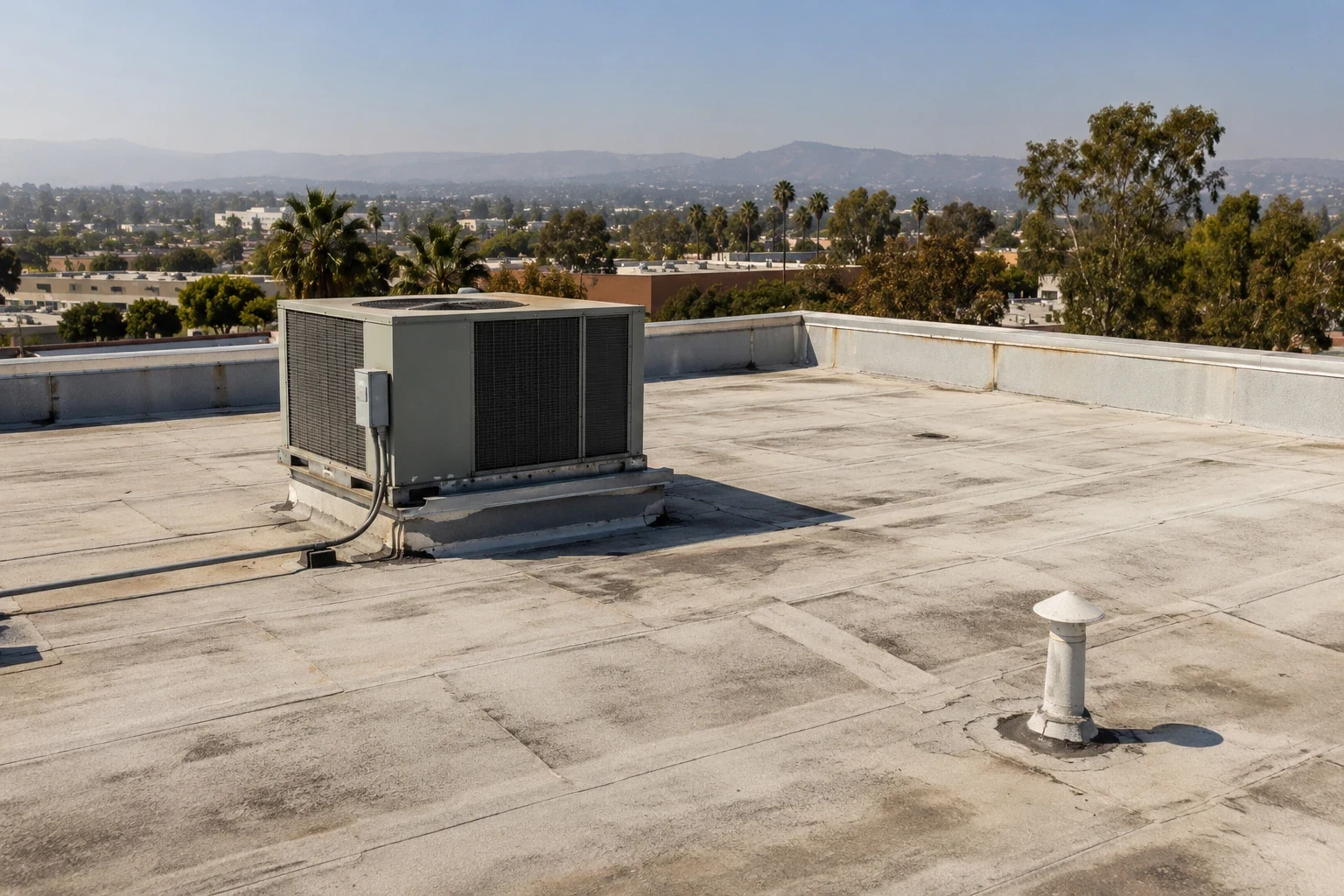
For each roof section, capture seams, penetrations, curbs, drainage, perimeter metal, visible movement, and prior repair points. Note whether the assembly was walked, viewed from a restricted route, or sampled. A condition report can provide the observations and photos that feed the register. A hands-on roof inspection can update a building entry when a new leak or repair creates a reason to revisit it.
The owner may already have a work-order system. We can use its building codes and maintenance labels when they match the roof plan. If labels do not line up, first reconcile them with the facility contact. That small step prevents separate teams from calling the same roof zone by different names. The register remains useful when a property manager changes because the record describes the location rather than depending on one employee's memory.
How does repair history change the next inspection?
A patch is not just a completed ticket. Record the membrane or flashing detail that was opened, the preparation performed, material used, repair boundary, and any test or inspection completed afterward. If the work stopped at temporary containment, keep that status open and assign a follow-up. When the same area appears in a new leak report, the prior record can show whether the symptom returned at the repair or appeared along another path.
Use one set of roof-zone labels for photos, tickets, maintenance schedules, and contractor scopes. A preventive maintenance visit can check drains and details already listed for review. If moisture could alter the repair boundary, an infrared moisture survey can help identify candidate areas for confirmation. The register should distinguish an indication from a verified wet assembly so the next budget does not carry more certainty than the test provides.
Rialto's adopted climate plan treats recurrent high temperatures as a community-level risk, not as a roof inspection result. That context can inform maintenance timing, but it is not a roof-level forecast. We record the actual surface, seam, sealant, and flashing conditions found at the asset. A dated inspection history lets the owner compare those observations over time without assigning a temperature or failure rate to an individual building.
How should a director sort work across properties?
Priority should follow exposure, active water entry, safety, operational effect, and the time needed to restore a reliable condition. One list can separate urgent containment from permanent repair and planned replacement. The record should identify who owns each action and what evidence will close it. This helps a director avoid treating every roof item as an emergency or leaving a consequential defect in a general maintenance queue.
Rialto's Agua Mansa planning geography crosses portions of Rialto, Colton, and two counties; only the Rialto portion belongs in an in-city location view. A group of buildings near that corridor may share access or vehicle movement considerations, but that does not establish their roof types. Each asset should retain its own roof plan, gate instructions, and work windows. A Rialto-side Agua Mansa overview can situate those properties while the action list stays building-specific.
For a confirmed repair, the register can link the finding to a repair ticket with work boundaries and follow-up. When defects span multiple sections, a replacement assessment can support a broader comparison. Do not replace the underlying condition record with a priority score; the score helps sequence work, while the Diligence Notes explain why an item received that priority.
When should the roof register feed a capital plan?
Repeated repairs, confirmed wet materials, attachment concerns, extensive deterioration, or a system that no longer supports practical patching can move an item into capital review. The register should retain the evidence, not just an estimated renewal year. For each candidate, note roof area, test limits, access needs, penetrations, and work that another trade may need to perform. Those items affect scope, sequencing, and comparable pricing.
A roof capital planning review can group confirmed conditions with budget timing and operating constraints. If a funding decision is still distant, keep the record current through an inspection or maintenance visit. Do not treat the register as a warranty determination or remaining-life promise. A useful asset file states what is known, what could change, and which next check would reduce uncertainty.
For proposed work, the City's review process checks submitted construction plans and inspects completed work under applicable state code and municipal rules. For a proposed roof project, that published process belongs in the planning file alongside drawings, scopes, and approvals. The asset record should point to the applicable submittal and review status once established; it should not infer permit requirements from a maintenance inspection.
What should the next facilities employee receive?
Provide a current asset list, roof plans, repair tickets, warranty documents, known access restrictions, and the person authorized to approve work. The handoff should identify the last inspection date and any item still marked temporary, pending a test, or awaiting a capital decision. We can walk the register with the facilities director and confirm which building names and roof labels should continue into new reports.
After a visit, return photos and notes using those same labels. State which areas were covered, which were inaccessible, and whether the repair changed the condition. The owner can then assign a next action without reopening the entire history. A common multi-site process can standardize records across buildings while preserving separate conditions, approvals, and schedules for each one.
Commercial Roofing Questions
Can the register include roofs owned in different divisions?
Yes. We can use the owner's asset identifiers and retain separate roof sections, contacts, and access rules for each property. The register should show the reporting structure without merging distinct assemblies.
What if the existing roof type is unknown?
Leave the field unconfirmed until drawings or inspection support a system name. The record can still capture visible layers, transitions, and test locations without presenting an assumption as a verified assembly.
How should an open leak ticket appear?
Keep immediate containment and permanent correction as distinct actions. The entry names who owns the follow-up and what inspection or repair will close the ticket.
Can old work orders be added to the asset file?
Yes, when they include a usable building or section reference. We can retain the original date and description, then link it to the current roof map without rewriting it as a new inspection.
Does a roof register predict replacement timing?
It supports a timing decision by organizing conditions and repair history. Replacement planning still depends on assembly review, testing where needed, project scope, and the owner's budget cycle.
Related Roofing Work
Put each roof condition on a usable record
Schedule a portfolio review and share the current asset list, roof plans, open tickets, access rules, and capital priorities. We will map the first set of roof sections and return records that support assigned actions.