
Start with the work order and the roof section above the report. A lifted TPO lap, wet insulation, or water beside a drain can send a crew in different directions. We confirm the leak location, choose an authorized access route, and inspect the membrane before setting a repair boundary. The first visit records what is visible, what needs a test, and which operating limits affect the crew sequence.
Baseline Road at Riverside Avenue appears in Rialto's commercial-area planning; warehouse and industrial uses also cluster near rail lines in the City's northern and southern areas. For a TPO assessment, the access plan sets how we reach the field, while the roof register records weld continuity, attachment, and drainage at the installed assembly.
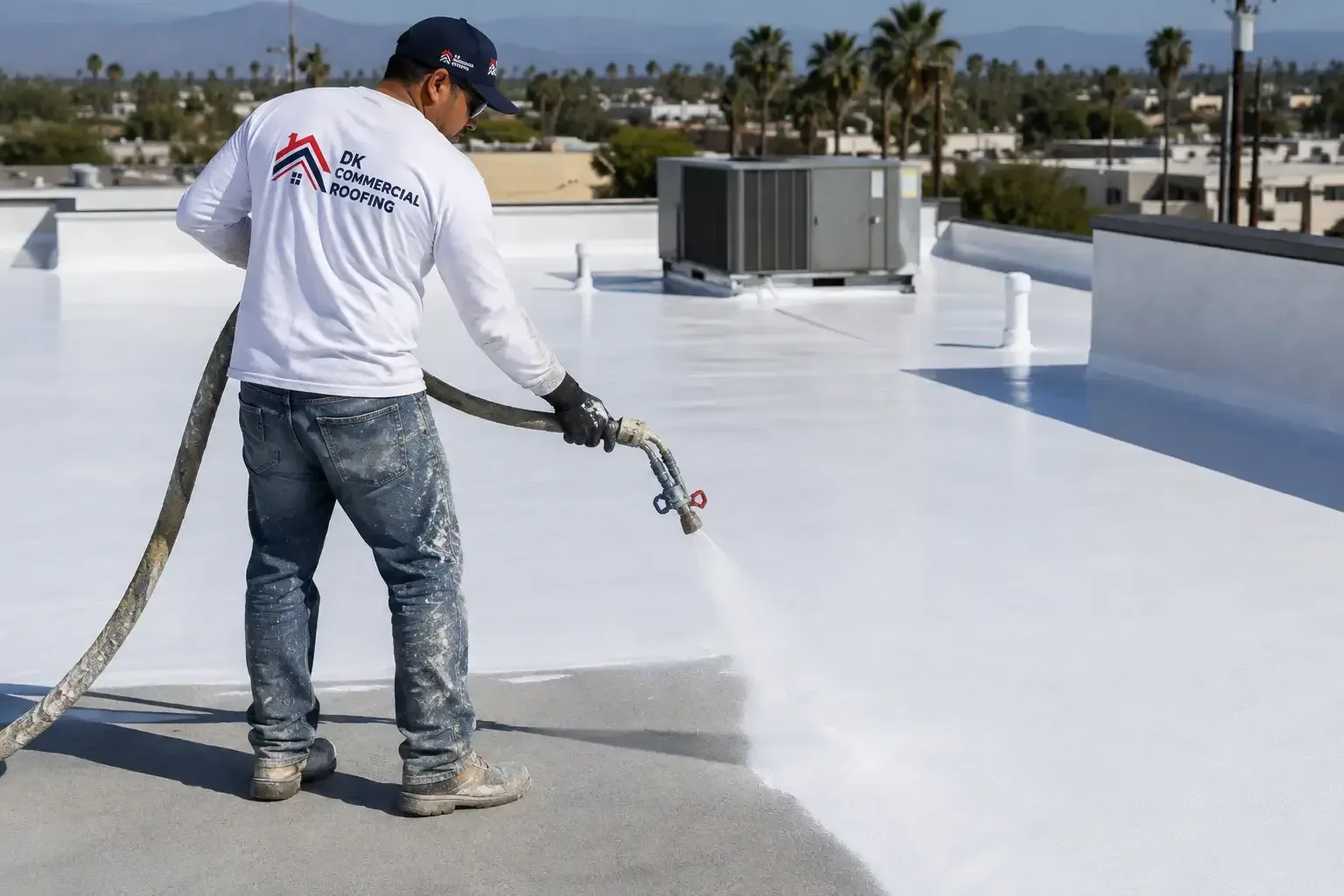
What Does the Weld Need to Show?
TPO sheet edges join through hot-air welding. A seam can look closed at a glance and still have a narrow unbonded channel, especially at a patch edge, corner, or change in plane. We inspect the full lap, probe it where conditions allow, and mark the point where separation begins and ends. At corners and patch edges, we check for residue or incompatible material before making a new TPO weld.
A sound repair needs clean, compatible membrane and enough intact sheet around the opening for a stable tie-in. If a local split has reached a curb or edge, we follow the connected detail before setting the work order. A penetration flashing inspection can include the boots, corners, and terminations beside the field seam. We record any exposed area that remains outside the confirmed repair limit.
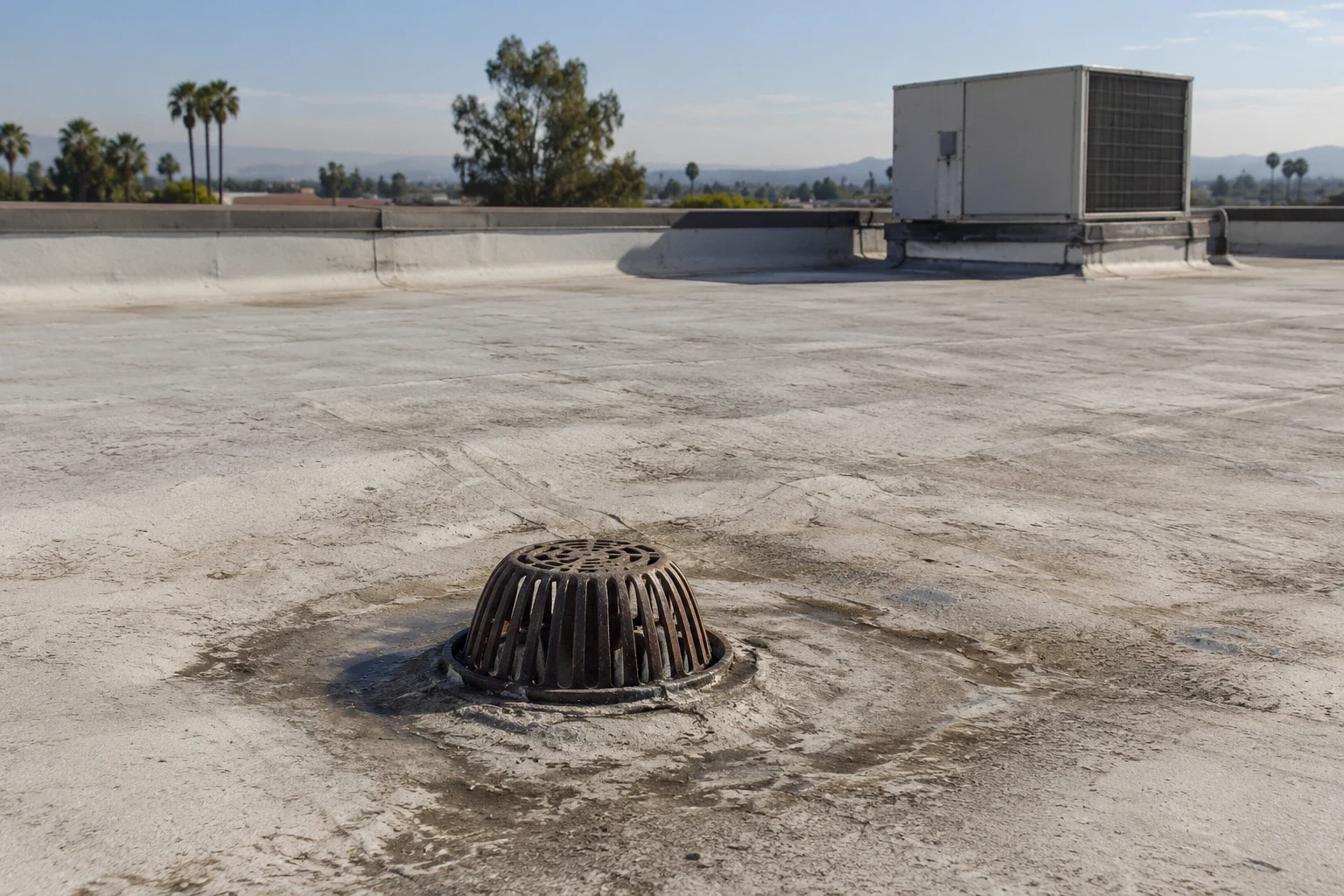
Where Does Runoff Leave the Sheet?
A drain can be clear while a raised lap or low point holds water beside it. We trace the slope toward the bowl, inspect the membrane connection, and check whether the overflow has an open route. Debris removal is a maintenance item; a loose flange or detached membrane requires correction at the assembly. Keeping those conditions separate prevents a cleared outlet from being mistaken for a repaired roof.
Rialto's plan names extreme heat, flooding, wildfire, and air pollution as City hazards and describes hot days as regular. For TPO work, confirm product limits and check the sheet at the seam and drain before heating a repair. A drain and scupper review records outlet details and the water route. The recommendation follows the roof condition and the selected system's installation requirements.
How Is the Sheet Secured?
A TPO roof may be mechanically attached, adhered, or ballasted where the assembly design allows it. Each method changes what the inspector can see at seams, edges, and transitions. We look for exposed fastener plates, loose rows, adhesive release, or movement at the perimeter. A closed weld does not establish that the insulation or deck below remains stable, so a soft area or repeated separation may call for a targeted opening.
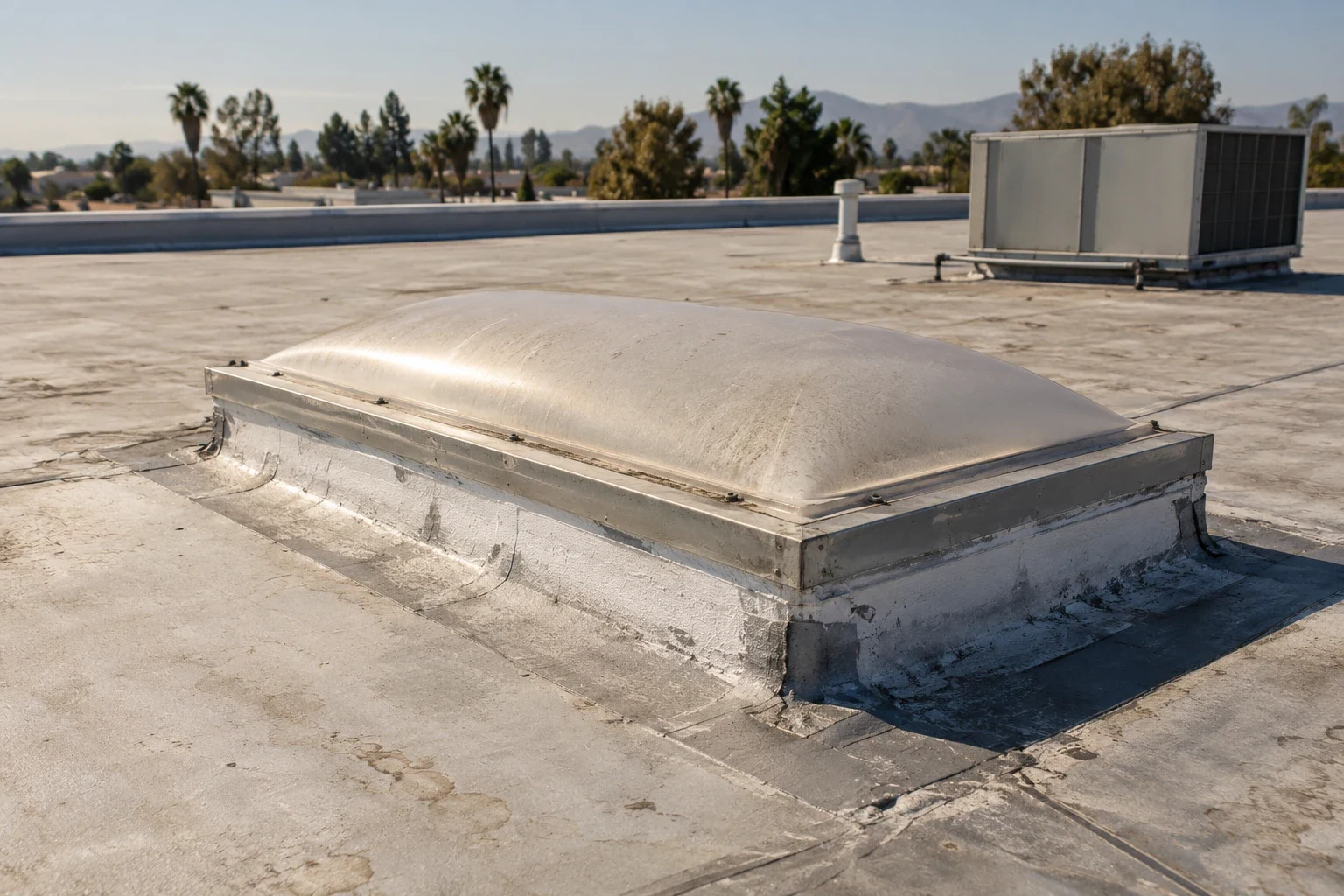
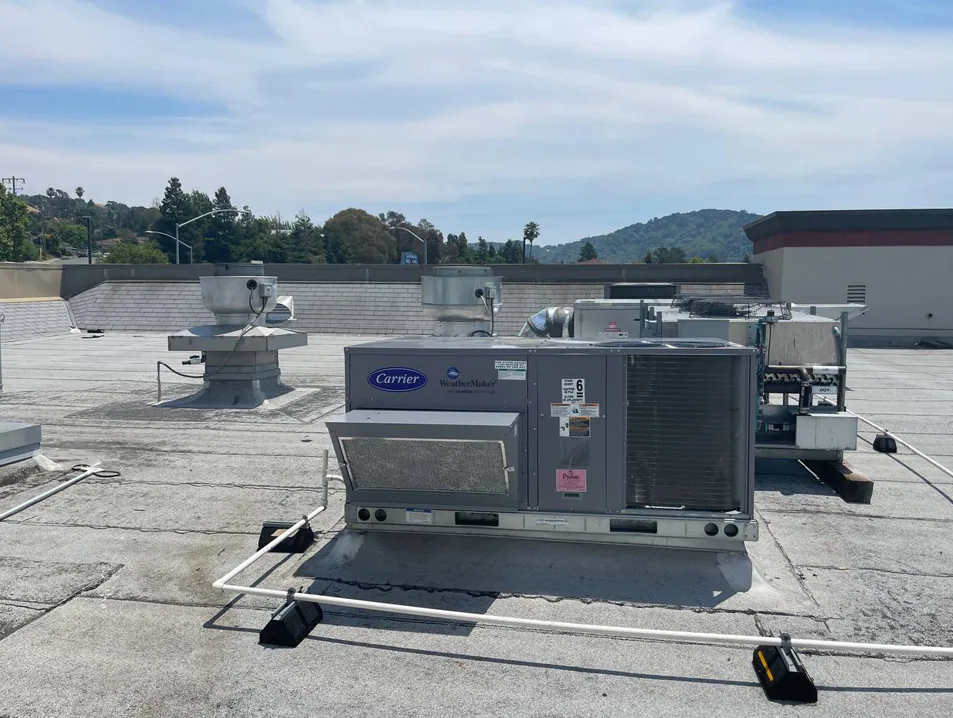
At a curb, pipe boot, or rooftop support, the flashing detail has to connect to the installed sheet without leaving a route behind the membrane. We mark equipment clearances and confirm whether another trade needs access before roofing work starts. A curb and support inspection can identify a transition that needs to be included in the tie-in. The Diligence Notes keeps attachment observations separate from concealed conditions.
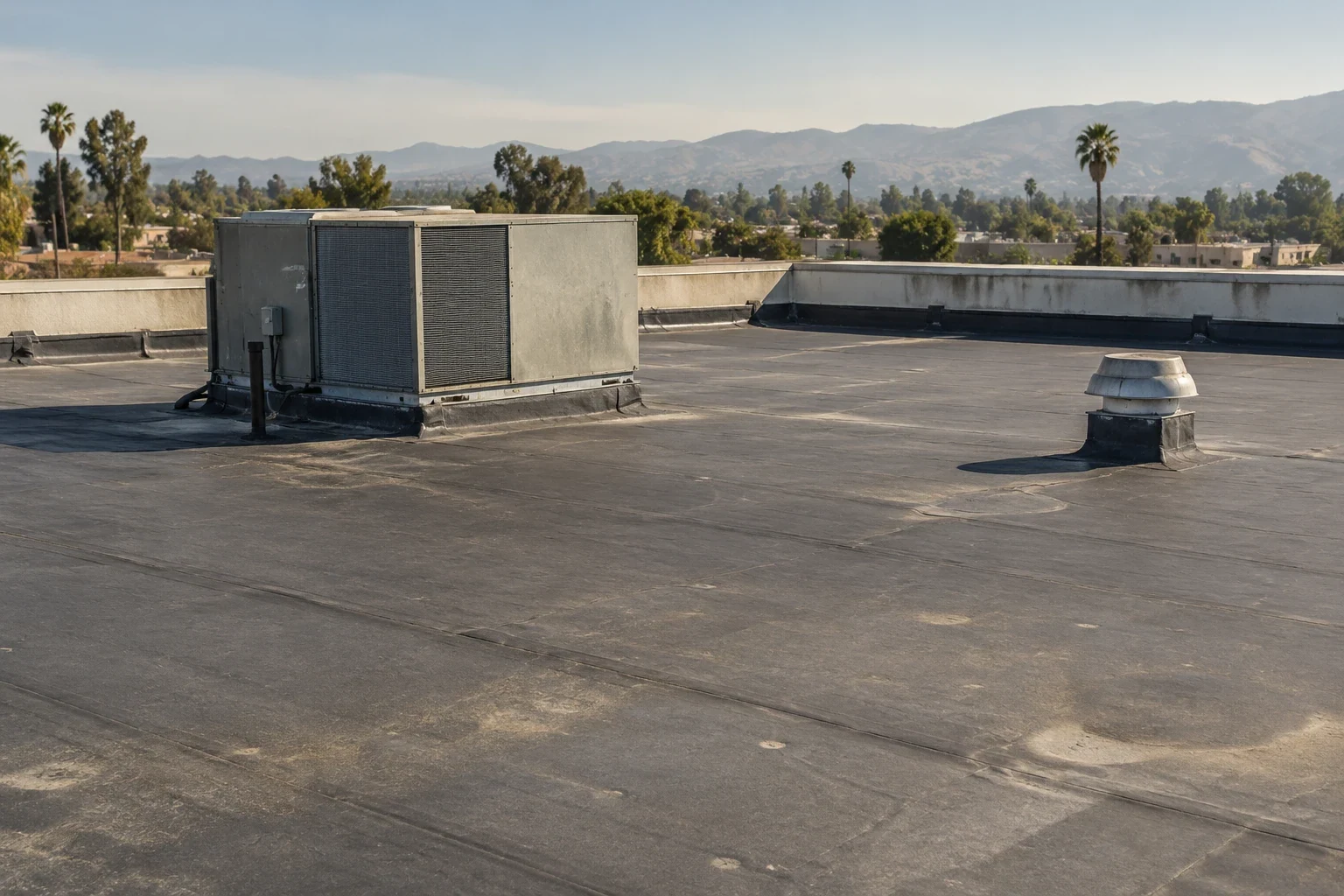
When Can a Weld Repair Stay Local?
A small seam opening can remain a repair ticket when the surrounding sheet is flexible, the substrate is firm, and the adjacent weld holds. We remove loose material, prepare the surface, and heat-weld a compatible patch over sound membrane. The crew tests the finished edge and records the repair location. If moisture, repeated movement, or a weak deck continues beyond the test area, the scope needs a wider measured boundary.
On Rialto's map, the Gateway Specific Plan Area assigns office-park and industrial-park designations. For a TPO work order, mark the receiving window, then record attachment observations and seam-test results for the roof section under review. We separate urgent containment from a lasting correction, then compare the repair with a recover evaluation when existing layers and drainage can support another assembly. Each option uses the same field evidence.
What Changes a Recover or Replacement Plan?
A recover depends on dry layers, secure attachment, sound deck support, and enough height at drains and curbs to finish the new membrane. We verify those points before proposing additional material. If wet insulation reaches several roof sections or attachment has released across the field, tear-off may be the more direct scope. The work order identifies removal limits, substrate assumptions, insulation, new sheet, edge details, and temporary dry-in points. When another membrane fits the observed conditions better, a PVC roof system has its own seam and flashing requirements, while an EPDM assembly uses a different joining method.
For Rialto plans submitted after December 31, 2025, the review edition is the 2025 California Building Standards, in force from January 1, 2026. A TPO reroof package can identify attachment, insulation, weld, and edge details for that review; field observations remain separate from approval. A commercial roof inspection can set the condition record before a capital decision. For corridor properties, the Rialto commercial corridors are planning geography; actual staging still follows the facility's loading and access rules.
Which Details Move Cost and Timing?
Repair size, membrane thickness, attachment, access, number of curbs, drain condition, and removal depth all affect the crew sequence. Weather and the time available to open a roof section can also change how much work fits in a shift. We distinguish measured items from allowances for layers that remain concealed. If a test shows wet insulation or deck deterioration outside the expected area, the owner receives the finding before the boundary changes.
The condition record should identify the installed system, seam locations, attachment where visible, drainage, prior patches, and photos by roof section. A roof condition report can keep that evidence together for later maintenance or capital review. The same record shows what could not be inspected and what test would answer the remaining question. That gives the facility director a usable next step instead of a membrane name without a defined work order.
Commercial Roofing Questions
How do you tell whether a TPO seam is open?
At a suspect TPO lap, we test the weld where safe and mark the first separation point. A weak bond, lifted edge, or contaminated section is recorded by roof zone. We also check attachment and nearby insulation before deciding whether the repair stops at the seam or needs a wider test.
Can TPO be installed over the existing roof?
A recover is a candidate only when retained layers are dry and firmly attached, the deck can support them, and curbs and drains leave adequate height. We verify those conditions before recommending another TPO sheet. If moisture would be trapped below the new sheet, removal belongs in the comparison.
Does a warehouse use mean TPO is the right choice?
No. We identify the installed system, roof slope, equipment, insulation, attachment, and access limits first. A warehouse near a Rialto rail or industrial area still needs a roof-specific review; the surrounding land use does not specify the membrane.
What should a TPO repair work order include?
Name the seam or flashing detail, patch material, preparation, tie-in limit, and any test that could extend the work. Include roof access and operating constraints so the crew can isolate the section and restore a watertight boundary within the planned window.
When should a local seam repair become a larger review?
Repeated openings, soft substrate, wet insulation, or movement along several fastener rows can change the decision. We map the affected area and explain which test would separate a local weld issue from broader assembly work.
Related Roofing Work
Set the TPO Inspection Route
Share the leak location, roof plan, recent repair tickets, and access window. We will check the membrane and adjoining details, then prepare a measured repair work order or a larger-system recommendation.