
A unit that has shifted, a pipe support with a loose base, or a curb with an open corner changes the work order. We identify the equipment, the affected roof section, and the safe route before a mechanic or roofing crew moves onto the roof. Then we check the curb line, flashing, fasteners, nearby seams, and the drain path. The facility director gets a clear split between a roofing correction, an equipment coordination item, and any condition that needs a closer look.
Rialto planning materials identify Foothill Boulevard and Riverside Avenue as commercial locations. That map context helps label a dispatch, but it does not decide how a mechanic reaches a unit or where the roofing crew can stage. We inspect each support's membrane and sealant in place, then plan work around the equipment and approved roof route. A Rialto commercial-corridor roof review can keep the property route tied to its actual access and use.

What changes the condition at a curb?
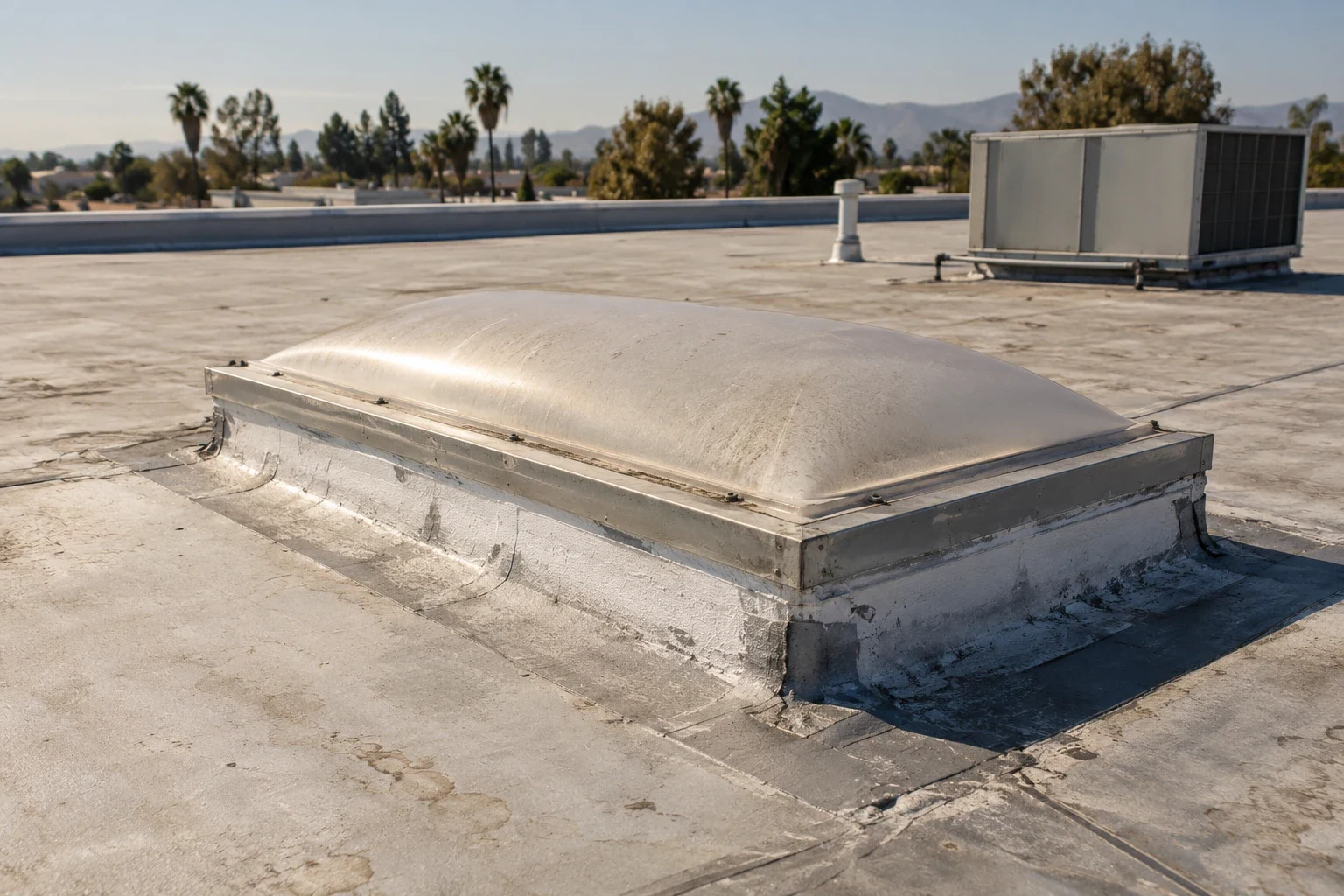
A curb is a raised frame through the roof assembly, so the membrane must turn up its sides and terminate without leaving a path behind the flashing. We inspect corners, lap seams, counterflashing, sealant, and the connection to the field membrane. A split at one corner may be local. A broad gap, soft substrate, or recurring patch can point to movement or a detail that needs to be rebuilt. We note the exact side and corner so a mechanic can recognize the same condition.
Equipment vibration can loosen fasteners or work at a transition, but the visible unit does not tell us which component moved. We check the curb perimeter and adjacent membrane before assigning cause. If the equipment contractor must lift or reset a unit, the roofing scope needs a sequence for temporary protection and final flashing. Our roof inspection route can document the existing curb and surrounding field before other trades begin. That record gives both crews a defined baseline and avoids treating a temporary opening as a finished roof detail.
How do we check pipe and equipment supports?
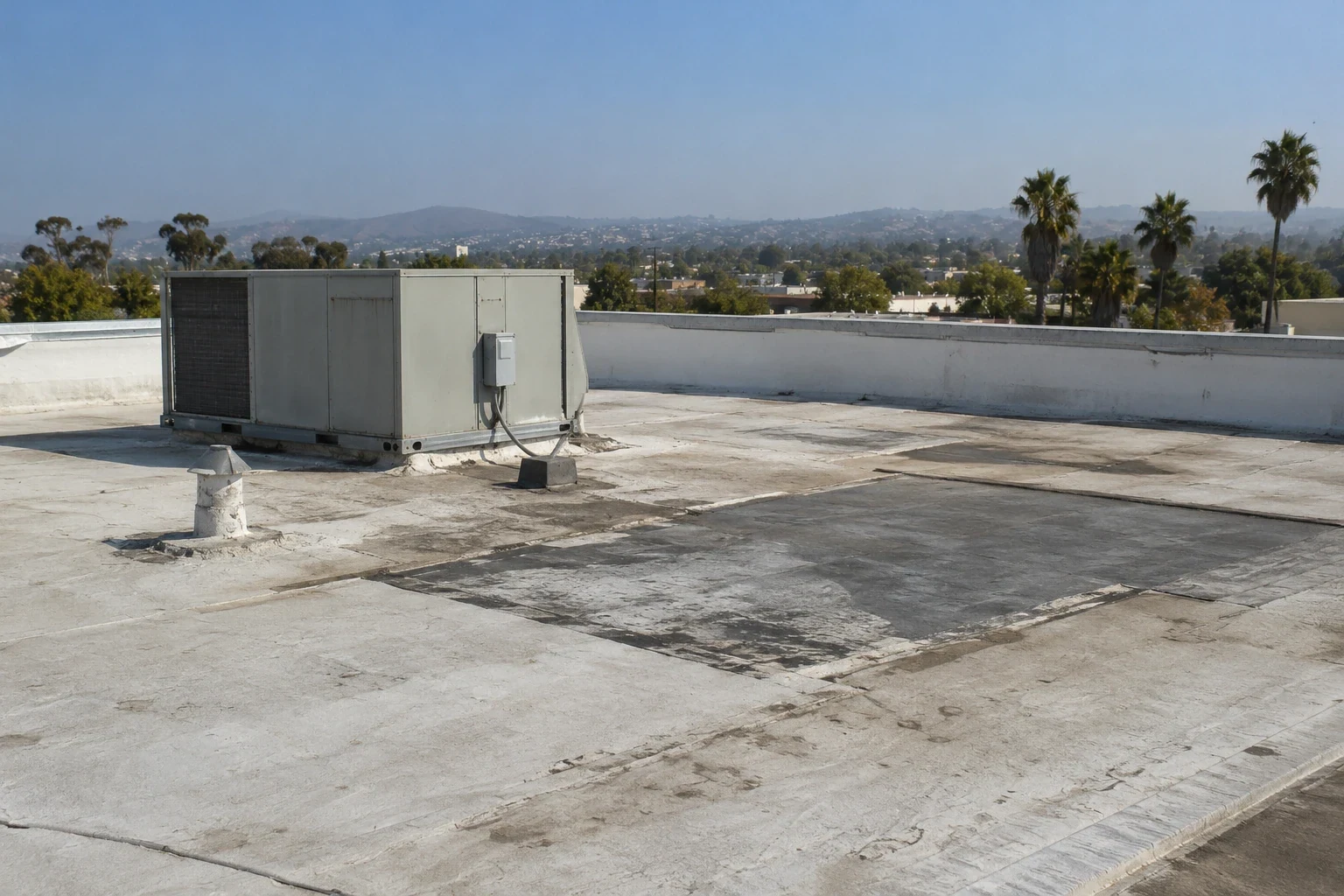
A pipe shoe or equipment rail transfers load through a small footprint. We inspect the base, attachment, bearing surface, and any pad that separates metal from the roof. The support should not cut, crush, or trap water against the membrane. If the base rocks or the fasteners have backed out, we record that movement and isolate the immediate roof repair from any structural or mechanical work that needs another trade. We do not cover a loose base with a patch and call the support secure.
The inspection also checks whether a support blocks drainage or leaves a debris pocket. A raised pad can divert water into a seam or keep the drain path from clearing. Where the issue reaches the membrane, commercial roof repair can address the damaged surface and tie-in. When water is already inside, leak tracing follows the interior report back to the roof area. Each ticket should state which support was checked, what was repaired, and which equipment decision remains with the building's mechanical vendor.
What access window should the work order allow?
Before the crew stages tools, we confirm the hatch or ladder, fall-protection requirements, escort rules, equipment shutdown limits, and the route across the roof. The facility contact identifies units that cannot be interrupted and the hours when roof access is available. If a crane or lift is part of the mechanical scope, its setup and pick sequence must be coordinated separately from membrane work. We keep temporary openings protected and record which sections remain closed until final flashing is complete.
City land-use maps distinguish commercial blocks from industrial and receiving areas. Before equipment work begins, the site contact marks the actual loading path, any occupied space below, and the ground zone reserved for a lift or material cart. The access sketch should connect that ground boundary with the route across the roof. For a larger warehouse roof scope, we can break the work into sections and mark the equipment areas that need separate coordination. This keeps an access note specific to the building rather than treating every unit as interchangeable.
When is a patch enough, and when is a rebuild needed?
A small opening at a sound curb, with dry material and stable attachment around it, may support a localized repair. A curb with widespread separation, wet insulation, corroded attachment, or several failed corners needs a broader scope. We map the perimeter, check the transition to the field membrane, and identify any drain or edge detail affected by the repair. If the assembly below is uncertain, a targeted opening may be more useful than adding another layer over the curb.
The written work order separates immediate weather protection from the permanent correction. It names the roof section, describes what will be removed and restored, and calls out any equipment vendor action that must happen before closeout. A condition record can retain photos and repair notes for the next inspection. If the curb is part of a wider project, replacement planning should carry the equipment transitions into the new assembly details. The owner can then compare a local repair with the cost and disruption of correcting several related details at once.
What should the closeout record show?
Closeout should identify each curb or support by roof section, note the observed condition, and include photos of the completed flashing and surrounding membrane. We record whether the mechanical vendor reset equipment, whether a support remains isolated, and whether a follow-up check is needed after the unit returns to service. If an area could not be reached or the equipment could not be moved, that limit belongs in the record. A clear handoff prevents the next shift from mistaking unfinished coordination for completed roof work.
Share the equipment list, prior leak tickets, roof plan, access rules, and the name of the person coordinating mechanical work before the visit. We will set the route, mark the curb and support locations, and prepare the repair ticket around the operating window. For a building in the Rialto portion of the Agua Mansa industrial corridor, the access note should distinguish the city's area from the larger plan geography that also reaches Colton and neighboring county land. Schedule an inspection or discuss a current leak so the first visit can focus on the detail that is moving water.
Commercial Roofing Questions
Does every curb leak require the equipment to be removed?
The repair boundary decides that. We inspect the curb sides and corners first; if the membrane can be safely tied in with the unit in place, a local correction may work. A damaged curb, inaccessible flashing, or a mechanical reset can require a coordinated shutdown or lift.
Can a loose pipe support be secured as part of roofing work?
The base and membrane connection are checked separately. We can correct roof damage and coordinate the support detail, but the work order identifies any load or pipe adjustment that belongs to the mechanical trade. The closeout then records which part was completed by each crew.
What if water collects beside the equipment frame?
A blocked drain path or support layout may be redirecting runoff. We clear and inspect the route, then check the membrane and flashing where water meets the curb. If the assembly has softened or opened, the scope includes that repair rather than relying on debris removal alone.
What should we send before the Rialto roof visit?
The equipment list, roof plan, prior tickets, access window, and mechanical contact set the first route. Mark units that cannot stop and any area beneath the curb where containment is needed. We can then plan the inspection and identify the approvals required for the work zone.
Related Roofing Work

Put each rooftop support on the work order
Schedule an inspection or report an active leak. Share the roof plan, equipment list, access limits, and mechanical work window so we can map the curb line and coordinate the first visit.