
A drip line over a work area needs a safe route to the roof before anyone opens a ceiling or moves equipment. We start with the affected room, the last known leak, and the person who can approve access. Then we follow the affected roof plane outward and examine the joints, outlets, service curbs, and perimeter that could connect to the reported room. The first ticket separates immediate containment from the permanent correction. That distinction matters when production, receiving, or tenant activity continues below the work zone.
Rialto is an incorporated city in San Bernardino County, within the Riverside-San Bernardino-Ontario metropolitan area. City planning materials identify commercial corridors and industrial and warehouse areas, so the roof work can involve different operating schedules and access controls across the market. A commercial-corridor inspection route may start with a different building contact than an industrial assignment. In both cases, we verify the actual roof assembly and access conditions rather than assume them from the area label.
How do we set the first inspection route?
We review the leak ticket, roof plan, previous repair notes, and the access instructions before scheduling the walk. The property contact identifies the hatch or ladder, fall-protection requirements, restricted equipment, and any area that cannot be crossed during active operations. On the roof, we label the affected section and follow the likely water path outward. We check where the membrane meets walls, curbs, drains, and perimeter metal. Each observation gets a photo reference and a location the next crew can find.
Rialto's planning material describes several commercial and industrial or warehouse areas, but it does not establish the roof type at an individual property. We confirm that from plans, visible transitions, or a closer assembly review. A hands-on inspection can document the field condition; a written condition report can organize photos, limits, and next actions for the owner. If the plan is incomplete, we identify the roof sections with the site contact before the report becomes the basis for a repair order.
Which details tend to change the work order?
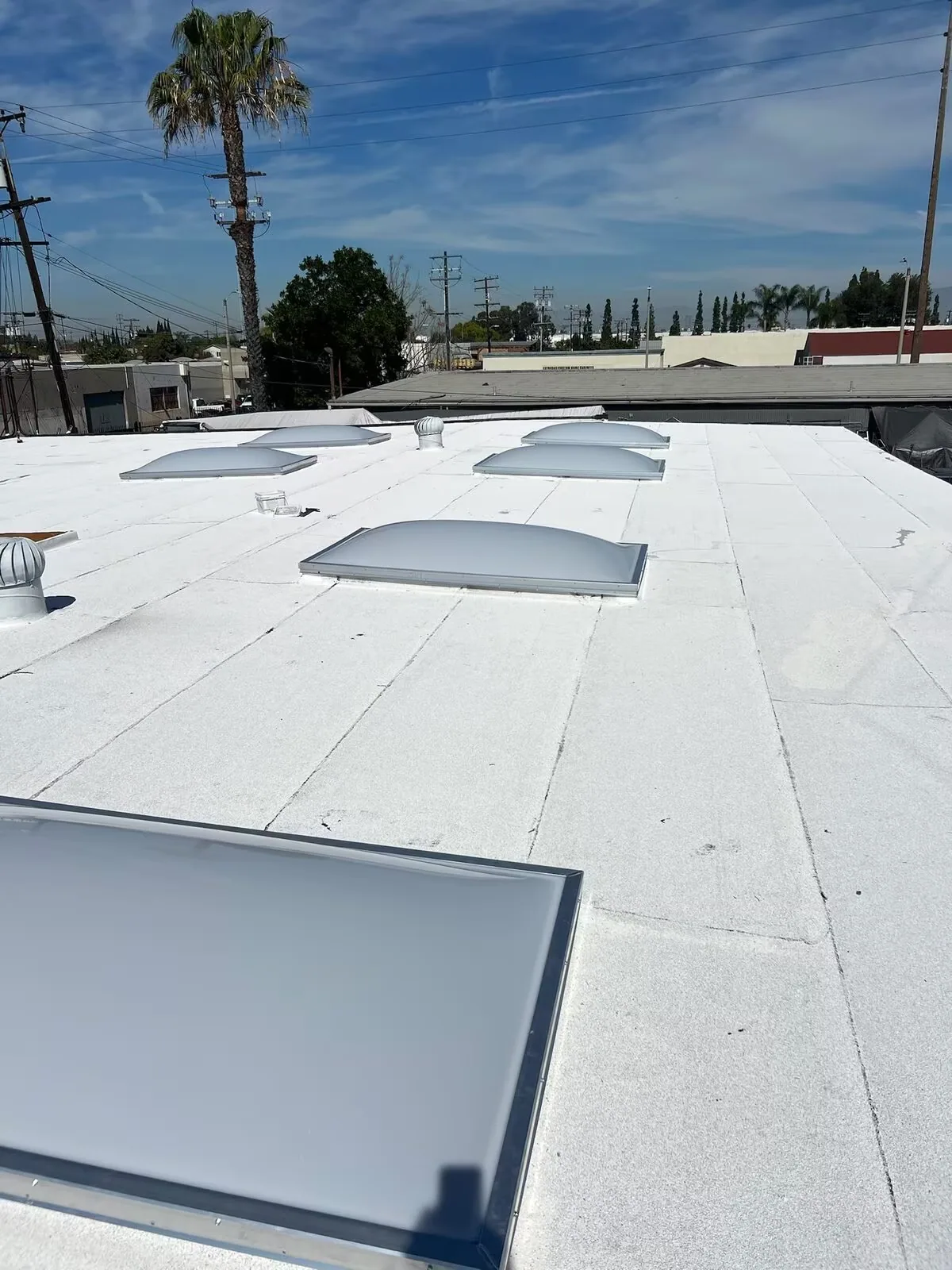
A split seam, lifted flashing, blocked drain, or loose termination can look similar from the ground while calling for different corrections. We inspect the membrane field, follow seams into transitions, and check whether water can reach an outlet without collecting behind a curb. At drains, we look at the bowl, clamping detail, and adjacent surface. At an edge, we inspect securement and the condition of the metal. Around equipment, we check the curb flashing and nearby service path. The report names the observed defect, not a presumed cause.
Rialto's climate adaptation framework places extreme heat alongside wildfire, flooding, and air pollution, and describes hot days as recurring locally. That context helps set a sensible inspection window; it does not predict an assembly's condition. On the roof, we document the actual lap, sealant, surface, and repair state before selecting any work. When hidden wet insulation could change the repair boundary, an infrared moisture survey can help select areas for physical verification. The result then informs whether a localized repair remains appropriate.
When is a repair enough, and when is a larger scope needed?
A local repair fits when the surrounding membrane is stable, the substrate can hold a bond, and the defect has a clear boundary. We remove loose material, prepare sound surfaces, and complete a compatible tie-in. If water has traveled beneath the assembly, several sections show movement, or the deck is soft, the work order may need testing or a wider removal. We identify temporary dry-in separately from permanent correction. The owner can then see what has been secured, what remains exposed, and which finding drives the next approval.
Recurring leaks, repeated patches, and moisture in more than one area may justify a replacement comparison. We check retained layers, attachment, drain elevations, curbs, and edge transitions before discussing a recover. A repair scope can close a confirmed defect; a recover evaluation examines whether existing layers can remain below new work. If removal is more suitable, a replacement plan can set roof sections, tie-in points, and daily protection. Each option should follow the evidence from that property, not the name of its district.
Before a crew mobilizes, we mark where the day's work stops and how the exposed edge will be secured. If a repair touches a drain, the route includes the outlet and the surrounding membrane so water has a clear path after closeout. If equipment blocks the detail, we identify the access needed from the building team rather than work around an unapproved obstruction. The supervisor records completed areas, materials used, and any item that remains open. A returning crew can then pick up at the correct roof section, while the property contact sees whether the next step is a test, a second repair visit, or a broader scope review.
What should the owner prepare before work starts?
Share the current roof plan, leak locations, repair history, warranty records, and the name of the person who can authorize access. List shifts, deliveries, tenant limits, equipment that must remain available, and any area below the proposed work that needs protection. We confirm where materials can be staged, how the crew reaches the roof, and who receives updates if the work boundary changes. These details set a workable crew sequence and help keep temporary protection clear at the end of each shift.
Rialto's code review covers proposed drawings as well as completed construction, with the Building Division checking against state requirements and local ordinances. Submittals received after December 31, 2025 use the 2025 California Building Standards, which took effect on January 1, 2026. That date is useful when coordinating design and submittals; the actual scope and review determine the applicable approvals. A capital planning review can place immediate roof work beside a longer replacement decision. For properties in the Gateway plan area or the Rialto portion of Agua Mansa, the work route still comes from the property's access instructions and roof records.
At closeout, we mark completed repairs, open testing, and any condition that needs a return visit. Photos should identify the roof section and tie-in, not only show a close view of the patch. The owner receives a condition record that can be attached to the next work order. If an emergency leak cannot wait for a regular visit, our response service can address containment and establish what follow-up work remains. Keeping that handoff specific helps the next shift continue without guessing where the prior crew stopped.
Commercial Roofing Questions
Can a leak be traced while the building is operating?
We plan the roof route with the site contact and keep it within approved access and safety limits. If an interior check is needed, we identify the affected room and coordinate that entry before work begins.
What does the first visit include?
The visit follows the reported condition across the relevant roof section, checks nearby drains and transitions, and records photos and access limits. We then separate a confirmed repair from testing or monitoring.
Does Rialto's heat plan determine when our roof needs service?
No. The city plan supplies broad climate context. We set the next action from the roof's observed surface, seams, flashing, drainage, repair history, and any verified moisture.
When should an owner compare repair with replacement?
Several recurring failures, wet materials, unstable attachment, or repairs spanning multiple sections can widen the decision. We document those conditions and identify any test needed before comparing scopes.
What records help coordinate roof work?
Roof drawings, prior tickets, warranty information, access instructions, operating hours, and the approval contact help us map the route and set the work boundary.
Related Roofing Work
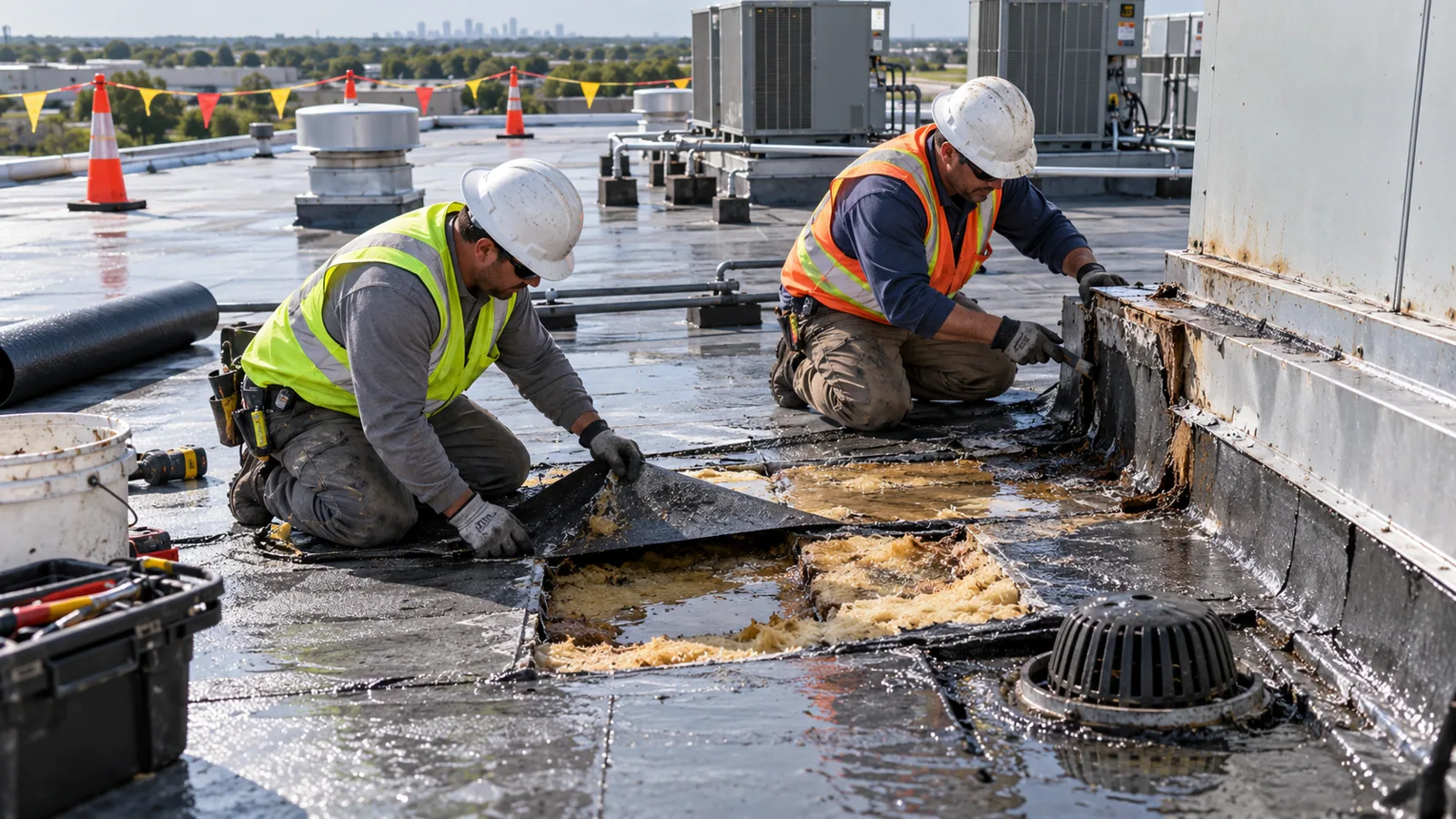
Set the first roof route
Share the reported leak or inspection concern, roof records, access instructions, and operating limits. We will map the affected section, document what the roof shows, and define the next work order.