
A line change can shift where a roof repair needs access. We begin with the production area below, the roof section above it, and the equipment contact who can approve a work window. Then we inspect the membrane field, curbs, penetrations, drains, and edges that may be involved. The resulting ticket separates containment from permanent repair and makes clear which production restrictions shaped the crew sequence.
The Agua Mansa Industrial Corridor is one part of Rialto's broader industrial planning geography, and the Gateway Specific Plan Area includes industrial-park designations. Neither place name establishes a particular plant's roof assembly. We use those local planning references to orient a request, then verify roof layers and access at the building. A Rialto-side Agua Mansa review provides corridor context without substituting for an inspection.
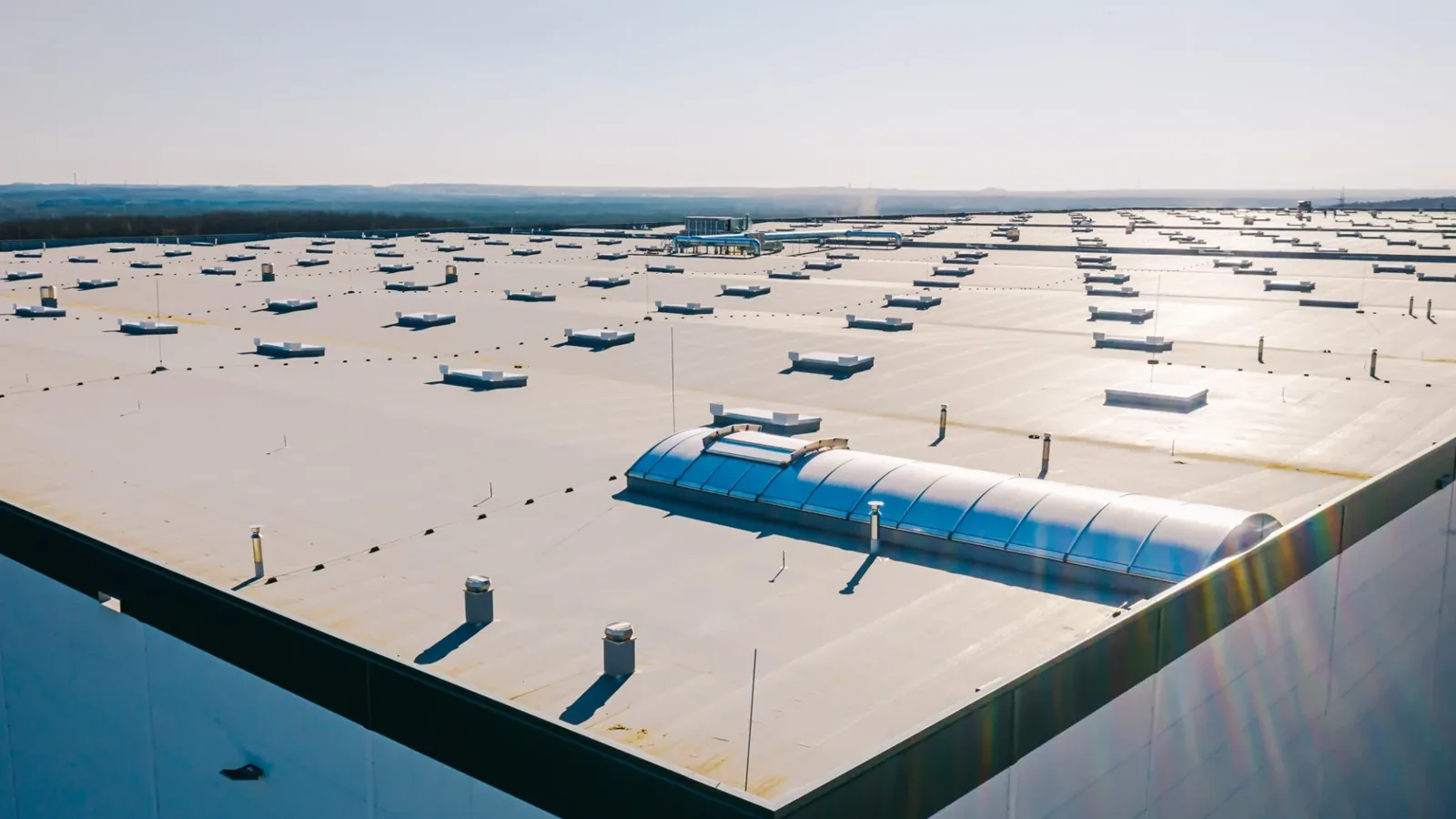
Which details sit around process equipment?
Exhaust, conduit, piping, supports, and rooftop units create transitions through the roof. We label each detail by roof section and check flashing laps, curb corners, sealant, fasteners, and nearby seams. If equipment vibration or service movement is reported, we record the observation and coordinate with facilities before approaching a support. The roof scope covers membrane and flashing work; the equipment owner or mechanical trade handles equipment changes that fall outside that boundary.
A penetration that has been modified over time may carry several layers of patches. We identify what remains visible, where the tie-in can reach sound material, and whether access is limited by active lines. A curb and support inspection can document the roof connection in enough detail for the equipment contact to review. If a test opening is needed, its location and restoration approach are agreed before the crew cuts the membrane.
How is work set around production?
We confirm shift times, roof access, material staging, equipment outages, and areas below that require protection. The facility team identifies process zones where dust, water, or a temporary closure would affect work. The crew sequence can divide an installation by roof section, limit how much assembly is open, and specify when each area will be secured. If the plant changes its production plan, the work window can be adjusted before mobilization.
Shipping may be managed by an outside group with its own receiving schedule. If dispatch and a roof lift overlap, we separate material handling from the roof crew window, confirm overhead clearances, and preserve required travel paths. The logistics and 3PL workflow can account for those receiving constraints from the operator side; the roofing sequence still follows the plant's approved access instructions.
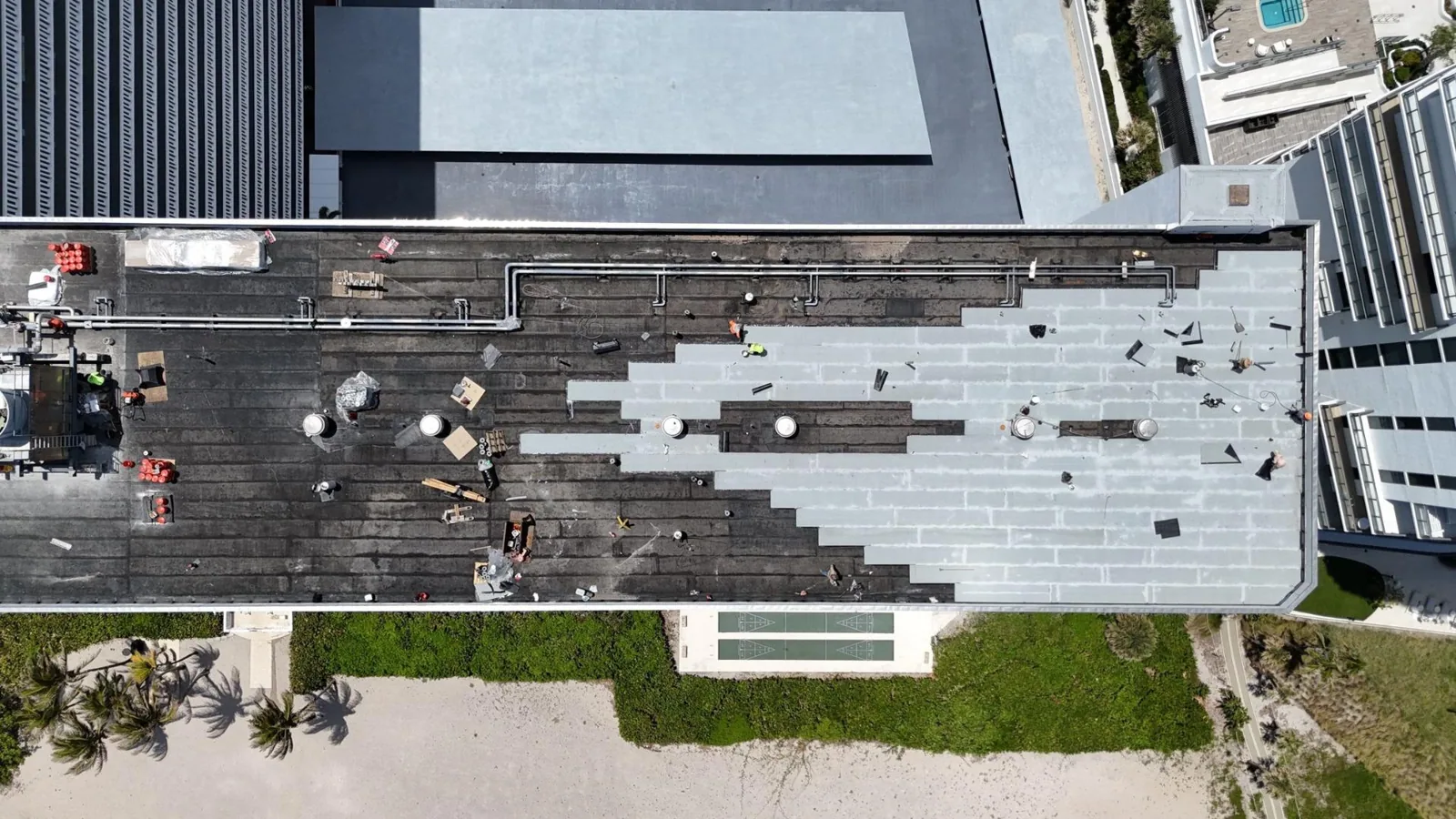
City planning puts rail-adjacent industrial and warehouse activity in both the northern and southern reaches of Rialto. That is context for delivery coordination, not a description of any one manufacturer's operation. At the property, we follow the facility contact's access instructions and routes. For reroofing while production continues, an occupied-building roofing sequence can keep phase limits and end-of-shift dry-in visible to operations.
Manufacturing lines may concentrate exhaust, process piping, conduit, and service traffic in a few roof zones. We locate those penetrations against seams and drains, then record whether a curb or flashing can be reached without interfering with process areas. If equipment has been changed, the responsible trade should confirm support and clearance before we adapt the roof detail. The final map carries those interface points into maintenance.
How do we trace water through a plant roof?
A drip above a machine or production aisle may begin at a roof detail some distance away. We take the interior report, locate its roof section, and inspect the drainage route, seams, penetrations, and perimeter. If water is active, containment is handled first; the permanent scope follows once the likely entry path is documented. We note whether the condition is confirmed or still needs a sample to distinguish surface wetness from moisture inside the assembly.
Rialto's plan describes hot days as routine and includes heat among the City's hazards. That planning reference does not measure aging at a particular plant. On the roof, we record the membrane, sealant, and repairs visible at the visit. A heat-related roof review can help organize observations when the surface or patches appear affected. Drainage concerns are recorded separately so obstruction or slope correction does not get mistaken for membrane repair.
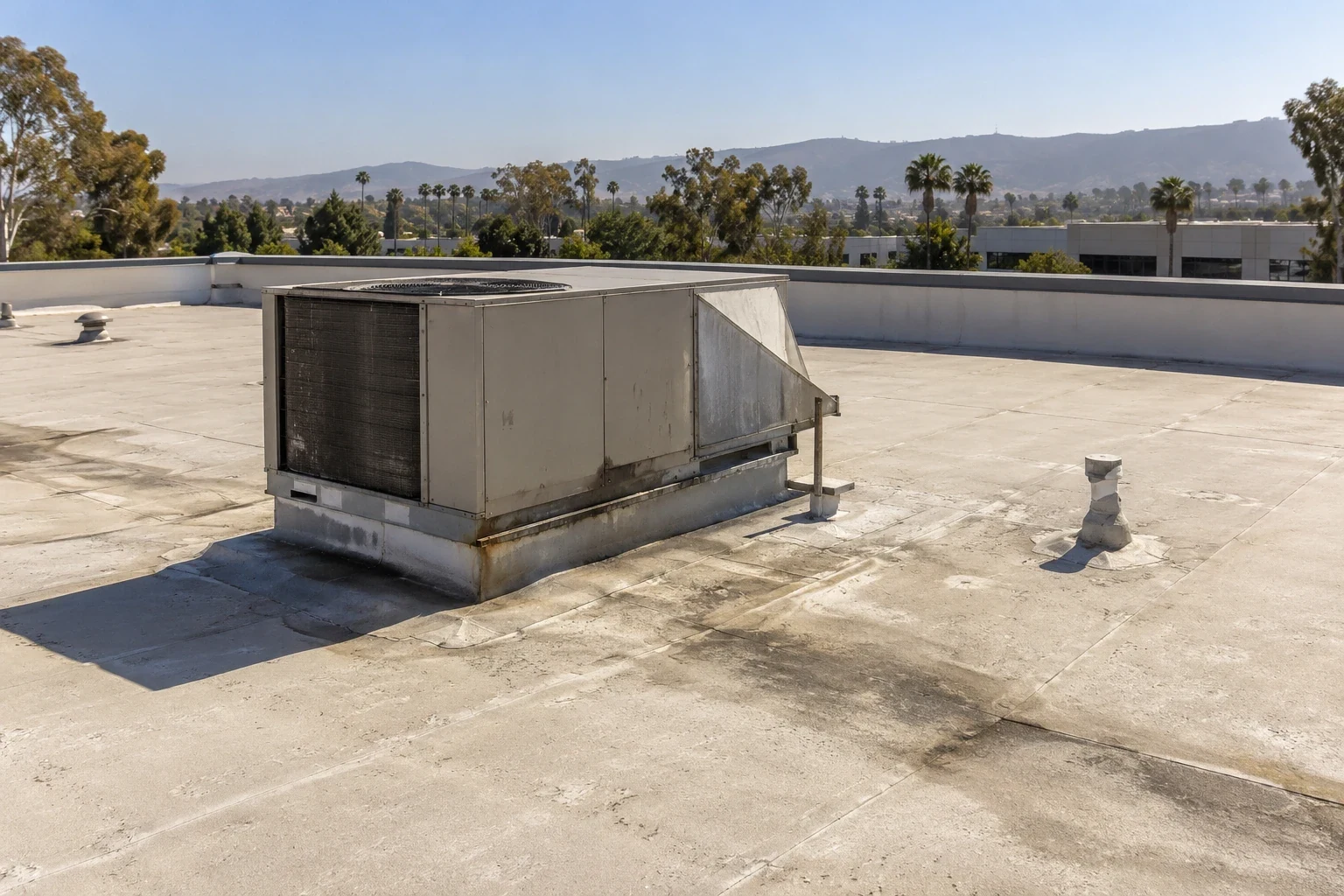
How do we select an assembly for a manufacturing property?
System choice starts with the deck and the layers already in place. We identify membrane or metal type where records and field conditions allow, review attachment, and inspect transitions at walls, drains, curbs, and expansion joints. If moisture or deck capacity is unknown, we state what testing would settle the question. No assembly should be selected on a product label alone when the substrate and operating environment remain unclear.
The Gateway Specific Plan Area includes varied land-use designations, while the Rialto portion of Agua Mansa is described as industrial. That context helps explain why a city may have multiple building functions; it does not prove which system any plant uses. We compare repair, recover, and replacement using confirmed conditions and the facility's access limits. A roof inspection establishes that record before a replacement scope includes removal, substrate correction, insulation, membrane, and edge details.
Which items should be repaired before a capital project?
Open seams, failed flashing, a loose perimeter, or water entry above active equipment may need prompt action. We isolate those items from wear that can be monitored or scheduled. Repeated leaks, wet insulation, or movement across several roof sections can change the decision from patching to broader investigation. Each item is linked to an observation and a roof location so the plant manager can approve work based on evidence.
Cost and timing vary with removal, deck work, access, protection, edge conditions, production limits, and whether multiple trades must coordinate. A capital planning review can carry confirmed repairs into the plant's project calendar and show open questions separately. If the proposed scope requires facility coordination, a general contractor can work from the same roof boundaries, work window, and tie-in details.
What should return to the maintenance team?
Closeout should identify the repaired section, the transition treated, photographs, and any condition that remains open. If a test or equipment inspection was not completed, record the reason and who owns the next action. That lets the maintenance team update its roof register and schedule a repeat check at the same location. A vague note that says to watch the roof does not help the next shift find a specific detail. The next technician can match that record to the marked plan without repeating the access discussion.
For a Rialto manufacturing property, the broad industrial-area reference and the field record answer different questions. The first situates the request within local planning geography; the second states what the roof showed and what work was done. We can return records in the facility's preferred format and identify any access restriction that should carry into the next inspection route.
Commercial Roofing Questions
Can you repair a roof without shutting down production?
A phased repair may fit if equipment access, protection, and dry-in limits are coordinated with operations. We identify the affected zone and schedule before opening the roof.
What if a leak appears below an exhaust line?
We inspect the penetration, adjacent seams, and drainage route before assigning the cause. If equipment work is needed, the roof and mechanical tasks are kept distinct.
Can you coordinate with our mechanical contractor?
Yes. We define the roof-side flashing and membrane work, identify equipment access requirements, and coordinate the work window with the facility contact and mechanical trade.
How do you decide between a patch and replacement?
We compare the size and spread of confirmed conditions, moisture, attachment, and substrate. The report separates localized repair from testing and capital options.
What should be included in the closeout record?
Include section label, repair photos, material transition, work performed, open issue, and next action. That gives maintenance staff a reliable point for follow-up.
Related Roofing Work
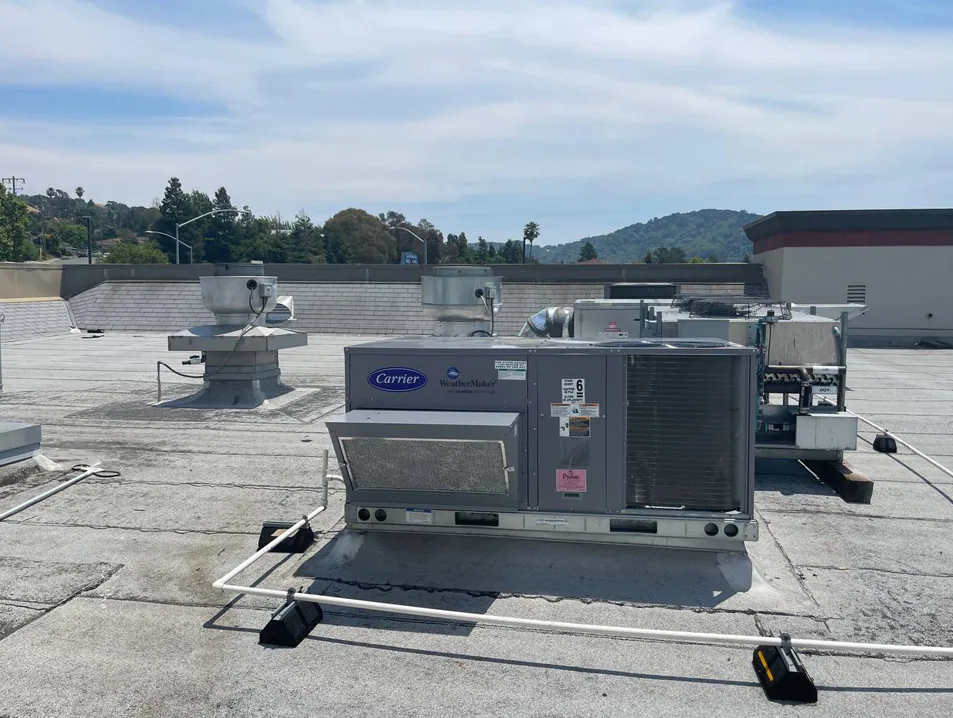
Plan roof work around the production window
Share the affected line or process zone, roof plan, equipment restrictions, and access hours. We can map the inspection route and identify the next repair or capital decision.