
Surface chalking is a reason to inspect, not a repair scope by itself. We identify the roof material, review prior work, and check whether seams, flashing, and field membrane have changed. A brittle edge, open lap, or loss of attachment may need correction; color change alone may not. The work order separates visible aging from confirmed failure and records which sections need testing before coating or replacement is considered.
Rialto's climate planning lists heat among citywide risks and notes recurring hot days; it is background for scheduling, not a measurement of one roof surface. Foothill Central and Gateway are broad planning areas within the local commercial context. Those facts do not provide a roof-level temperature history or UV reading. We inspect actual material condition and connect the climate planning context to maintenance timing, access, and the repair decision.
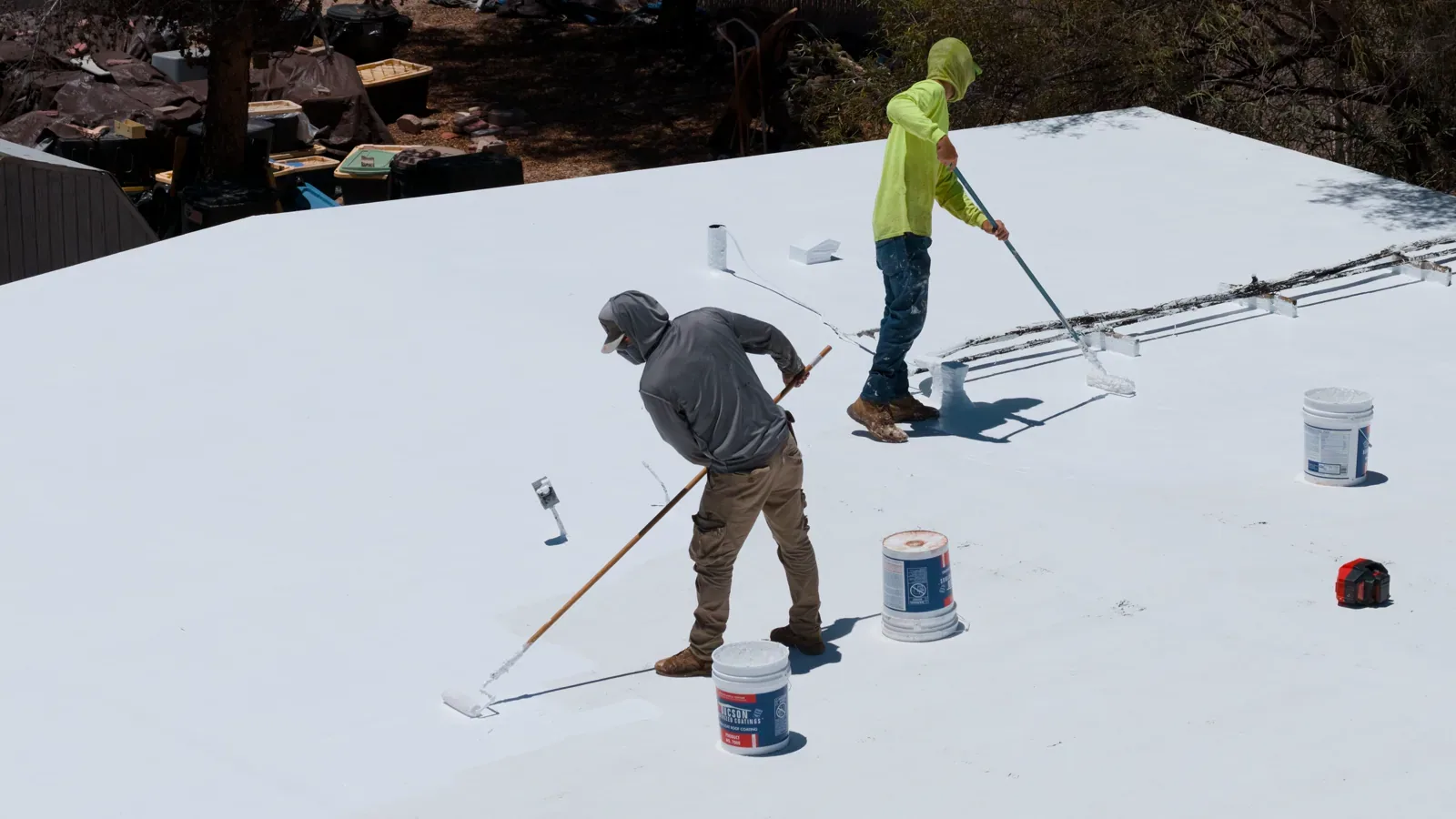
What Does the Surface Show?
Check for chalking, erosion, splits, blisters, exposed reinforcement, shrinkage, or brittle areas that crack when handled under safe conditions. Compare the suspect section with adjacent material and photograph each observation by roof zone. Note whether the surface change follows a drain path, seam, repair, or area exposed to regular maintenance traffic. Do not estimate remaining life from color or a single roof walk.
Rialto's climate plan also identifies wildfire, flooding, and air pollution among citywide hazards. Those are planning categories rather than measurements at an individual building. A roof inspection can map surface conditions and details, while a moisture survey may help locate concealed wet areas that change the scope.
Which Details Age Before the Field?
Seams, terminations, sealant, penetration boots, and edge metal can fail before the broad roof field does. Inspect lap edges for separation, flashing returns for movement, and sealant for loss of adhesion. Check fasteners and metal joints where thermal movement may place stress on the connection. Label each detail and record whether the substrate underneath is firm or requires a test opening.
The City's commercial geography includes a Baseline/Riverside node and several named corridors. These labels help orient service coverage, while heat exposure must be evaluated on the actual roof. Those corridors do not indicate what membrane is installed on a building. A seam failure assessment can define an open lap, and a flashing repair review can map the transition when a sealant or metal detail has separated.
What Do Earlier Repairs Tell the Next Visit?
Compare earlier repair tickets with current surface conditions. Look for patches that have lifted, coatings that have lost adhesion, and repeated work at the same curb or seam. Record the material used if the property file identifies it. If the repair history is missing, mark that limitation and inspect the transition before choosing a new product. A coating applied over incompatible or unstable material can hide the condition rather than correct it.
The Gateway Specific Plan map spans office, retail, freeway-commercial, and industrial-park uses. These categories do not establish ultraviolet wear on an individual roof. That broad land-use map does not establish exposure at a specific roof. A Gateway-area roof visit still uses the building's own repair record and site map. A coating restoration assessment can test adhesion and compatibility before a broader surface scope is proposed.
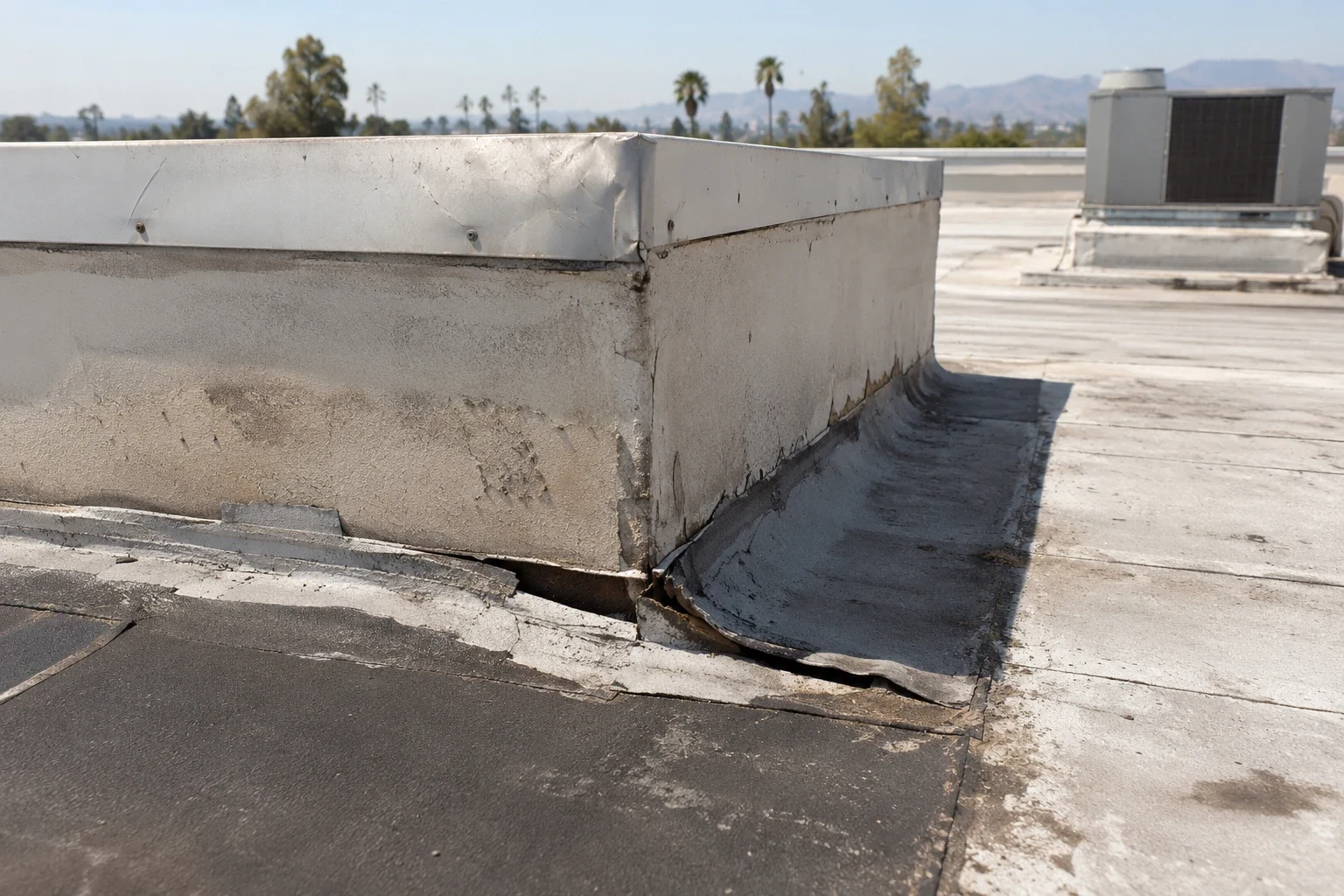
Could Aging Reach the Insulation?
Surface wear does not show whether insulation below is dry, attached, or stable. Check interior leak reports, roof low points, seam openings, and prior repairs to select verification areas. Use targeted openings or suitable moisture testing when hidden layers could change quantities. Mark the limits of each result. If a test finds moisture, confirm its extent before moving from local repair to section removal.
The City's climate document notes that hot days recur locally; a roof inspection still records observed surface wear, sealant, and membrane condition. The roof-level decision still depends on measured assembly conditions. A leak investigation can trace water entry, while a condition report can hold test locations and repair history together. The recommendation should state what the survey confirmed and what remains outside the test map.
When Does Restoration Fit the Assembly?
A restoration or coating may fit when the substrate is sound, the existing system is compatible, and the repair details can be prepared. Confirm the product's application limits, dry conditions, and required preparation. State which areas need repair first and which remain excluded. If the roof has wet insulation, widespread splits, or unstable attachment, a new surface cannot substitute for correcting those failures.
Rialto's 2025 Foothill Central framework consolidated earlier plan geographies and revised development and transportation policy for that district. The planning area does not say whether restoration suits a particular roof. A replacement review can compare removal and new assembly with restoration. When adjacent edges have moved or seams have opened, record those conditions as separate repair items.
How Should the Work Window Be Set?
Plan around the actual roof temperature, surface moisture, access, and material instructions. High surface heat can affect handling and application timing; select a shift when the chosen product can be installed within its requirements. Protect drains and equipment while cleaning or preparing the surface. Mark the day's stopping point and secure each transition if the crew cannot finish the entire section.
Rialto's climate planning gives citywide context for hot conditions but is not a daily forecast. The work plan uses current conditions and the contractor's safety procedures. If operations continue below, define the active roof section, staging route, and any room that needs protection. Record when the surface was prepared and when the next application or inspection is scheduled.
What Should the Aging Record Preserve?
Record material type, surface condition, seam and flashing findings, test points, repair details, photographs, and follow-up needs. Identify each roof zone and distinguish visible wear from confirmed failure. If coating or replacement remains an option, list the evidence needed to decide. This keeps the owner from treating a generalized aging observation as a finished capital recommendation.
Before accepting a coating or surface repair, verify that the preparation record, selected material, and completed area match the approved work order. Photograph the final edge and any transition that was excluded. If a new failure appears during preparation, stop at the agreed boundary and document the condition before expanding the scope. This keeps the decision tied to current roof evidence.
Give the facilities lead the next check date and the roof-zone labels to use. A future inspector can compare the same seam, edge, and field area and decide whether the condition has progressed or remained stable.
Use the same section labels during future maintenance. Gateway and Foothill Central are planning areas, not a substitute for a roof register. A later inspection can compare the same seam, edge, and prior patch, then note what changed. The next work order should follow that record and the current assembly condition, not a repeated estimate based on age alone.
Commercial Roofing Questions
Does surface chalking mean the roof needs replacement?
No. We inspect the membrane, seams, flashing, and substrate before deciding whether wear is cosmetic, repairable, or part of broader failure. Color alone does not set the scope.
Can a coating reverse UV damage?
A coating may protect a compatible, sound assembly, but it cannot restore failed attachment or replace wet insulation. We verify those conditions and define preparation and exclusions first.
How do hot days affect roof repairs?
We check actual surface conditions and follow the selected material's application instructions. The work window may shift when substrate temperature or moisture falls outside those requirements.
What should be included in a heat-damage inspection?
Map the roof sections, surface wear, seams, flashings, prior patches, and any test needed below the membrane. The record separates observed change from concealed condition.
When should we compare restoration with replacement?
Compare both when the surface has broad deterioration, repeated repairs, moisture, or unstable attachment. The condition record should show which findings support each option.
Related Roofing Work
Measure the Aging Before Choosing a Scope
Share the roof plan, prior repair history, leak reports, and access window. We will inspect the surface and details, then identify what needs repair, testing, or capital review.