
Before a new membrane covers an existing roof, the work order needs a clear answer on moisture, layers, and attachment. A recover can avoid removing sound material, but it can also conceal a wet assembly or a loose substrate if the checks stop at the surface. We map the roof sections, inspect seams and penetrations, verify drainage, and open targeted areas where the condition is uncertain. The facility director gets a yes, no, or limited-area option tied to evidence, not a blanket assumption that the old roof can stay.
The Agua Mansa Specific Plan covers industrial territory across Rialto and Colton. For an existing Rialto roof, the field record still carries the actual roof sections, moisture checks, and access limits that determine whether an overlay can remain. A recover decision depends on what the existing layers show at the property. Access and staging can determine whether the new system can be installed without disrupting receiving. We record moisture, deck, curb, drain, and edge conditions before setting the assembly. That record lets an owner compare recover with full roof replacement using the same roof boundaries and operating assumptions.
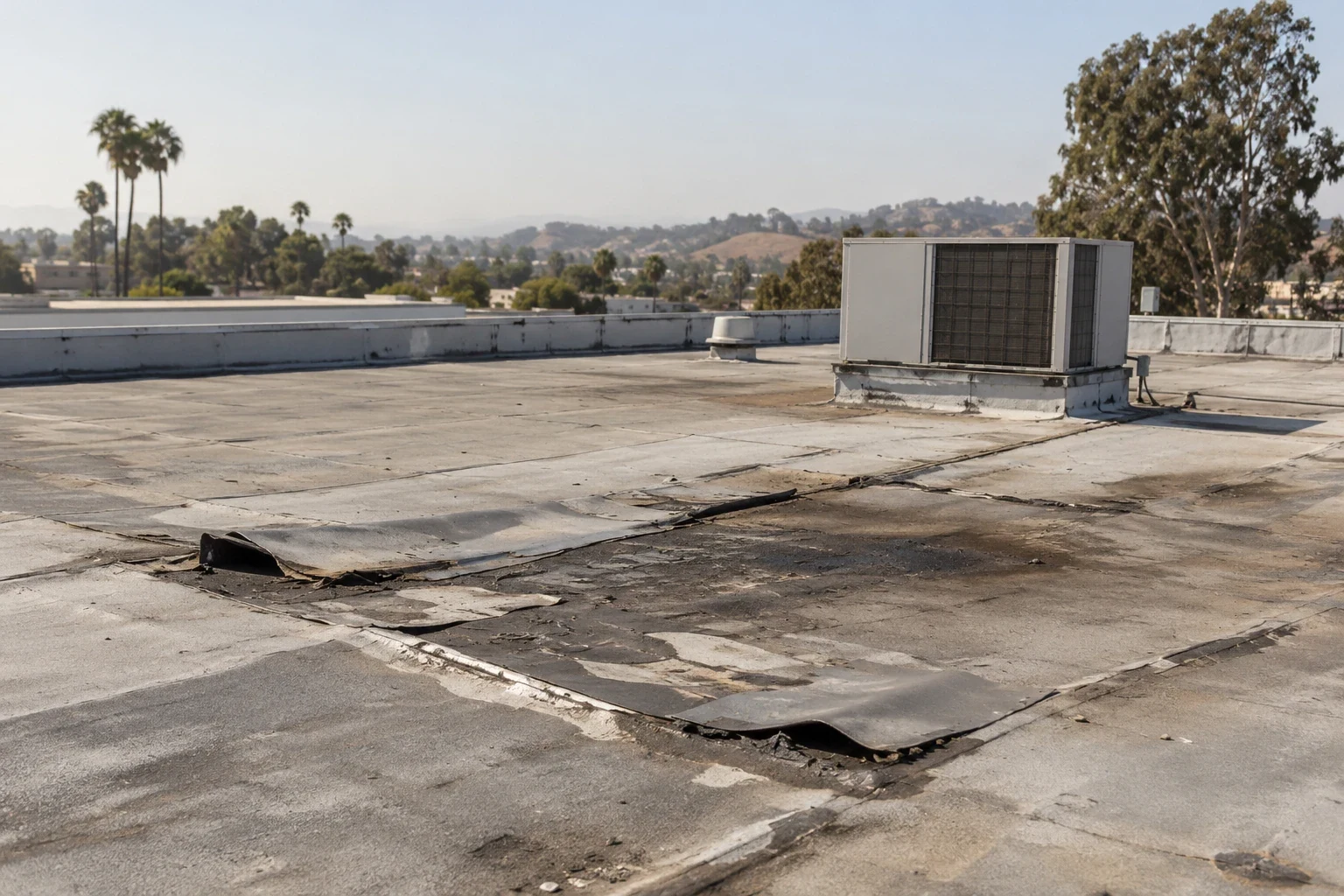
Does the existing roof qualify?
A recover starts with the assembly, not the product brochure. We check the number and condition of existing roof layers, whether the substrate can accept the proposed attachment, and whether insulation is dry enough to remain. A core cut can confirm the layers below a suspect area. Moisture mapping helps define where more openings are justified, but it does not replace a physical check when the result will change the scope. We mark each location and restore each test opening before the crew leaves.
Drainage and edge height also matter. A new system adds material above the existing surface, which can affect drain bowls, scuppers, door thresholds, curbs, and metal transitions. The available height at each detail must be measured before the recover is priced. A hands-on roof inspection records these points and identifies sections that may need different treatment. Where old membrane has separated or the deck moves underfoot, we isolate the area instead of allowing a favorable sample to stand in for the whole roof.
How are wet areas and loose layers handled?
Water in the insulation changes the answer. If a wet area is limited and the surrounding assembly is sound, the scope may remove that pocket and recover the eligible field. If moisture is widespread, covering it can leave the source and damaged insulation in place. We outline the affected roof sections, confirm the substrate, and distinguish repairable zones from areas that need removal. A ponding-water review can help separate a drainage problem from moisture that has already entered the assembly.
Attachment has to carry the new system through the loads it will face. We check the deck, existing fasteners where accessible, perimeter conditions, and proposed fastening or adhesive approach. A recover is not a way to bypass deck repair or edge correction. It needs a documented tie-in at walls, curbs, penetrations, and roof transitions. If the roof contains several generations of repair, the record should state what is known and where the assembly remains concealed. That keeps later work orders from treating the overlay as a complete view of the roof below.
Which new system fits above the old one?
The existing surface and the proposed attachment determine which assemblies are suitable. TPO, PVC, EPDM, modified bitumen, and coating systems do not all connect to the same substrate in the same way. We check manufacturer requirements for the proposed assembly, then detail the seams, drains, penetrations, and perimeter. For a mechanically attached membrane, the deck and fastener pattern matter. For an adhered system, compatibility and surface preparation matter. The TPO assembly is one option to evaluate when the substrate and fastening plan support it.
Rialto's hot season makes it useful to review how exposed roof surfaces and the existing membrane have handled heat before selecting an overlay. We inspect exposed seams, dark surfaces, equipment curbs, and existing repair material under the conditions present on the roof before choosing an assembly. We document the transition details so the new membrane is not expected to bridge a weak edge or unstable patch. For a warehouse property, our warehouse roof review can account for operations and staging while the crew works over selected sections.
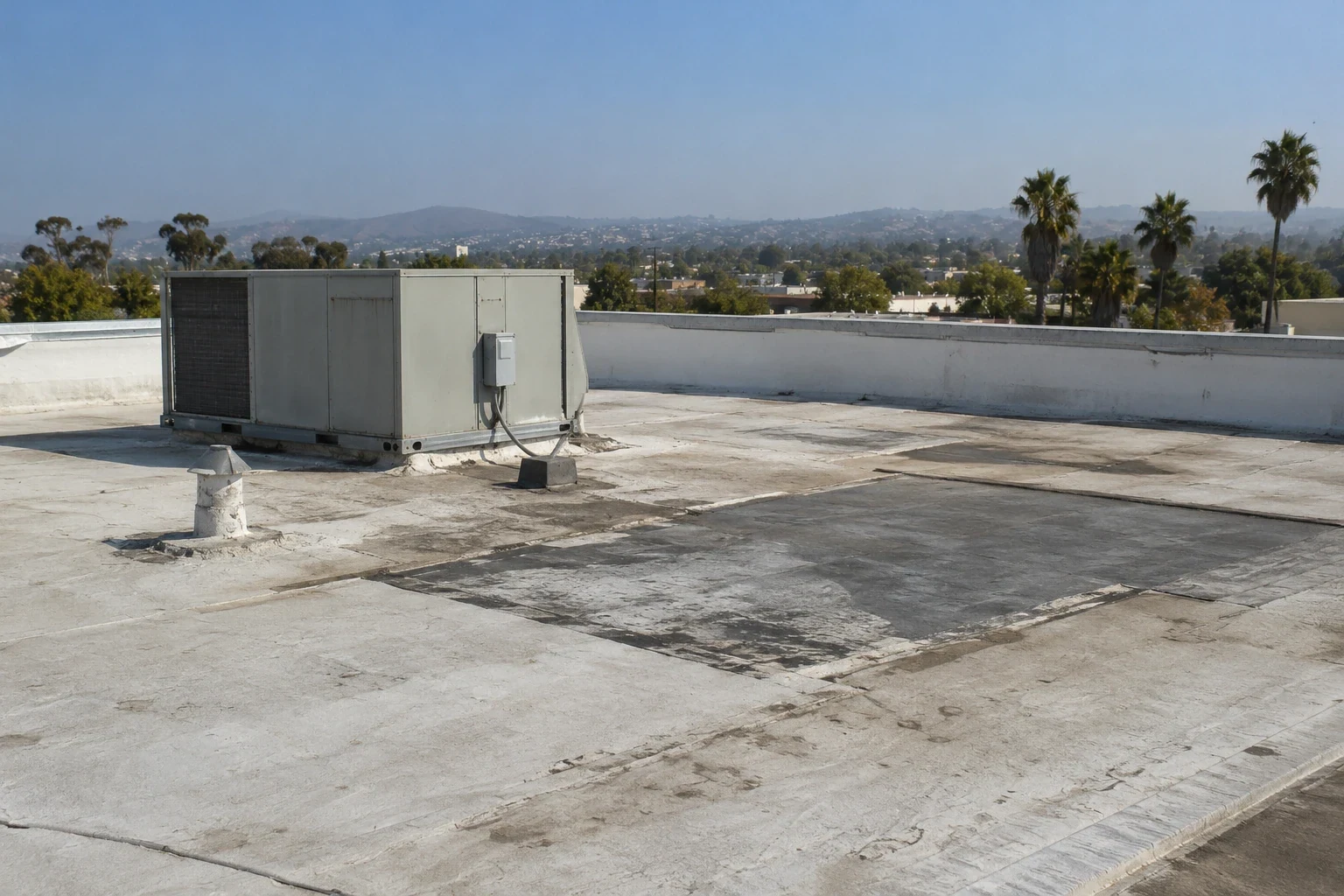
What must be planned before installation?
The recover raises the membrane plane, so we measure drain bowls, scuppers, curb flashing, door transitions, and perimeter metal before approving the detail. A small height change can affect how the new membrane turns into a drain or meets an equipment curb. We photograph each transition, show where existing material must be cut back, and specify the new termination. The owner sees which edges are ready and which need correction before the field crew stages material.
The roof plan also needs an access window and a material route. At properties near Foothill Boulevard or Riverside Avenue, deliveries and customer movement can constrain staging. In the Rialto commercial corridors, we coordinate roof access, loading areas, tenant notices, and interior protection before work begins. An overlay can limit tear-off debris, but it still creates noise, foot traffic, and temporary work zones. We break the job into sections, track each tie-in, and keep the facility contact informed about areas that are open, closed, or ready for inspection.
How do we compare recover and removal?
The comparison should use one confirmed roof area and one set of operating limits. We separate the price of recover work from any wet insulation removal, drain correction, edge metal, curb work, and deck repairs. We also state what cannot be confirmed until an opening is made. If the recover requires several exceptions, the owner should see those costs alongside the removal option. Our roof condition report keeps the findings available for maintenance, warranty records, and capital review after the immediate project.
The useful next step is a field review with roof plans, prior work orders, known leaks, and the building's access rules. We identify test locations and confirm which areas can remain in service during the work. If the old assembly passes, a recover can keep sound material in place while giving the building a new weathering surface. If it fails, removal exposes the conditions that must be corrected. Schedule an inspection or discuss a current leak, and we will set the route around the property and the facility's operating hours.
Commercial Roofing Questions
How many existing roof layers can remain?
The permitted assembly and the proposed system set the limit. We verify the actual layers and applicable code before recommending an overlay. If the existing roof has too many layers, poor attachment, or wet insulation that cannot stay, the recover option is removed from the scope.
Does a dry-looking surface prove the roof is ready?
No. Water can travel below the membrane and collect in insulation away from the visible leak. We trace the wet area, use targeted moisture checks, and open a core where the finding affects the decision. The scope identifies both confirmed and concealed conditions.
Can recover work proceed while the warehouse is operating?
We plan sections around receiving, trailer movement, pedestrian routes, and the safe roof access point. Some work can proceed over an active building when zones are separated and the schedule is coordinated. The property contact confirms any times when loading or overhead work must pause.
When should the owner choose full removal?
Widespread wet insulation, weak attachment, incompatible layers, deck damage, or details with no usable height can make removal the clearer scope. We list the failed checks and compare the work needed to restore the assembly, rather than pricing an overlay that leaves a known problem below the new membrane.
Related Roofing Work
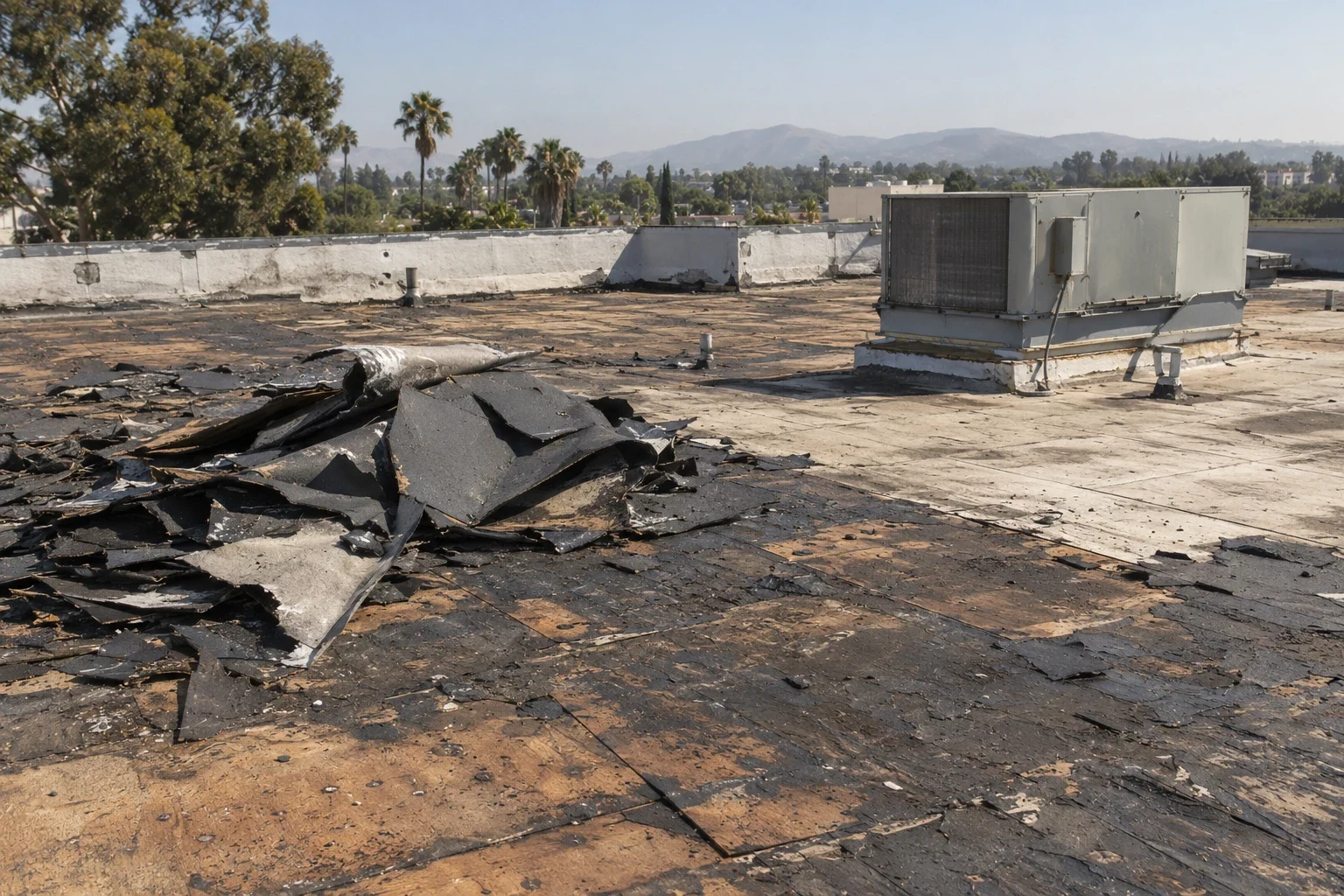
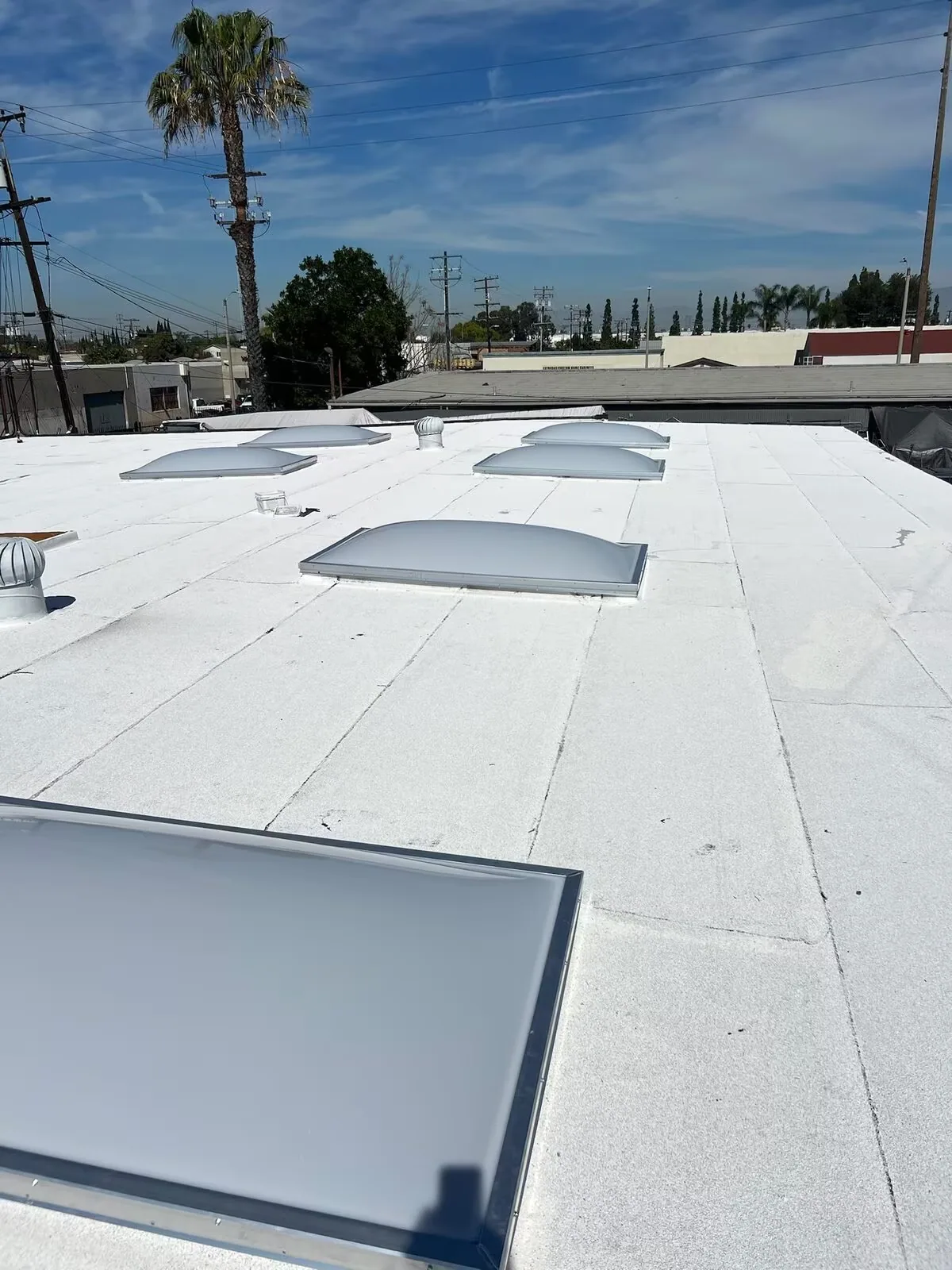
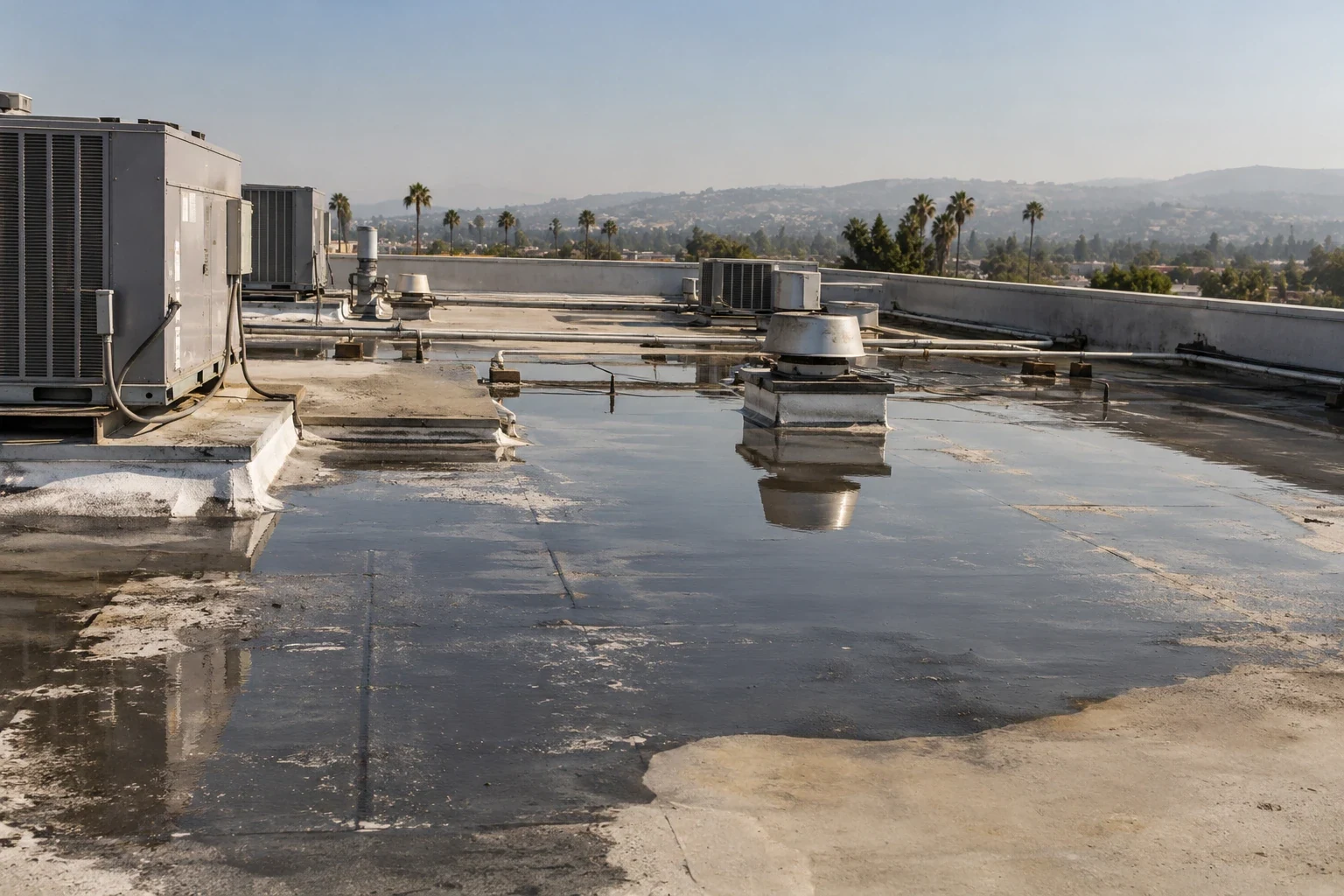
Check the assembly before covering it
Schedule an inspection or discuss an active leak. Share roof plans, repair tickets, known wet areas, access rules, and operating windows so we can choose test locations and set the first visit.