A KEE seam opening beside a curb puts two details on the same work order. We identify the membrane, follow the seam to its termination, and check what lies beneath the reported area. The crew sequence starts with a safe access route and a defined roof section. The work order then separates an observed weld failure from any moisture or attachment question that still needs a test.
Rialto's Foothill Central plan merges the former Foothill Boulevard and Central Area planning geographies. The General Plan also identifies commercial areas near Riverside Avenue and Valley Boulevard. For a KEE inspection, place that location in the work order, then trace each seam and termination by roof section.
How Is KEE Different from Other PVC Sheets?
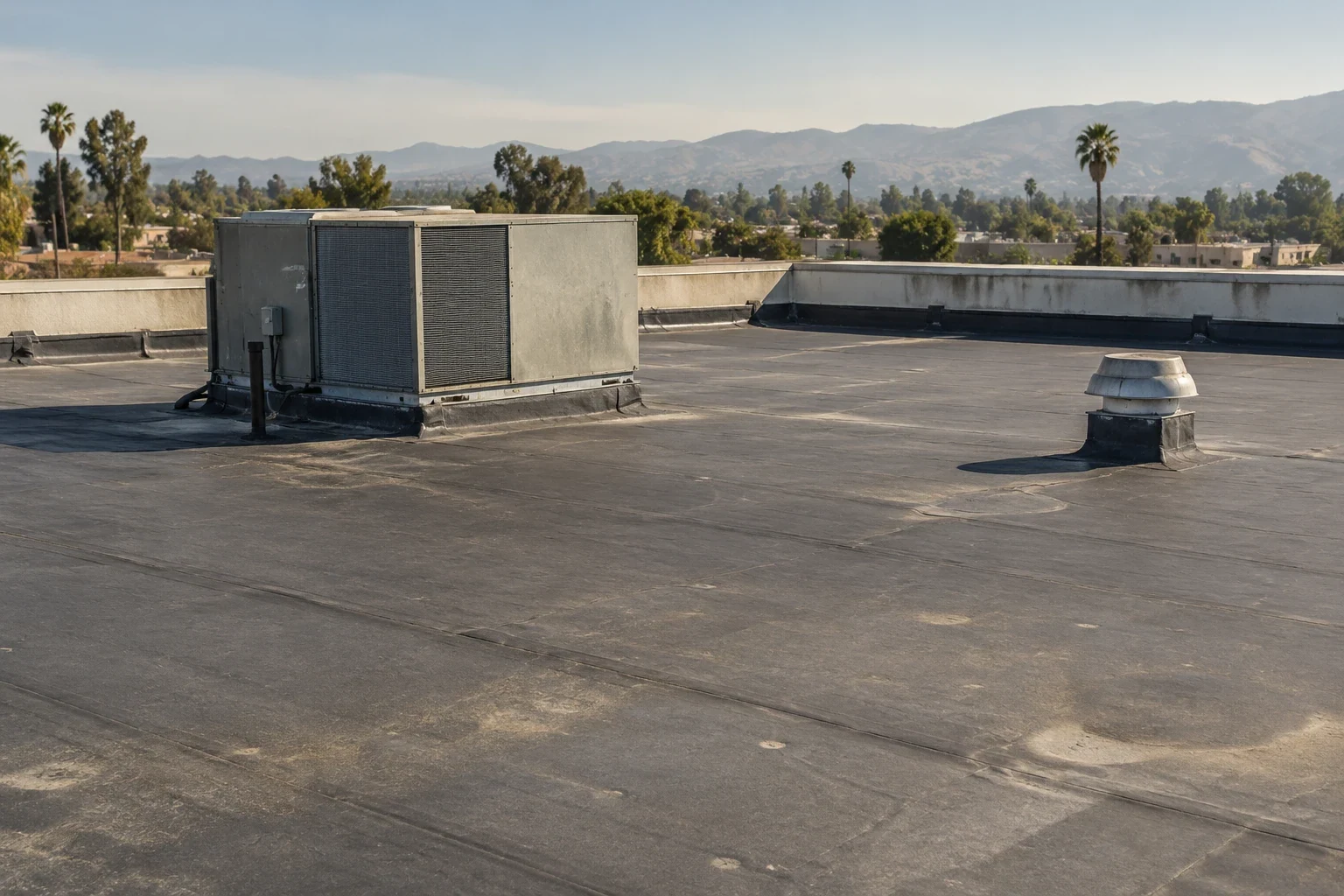
KEE is a PVC-based alloy membrane. That relationship does not make every PVC repair product suitable for every KEE assembly. We check product records, exposed material, seam behavior, and prior patches before choosing a repair method. If the system identification remains uncertain, an accessible edge or approved test can answer the question without assigning a material from appearance alone.
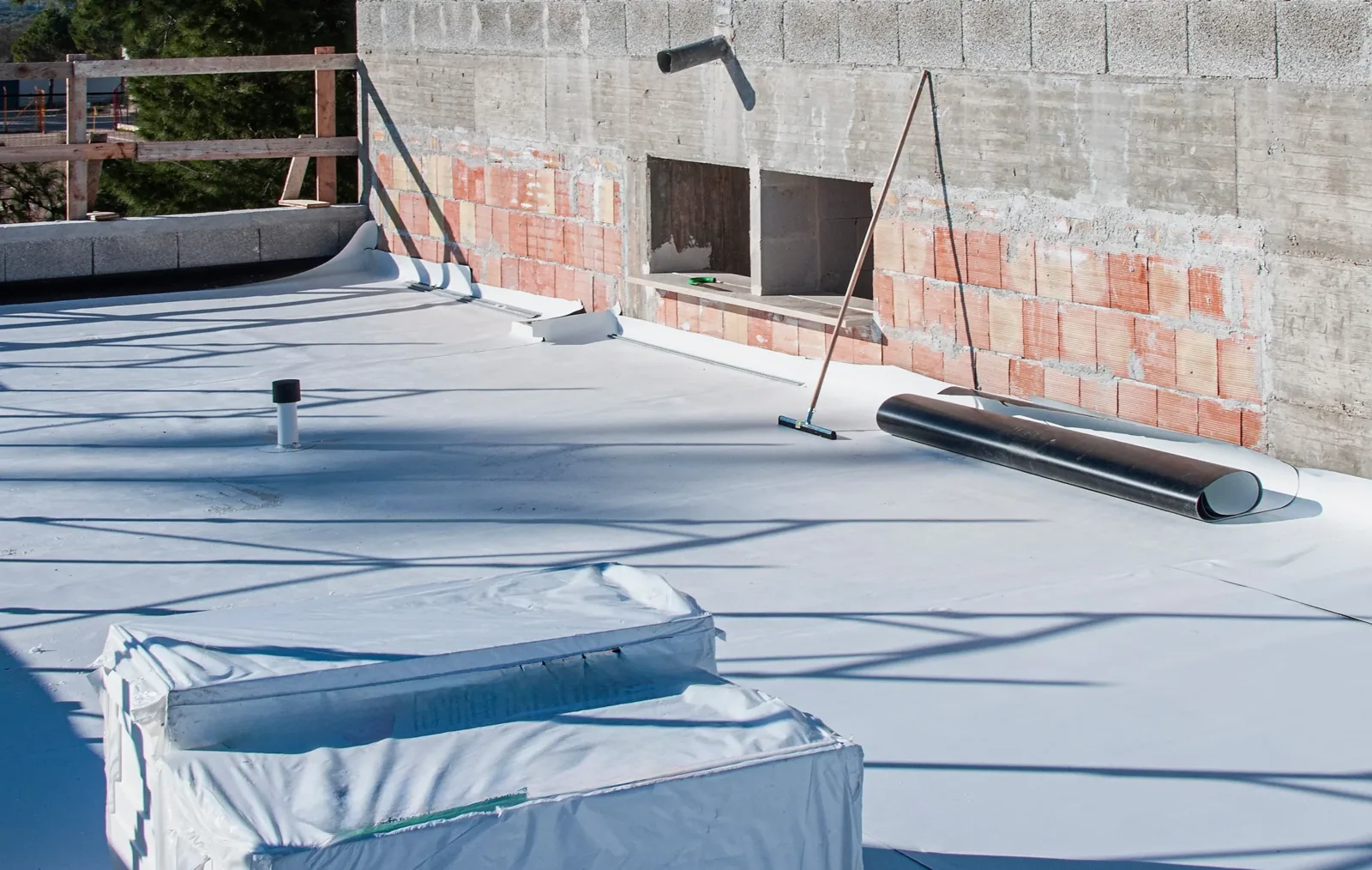
Hot-air welding joins compatible thermoplastic sheets, but temperature, preparation, and seam width still matter. We inspect the weld for a narrow unbonded channel, a contaminated edge, or a corner that has lifted. A PVC system comparison can help frame the material distinction, while a TPO assembly review follows a different sheet formulation. The work order names the installed membrane before specifying the patch.
What Does the Seam Test Need to Confirm?
A seam probe can reveal an open edge, but the inspection should not stop at the first point that resists the tool. We follow the lap in both directions and inspect intersections, repairs, and changes in plane. If the weld separates repeatedly, we also check attachment and substrate movement. The record gives the failed length and the next area that needs review, so material quantity follows observed conditions.
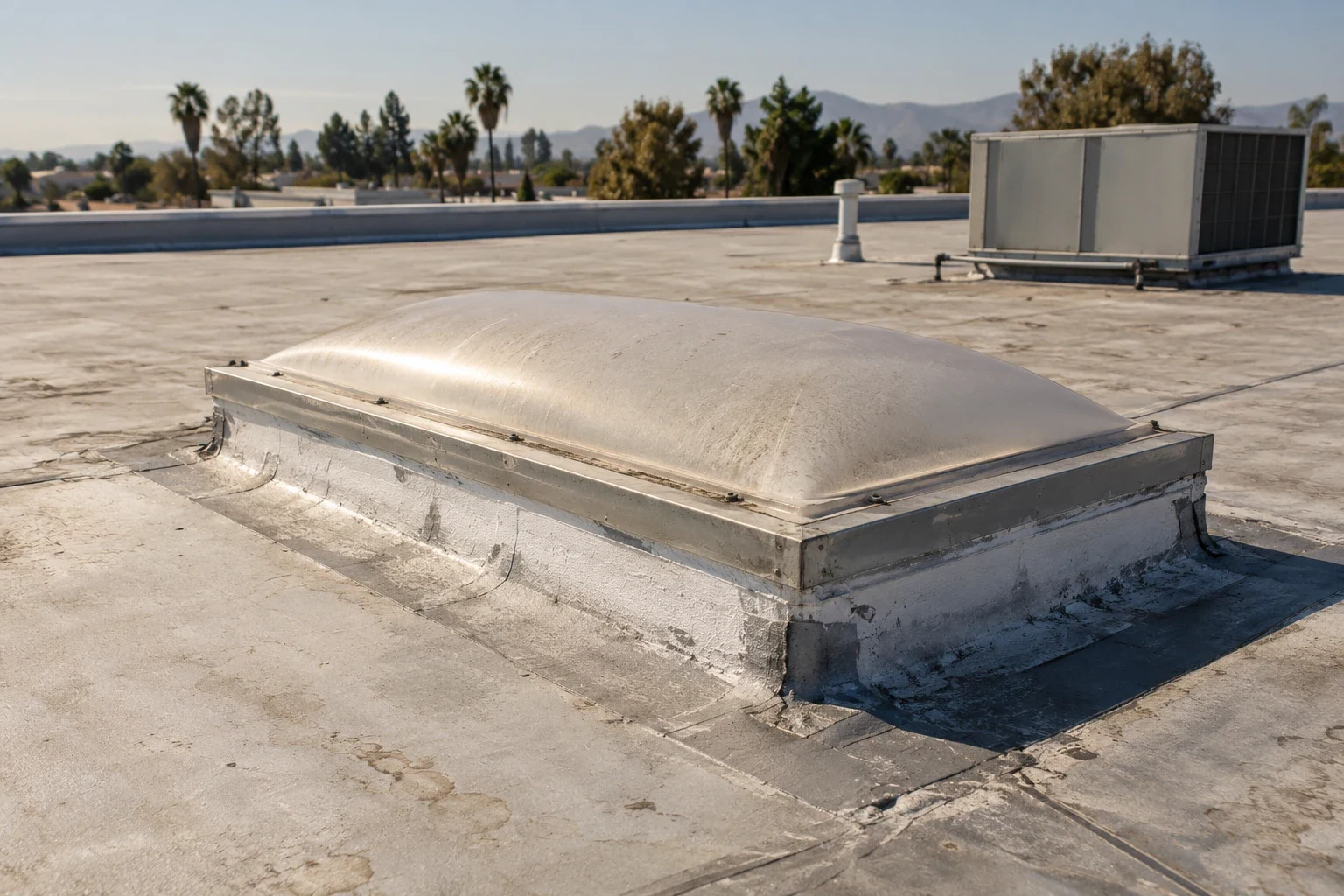
At a wall, curb, or rooftop pipe, the field weld connects to flashing and a termination. A penetration and curb inspection can document those transitions with the sheet seam. The detail needs compatible material, a clean substrate, and enough sound membrane around the repair. We photograph the finished tie-in and identify any adjacent area that was not opened.
What Should Heat Change in the Inspection?
The City's climate planning identifies extreme heat as a hazard and characterizes hot days as a recurring condition in Rialto. We do not turn that citywide context into a forecast for one roof. On the work area, we inspect seam edges, flashing, exposed repairs, and material flexibility. The actual condition determines whether the crew can weld, whether the surface needs preparation, and whether a second visit is needed for a sound closure.
A thermoplastic sheet can move at the perimeter and around roof openings when details are not secured or when a tie-in has lost bond. We check the curb line, edge metal, and any interface with a different system. A metal termination review can show whether the sheet or the edge connection is driving the work. The ticket keeps heat context separate from the visible finding and names the material step required.
Where Does the Water Route Cross the KEE Field?
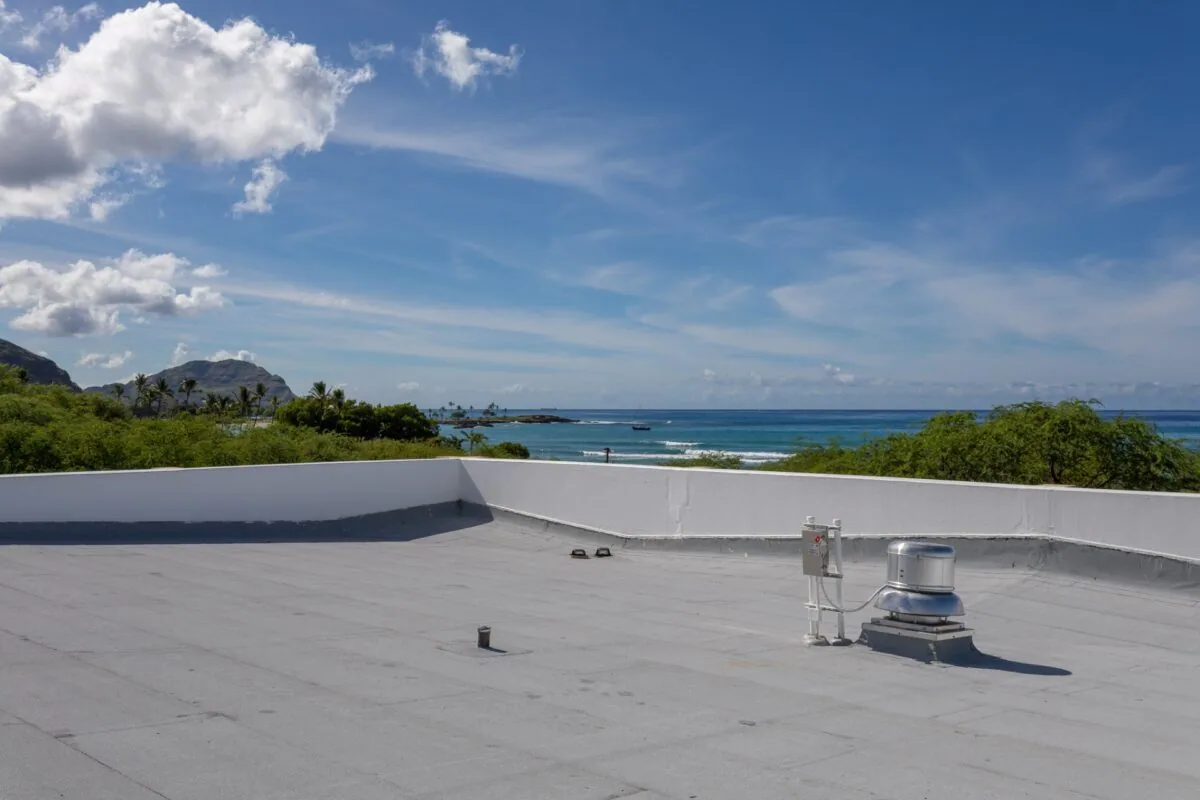
Follow the slope toward each drain before assigning a leak to the nearest seam. Water can run past an intact field weld and enter at a flange, pipe boot, or raised lap farther along its path. We inspect the drain bowl, overflow, and surrounding sheet, then note whether water clears or remains at a low point. A blocked path is a maintenance item; an open seam needs a membrane repair.
Within Rialto, the Gateway Specific Plan Area shows both office-park and industrial-park use categories. On a KEE roof, begin the inspection at the reported water path and check how the lap meets a drain flange, pipe boot, or raised curb. A drain path inspection records the outlet and field transition. If the water route crosses a large roof section, we mark each test point and keep its result tied to the correct panel instead of expanding the scope from a ceiling mark alone.
When Does a KEE Repair Become a Larger Scope?
A localized weld repair can work when the adjoining KEE remains flexible, attached, and dry enough to accept a compatible tie-in. Loose edge, recurring separation, wet insulation, or deck movement changes the boundary. We remove only the material required to reach sound sheet, then report any exposed layer that affects the work order. A test is useful when its result changes the repair or replacement decision.
When a patch cannot address the assembly, the owner may compare a broader repair scope with a recover evaluation. The retained layers need adequate attachment and workable heights at drains, curbs, and edges. If those conditions are not present, the roof plan should account for removal and new transitions. We isolate immediate water control from the capital decision, then document both work areas in the roof register.
What Belongs in the KEE Roof Register?
Since January 1, 2026, Rialto has reviewed plans submitted after December 31, 2025 against the 2025 California Building Standards. A KEE reroof proposal should show attachment, seam work, insulation, and terminations for the project review. The register lists the membrane, attachment where visible, seam repairs, drain details, photos, and any concealed condition that remains unresolved.
For a roof inside the Foothill Central planning area, the location gives broad context; the property contact still sets the route and operating window. A roof condition report can keep test results with the repair ticket and next review. A clear record shows which KEE seam was repaired, what material was used, and where the next crew should look if the same report returns.
The work window can change if the seam needs another preparation pass or a mechanical trade must move equipment first. We list those dependencies and identify the point where the roof section is closed for the shift. The facility contact receives the status before the crew moves to another zone. Any substrate question stays attached to the test location until the result changes the work order or the owner closes the open item. Carry that location into the next inspection route.
Commercial Roofing Questions
Can KEE be repaired with any PVC patch?
The patch has to be compatible with the installed KEE formulation and the repair method. We confirm the membrane from records or an exposed edge, prepare the surface, and verify the new weld around its perimeter.
What does a weak KEE weld look like?
A weak KEE weld may present as a lifted edge, unbonded channel, contamination, or separation at a corner. We mark the full failed length and inspect the substrate before setting the work boundary.
Can a KEE roof be recovered instead of removed?
A recover requires dry retained layers, secure attachment, sound support, and enough finished height at curbs and drains. We verify those conditions before presenting an added assembly as an option.
How does Rialto's heat factor into a KEE roof walk?
The City identifies regular hot days as a local climate condition. We inspect the actual weld, flashing, and repair surface, then use the observed condition to set the preparation and work sequence.
What should the facility director provide for a KEE review?
For a KEE review, send the roof plan, leak location, system records, prior repair ticket, and access window. We use them to set a route, confirm the membrane, and keep the inspection area tied to a specific work order.
Related Roofing Work
Confirm the KEE Repair Boundary
Share the roof plan, leak report, membrane records, and access limits. We will identify the KEE assembly, inspect the weld and adjacent details, and document the next repair or capital decision.