
A classroom closure begins with a roof decision that must fit the district's schedule. We identify the affected building area, roof section, and access window, then check the drain route, seams, curbs, penetrations, and perimeter details. The first work order separates immediate containment from permanent correction. That gives facilities a clear item to coordinate with school operations while keeping the condition record tied to the roof that was actually inspected.
Rialto planning marks Foothill Boulevard and the Baseline Road/Riverside Avenue intersection among its commercial places. The Rialto Commercial Corridors groups the City's street-based commercial geography; a separate map for the Gateway Specific Plan Area shows office, retail, and industrial designations. These broad locators do not describe a school roof. Each district building needs its own section map, access plan, and inspection record.
What should a district roof inventory include?
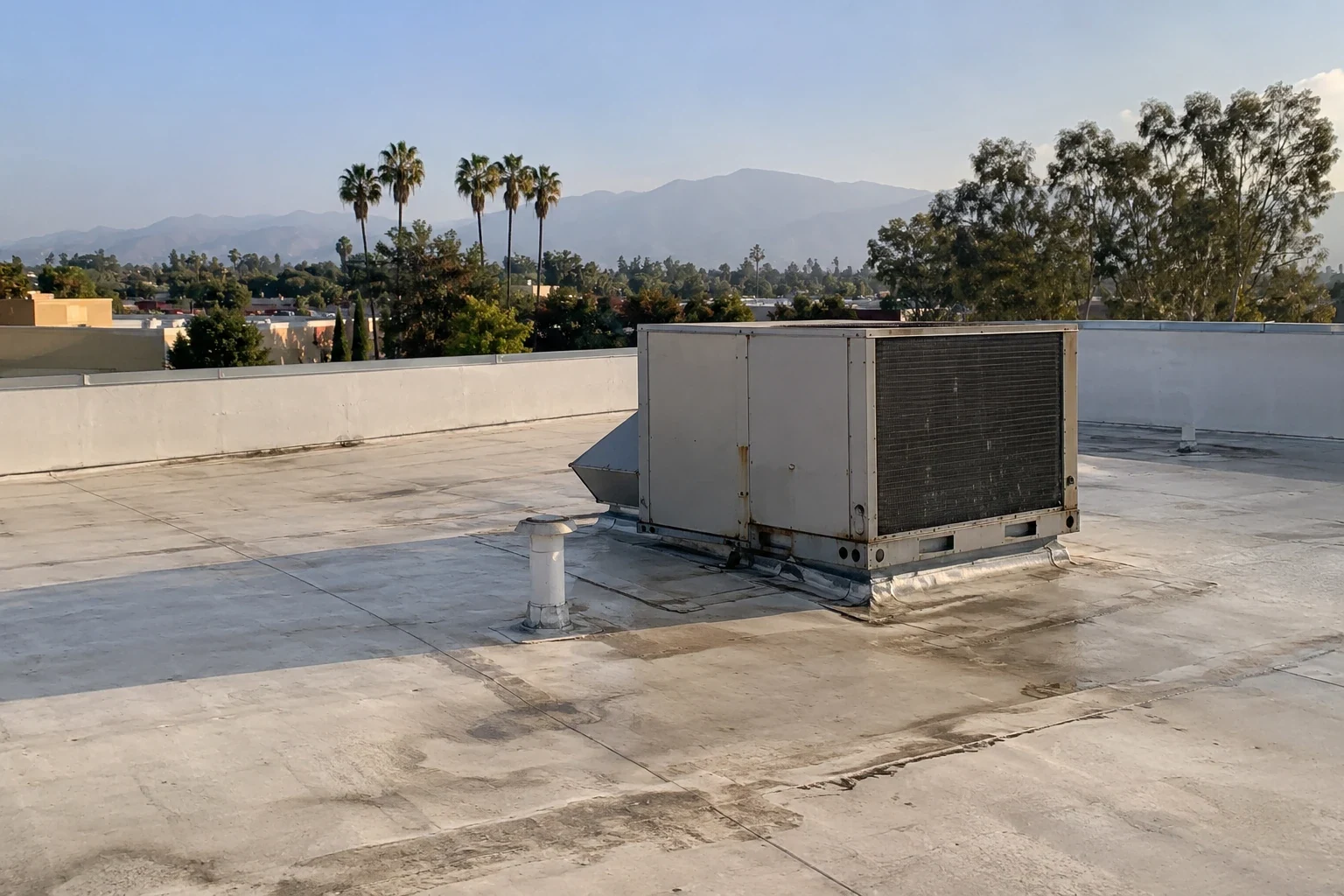
Start with building and roof-section labels that facilities can match to maintenance tickets. We record the system where it can be identified, drainage points, rooftop equipment, visible repairs, and access restrictions. Photographs should show enough surrounding roof to help the next crew relocate the detail. If the district has drawings, warranty documents, or prior scopes, we compare the field record with those files and note where the labels or assembly history do not line up.
We can return a photo-supported condition report that separates repair, monitoring, testing, and capital items. Each roof keeps its own findings even when the district uses a shared form. A repair on one building does not establish the condition on another. That distinction helps facilities staff schedule work, answer a principal's report, and update budget records without copying an old observation into a new roof ticket.
How do we handle a reported leak during the school day?
We ask which room or common area is affected, when water appeared, and what immediate response has already been made. On the roof, we locate the section above that area and inspect nearby seams, drains, curbs, and penetrations. Water can travel before it reaches an interior ceiling, so we trace the likely path and photograph the relevant details. If an opening is active, containment comes first; permanent repair follows the evidence collected at the roof.
Roof access may need to avoid arrival, dismissal, or scheduled activities. The district contact identifies the approved route, hours, and areas below that require notice or protection. A hands-on roof inspection can establish the condition and next action, while a drain and scupper review can address collection points that affect the reported location. We keep those observations distinct so a clogged outlet is not treated as membrane failure.
Which Rialto conditions affect the district plan?
Rialto's climate adaptation plan identifies extreme heat and flooding among the City's hazards and says hot days are a regular local condition. That is citywide planning context, not a forecast for a school roof. During the visit, we record the actual membrane, sealant, drainage, and repair conditions. The district can use those observations to decide whether the item is urgent, suited to a planned maintenance route, or likely to require further testing.
For applications submitted after December 31, 2025, Rialto names the 2025 California Building Standards as the governing review edition, effective January 1, 2026. The Building Division evaluates construction through plan review and inspection against California codes and local ordinances. Project requirements depend on the work proposed. We can provide roof assembly details and transition information for the district's design team when a project moves into plan review.
How are crews scheduled across occupied school buildings?
We confirm roof entry, check-in, material staging, work hours, and the ground areas that must remain available. The district contact identifies where ladders or lifts can be placed and which areas need an exclusion zone. For roof removal, the crew sequence must limit open assembly to the area that can be protected before the shift ends. If a test opening is proposed, we agree on interior protection and restoration before the roof is cut.
Some districts coordinate roofing through central facilities while others add a construction manager or general contractor. A phased roof sequence can list work zones, dry-in limits, and handoffs by building. We keep communication with the authorized district contact and avoid entering spaces without approval. When schedules change, we revise the access plan before crews move to a different area of the property.
Roof work may involve staggered entry, delivery vehicles, outdoor activity, and custodial access. We confirm which times apply to the scheduled building rather than assume a district-wide calendar. The route lists the access equipment and the person who can pause work if ground conditions change. A clear contact at shift start helps the crew close each section in order.
How can a district compare roofs for the capital budget?
A district-wide budget needs consistent information and separate evidence for each roof. We group confirmed leaks, deteriorated details, moisture testing, and replacement considerations by building. The report says what supports the recommendation and which area remains concealed. A localized repair can be priced and scheduled separately from a roof that needs selective removal or broader replacement. That gives facilities a clear sequence for approvals and lets finance distinguish current liability from future planning.
Rialto's commercial corridors and Gateway plan designations reflect a mix of land-use areas across the City. District buildings remain subject to their own roof conditions and operating schedules. If a public agency shares purchasing or review processes, a public-agency roofing workflow may help align records and approvals. A healthcare facilities program may face similar access planning, but each organization sets its own constraints and asset priorities.
What should facilities receive after the work?
Closeout identifies the roof section, work completed, photos, material transition, and any condition left for follow-up. If weather or access prevented inspection of a section, list that limit. The maintenance team can then match the closeout to its work order and assign a later route if needed. If the repair was temporary, document the permanent correction and the condition that should trigger a return visit.
For a district, consistent building labels matter when staff transfer or service requests arrive from several schools. We use the district's naming convention and return a record that shows which roof was examined. The next facilities review can compare the same repair points without treating another building as equivalent. That gives the district one reliable basis for the next work order, maintenance visit, or capital request.
Commercial Roofing Questions
Can roof work be scheduled outside class hours?
We can coordinate a work window with district facilities, subject to roof access, weather protection, material staging, and required dry-in time. The route and affected ground areas are agreed before mobilization.
How do you respond to a leak above a classroom?
We identify the room and roof section, inspect the likely water path, and separate immediate containment from permanent repair. Facilities can coordinate any interior access or protection.
Can one inspection cover several school buildings?
A district route can be coordinated, but each roof receives its own section map, photos, conditions, and access notes. One building's findings are not applied to another.
What if roof drawings do not match the current building?
We use field references confirmed with facilities and mark the discrepancy in the record. The district can update its plan before later bids or inspections use it.
Which roof conditions should receive the first work order?
Active water entry, exposed assembly, or a loose detail near an occupied area may require prompt containment. We document what is confirmed and list the next permanent action.
Related Roofing Work
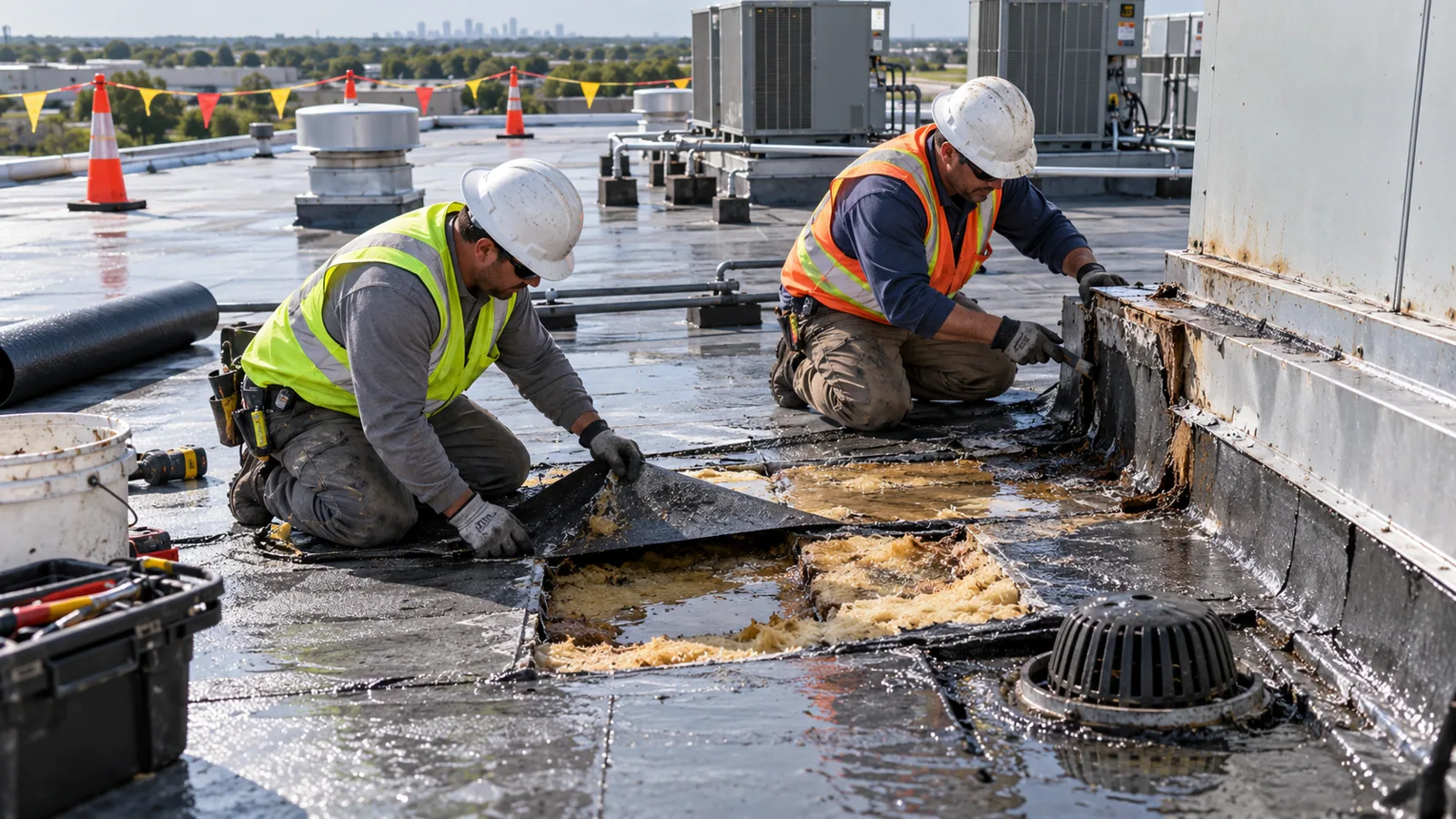
Map roofing work to the district calendar
Share the affected building, reported room or area, roof drawings, access restrictions, and available work windows. We can set an inspection route and return building-specific findings.