
A roof puncture should be mapped before debris or a patch hides its edges. We locate the opening, identify the membrane and roof section, and check the area below for water exposure. The first repair ticket records the size and condition of the damaged material, nearby traffic paths, and whether the substrate may be affected. A temporary cover can limit exposure, but the permanent repair needs sound material around the opening.
The Gateway Specific Plan map shows office, retail, freeway-commercial, and industrial-park categories; those labels cannot locate a puncture or define roof damage. Those broad land-use descriptions do not show where a puncture occurred or how far damage extends. These are broad planning contexts, not proof that a particular property has foot traffic or a specific membrane. The inspection checks the roof's actual access route and surface conditions before assigning a cause.
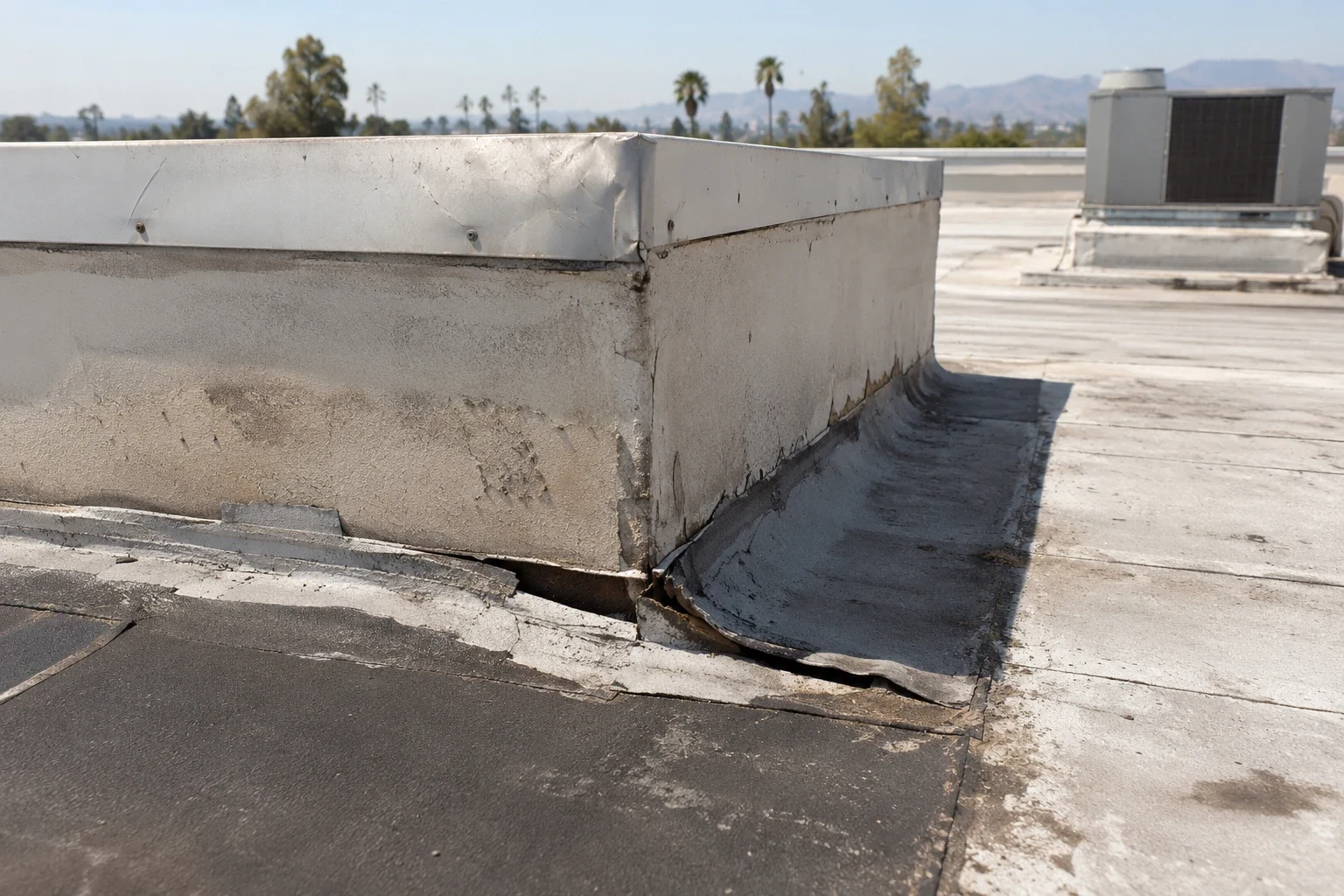
What Made the Opening and What Is Still Attached?
Look for a cut, split, puncture, crushed area, or displaced fastener, but do not assign a cause from appearance alone. Remove loose debris carefully and inspect the membrane edge, reinforcement, and substrate. Check whether the opening intersects a seam, flashing, curb, or previous patch. Photograph the defect with a scale reference, then mark its location on the roof plan so follow-up can return to the same point.
Inspect the surrounding surface for scuffing, blisters, loose attachment, or small openings that may be related. A roof inspection can map adjacent conditions, while a repair assessment can define the patch boundary. If the opening follows an open lap, a seam failure review can separate a puncture from a joining failure.
Where Does Foot Traffic Cross the Roof?
Identify roof access points, service routes, equipment clearances, and any path routinely used by maintenance trades. Check whether walk pads, guards, or marked access zones are present and whether the puncture lies near a turn or staging area. Record what the site contact knows about recent work, but keep that history separate from confirmed physical evidence. If the route creates repeated abrasion, the work plan can specify protection after the repair is complete.
The City identifies several commercial corridors and a key node at Baseline and Riverside; its land-use map also distinguishes industrial and warehouse areas. A puncture report still needs its own roof-section label and field record. Those streets do not establish a particular roof's maintenance habits. A commercial-corridor roof visit still checks the building's access and equipment layout. The city's Gateway map is a broad land-use reference, not a surface inspection.
How Far Could the Damage Reach?
Follow the drainage direction from the opening and check whether water has reached insulation, a deck joint, or the interior below. Look at seams and transitions in the same section, especially when the puncture is near a curb or drain. If moisture is suspected, select a test location that can confirm the layer condition. Mark any untested area and keep it outside the confirmed repair quantity until evidence supports expansion.
Rialto's adopted climate plan includes flooding among City hazards; it does not establish water intrusion at an individual building. We trace the actual route and document what is wet. A moisture survey may help select openings, and a leak investigation can connect the interior report with the roof defect.
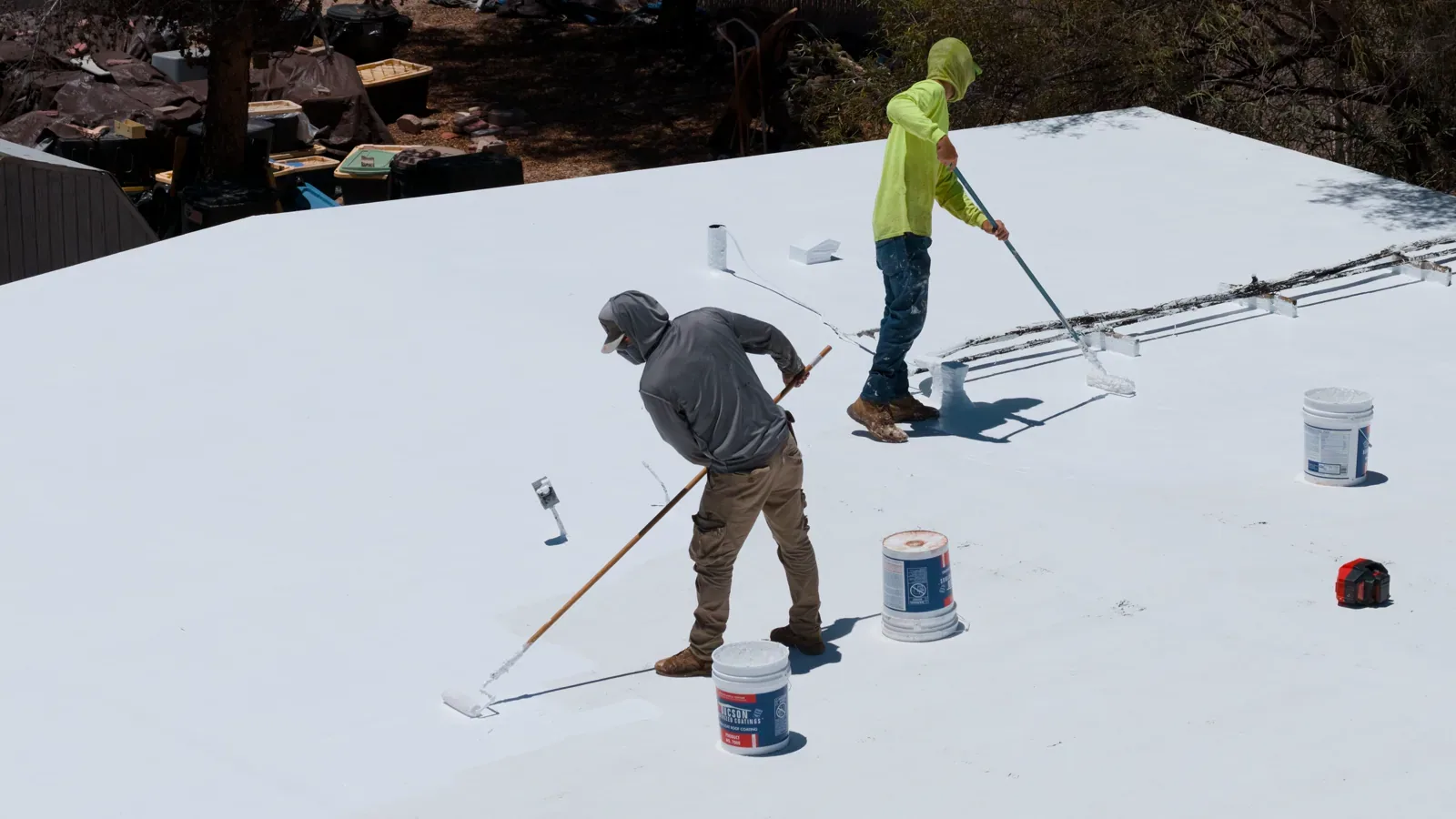
What Does a Stable Patch Require?
Match the repair to the membrane and the damage pattern. Remove loose or contaminated material to a stable boundary, prepare the surface, and use the compatible patch or repair detail. Extend the tie-in onto sound membrane and check the finished edge. The ticket should identify preparation, patch type, repair dimensions, and any test that remains. A patch over a wet or moving substrate may conceal the problem without correcting it.
Heat is part of Rialto's local climate planning, with hot days described as a regular condition. We follow the chosen material's limits and check the actual substrate before application. A coating review may suit broader surface work only when the assembly supports it. It should not be substituted for an isolated puncture repair or used to cover an unresolved opening.
How Can Repeat Damage Be Reduced?
After the patch is accepted, review how tools, carts, or service work reach the roof. Add or reposition walk pads where the building's access plan supports them, and make the route clear to other trades. Check whether equipment servicing causes people to cross the repaired section. The facilities lead can add the marked location to the roof register and note the material limits for future maintenance.
Foothill Central is a broad Rialto planning area that combines former plan geographies, while Gateway includes several commercial and industrial designations. Those named areas do not reveal foot-traffic patterns on a building. The property contact and roof map do. A maintenance visit can recheck repaired paths and penetrations at a planned interval, based on the observed condition.
When Does One Puncture Need a Wider Review?
A single opening with firm surrounding material may be corrected locally. Multiple punctures, repeated patches, wet insulation, or attachment loss across a section can change the scope. Inspect the nearby system and verify concealed conditions before recommending broader work. Document the punctures by roof zone and separate confirmed repair from areas still needing a test or opening.
When a roof has recurring damage or widespread deterioration, compare repair history with a full condition review. A replacement assessment can evaluate the larger assembly. If movement or lifted edges accompany the opening, a wind-damage inspection can capture connected perimeter conditions. The scope should follow the evidence, not the number of tickets alone.
What Should the Puncture Record Include?
Closeout should include the opening's location, membrane type, repair dimensions, materials, preparation, photographs, and condition below. Note if a moisture test was performed and whether the substrate was confirmed sound. Label any follow-up item and the next inspection route. If temporary protection remains, do not mark the repair complete; state who will check it and when a permanent detail is scheduled.
Before the ticket closes, confirm the repaired area is clean, the water path is open, and any temporary cover has been removed or clearly assigned for later removal. If the repair crosses a seam or flashing return, photograph that tie-in from more than one angle. The property lead can use those views to verify the finished boundary during the next roof walk.
Use the same roof-zone label for future inspections and service tickets. Area plans can help staff route a request to the right market file; the puncture's history must come from the owner's tickets and inspection records. The repair file should show what the crew found and what changed. A later visit can then distinguish a new impact from wear at an established access path and assign the correct next step.
Commercial Roofing Questions
Can a puncture be repaired with a surface seal?
Only when the surrounding membrane and substrate can support a compatible repair. We remove loose material, prepare the boundary, and inspect the finished tie-in rather than sealing over debris or movement.
How do you know if the insulation below is wet?
A visual opening may not show the full extent. We use an approved moisture check or targeted opening when that information could change the repair scope, then mark the tested location.
Do you replace walk pads after a puncture?
We review the access route and protection that fits the assembly. Any added walk pad should be compatible, placed at a useful route, and recorded for the next maintenance visit.
What if the puncture is beside a seam?
Inspect both conditions. A damaged field sheet and an open lap need different repair details, so we map each boundary and confirm the surrounding membrane before closing either one.
When is a puncture a sign of widespread roof failure?
Repeated openings, wet insulation, loose attachment, or multiple damaged sections can justify a wider survey. We verify the pattern and keep any untested area separate from confirmed failure.
Related Roofing Work
Locate the Opening and Protect the Section
Send the roof plan, puncture location, leak report, access rules, and any recent maintenance notes. We will map the damage and prepare a compatible repair scope.