
Before a coating is added, the facility director needs a clear answer on adhesion, moisture, and the details that will remain below the new surface. A coating can renew a compatible, sound roof, but it cannot correct wet insulation, loose attachment, or a failed curb by itself. We inspect the existing membrane, map open seams and repairs, and test representative areas for adhesion. The scope shows what preparation is required and where a different repair or replacement decision belongs.
Rialto's climate plan identifies extreme heat among City hazards and says hot days are regular. That makes surface preparation and application conditions important parts of a coating visit, not proof that an individual roof has heat damage. We review the exposed membrane and note the conditions present during inspection. Foothill Boulevard and Riverside Avenue are among Rialto's commercial areas, while warehouse and industrial uses also appear near rail lines in the General Plan. At a property in these settings, access, equipment, and operations determine where preparation and coating can proceed. Our roof inspection gives the condition record used to set that boundary.
Which roof conditions support a coating?
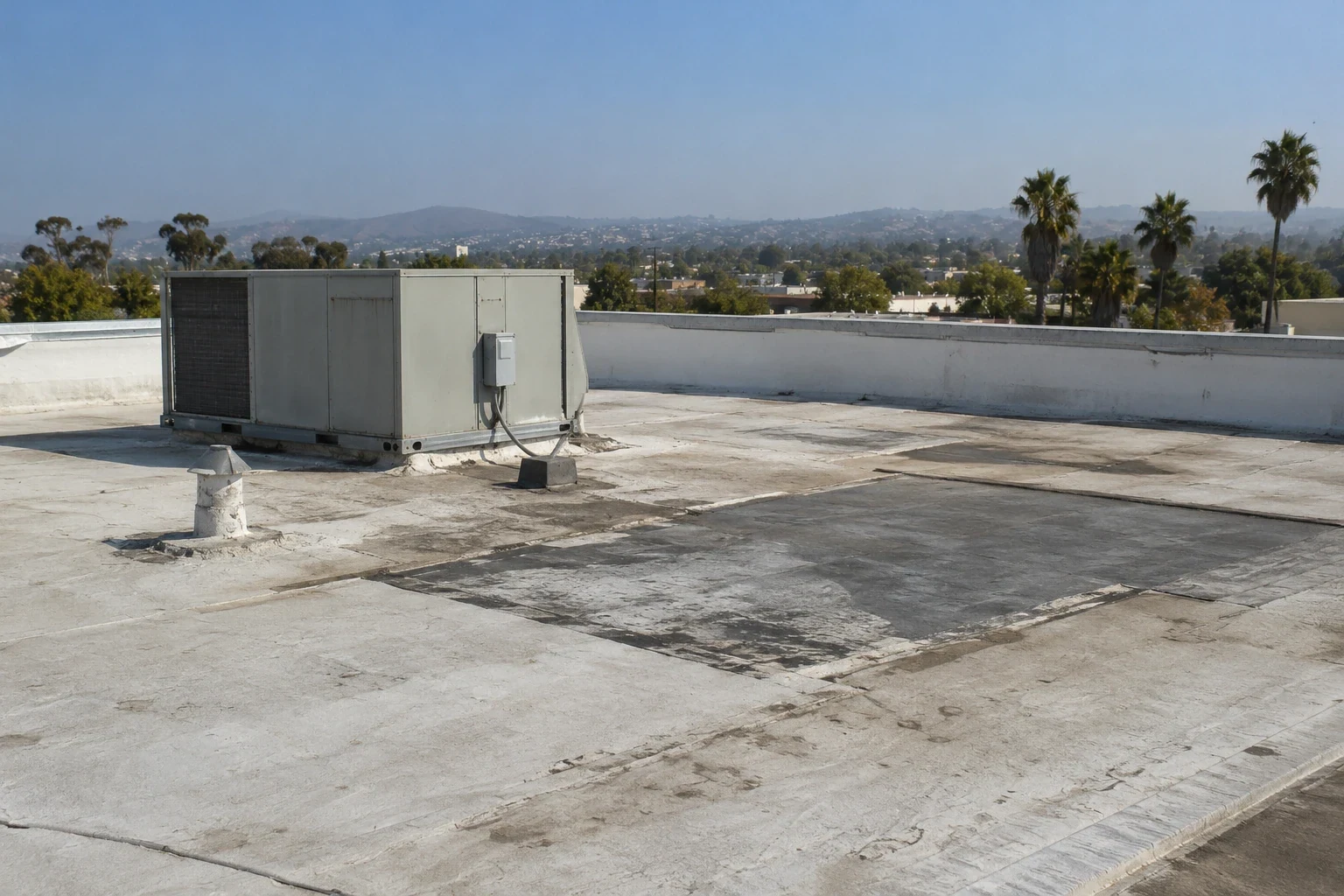
We begin with the assembly underfoot. The roof needs to be stable enough to receive the coating, with no widespread wet insulation, loose membrane, or movement that will continue beneath the new film. We inspect representative field areas, seams, flashings, penetrations, and the perimeter. If a suspect area could change the scope, we select a test location rather than treating one dry spot as proof for the entire roof. The owner receives the limits of the coating area and any section that needs repair first.
Surface type matters. Existing coatings, aged membranes, contaminants, embedded gravel, and previous patches can change how a new material bonds. We identify what is present and prepare a small test area when compatibility is uncertain. A silicone coating system and an acrylic coating system do not share every application condition. We compare the roof surface, water exposure, and detail transitions with the proposed product requirements before placing either in the estimate. The choice follows the substrate, not a preference for a particular finish.
What preparation happens before coating?
Preparation sets the bond. We remove dirt and loose material, clean areas that need it, and let the surface dry as required by the product instructions. Blisters, open seams, failed patches, and exposed fasteners receive separate repair details before field coating. We do not use the coating layer to bury a defect that needs a cutback or flashing reset. The work order separates cleaning, patching, reinforcement, primer, and finish coats so the owner can see what drives labor and material use.
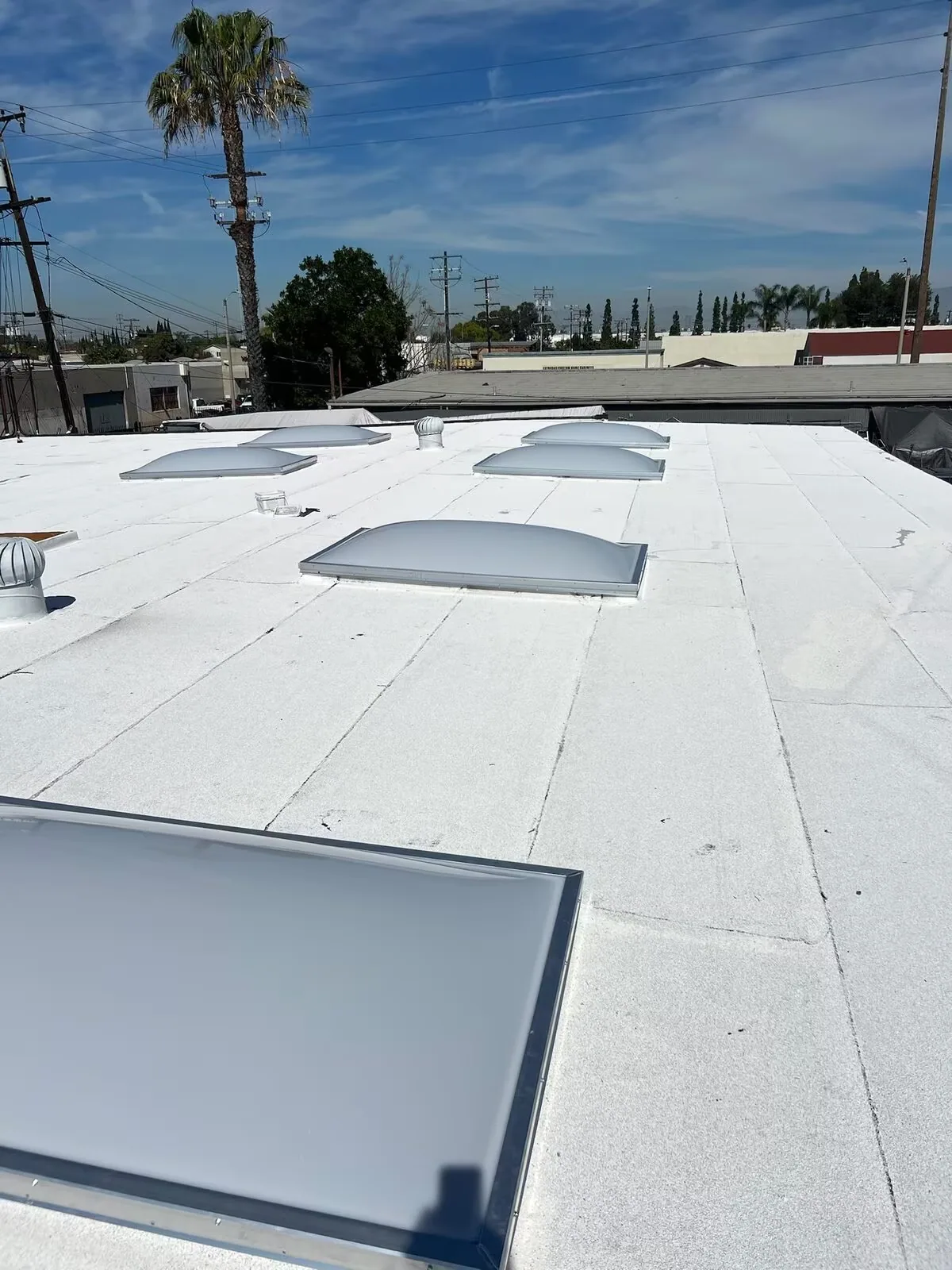
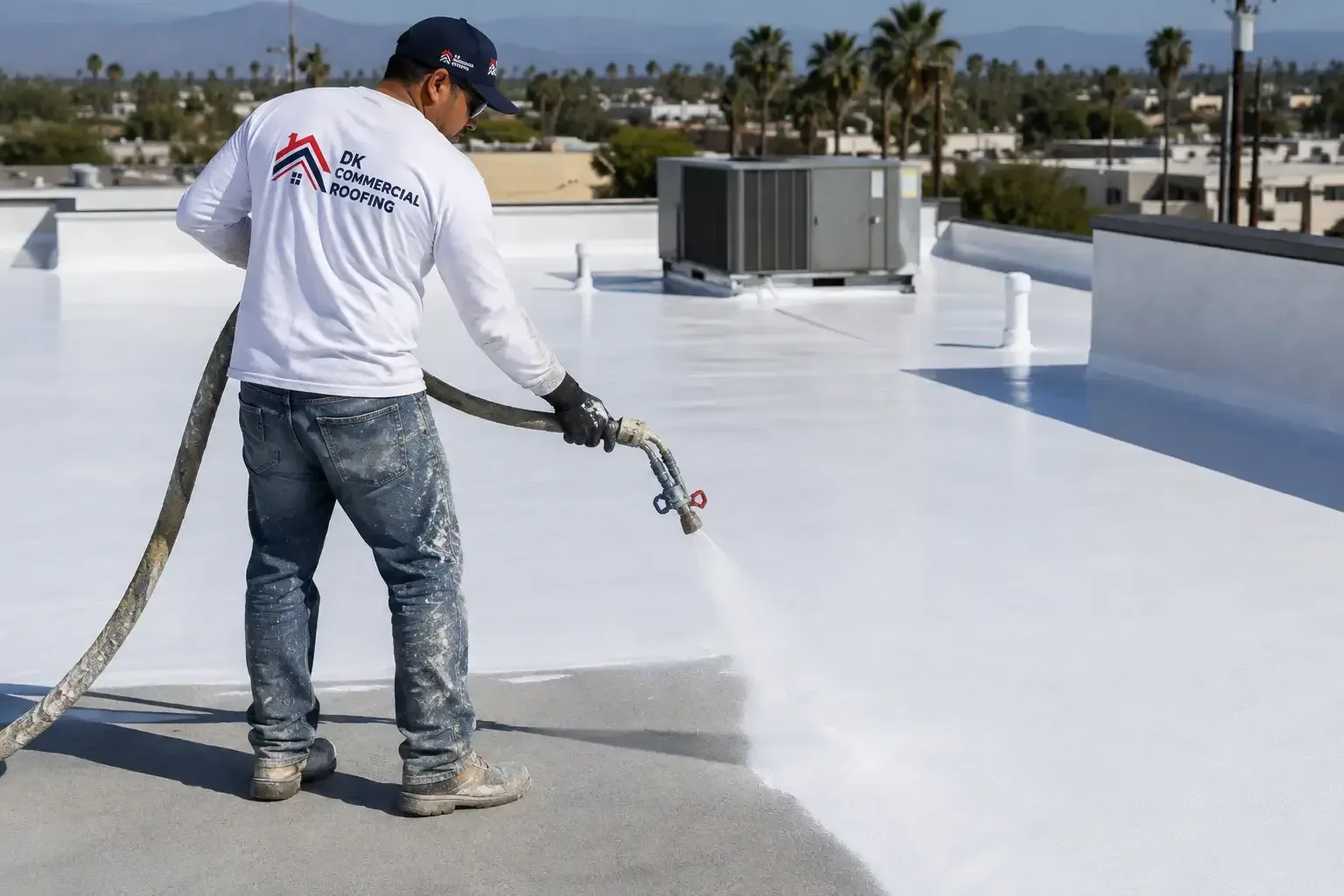
Application moves in controlled sections. We protect drains, equipment, skylights, and walls from overspray or runoff, then work around the roof access route and occupied areas below. Coverage and film thickness follow the selected system requirements and the roof's surface condition. A skylight or penetration repair needs its own transition detail before the field coating closes around it. Where a drain or scupper has loose metal or ponding, the drainage detail must be corrected as part of the sequence, not hidden beneath a coating pass.
How do Rialto conditions affect the work window?
Coating products have limits for substrate temperature, moisture, dew, and the time needed to cure. We check the roof at the start of the shift and compare the surface conditions with the product instructions. Rialto's climate plan discusses modeled citywide heat projections, so the project schedule comes from actual conditions at the roof, not a citywide forecast. If an application window closes, we stop at a planned tie-in and protect the section until the next suitable visit. The schedule should account for that possibility before material is opened.
The Gateway Specific Plan includes office-park, retail-commercial, freeway-commercial, and industrial-park designations in Rialto. A coating crew can encounter different access and protection needs across those uses. We confirm where equipment can be staged, which doors and loading paths must stay open, and whether tenants or production need notice before work begins. If the roof has a large equipment field, we divide the coating route around curbs and service clearances. The warehouse work plan can help coordinate that sequence where receiving and inventory occupy the space below.
How are edges, drains, and transitions handled?
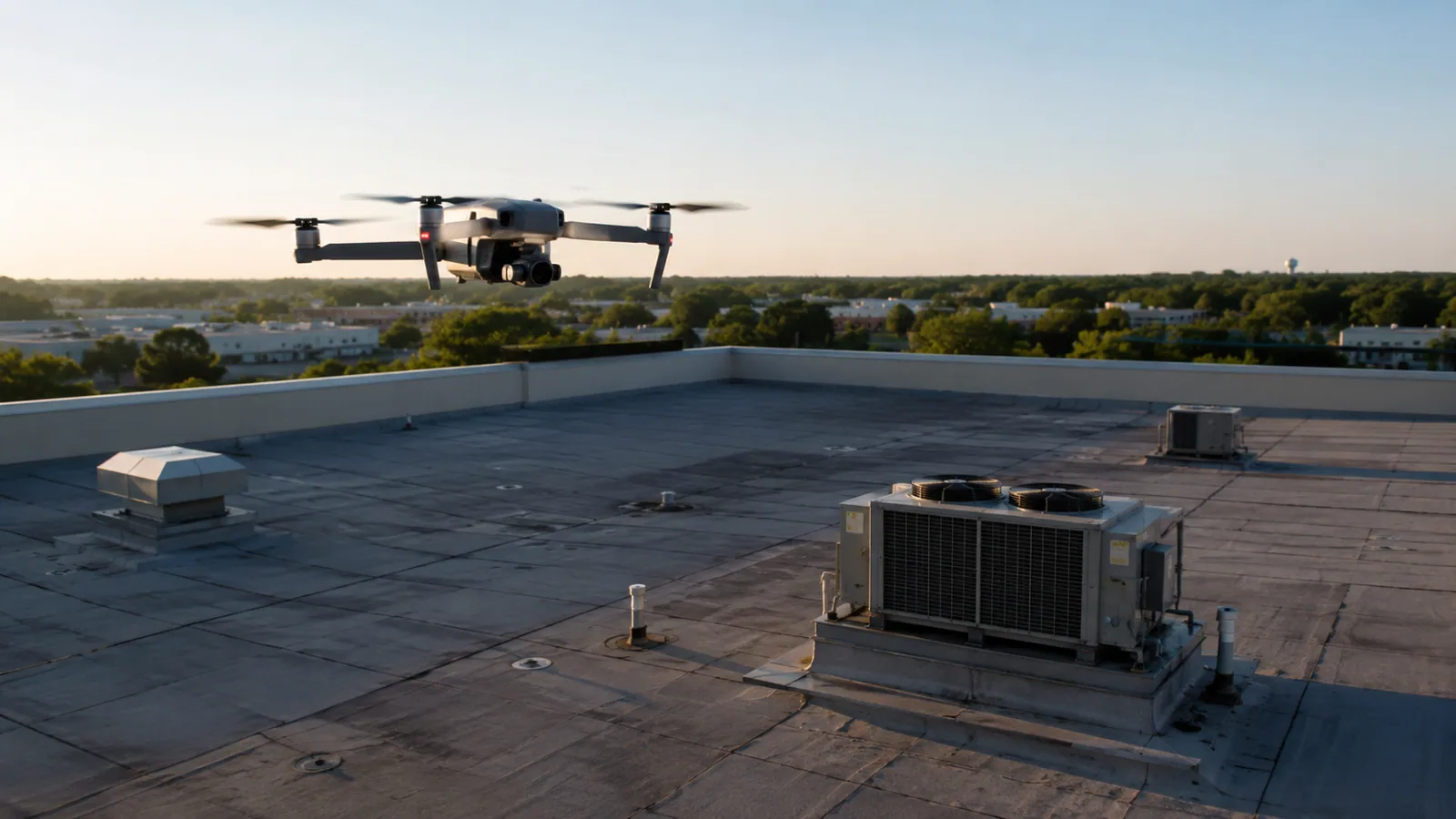
Water must still reach the drain after the roof is coated. We map low points and outlet locations, inspect drain bowls and scuppers, and check that reinforcement will not obstruct the path. Coating can follow a designed slope, but it does not create one. Where ponding reflects a slope or substrate issue, we price that correction separately and identify how it affects the new surface. At parapets and edges, we plan the coating termination with metal, coping, and wall transitions instead of leaving a thin feathered edge exposed.
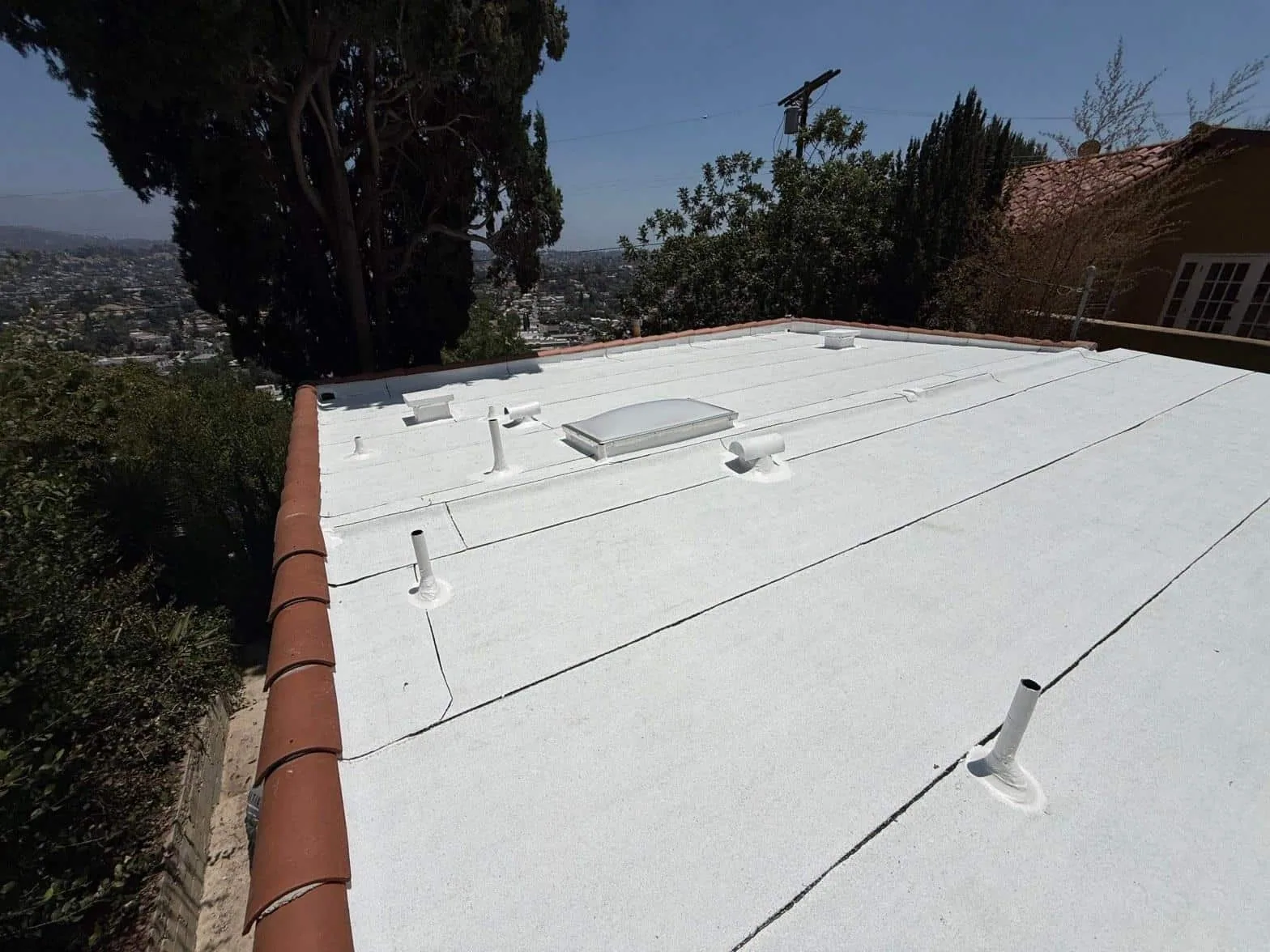
Details around equipment supports, pipes, and curbs receive close attention because a small unsealed gap can admit water below the field layer. We clean and reinforce those points with compatible materials, then check that the transition remains accessible for service trades. A coating restoration scope may also pair with edge metal and coping work when perimeter movement is present. If widespread moisture or unstable attachment appears, the building may need a different scope. The replacement review compares removal and new assembly options using the same field findings.
What belongs in the coating scope?
A useful estimate names the eligible roof area, system type, surface preparation, repair details, primer, coating passes, and expected access needs. We identify any area omitted because of moisture, movement, incompatible material, or inaccessible equipment. If a test patch is required, its location and acceptance criteria belong in the work plan. That keeps a coating estimate from treating every roof section as ready for the same treatment. The facility director can compare coating with localized repair or replacement without combining unlike quantities.
At closeout, we record the completed sections, preparation and repair work, product system, weather conditions, and any areas held for follow-up. The photos should show transitions and repaired details as well as the open field. A condition report can keep the coating work with the building's prior repair tickets and next inspection date. Schedule a coating assessment or discuss an active leak. Share roof plans, leak history, recent repairs, access rules, and work hours so we can set a test area and first visit. A Rialto commercial-corridor route still starts at the specific property and its approved roof access.
Commercial Roofing Questions
Can a coating go over any commercial roof?
Coating is a candidate only when the roof assembly is stable, compatible with the product, and sufficiently dry. We inspect field membrane, seams, flashing, and substrate, then test adhesion where the existing surface makes the bond uncertain. Wet or moving sections need another scope before coating.
Will coating correct ponding water?
A coating follows the roof shape and does not rebuild slope on its own. We map standing water, check the outlets and nearby substrate, and price drainage correction separately when the cause reaches beyond the surface.
What can delay coating work in Rialto?
Surface moisture, temperature, dew, access restrictions, and the selected product's cure window can change the sequence. We compare conditions with product instructions, protect the completed tie-in, and resume when the next section can be prepared correctly.
How do we compare coating with replacement?
The condition record sets the comparison. We identify sound areas, repairs required before coating, and sections with moisture or attachment problems. If preparation and exceptions approach a larger scope, the owner can review coating beside removal with the same access and drainage assumptions.
Related Roofing Work
Check the roof before selecting a coating
Schedule a coating assessment or report an active leak. Share roof plans, repair history, access rules, and operating hours so we can inspect the surface and choose a test area.