
Start with the roof condition and the weather window, then decide whether an acrylic coating belongs in the work order. We inspect the existing surface, map repairs, and confirm which areas are dry enough for preparation. A coating is a renewal option only when the assembly can accept it and the details can be made continuous. If moisture or movement remains unresolved, stop the coating discussion and define the investigation first.
Rialto's adopted climate plan treats extreme heat as a local hazard and notes that hot days occur regularly. That context makes daily conditions relevant, but it does not replace product instructions or roof-level checks. The Gateway map assigns office-park, retail-commercial, freeway-commercial, and industrial-park designations; those describe planning, not a building's installed coating. Those designations describe a broad planning area; every coating decision still begins with the actual building and roof section.
Read the Existing Surface Before Pricing
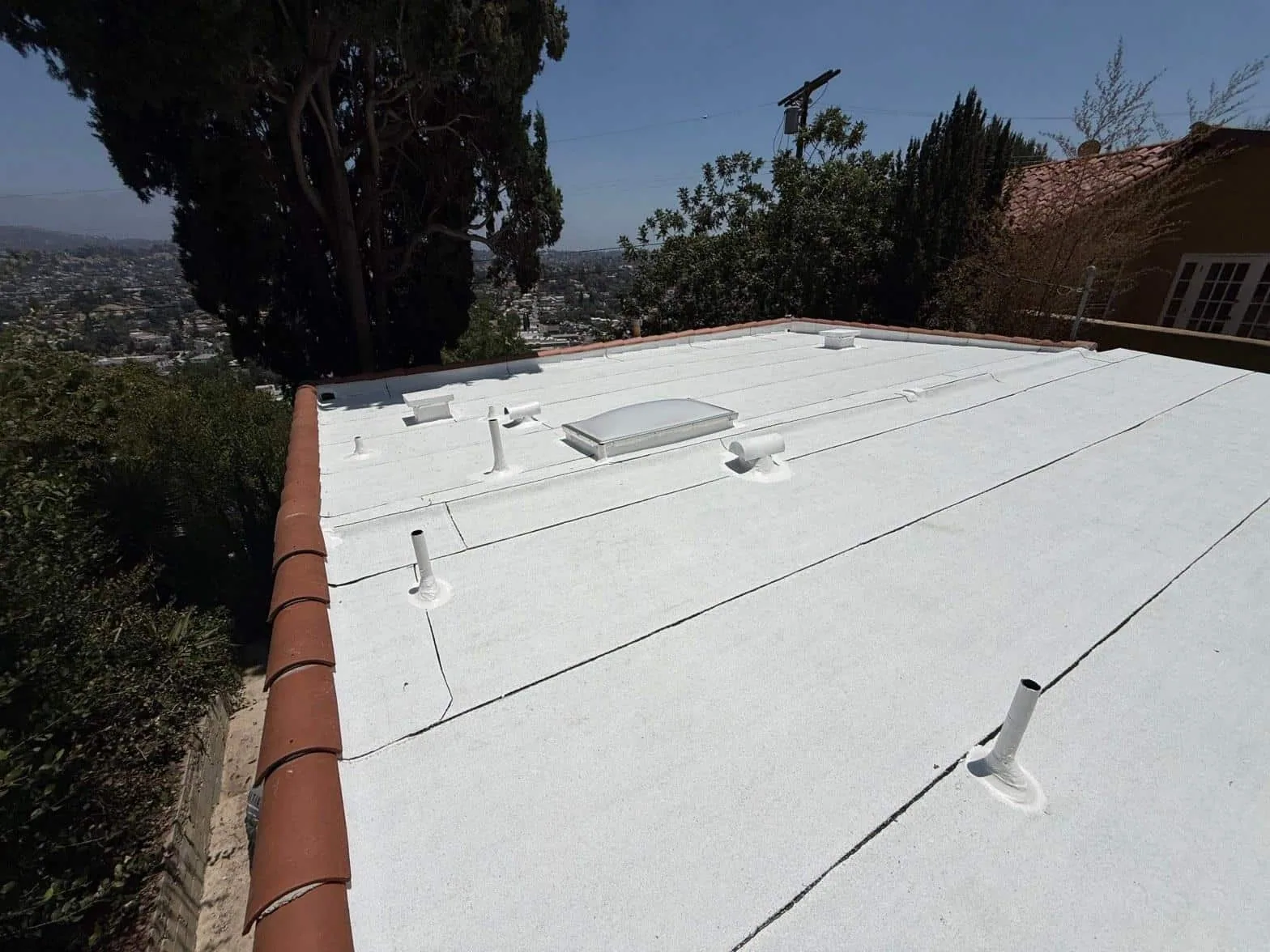
Walk the roof in sections and record membrane type, prior coatings, surface wear, open seams, blisters, and areas that feel unstable. Look at the transitions around curbs, penetrations, parapets, and perimeter edges. A test patch can help show how the proposed material bonds to a prepared area. Keep the test location, preparation method, and result in the condition record so the estimate reflects what was actually checked.
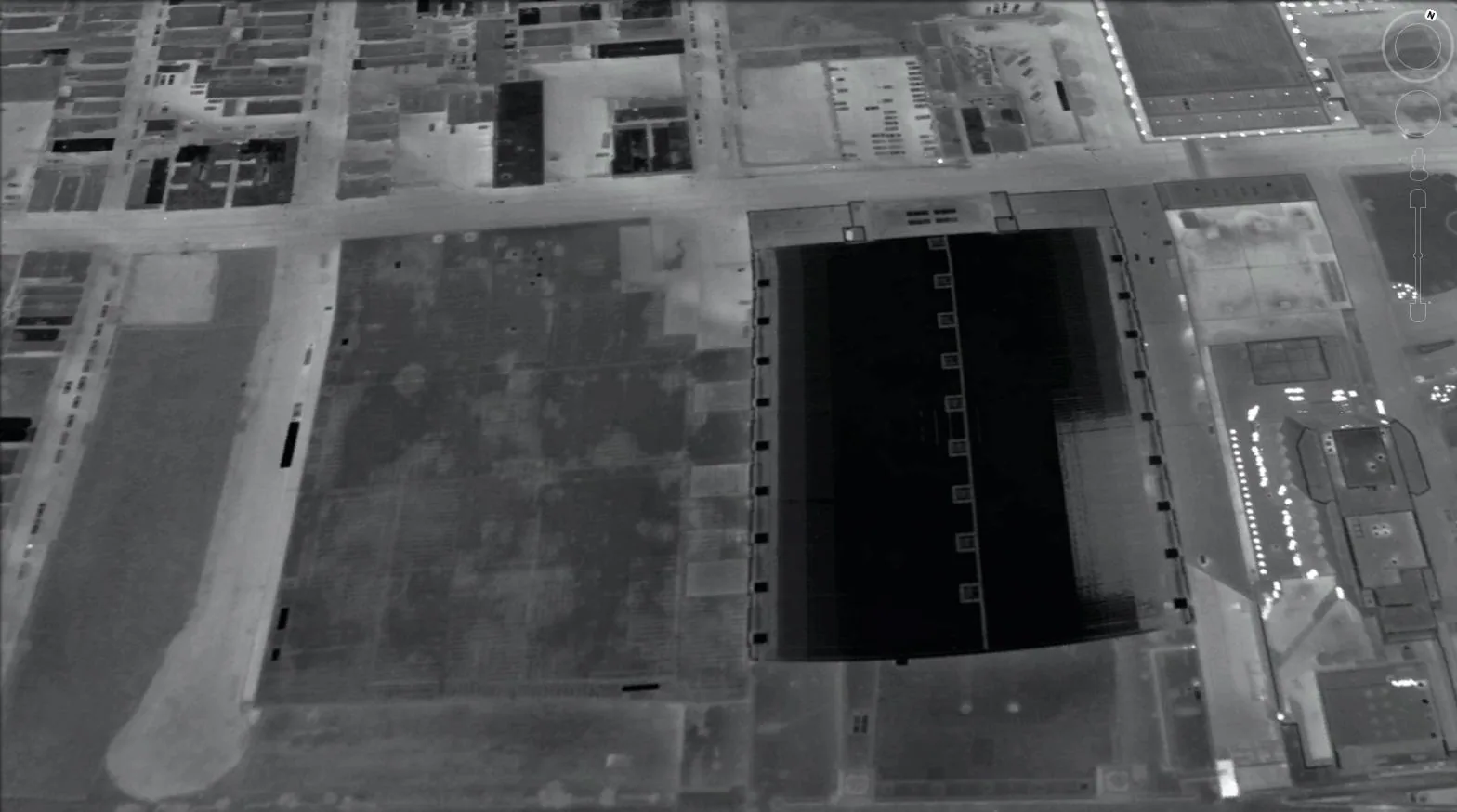
Do not treat a visual pass as proof that concealed layers are dry or firmly attached. Where staining, soft spots, trapped water, or delamination could change the scope, mark the location for confirmation. A moisture survey may help prioritize openings, while a roof condition report keeps findings tied to roof sections. Separate confirmed repairs from allowances before coating quantities are set.
Keep Water Moving Through the Roof Plan
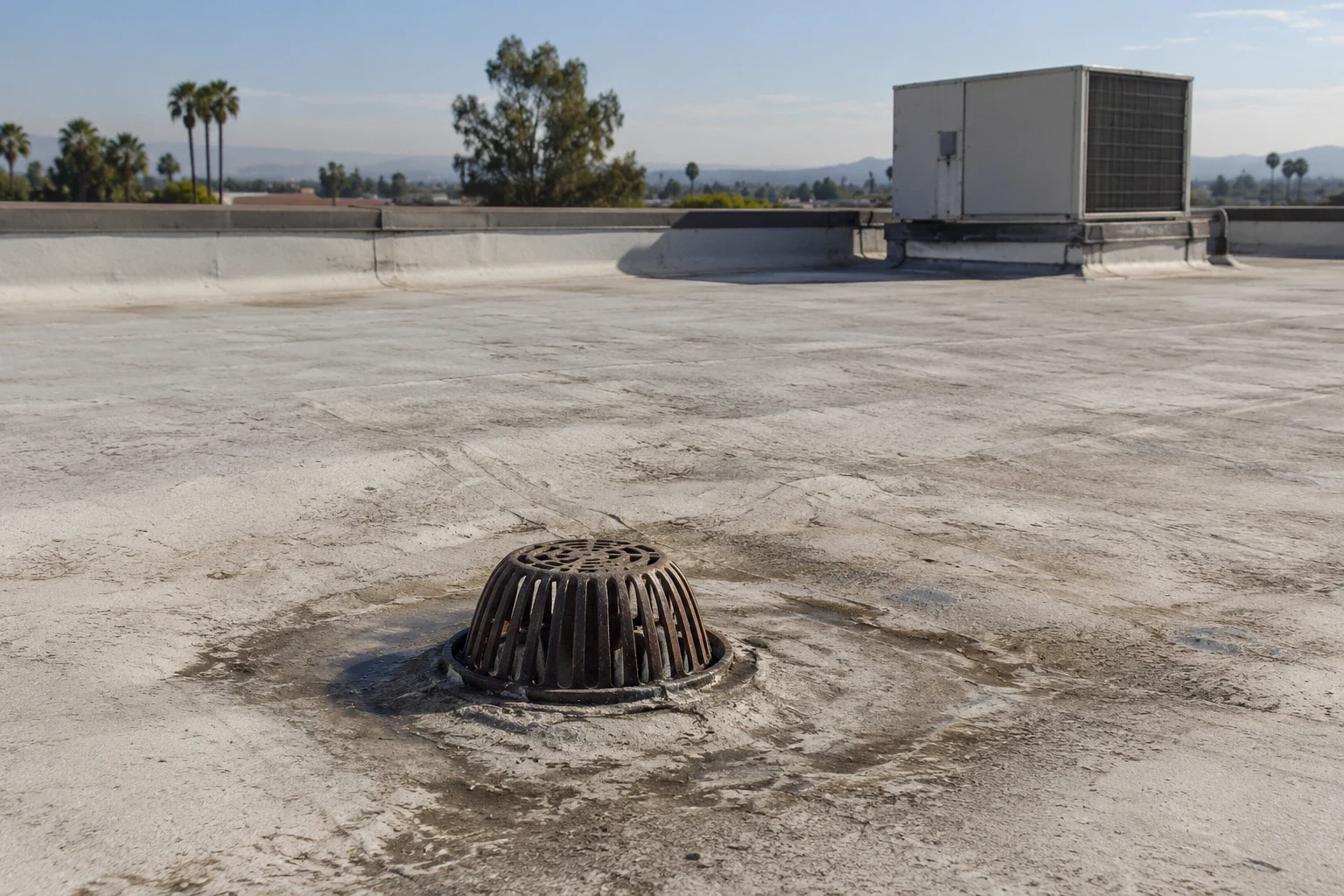
Acrylic coating follows the roof plane; it does not correct a blocked outlet or a low area that holds water. Inspect drains, scuppers, overflows, and the surface around each discharge point. Note ponding duration when the site team can verify it, and check whether debris or a damaged drain component explains the condition. Mark where water travels so the crew can protect outlets during cleaning and application.
Commercial references in Rialto's General Plan include Foothill Boulevard, Riverside Avenue, Valley Boulevard, plus the Baseline Road and Riverside Avenue intersection. These are citywide planning references, not claims about a particular building. On each roof, the drain path is a separate field observation. A drain and scupper review can define related corrections, while an assessment in the Gateway plan area remains specific to the property being inspected.
Choose Acrylic for Conditions It Can Meet
Acrylic is a liquid-applied coating option whose suitability depends on the existing roof, surface preparation, exposure, and application conditions. Confirm the selected system's substrate limits and installation requirements before including it in a proposal. The scope should state where primer is required, how repairs will be completed, and which areas are excluded. If product compatibility cannot be established, leave the roof uncoated until the team resolves that question.
Compare a coating with the condition of the assembly, not with a short list of material names. A silicone coating review may be useful when the expected exposure differs, and a TPO system assessment may fit a different replacement plan. Neither comparison removes the need for a substrate check. Record why the chosen approach fits the observed roof and what conditions would require a scope change.
Set the Work Window and Application Sequence
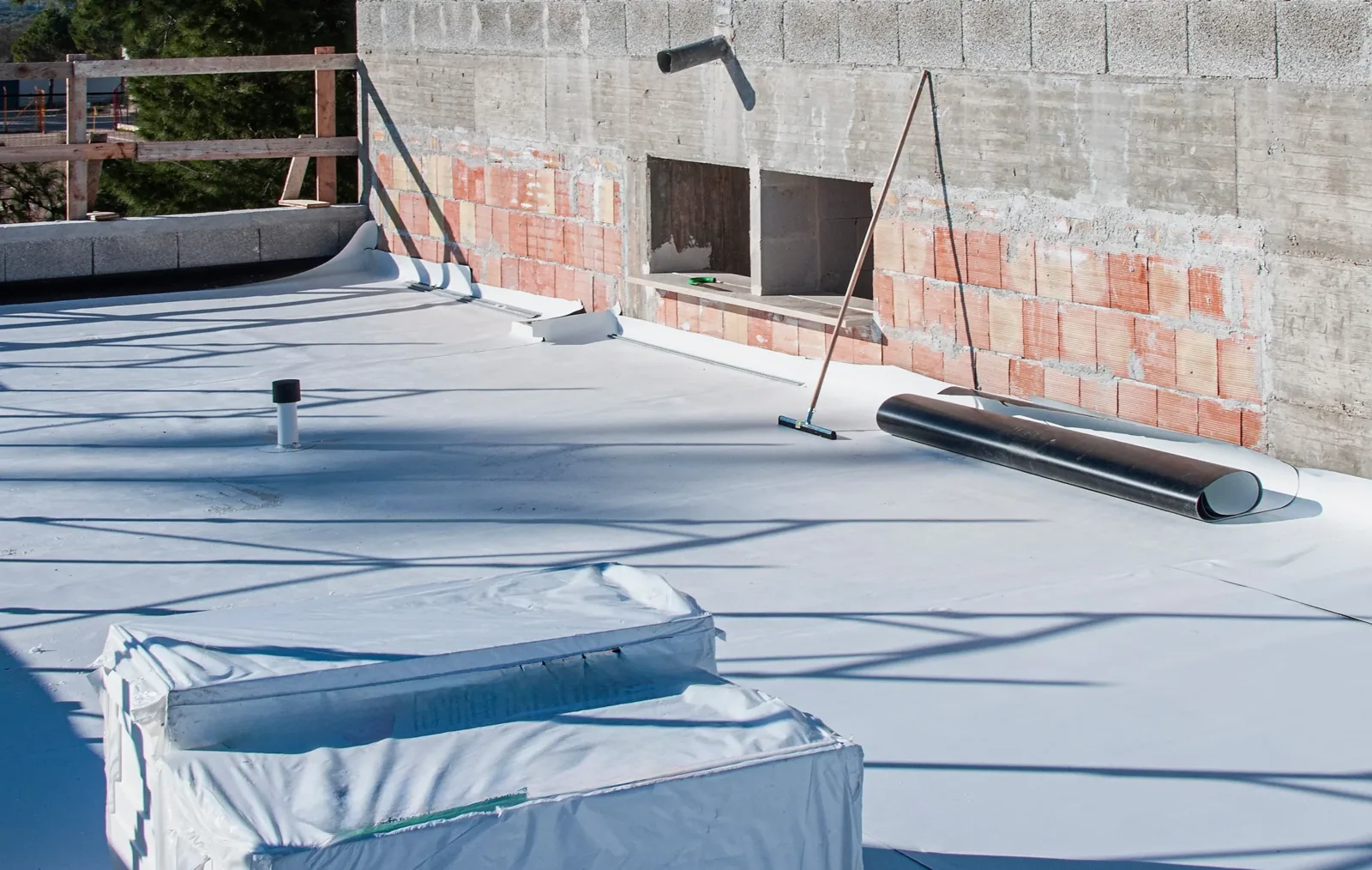
Before mobilization, list access points, equipment conflicts, staging limits, and the route crews will use between roof sections. Cleaning and preparation come before approved repairs, primer, reinforcement, and coating passes. Protect drains and equipment from debris or overspray, and keep the day's active boundary visible. The foreperson should know which section is ready, which remains under preparation, and where the application must stop at shift end.
Rialto's climate plan also names wildfire, flooding, and air pollution as city hazards. Those broad conditions do not establish a site schedule. On the workday, use the selected system's instructions and observed surface conditions to decide whether application may proceed. A coating restoration scope can set checkpoints for preparation, coverage, and tie-ins. Document interruptions so the next crew can resume without covering an unfinished edge.
Inspect Each Section Before It Is Closed
Check the prepared substrate before coating starts, then review coverage and details as the work advances. Watch transitions at penetrations, curbs, edges, and drainage points for missed areas, thin application, contamination, or a discontinuous termination. Use the manufacturer's specified checks and acceptance criteria rather than an invented field threshold. If the condition fails a required check, isolate the affected section and record the correction before moving the crew onward.
For projects near the Agua Mansa planning area, keep the local target precise: the plan spans parts of Rialto, Colton, and two counties, so only its Rialto portion belongs in this service context. That regional framework does not describe a specific roof. The work record should identify the property contact, section limits, repair tickets, and inspection status. A roof repair assessment can handle defects that remain outside the coating scope.
Know When a Coating Is the Wrong Scope
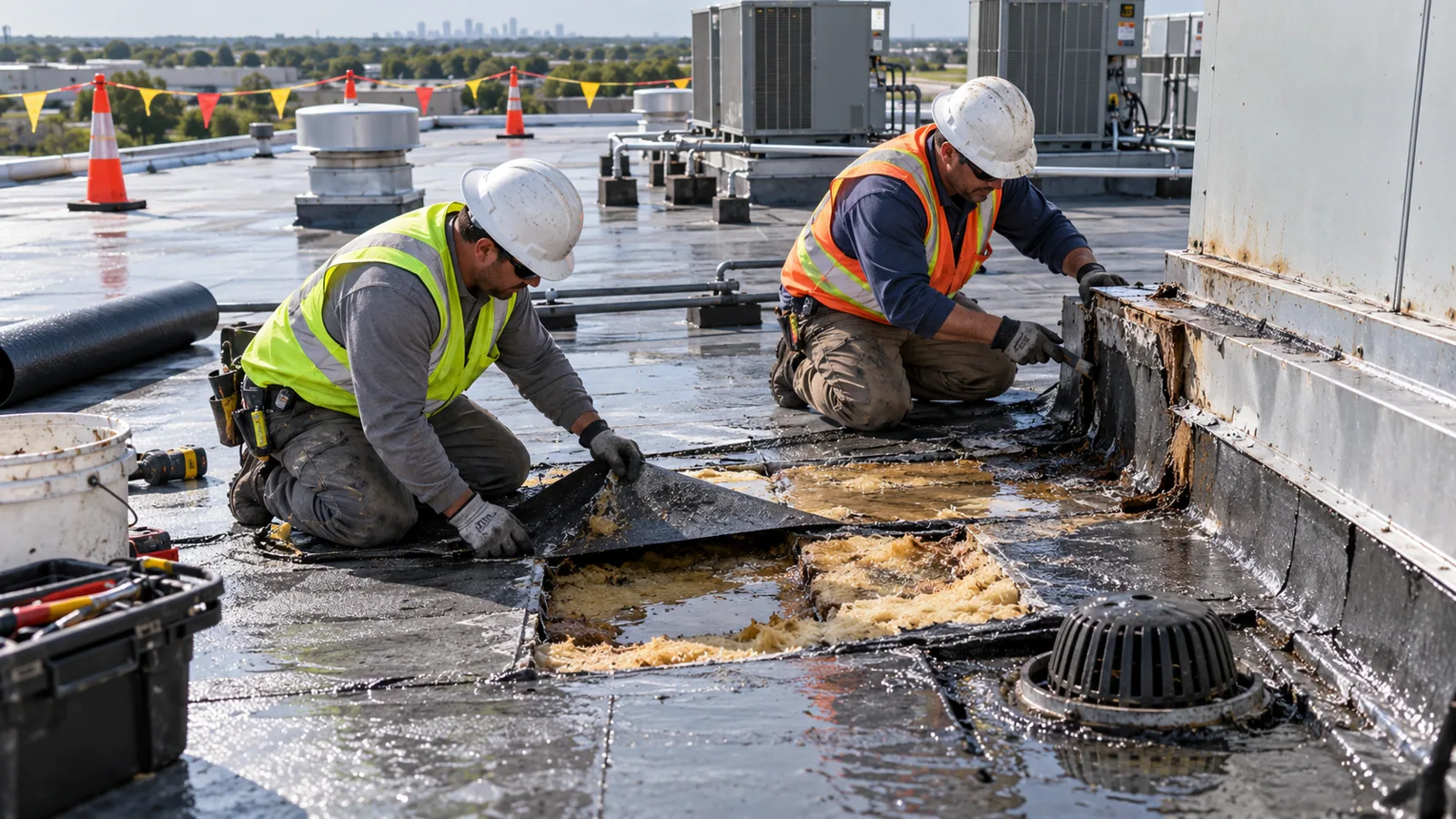
Widespread membrane failure, wet insulation, unstable attachment, soft decking, or repeated leaks at concealed transitions can make restoration unsuitable. Confirm questionable areas with targeted openings or other approved investigation before presenting a roof-wide coating as the answer. If removal or replacement is needed, state the observed reason and the area affected. A proposal should also explain limits, exclusions, and the findings that would trigger a pause after preparation.
A project entering Rialto plan review after December 31, 2025 uses the 2025 California Building Standards, in force since January 1, 2026. Confirm applicable review requirements for the planned project and keep that coordination separate from the coating inspection record. A replacement review can compare a new assembly with restoration. A membrane-system comparison can address a different replacement plan.
Leave a Record the Next Visit Can Use
Closeout should state the roof areas prepared and coated, repairs completed, test locations, interruptions, and final inspection points. Photograph representative transitions and drainage details, then label each image by section rather than relying on an unlabeled gallery. Note materials and application records required by the selected system. The file should distinguish coating installed from concealed conditions verified, because those are different findings.
Set a follow-up route for the property team: identify the areas to watch, the record location, and the next planned review. If a section was deferred, show its boundary and protection status clearly. Keep the service recommendation tied to observed roof conditions, whether the building sits near Foothill Boulevard, Riverside Avenue, or another Rialto planning area. A useful closeout gives maintenance staff a concrete starting point without promising that coating removes every future repair need.
Commercial Roofing Questions
Can acrylic coating go over any commercial roof?
No. First confirm that the existing membrane, prior coating, and prepared surface are compatible with the selected system. Wet, loose, or unstable areas need investigation or repair before coating is considered.
Does a coating fix ponding water?
Not by itself. The team should identify why water remains, inspect outlets and roof shape, and include drainage corrections where the findings support them. Coating should not conceal an unresolved flow problem.
How do you know whether the surface is ready?
Preparation and test areas provide evidence about cleanliness, adhesion, and compatibility. The project record should show what was tested and where; concealed moisture may require a separate confirmation step.
What can delay the application window?
Surface moisture, site access, equipment conflicts, or conditions outside the chosen product's application instructions can change the sequence. The crew should document the stop point and protect the unfinished section.
When should we consider replacement instead?
Consider a replacement review when investigation finds widespread failure, wet insulation, unstable attachment, or deck concerns. The recommendation should identify the observed area and explain why coating would not resolve it.
Related Roofing Work
Plan an Acrylic Coating Assessment
Request an inspection to map the roof sections, confirm coating compatibility, and define repairs or investigation before pricing an acrylic restoration.