
A coating decision starts at the substrate, not the pail. We inspect the existing roof, identify loose material or wet areas, and check whether the surface can accept a silicone system. The work order names preparation, repairs, test patches, and the areas that need removal. If the roof is still moving or retaining moisture beneath the membrane, a coating alone will not settle that condition.
Rialto's climate plan lists extreme heat among City hazards and describes hot days as regular. Gateway's plan map includes office-park and retail-commercial designations. For silicone restoration, use the substrate moisture check, adhesion patch, and product instructions to set the application window and define any preparation before coating.
What Must the Existing Roof Show?
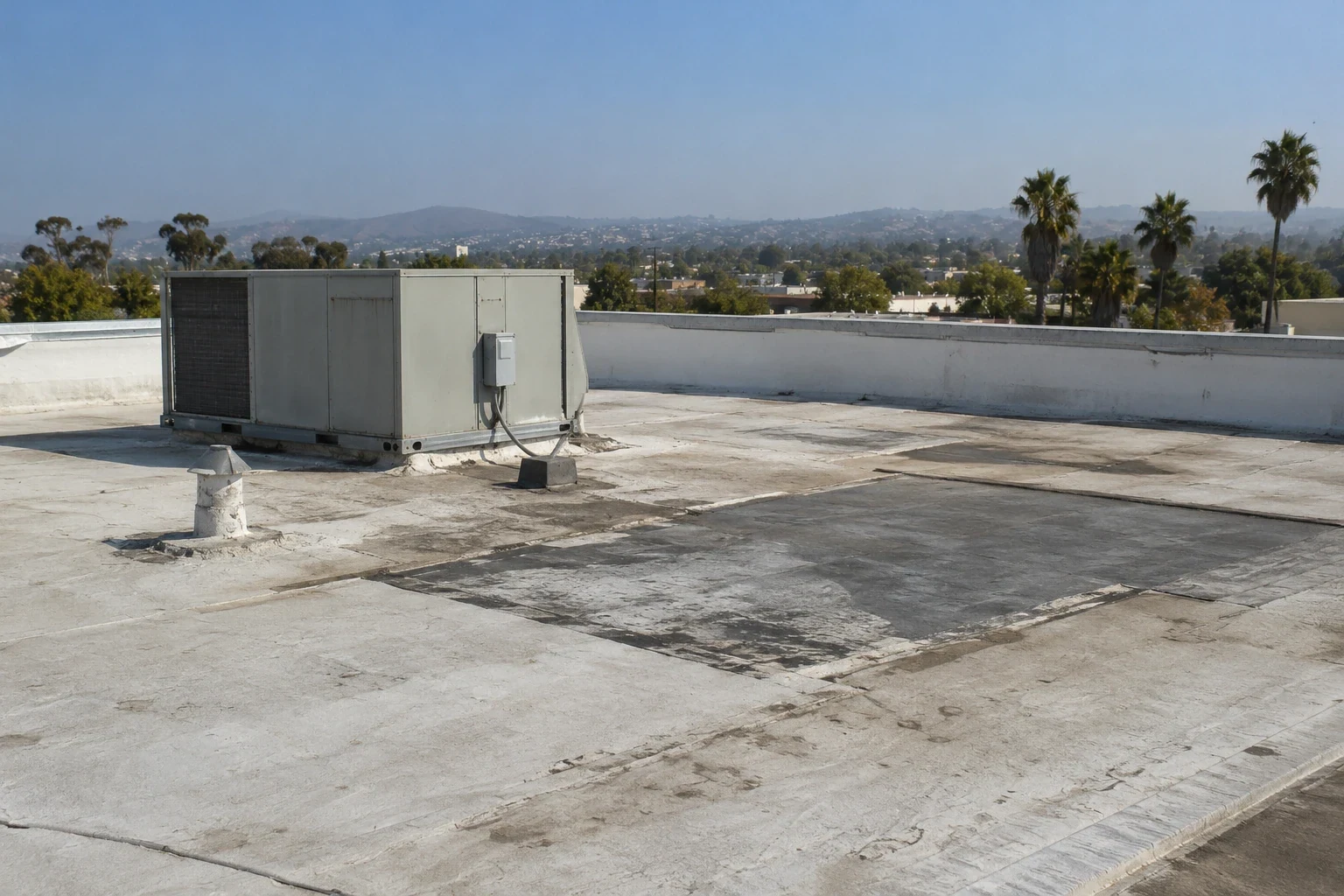
The surface must be sound enough to receive preparation and a compatible coating. We inspect membrane adhesion, existing coatings, contamination, blisters, seams, and wet areas. A peel or pull test can help assess compatibility in the test zone, while a moisture survey or opening addresses what may be below the surface. We label each result by location and keep an untested area outside the confirmed scope.
A coating cannot bridge every failed detail. Loose flashing, open seams, punctures, and unstable edges need repair before the broader surface is treated. A roof repair assessment can isolate those corrections. When a patch reaches another membrane or a curb, we check the transition and record what material remains. The application plan starts after the substrate and detail work are defined.
How Does Drainage Affect a Coating Plan?
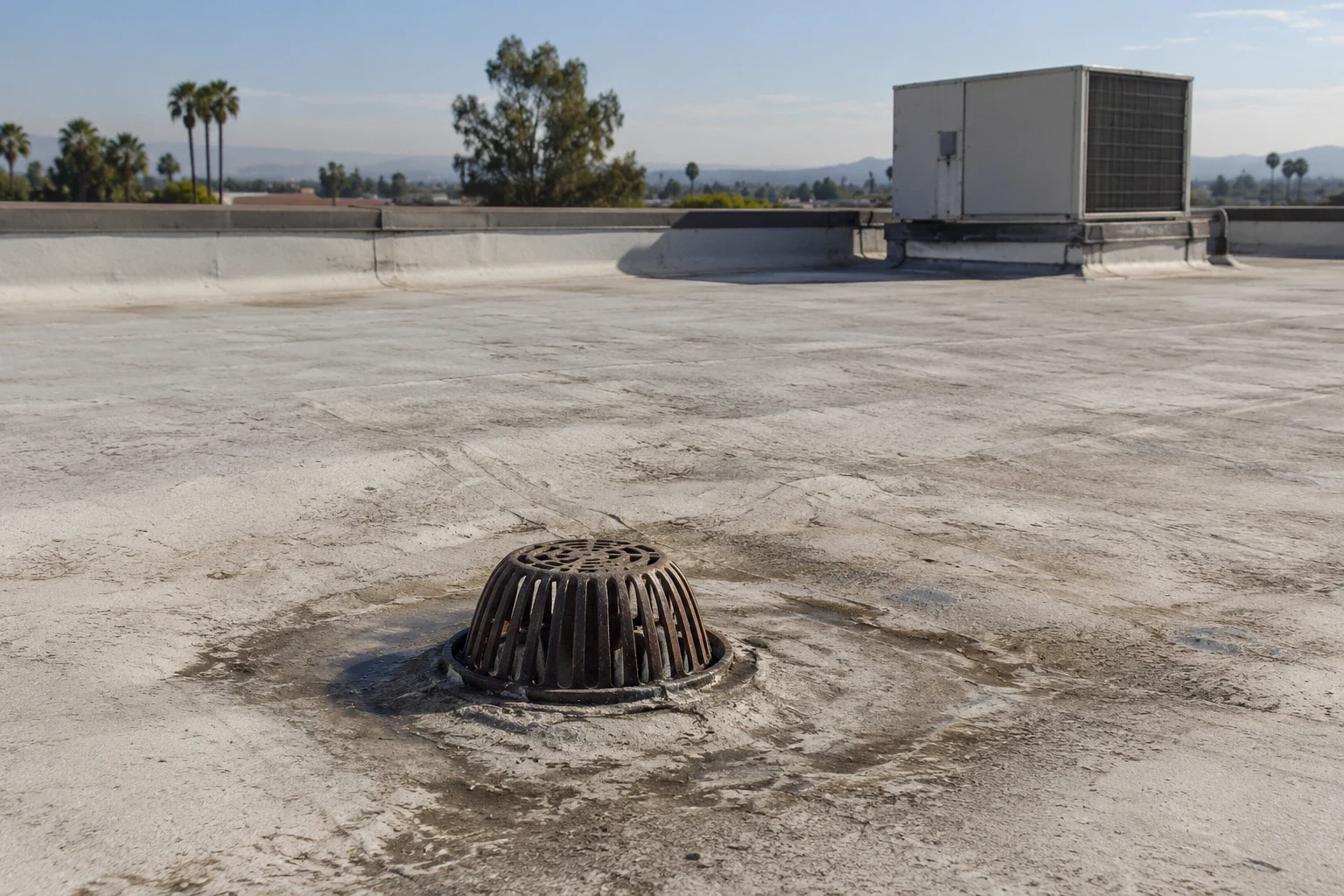
Coating follows the roof's existing shape. If water remains at a low point, the project team needs to understand whether the outlet is restricted, the deck has deflected, or the roof plane needs correction. We inspect drains, overflows, scuppers, and the coating termination around each one. A new surface should not seal over a blocked outlet or leave a ridge that redirects runoff toward a curb.
The General Plan names Valley Boulevard and the Baseline Road/Riverside Avenue intersection among Rialto's commercial areas. For a coating estimate in those corridors, we map the roof sections feeding each outlet and match the application stop line to that runoff route. A drain and scupper review can identify outlet work that belongs beside the coating scope. We note each contributing roof section so the crew sequence preserves the active drainage path.
When Does Silicone Fit the Surface?
Silicone coating systems use a liquid-applied layer over a prepared roof. Product selection depends on the existing membrane, coating history, expected exposure, and the details at curbs and edges. We confirm the manufacturer's preparation and application requirements for the chosen system. A test area can show whether the surface and coating bond as expected before the crew proceeds across a larger section.
An acrylic coating has different application limits and should be compared against the actual roof and water conditions. A spray foam assembly is another distinct system, not a coating substitute for wet or failed membrane. We describe the selected material, substrate preparation, reinforcement at details, and finish conditions in the work order. The comparison should end with a compatible assembly, not a product label alone.
What Happens During the Work Window?
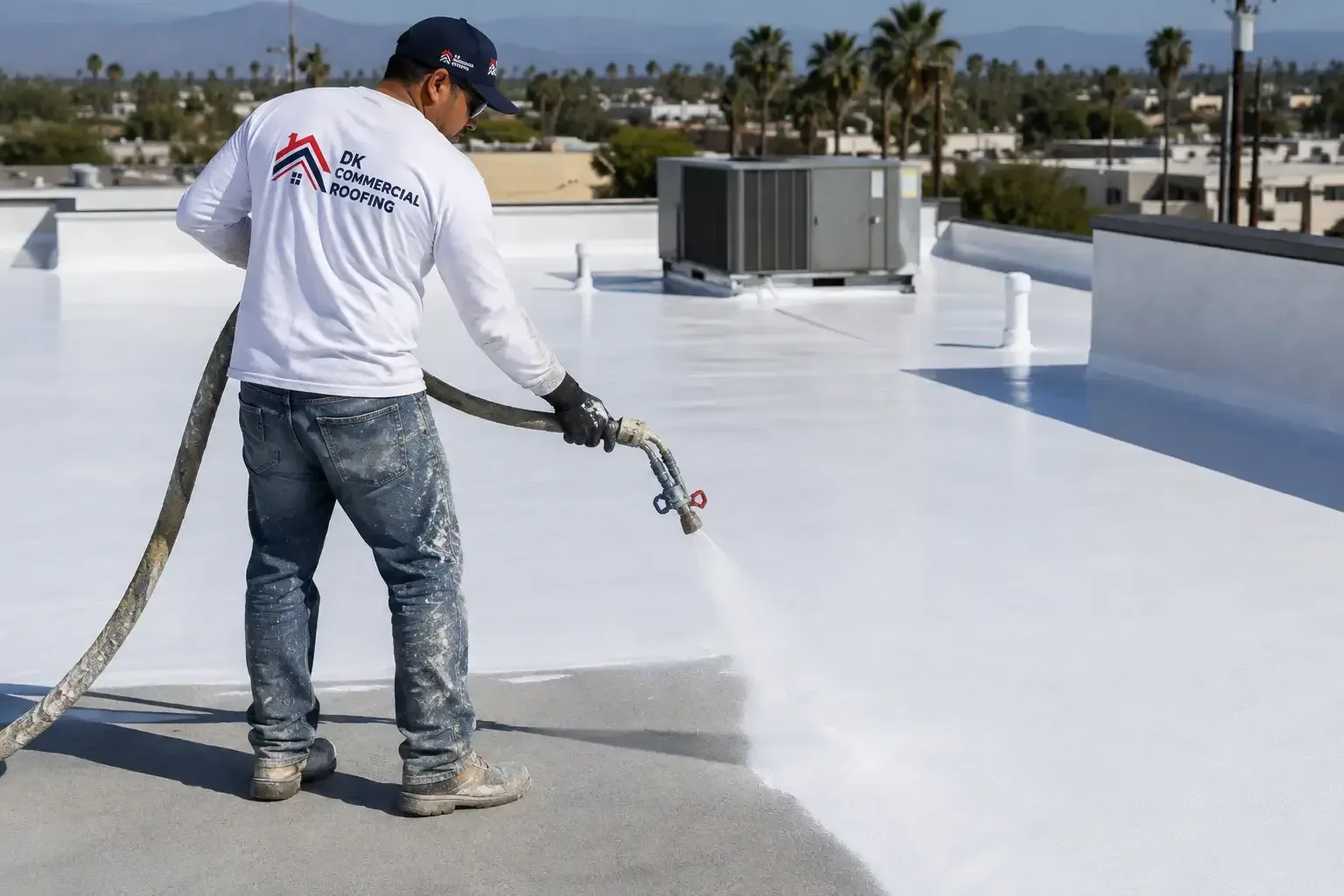
The crew cleans and prepares the roof, completes approved repairs, and applies coating in the specified passes. Surface dryness, temperature, wind, and access determine when application can start. We mark the active area, protect drains and equipment, and maintain a route for safe movement. If the facility has a receiving schedule or equipment clearance requirement, the sequence places staging outside the restricted period.
Rialto's climate plan also lists wildfire, flooding, and air pollution among City hazards. On a silicone project, the crew plan follows the coating instructions and the facility's operating window. A coating restoration scope identifies primer where required, reinforcement, number of passes, wet-film checks, and the planned tie-in point. The record shows where each application stopped if a shift ends before the full roof is complete.
Before the next pass, we check that the prepared surface is clean and that the prior layer has reached the condition required for recoating. We watch for pinholes, thin coverage, debris, and a missed corner at curbs or drains. The specified system determines reinforcement and cure requirements. Each completed roof section is marked so a later shift can start at the correct tie-in without coating over an unfinished edge. The register records the completion point, deferred detail, responsible contact, and next inspection date.
When Should the Roof Be Repaired or Replaced Instead?
Wet insulation, loose attachment, a soft deck, widespread membrane splits, or failed edge details can make coating the wrong scope. We open selected areas when concealed conditions could change the recommendation. If the substrate is not stable, we describe the removal or repair needed before restoration. A coating estimate should state the exclusions and any condition that would stop work after preparation begins.
The Agua Mansa Specific Plan is an industrial planning area that crosses portions of Rialto and other jurisdictions. For a property in its Rialto portion, we coordinate access and staging with the building contact and keep the work order tied to that roof. A moisture survey can identify areas for confirmation; a replacement review may suit assemblies that cannot accept a coating. Both choices use measured findings rather than an assumed roof-wide condition.
What Should the Coating Closeout Include?
Record the existing roof type, preparation completed, test results, repaired details, application areas, and final inspection points. The file should distinguish coating applied from substrate condition verified. Photograph drains, curbs, terminations, and each tie-in so the next maintenance visit can compare the same locations. If weather or access leaves a section incomplete, mark that area and its protection status.
For Rialto permit filings after December 31, 2025, review uses the 2025 California Building Standards edition that took effect January 1, 2026. A coating scope should separate any design review from records of preparation, adhesion testing, and application. A condition report can carry the test map and coating closeout. For a project in the Gateway Specific Plan Area, map the coating boundary and coordinate lift placement and material staging with the building contact. Add the drain terminations and application stop points to the closeout record so later maintenance can follow the same route.
Commercial Roofing Questions
Can silicone coating go over an existing roof?
Only when the substrate is compatible, sound, prepared, and dry enough for the selected system. We inspect the membrane, prior coatings, drainage, and transitions, then use a test area if adhesion remains uncertain.
Does coating fix a wet roof?
Moisture below the coating needs its own finding. We identify whether water is in the coating, membrane, insulation, or deck. Wet or unstable layers need a repair or removal plan before a new surface is applied.
What does a coating test patch establish?
It shows how the selected coating bonds to the prepared surface in that test area. It does not confirm every roof section or concealed layer, so the work order keeps the test location and remaining unknowns clear.
How is a drain handled during silicone application?
We protect the opening, inspect the flange and surrounding membrane, and define how the coating terminates at the outlet. If the drain connection is loose or the path is blocked, that work is addressed separately.
When is replacement preferable to coating?
Broad moisture, unstable attachment, damaged deck, or many failed details can make removal more appropriate. We map the affected areas and compare that scope with coating only where the substrate can support it.
Related Roofing Work
Test the Silicone Coating Scope
Share the roof plan, leak record, previous coating information, and access window. We will inspect the substrate and transitions, identify test areas, and set the restoration or removal decision.