
A roof claim begins with a facility director deciding what must be protected now and what evidence should be preserved before repairs change the detail. We inspect the reported section, photograph the roof and interior effects, and separate emergency containment from permanent work. The record names the location, observed condition, and action taken. It does not decide coverage. The owner submits the material to the insurer, whose policy and review process determine the claim outcome.
Rialto planning identifies a commercial node at Baseline and Riverside alongside activity on Foothill, Riverside, and Valley. Those market labels do not substantiate an insurance loss or damage location. Gateway's plan map contains office, retail, highway-commercial, and industrial-park land-use categories. A claim file should still identify the insured property's own roof and incident facts. These broader settings can involve different roof access and operating rules, but a claim record starts at the building's actual roof section. We identify the contact, roof plan, and access window before documenting the area. If water is actively entering, our emergency roof response can protect the interior while the inspection record is prepared.
Which observations belong in the first record?
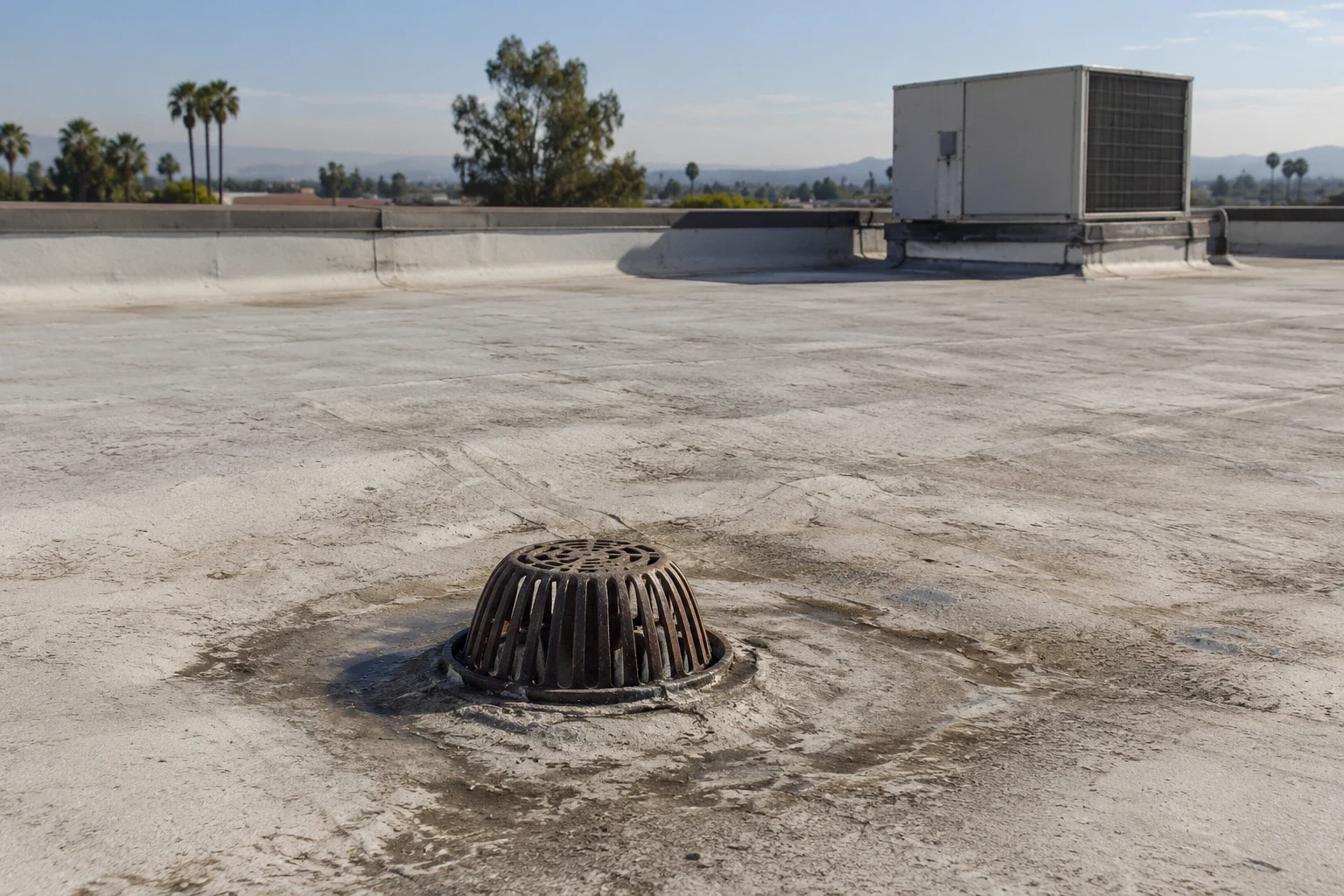
Write down when the condition was reported, where it appeared inside, whether water is still moving, and which equipment or inventory sits below. On the roof, we inspect the area above the report and nearby seams, penetrations, drains, curbs, and edges. The photos show both the full roof section and the close detail. A picture of a ceiling stain alone may not locate the entry point. We label each image with a roof-section name and a direction or nearby feature that another person can recognize.
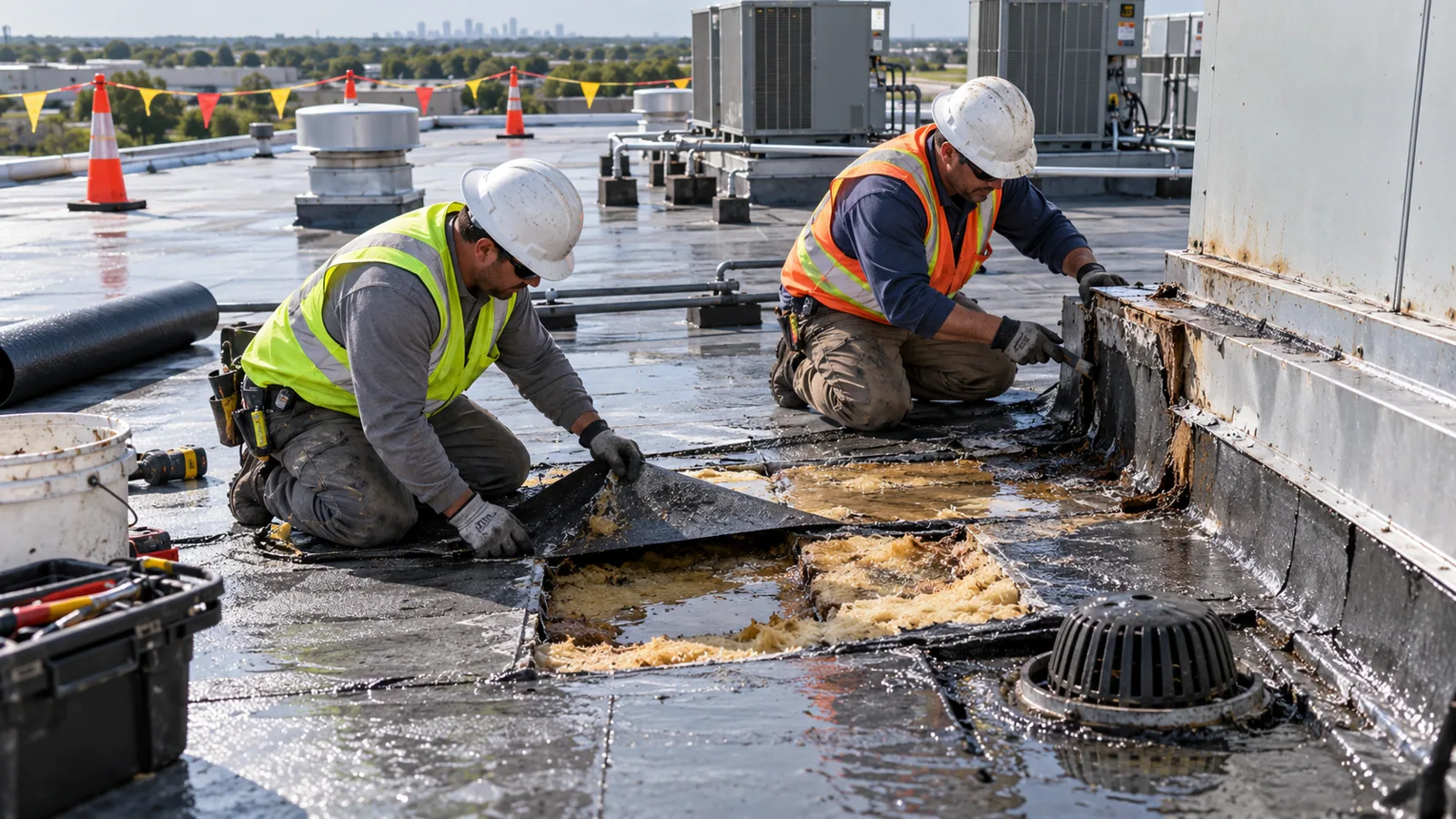
Do not remove a damaged section before its condition has been recorded unless immediate protection requires it. We photograph displaced metal, open flashing, punctures, wet insulation exposed during work, and temporary coverings as they are found. When a condition needs urgent containment, the work ticket states what was moved, covered, or isolated. A commercial roof inspection can map additional sections if the original report points to more than one area. The final record keeps the first observation separate from conditions discovered after an opening.
How should photos follow the repair sequence?
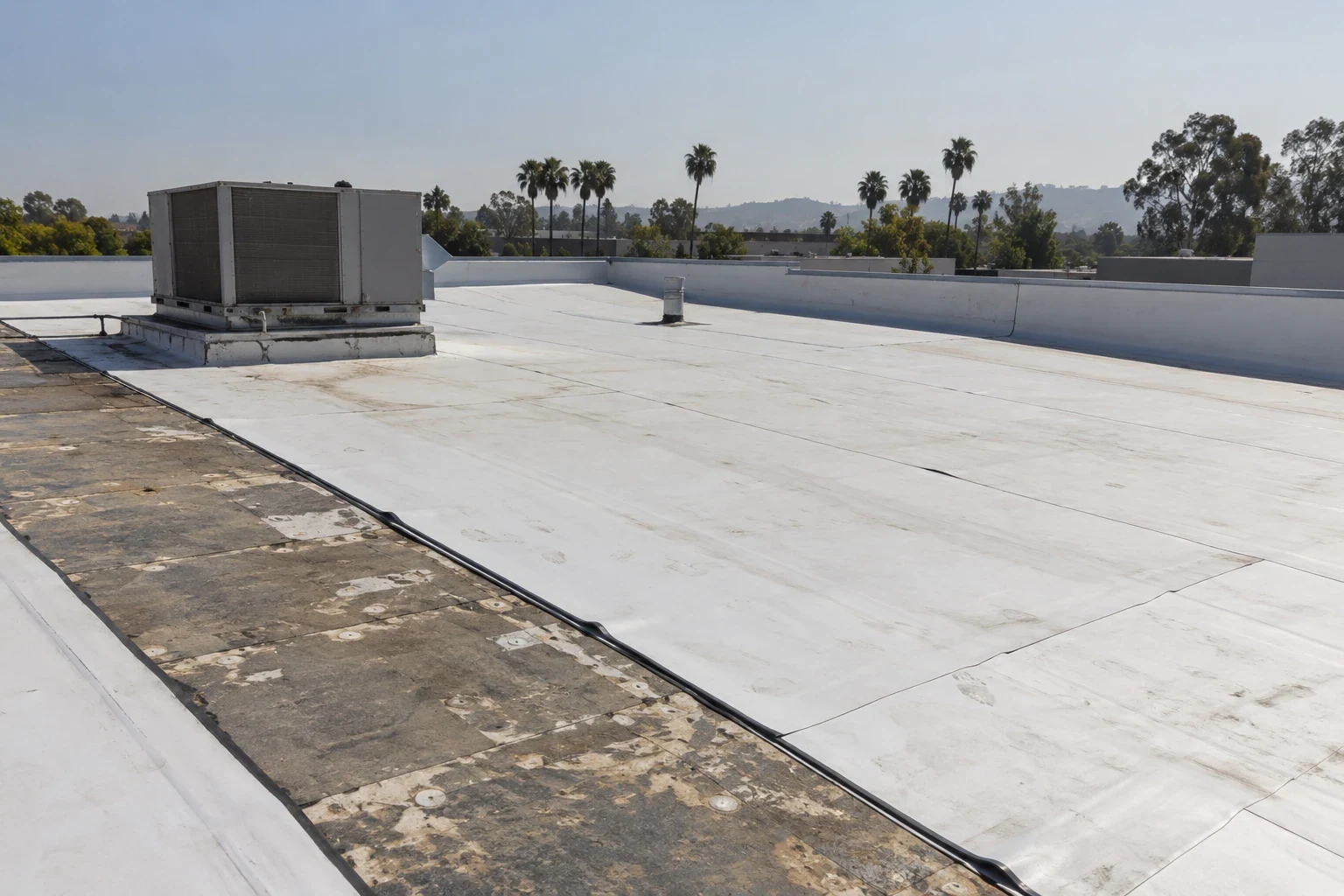
Take the first images before cleaning or patching, then photograph each stage that changes the roof. The sequence can show loose material removed, substrate exposed, preparation completed, and the new tie-in. We include a scale or a known roof feature when the detail is small. A label should identify the section and the direction of the view, not rely on a filename that only the original photographer understands. Retain the capture date with each image and use a brief caption to explain why the angle matters. That keeps the file usable when a later reviewer was not present during the inspection. Those details help the facility team match a repair ticket with a physical point on the roof.
If a repair requires a cutback or core, we record the opening and the materials visible at that location. The scope distinguishes a confirmed wet area from nearby sections that were not opened. When the roof can be tested safely, we coordinate with the interior contact and document what the test showed. A roof condition report can group the images with leak history, repair tickets, and follow-up tasks. For an active leak, our leak-tracing work documents the path and permanent repair separately from temporary protection.
What should the repair estimate separate?
The estimate should show emergency work, investigation, permanent repair, and any additional assembly work as distinct items. For a localized opening, it may list removal of loose material, substrate preparation, compatible membrane, flashing, and closeout photos. If hidden insulation or deck conditions change the quantity, we identify the added work and explain why the repair boundary must expand. Cost also follows access, material compatibility, protection below, and the depth of removal, so the estimate lists those drivers by work item. We state which details were observed and which remain concealed until access is available.
At Agua Mansa, the industrial plan crosses Rialto, Colton, and county territory. For work within the Rialto portion, a receiving schedule, gate procedure, and truck path can shape when an inspection or repair happens. Those operating constraints affect access and sequencing; they do not change the physical evidence in the claim file. A Rialto-side Agua Mansa roof route can be scheduled with the facility contact. We keep work photos, material notes, and roof-section names together so an owner can explain what was completed and what needs another visit.
What decisions stay with the insurer?
The roofing record describes observed conditions and work performed. It does not interpret policy language, assign fault, promise reimbursement, or determine whether a storm caused every roof condition. We can identify a lifted edge, open seam, wet insulation, or prior repair and note where it sits. The insurer or adjuster evaluates that material under the policy. If a cause remains uncertain, we state what inspection or testing would narrow the question instead of labeling a suspected condition as confirmed damage.
Rialto's climate plan groups heat, fire, flood, and air-quality concerns among citywide hazards; it does not verify the cause of a roof loss. That information can explain why an owner tracks roof condition and surface exposure, but it does not establish what caused a particular leak. We document the actual membrane, flashing, drains, and attachment visible during the visit. A wind damage inspection can focus on edge and seam movement, while a puncture repair records a localized opening and its tie-in. Each scope remains tied to the detail that was inspected.
How does the file support the next work order?
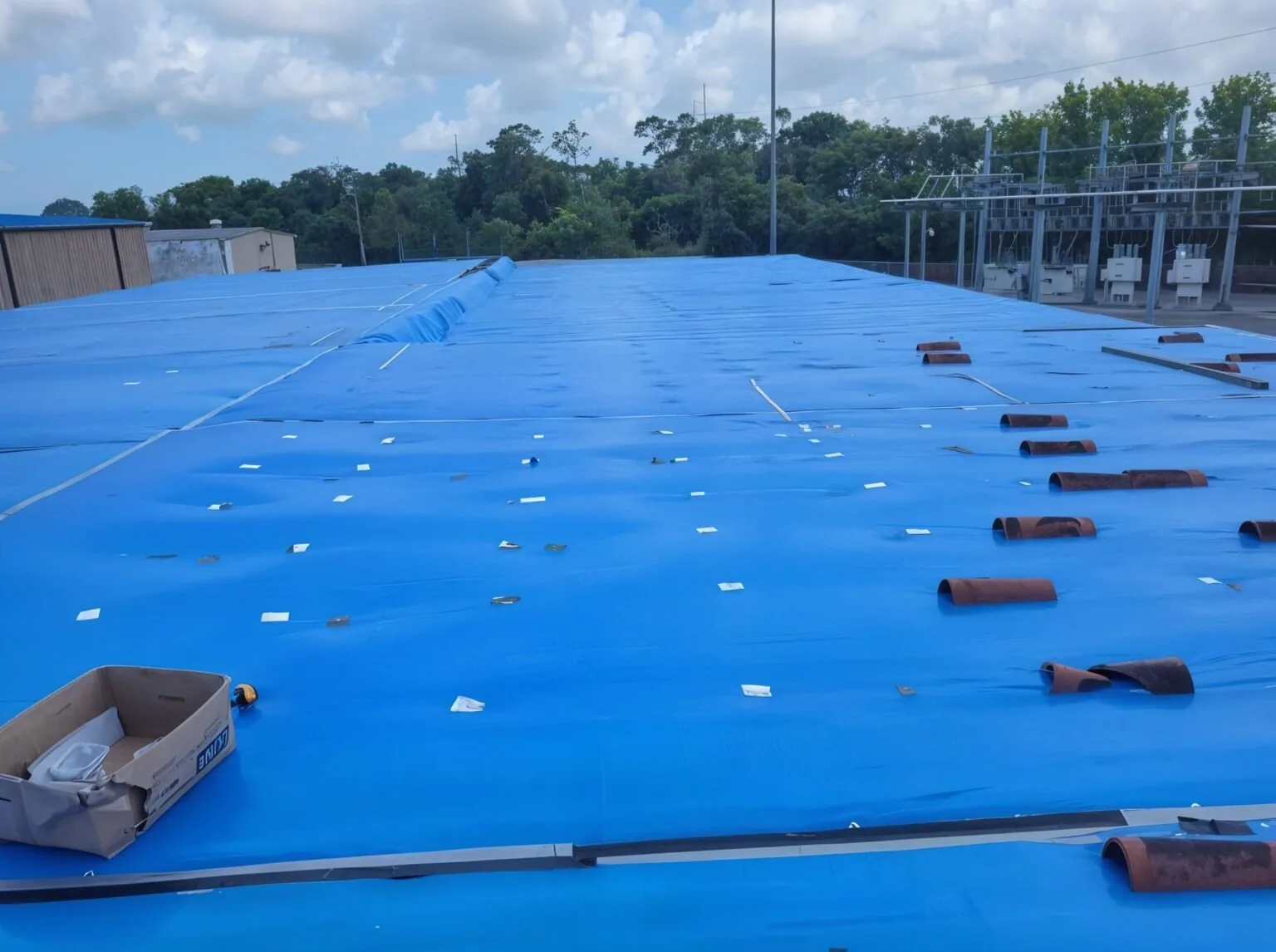
At closeout, we provide the inspection location, photographs, containment performed, permanent repair completed, and any remaining item. If a temporary cover stays in place, the record says where it ends and what needs a return visit. The facility director can then compare the work order with the insurer's requests and direct the next roof access. A separate capital review can keep a larger replacement question apart from a repair claim.
The City moved to the 2025 California standards on January 1, 2026, applying that edition to applications received after December 31, 2025. Note any permit question separately from claim evidence. If a proposed correction needs permit or design review, we note that schedule item separately from the claim documentation. To prepare the first inspection, share the roof plan, interior report, date of discovery, prior repair tickets, access rules, and insurer's documentation request. Schedule an inspection or discuss active water; we will set a safe route and provide a work record tied to the actual roof section.
Commercial Roofing Questions
Does the roofer decide whether the policy covers the damage?
No. We record roof conditions, photographs, and work performed. The insurer applies the policy and makes its coverage decision. Our scope stays focused on inspection, containment, and repair documentation.
What should we photograph before a temporary repair?
Capture the room or equipment below, the roof section, and a close view of the damaged detail. We add images of preparation and the final tie-in when permanent work proceeds. If immediate protection cannot wait, we record the condition as soon as it is safe to do so.
Can the repair proceed while the claim is under review?
Immediate protection may be needed to limit interior exposure. We document containment and obtain the facility contact's direction before permanent work changes the damaged detail. The owner can coordinate with the insurer on any requested inspection or documentation timing.
What if the opening reveals more damage than expected?
We stop at a stable boundary, photograph the exposed layers, and contact the facility lead before expanding the work. The revised ticket identifies the added area, condition, and next action so the estimate and record remain aligned.
Related Roofing Work
Keep the roof findings and repair record together
Schedule an inspection or report active water. Share the roof plan, discovery date, photos, prior tickets, access rules, and insurer's documentation request so we can set the first route.