
Choose the work order before choosing a GAF product name. A leak near a curb, a loose perimeter, or a damp roof section can point to different assembly problems. We start with the installed membrane, roof plan, and access rules, then trace the reported condition through seams, flashings, drains, and edges. The condition record keeps the observed detail separate from assumptions about layers that are hidden. That gives the facility director a repair path tied to a roof section.
In Rialto's Foothill Central Specific Plan Area, the merged framework replaces two former planning areas and updates land-use, mobility, infrastructure, and development rules. The Gateway Specific Plan Area map for Rialto assigns office-park, retail-commercial, freeway-commercial, and industrial-park categories. Those broad settings call for a roof plan that accounts for use and access, not a guess about what membrane is installed. Our Rialto commercial corridor inspection route begins with the property's own roof register and operating window.
What is installed on the roof?
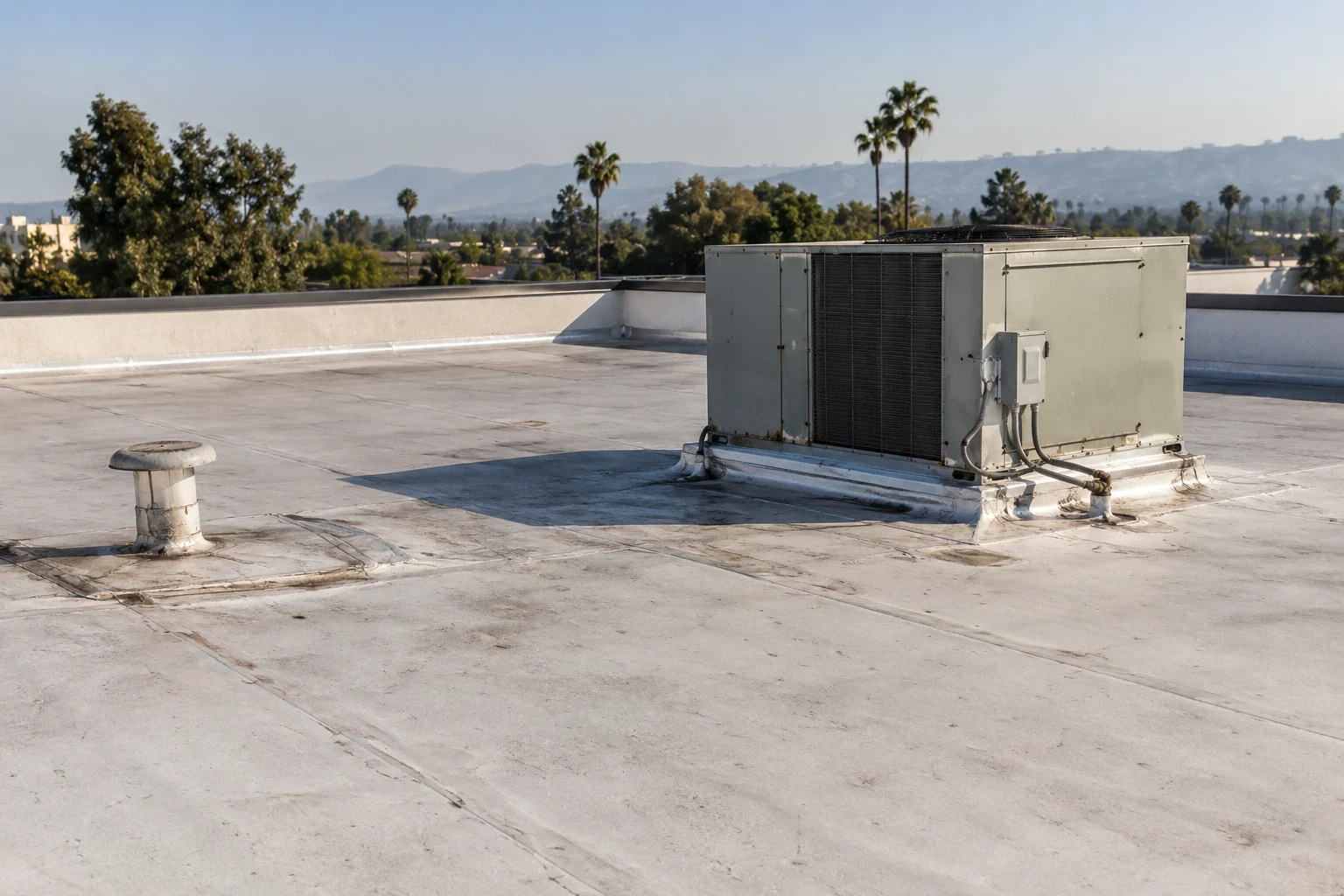
Manufacturer names can remain on old submittals after a repair or recover changes the surface. We compare available closeout records with the membrane, seams, edge details, and flashing visible today. A field label alone does not identify every layer below it. We record what can be confirmed and flag any point that needs a test opening. That distinction matters when a repair material must bond to the exposed sheet or when a replacement specification is being assembled.
For an existing GAF assembly, the inspection route follows its actual attachment and transition details. We look at field laps, penetrations, curbs, termination bars, drains, and changes in elevation. If the records name a system but do not show later repairs, we map those patches before setting a tie-in. A commercial roof inspection can establish the present condition record. The result is a roof register entry that the next maintenance ticket can locate without relying on a brand label alone.
Where can a detail break down?
A seam defect often starts at a point where material, movement, or preparation changes. We check lap edges for separation, dirt, wrinkles, and prior patches. At a pipe, curb, or equipment support, we trace the flashing into the field sheet and inspect corners where water can collect. The crew marks the beginning and end of a failure before preparing a repair. A patch that bridges loose membrane or reaches onto contaminated material is not a dependable boundary.
Heat is one of the hazards named in Rialto's climate planning, and the City describes hot days as a regular local condition. That does not diagnose a roof. It does make the observed surface and application window worth recording during a repair visit. We check material instructions and substrate condition before selecting a tie-in method. If the failure includes a difficult penetration, penetration flashing work can be included in the same inspection sequence rather than left as a separate unresolved edge.
When should the scope move beyond a patch?
A local repair fits when the membrane around the defect remains attached, dry, and compatible with the proposed material. We clean and prepare the area, install a matching repair detail, then test and photograph the finished edge. Where moisture, loose attachment, or repeated openings continue across a wider section, the work order should measure that area instead of repeating a small patch. We explain the repair boundary and any test that could change it before expanding the crew scope.
Construction proposals in Rialto go through the Building Division's plan-review and inspection process, measured against California codes and municipal ordinances. For permit plans submitted in Rialto after December 31, 2025, review follows the 2025 California Building Standards; that edition took effect January 1, 2026. We identify a permit question when it applies to proposed work and keep it distinct from the roof observations. A replacement assessment can compare tear-off and recover conditions using measured roof sections, drainage heights, deck findings, and edge details.
How does the crew sequence stay controlled?
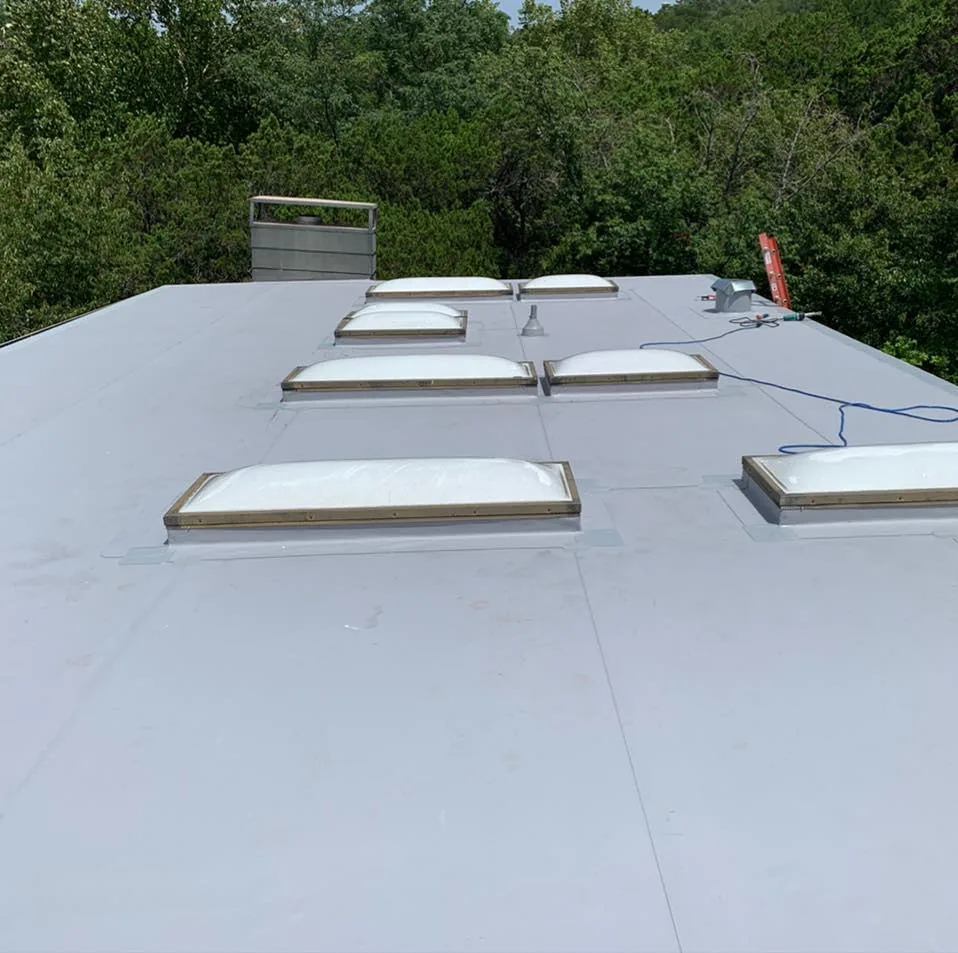
Roof access, staging, and work below the roof set the first sequence. We confirm the hatch or ladder, fall-protection needs, tool route, and any area that must remain clear. On an operating commercial property, containment and debris handling belong in the work order before material is opened. We identify the section, the crew window, and the person who can approve a change if concealed damage appears. The facility team can then coordinate work without treating the entire roof as one open zone.
The industrial purpose of the Agua Mansa planning area and the range of designations in Gateway describe planning context, not a specific building's operating schedule. Each property contact supplies the access rules and any active-use restrictions. A TPO system review can help compare seam and flashing requirements when another membrane is under consideration. For a second specification comparison, we can review Carlisle SynTec assembly details or Johns Manville roof options against the roof conditions documented on site. For a documented repair and closeout, we add a roof condition report with photos and follow-up items linked to the same roof section.
What should the decision record include?
A useful decision record states which conditions were confirmed, which remain concealed, and what action follows. We note the membrane identified, visible attachment, moisture indicators, seam condition, drain path, and perimeter details. Photographs carry roof-section labels. The record also lists any access limits or test openings, so the next reviewer knows where the inspection stopped. If the owner is weighing repair against replacement, those facts make the comparison specific to the assembly rather than to a manufacturer name.
We can also separate immediate containment from permanent work. An active leak may need temporary protection while a larger area is measured and scheduled. The later scope then identifies removal limits, substrate preparation, insulation, new membrane, and transitions. A recover evaluation checks whether existing layers and drainage can support another assembly, while coating restoration is considered only when the substrate and surface are suitable. Schedule an inspection or discuss an active leak; share prior tickets, roof plans, and the access window so we can set the first route.
Commercial Roofing Questions
Can a GAF label identify every roof layer?
No. A label or old submittal describes the information it carries, while later repairs and added layers may change the assembly. We compare records with visible seams, edges, and flashings, then call out any concealed point that requires sampling before a scope is finalized.
What changes the repair boundary on a GAF roof?
The boundary follows sound, compatible material. Moisture, loose attachment, repeated openings, or a transition that cannot hold a tie-in can widen the measured area. We mark the limits and explain the test or finding that would change them.
Can a repair use a different material?
Compatibility has to be established at the exposed assembly. We identify the existing sheet, check preparation requirements, and select a repair detail that can bond or transition properly. If the system cannot be confirmed, we recommend a targeted test before installing a patch.
How do you plan roof work around Rialto operations?
The facility contact identifies the access point, restricted areas, staging location, and work hours. We use those limits to set the inspection route and crew sequence, then record any area that was unavailable so the work order stays precise.
When does replacement make more sense than repeated repair?
A broader review is warranted when failures recur across sections, moisture extends beyond a local detail, or attachment and substrate conditions keep undermining repairs. We document those findings and compare measured repair, recover, and removal scopes before the capital decision.
Related Roofing Work
Put the GAF roof on a clear work order
Schedule an inspection or report an active leak. Share the roof plan, repair history, access rules, and operating window so we can map the route and document the next decision.