
Before a Carlisle SynTec repair is scoped, identify the sheet and the way the roof holds it in place. A membrane label does not show whether later work changed a seam, drain, or perimeter. We compare records with the field, mark the roof section, and trace the reported condition through nearby transitions. The work order then names what is visible, what needs testing, and which repair material can meet the exposed assembly.
In 2025, Rialto folded its earlier Foothill Boulevard and Central Area planning districts into Foothill Central; the Agua Mansa Industrial Corridor also crosses city and county lines. Both are broad planning contexts. They do not specify a roof system at an individual property. We plan the route from the facility's own access instructions and use a Rialto-side Agua Mansa roof visit when the address falls within that district.
Which Carlisle assembly is present?
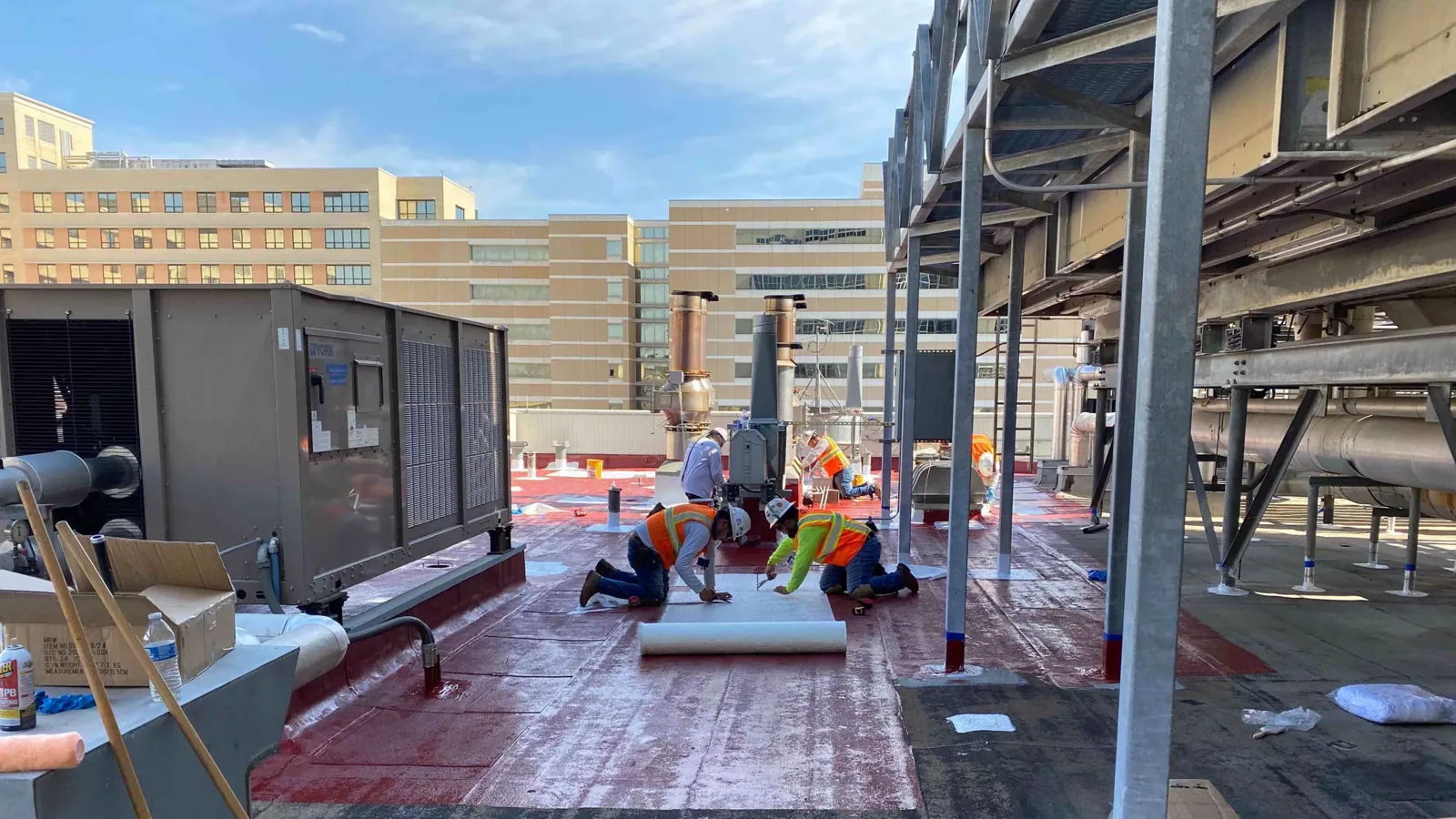
Carlisle SynTec has commercial single-ply roofing systems, but the current roof still has to be identified in the field. We look for membrane markings, seam construction, exposed fasteners, adhesive indications, and repair history. TPO, PVC, and EPDM do not use identical joining methods, so a product family guess can lead to the wrong preparation or patch. If the surface cannot be confirmed, we state that limit and choose a test that answers the material question.
Attachment also changes the inspection. A mechanically fastened assembly may show plate rows or movement near edges. An adhered sheet calls for attention to bond, blisters, and substrate. A ballasted roof needs a route that accounts for the covering and visible transitions. We record the observed method where possible, then connect it with PVC flashing requirements only when that is the system found on site.
Before a material is named for a repair, the crew checks how the exposed sheet responds to cleaning and preparation, then verifies that the intended transition can be made without covering a weak edge. The nearby insulation, cover board, and deck are part of that judgment because a stable surface is required for a durable tie-in. Where a liquid detail is being compared, Soprema flashing-system considerations can be reviewed against the same field conditions. The comparison stays on preparation, substrate, and transition details, not on a product label by itself.
What does a sound seam show?
A sound lap has a continuous bond, a stable edge, and no channel that can carry water under the sheet. We inspect the full seam around a reported leak, not only the spot nearest the ceiling stain. Corners, patches, and changes in plane often need a closer look because geometry and preparation can vary there. The inspection note records separation length, contamination, wrinkles, and adjacent conditions before the repair boundary is chosen.
Water can travel beneath a membrane before appearing indoors. We compare the ceiling report with the roof plan, then check drains, curbs, penetrations, and perimeter transitions along the route. If the defect reaches a metal edge or wall flashing, that connection belongs in the scope. A seam failure repair review can document the related laps. The facility director receives a ticket tied to the section and the material preparation the crew will use.
How do local conditions affect the visit?
Rialto's adopted climate plan lists heat as a local hazard and notes that hot weather is a recurring condition. That context does not establish the cause of a particular seam failure. We document the surface and repair conditions on the inspection date, then follow the selected material's application limits. If a sheet has softened, shrunk, or pulled at a detail, we record the measured condition and check its attachment instead of attributing it to climate alone.
In the Agua Mansa Industrial Corridor, the specific plan is a multi-jurisdiction industrial framework; the Rialto portion is the only part relevant to this market route. The work sequence on a building there still depends on its own gate, roof access, and operating window. A roof insulation and cover-board inspection can be added when a soft area suggests that the membrane surface alone will not answer the repair question. We keep any opening small and restore it after documentation.
When can the repair stay local?
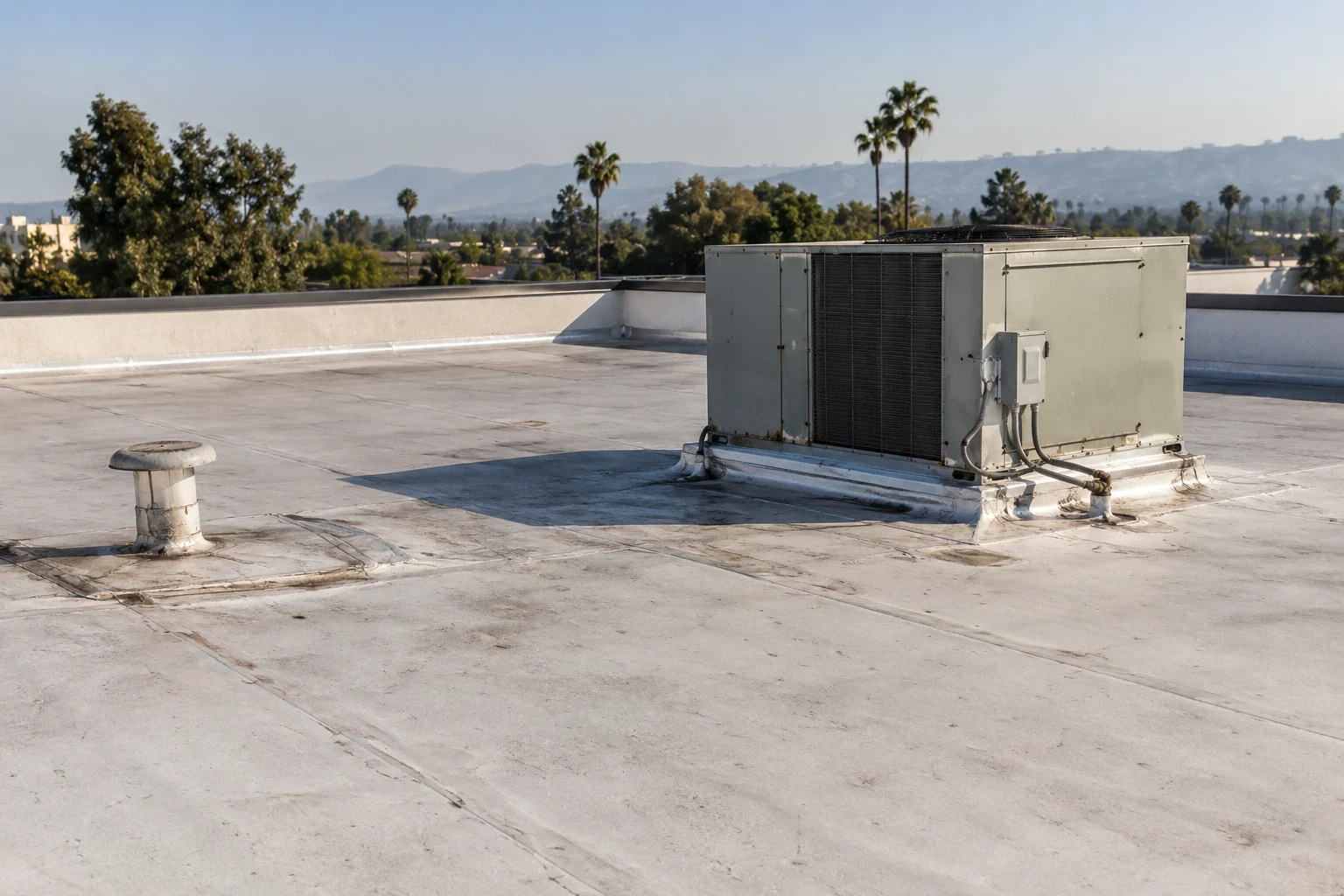
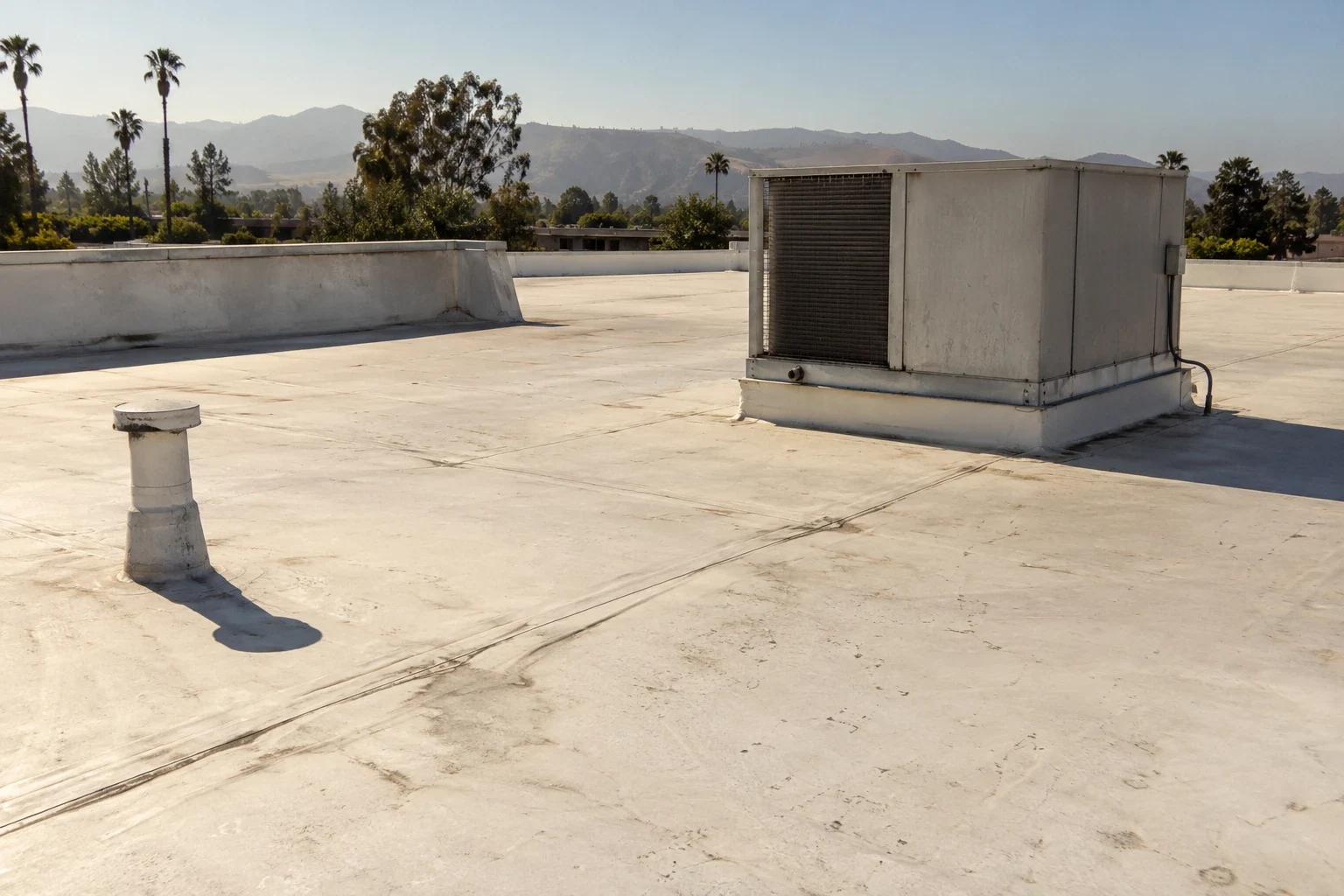
A local repair is reasonable when the field sheet remains bonded or secured, the substrate is stable, and the nearby lap provides enough sound material for a compatible tie-in. We remove loose material, prepare the surface, install the specified detail, and check its edge. If moisture spreads past the test boundary or several seams show the same movement, repeating a small patch would leave the cause unmeasured. The work order should then expand to a defined roof section.
The 2025 California Building Standards took effect January 1, 2026. Rialto applies that edition to permit submissions received after December 31, 2025, with plans and inspections checked against state and local rules. We flag a design or permit question when the proposed scope calls for it. A repair work order can address a contained defect, while replacement planning compares removal, recover suitability, drainage, and edge reconstruction.
What belongs in the closeout?
Closeout records make a repair usable across shifts. We list the Carlisle system identification and the basis for it, roof section, defect location, preparation, material installed, and test performed. Photographs show the finished tie-in and any nearby condition left for monitoring. The closeout names the person responsible for that next review. If the inspection could not reach a section, we note that limit rather than marking it complete. The record can then support maintenance planning without confusing an interim dry-in with a permanent correction.
The Gateway map for Rialto places office parks, retail-commercial districts, freeway-oriented commercial uses, and industrial parks within the plan boundary. The property's actual use sets the work window, material staging, and containment plan. A condition report can carry the observation into the roof register. If membrane selection is still open, review GAF system considerations alongside the existing assembly rather than selecting by label alone. Schedule an inspection with prior repair tickets, roof plans, and access rules ready for the first route.
Commercial Roofing Questions
How do you confirm the Carlisle membrane type?
We compare available submittals and labels with the surface, seam, and flashing details present today. Later repairs can change what is exposed. When the material remains uncertain, we record that and recommend a targeted confirmation before choosing a patch method.
What makes a SynTec seam repair larger than a patch?
Movement across several laps, moisture beyond the test point, or weak attachment can shift the scope. We map the affected roof section and identify what needs an opening or added inspection before expanding the work order.
Does Rialto heat prove why a membrane failed?
No. The City's climate planning identifies heat as a hazard, but a roof visit has to establish the actual condition. We document the surface, seam, attachment, and repair history and use the product's installation limits for the work window.
Can you keep Carlisle roof work away from active areas?
We plan the route with the facility contact. Access, staging, containment, and the area below the repair are set before the roof section is opened. Any restricted zone is carried into the crew sequence and closeout.
What records help before a Carlisle replacement?
Roof plans, previous repairs, system submittals, moisture findings, and any known access limits help define the comparison. We verify current layers and drainage, then document removal or recover assumptions in the proposed scope.
Related Roofing Work

Set a Carlisle SynTec inspection route
Share the roof plan, prior repair records, system submittals, and access window. We will identify the assembly, inspect the reported detail, and prepare a work order tied to the roof section.