Choose the inspection question before opening a Soprema roof section. Is water crossing a field seam, entering at a liquid-applied detail, or moving from a drain or curb? We start with the roof plan and work order, then trace the reported location through the membrane and adjacent transitions. The condition record identifies the exposed product where it can be confirmed and marks any assembly question that needs a sample or submittal.
Two broad plans frame local land use: Foothill Central revises the former Foothill Boulevard and Central Area framework, while Gateway maps office, retail, freeway-commercial, and industrial categories. These are broad planning areas, not descriptions of the roof on a particular parcel. The building contact establishes its own access and staging limits. For a roof in Foothill Central, the specific-plan area inspection route follows that property's roof register and work window.
Which Soprema material is exposed?
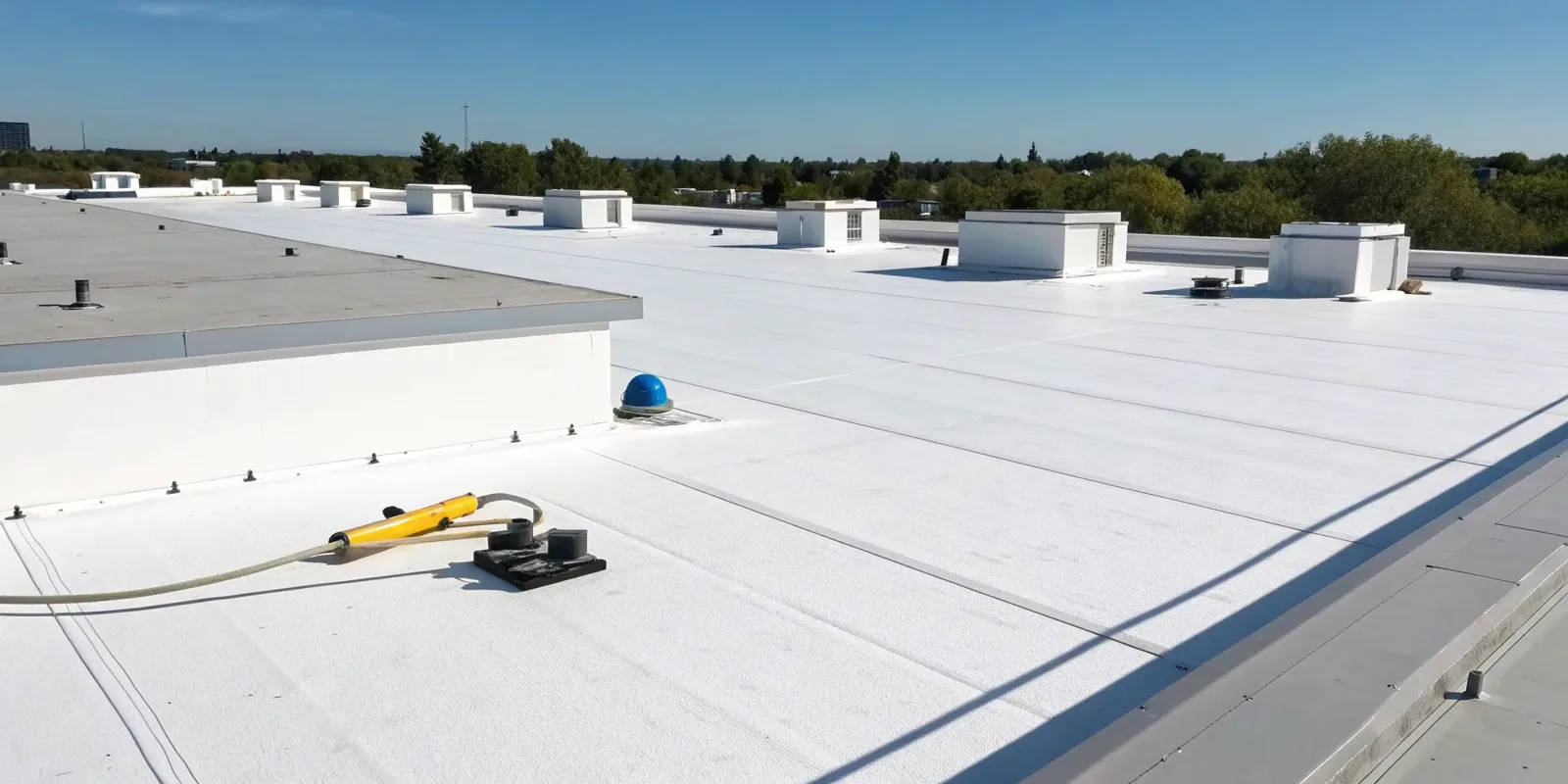
Soprema manufactures commercial roofing systems and liquid-applied products, but the right repair starts with the actual exposed material. We review submittals, labels, seam type, surface condition, flashing, and previous repairs. A liquid-applied product may be used at certain details, yet a name from an old proposal does not establish what covers the roof today. We document verified identification separately from assumptions and check the manufacturer's instructions for surface preparation and compatibility.
If the field membrane is sheet material, we inspect seams and patch edges for separation, wrinkles, contamination, or movement. At liquid flashing, we look for cracks, loss of adhesion, exposed reinforcement, and a stable tie-in into the adjoining surface. We record the extent of each condition and check whether moisture or loose substrate continues beyond it. For a comparison with another manufacturer, Sika Sarnafil membrane details can be evaluated against the same roof facts, while Carlisle SynTec system requirements offer a distinct system reference.
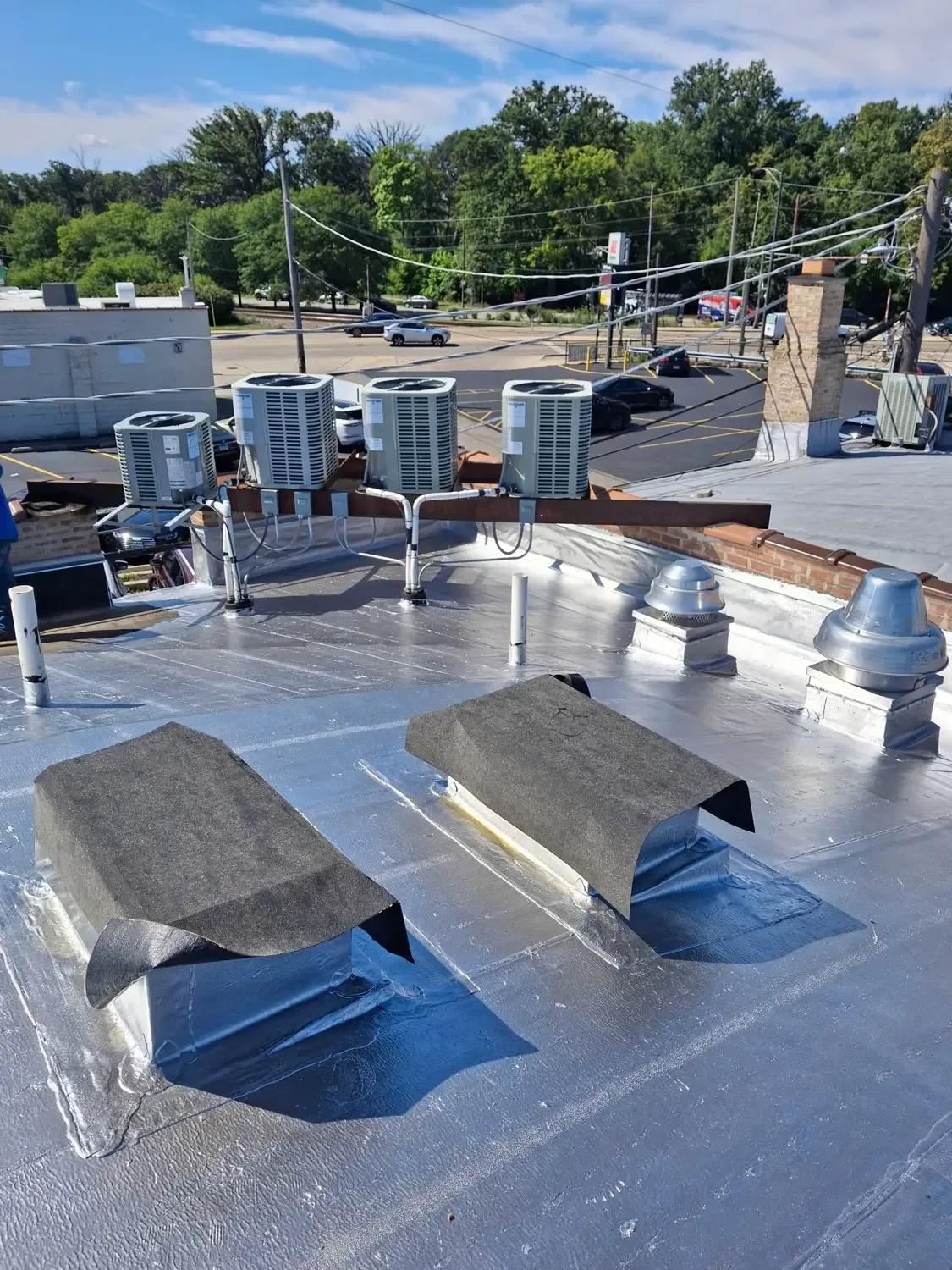
A liquid detail also needs a defined endpoint. We inspect where it meets the field sheet, metal, wall, or penetration and note whether the transition is continuous. If the interface has lifted, we remove material only as far as a sound bond can be established. The closeout photo shows that tie-in and the roof-section label, making a later inspection easier to compare with the repaired condition.
What should a flashing detail show?
Liquid-applied flashing depends on a prepared, sound surface and a continuous transition. We inspect the substrate for loose material, moisture, old sealant, and coatings that could interfere with adhesion. Around a curb or penetration, we look at corners and the vertical return, not only the broad surface. The work order states the removal and cleaning required, the detail boundary, and any reinforcement or cure interval specified for the product selected.
A new coat over a failing layer can conceal rather than correct a weak interface. If the existing detail is blistered or detached, we determine whether the repair reaches stable material. The crew isolates the roof section, prepares the surface, and checks the cured edge before closeout. A roof coating assessment can decide whether a broader coating scope is suitable, while silicone coating details require their own substrate and compatibility review. Neither option replaces a test when the underlying assembly is uncertain.
How do drainage and surface conditions affect the plan?
At a drain, we inspect the outlet, membrane connection, surrounding slope, and overflow route. A liquid flashing around a pipe or curb is checked for the same continuity and adhesion as field details. If water is ponding, the record notes the affected section and nearby seams rather than treating a product application as a drainage correction. We separate cleaning, localized repair, and a change in slope into distinct work items because they need different scopes.
Rialto's adopted climate plan lists extreme heat and flooding among citywide hazards and says hot days are regular. That is local context, not evidence about a particular product's failure. We note the surface condition at the inspection and follow the selected product's temperature, preparation, and cure requirements. A drain and scupper review can define outlet work. When hidden moisture may affect the choice, a moisture survey can guide verification locations under suitable conditions.
How far should the repair extend?
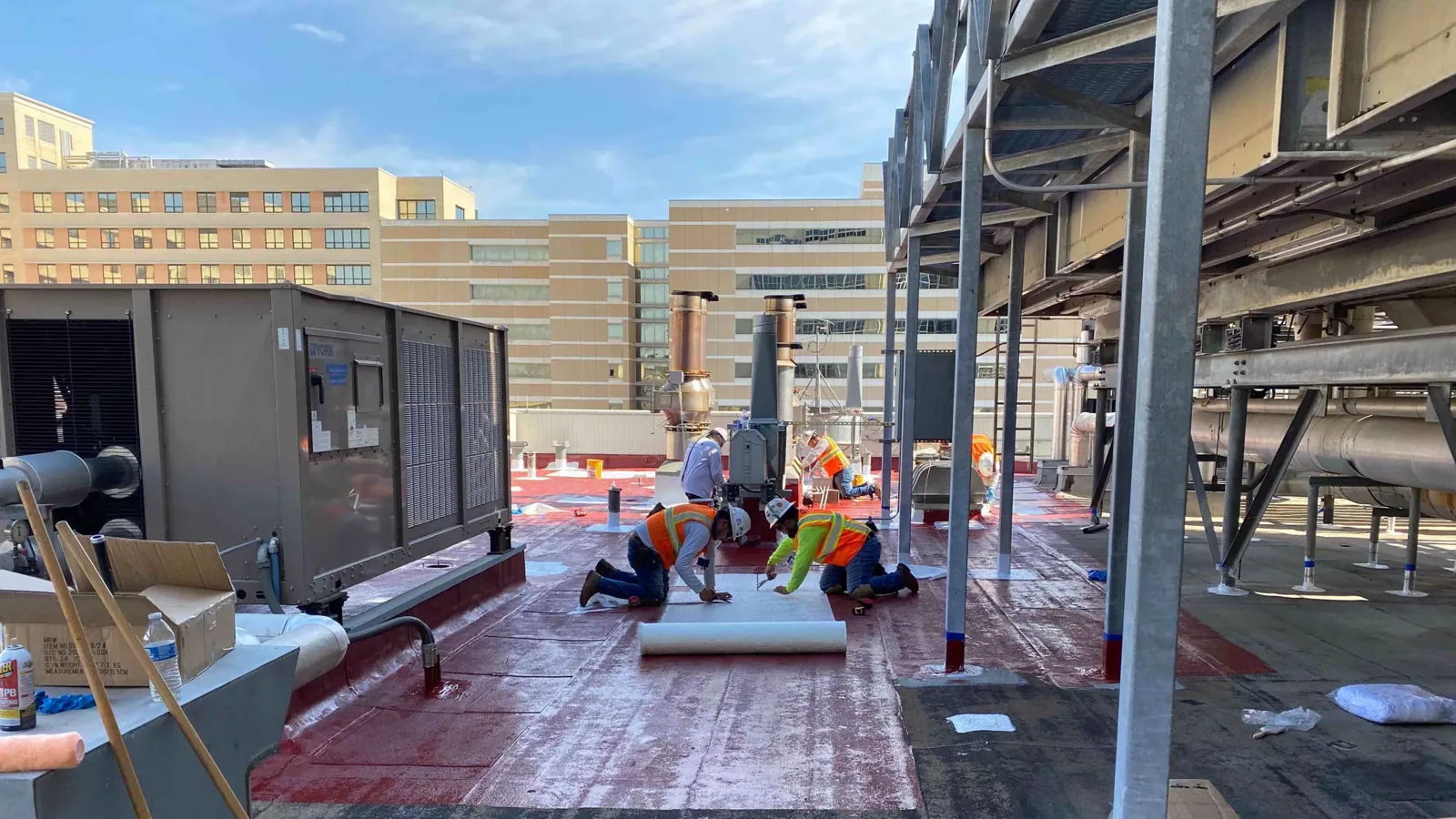
A contained correction needs sound substrate and a stable connection to the surrounding assembly. We map the edge of the failed material, inspect nearby transitions, and test where it can confirm the tie-in. If the same release appears at several details or moisture extends outside the visible area, we measure a broader section. The proposal identifies what is included and what remains conditional on a test. That gives the facility director a boundary to approve and a defined closeout check.
The Agua Mansa Specific Plan is a large industrial planning geography that spans more than one jurisdiction; only the Rialto portion is relevant to this market. A property there still has its own access route, work restrictions, and staging location. We set those details with the facility contact and include containment before removing material. A phased occupied-building plan can organize work when activities continue below. The plan-area designation does not replace the site's operating instructions or roof safety requirements.
When does the condition support a larger project?
Repeated failure, wet insulation across more than one location, or widespread loss of bond can change the decision from patching to system work. We compare the repair record with the roof plan and identify which sections need sampling. A recover is considered only when the existing layers are dry, secure, and compatible with added material, and when drains and curbs retain enough height. If those checks do not hold, removal and replacement need to be compared instead.
Rialto adopted its Foothill Central plan in 2025, combining two former planning areas into one updated framework. The district policies describe land use and infrastructure, while the inspection findings stay tied to the roof section and tested assembly. The adopted plan also updates mobility and implementation policies, not the details of a property's membrane. A replacement scope uses measured removal limits, while a recover review addresses retained layers, attachment, and drainage. Schedule the inspection with submittals, repair tickets, roof plans, and access rules available.
Commercial Roofing Questions
Can a Soprema liquid flashing repair go over an old coating?
Only after checking the exposed layer, preparation, and compatibility. A coating or prior patch can affect adhesion. We identify what must be removed or tested and set the repair boundary at stable material before selecting a detail.
How do you locate a leak near a Soprema detail?
We start at the interior report and trace the roof route through adjacent seams, drains, penetrations, and curbs. The record maps the observed entry path and notes where a sample or moisture test could change the scope.
What does Rialto's climate plan say about this roof?
It identifies citywide hazards, including heat and flooding. It does not prove why a roof detail failed. We inspect the actual surface and use the selected product's preparation and application requirements to plan the work.
Can a repair include both membrane and flashing?
Yes, when the inspection shows that both details form one water path. We list the sheet tie-in, vertical return, curb or penetration, and adjacent drainage separately in the ticket, then check each during closeout.
When should a coating repair become a replacement review?
Multiple areas of detachment, moisture below the surface, or an unstable substrate can undermine a local application. We map confirmed conditions and compare repair, recover, and removal scopes using the same roof sections and test findings.
Related Roofing Work
Set a Soprema detail review
Share the product submittal, roof plan, previous coating or membrane repairs, and access rules. We will inspect the exposed layers and document the right repair boundary or next test.