
Put the Colton roof issue on a work order with a section and access point before setting a crew route. We review the interior report, previous repairs, and roof plan, then inspect the section above the affected space. The walk follows seams, penetrations, curbs, drains, and edge transitions. We record what is observed and what needs verification below the membrane. That gives the facility contact a defined repair or test question instead of a broad description of the roof.
Colton's planning library lists the Hub City Centre Specific Plan, the South Colton Livable Corridor Plan, the Reche Canyon and Roquet Ranch plans, and adopted General Plan land-use and mobility maps. Those names identify planning documents and areas, not the roof conditions of a particular property. When a property is referenced through South Colton or another plan area, we confirm its asset ID and roof access with the owner. A nearby Rialto roof register should stay separate from Colton records.
How should a plan-area name enter the scope?
A corridor or specific-plan name can help a facility team find a property in its records. It does not say how many roofs are present, what materials cover them, or which details have failed. We use the plan designation only as geographic context, then match the correct address to the property file and roof drawings. This matters where different buildings have different access contacts or maintenance histories. The work order should identify the exact roof section approved for inspection.
The City records June 2019 adoption of the South Colton Livable Corridor Plan and links the Council resolution. That date helps identify which planning document the site contact is referring to. It does not replace current roof records. We review the plan version, prior tickets, and field conditions before mapping a seam or drain. For portfolios including Perris, keep municipal work orders and plan references distinct so an inspection in one city is not filed under another location.
What do we check above the reported area?
We locate the affected room or work zone, then follow the safest approved route to the roof. The first observations include visible membrane condition, seam edges, flashing, drains, curb lines, perimeter metal, and signs of earlier work. We compare those findings with the leak report and label each photograph by roof section. If an area is blocked or unsafe to reach, the record says so. It remains an open inspection item, not a completed check.
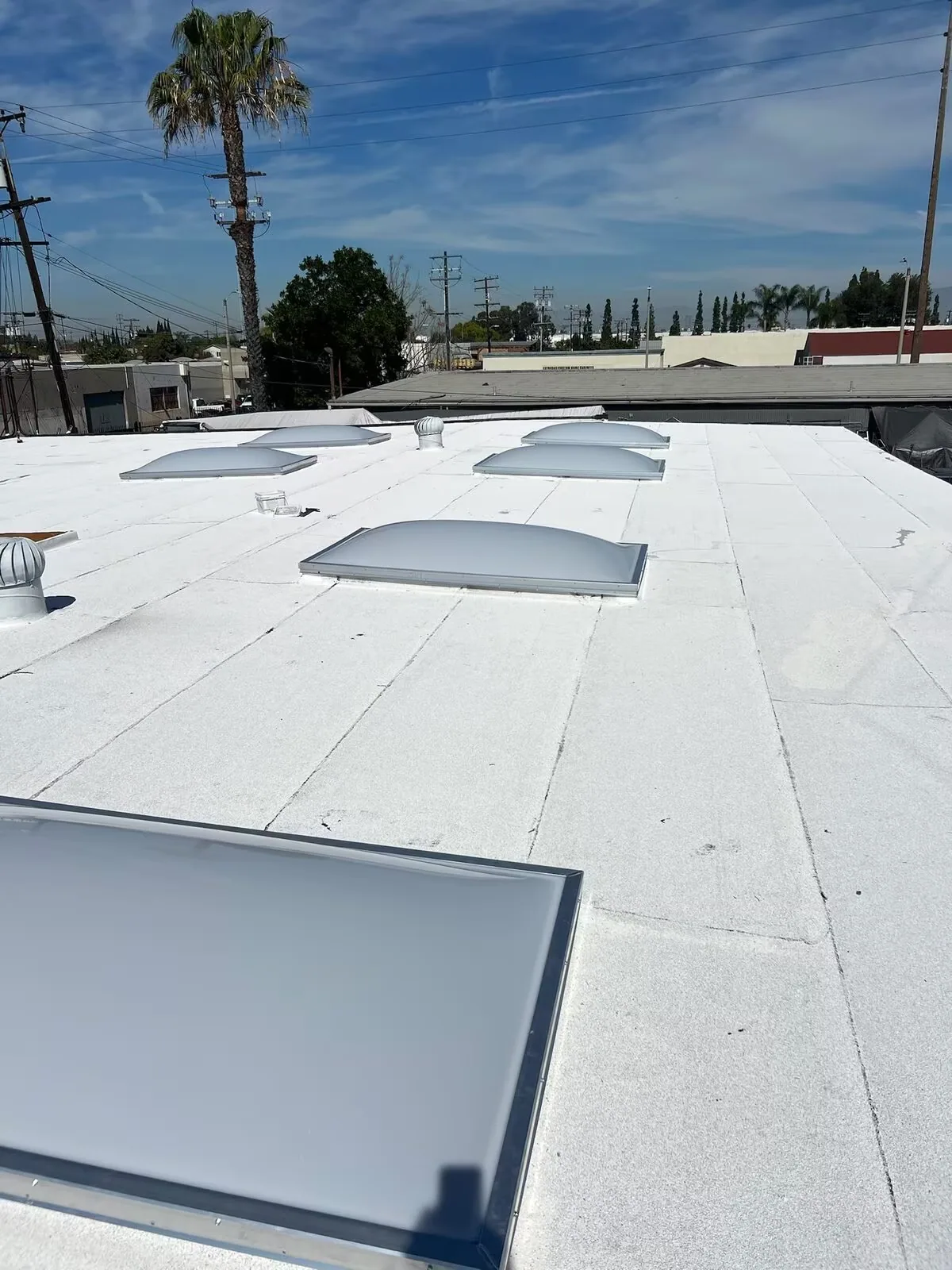
Water can travel across a roof assembly before showing inside. At a seam, we inspect the lap and any patch edge. At a curb, we follow the flashing around each corner and check its connection with the field membrane. At a drain, we check the outlet, overflow, and surrounding slope. A commercial roof inspection can document that route; an interior-to-roof leak trace can focus the work order when the entry point is not clear.
Where does water leave the roof?
A clear outlet is only one part of drainage. We check the bowl and membrane termination, the slope into the drain, any overflow, and nearby areas where a lap or curb may hold water. A clogged outlet needs cleaning; a detached flange needs a roof repair. If the roof has a low spot, we measure its extent and check whether the deck or insulation also needs review. Separate findings make the maintenance ticket and repair estimate easier to evaluate.
At edges and wall transitions, we inspect metal joints, securement, flashing returns, and sealant condition. A lifted coping joint can send water behind a finished patch, while a loose field seam may need a different correction. A drain and scupper scope can cover the outlet connection. edge metal and coping work can be added when the perimeter detail is part of the same route. The closeout should show which detail was repaired and which one remains for follow-up.

When does the work order need a wider limit?
A local patch can stay local when the material around it is attached, dry, and suitable for a compatible tie-in. We remove loose edges, prepare the surface, install the correction, and verify its perimeter. If the same defect recurs or moisture extends beneath adjacent seams, the repair area may need a measured expansion. We identify the observation or test that triggers that change before additional material is ordered. That keeps the owner in control of the approved work area.
Retained layers must be stable and dry before a recover is considered. We also check deck support, curb and drain height, attachment, and edge details. If those conditions do not support another layer, replacement may provide a clearer scope. A repair ticket can close one confirmed issue; a recover assessment checks the existing assembly; a replacement review defines removal, insulation, and tie-in work. Each option follows the same roof plan and verified conditions.
What does the next shift need to know?
Access rules and work timing belong in the ticket before mobilization. We confirm the authorized contact, hatch or ladder, fall protection, staging point, restricted areas, and any activity below that needs containment. The crew sequence identifies where tools can move and when a roof section must be closed. At closeout, we record materials, preparation, photos, completed repairs, and open tests. That lets the next shift find the same section without relying on an informal handoff.
For planning, Colton's documents include land-use and mobility maps as well as several named plans, including South Colton and Reche Canyon. They help the team identify a broad area; the roof register carries building-specific information. A photo-backed condition record can preserve findings for a future capital review. If work extends across several buildings, asset management records can group tickets without merging property boundaries. Schedule an inspection or report active water entry; provide the roof drawing, prior repair history, access contact, and operating window.
Where staff refer to South Colton or Hub City Centre in an internal request, we keep that planning label beside the building name rather than using it as the asset ID. The recorded adoption date can help distinguish the South Colton plan version under discussion. The roof file separately names the drawing used to map the inspection route.
Commercial Roofing Questions
Does the South Colton plan show a roof's current condition?
No. It is a planning document that helps identify a broad corridor area. We confirm the building, roof section, access limits, and assembly from the owner's files and a field inspection.
Can you inspect a property identified by another Colton plan?
Yes. The property contact confirms the address and roof access, then we use the correct plan and section labels in the work order. A plan name alone does not identify the structure or the current roofing system.
What if the leak is several feet from the visible ceiling mark?
The inspection traces seams, drains, curbs, and edges around the corresponding section. We record the likely water path and recommend a test if concealed moisture could change the repair limit.
What causes timing to change after the first visit?
Access availability, the time needed to prepare and close a roof opening, material limits, and concealed wet layers can alter the crew sequence. We document the condition that changes the schedule and confirm the revised work area with the contact.
Which records should stay with a Colton repair ticket?
Keep the roof plan version, section label, photos, material and preparation notes, test results, and any access restriction together. The closeout should identify the completed work and who owns each follow-up action.
Related Roofing Work
Set a Colton roof inspection route
Share the building identifier, roof plan, reported condition, previous tickets, and access instructions. We will map the affected section and document the next repair or test decision.