
Set the access sponsor, escort route, and readiness window before the crew carries tools to the roof. We need the authorized building contact, the allowed movement area, and the condition that should trigger a pause. An armory may combine assembly, training, office, storage, and vehicle functions. The work order should map the roof section and the area below it so the facility representative can protect operations while work proceeds.
Rialto's Gateway Specific Plan Area includes industrial-park, office-park, retail-commercial, and freeway-commercial land-use categories. The City's General Plan also describes industrial and warehouse uses along rail corridors and in northern and southern city areas. Those are broad context for commercial building work, not a claim about a particular armory's layout or mission. Site access and roof conditions determine the actual scope.

What Must the Readiness Contact Approve?
Confirm escort availability, identification steps, vehicle entry, tool handling, delivery limits, and work hours before assigning a mobilization date. Identify assembly or training periods that cannot be interrupted and any room or roof zone that must remain inaccessible. Put the access plan beside the inspection route. If a representative changes the approved boundary, stop and obtain new direction before moving tools or crew into the next area.
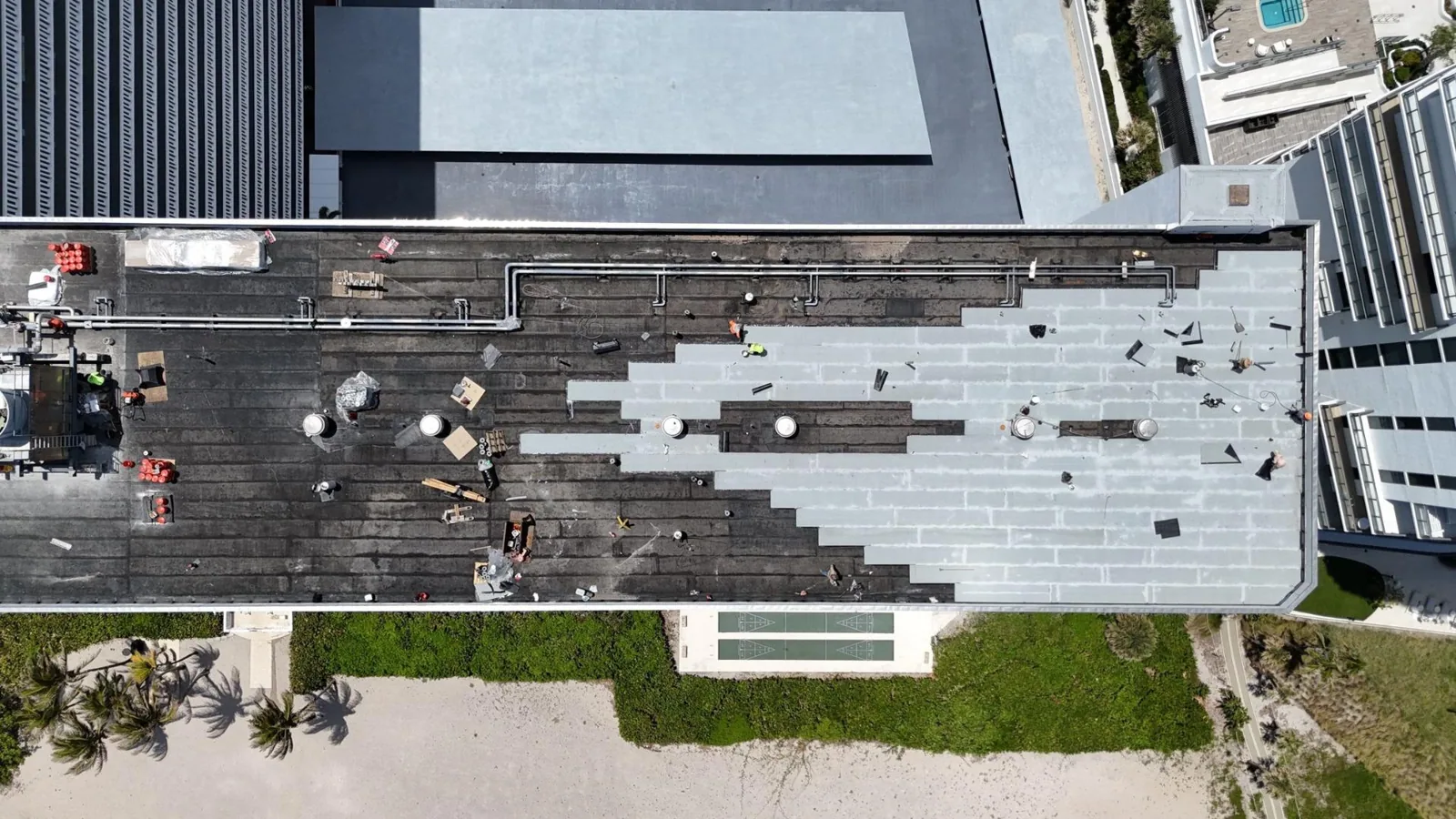
Plan where equipment can be staged, how debris will leave, and how the crew secures a partly completed section. The work boundary should include both roof access and the ground area below. A phased work plan can define daily stops, while a roof inspection can document the agreed route and findings without exceeding approved access.
How Should an Armory Roof Be Mapped?
Use the facility's building labels and approved plans to name each roof section. Note drains, seams, penetrations, curbs, equipment supports, edges, and changes in assembly. Keep the location of every condition specific enough for the facility manager to find it again. A leak in an office wing and a defect above a vehicle area may require different access and protection even if both sit under one roof.
In Rialto, construction review combines Building Division plan checks with inspections for state-code and local-ordinance compliance. Keep that municipal review distinct from any installation or federal approval required for the work. A roof condition report can preserve section labels, photographs, and follow-up items. If a test opening is needed, document its approved location before disturbing the assembly.
Which Roof Details Need a Safe Check?
Begin at the reported leak, then follow the drain path and inspect the closest seams, penetrations, flashing, wall intersections, and perimeter metal. Check for lifted laps, punctures, corrosion, loose edges, and prior repairs. If the route crosses a controlled zone, follow the approved escort plan and mark any detail that remains inaccessible. The report should not treat an unvisited area as a passed inspection.
The Foothill Central Specific Plan adopted in 2025 combines former planning geographies and updates land use, mobility, infrastructure, and development standards. That district is part of Rialto's broad local context; it does not identify an armory or roof system. A Foothill Central area assessment still follows the site plan. A moisture survey may help select areas for permitted verification.
How Can Vehicles and Equipment Stay Protected?
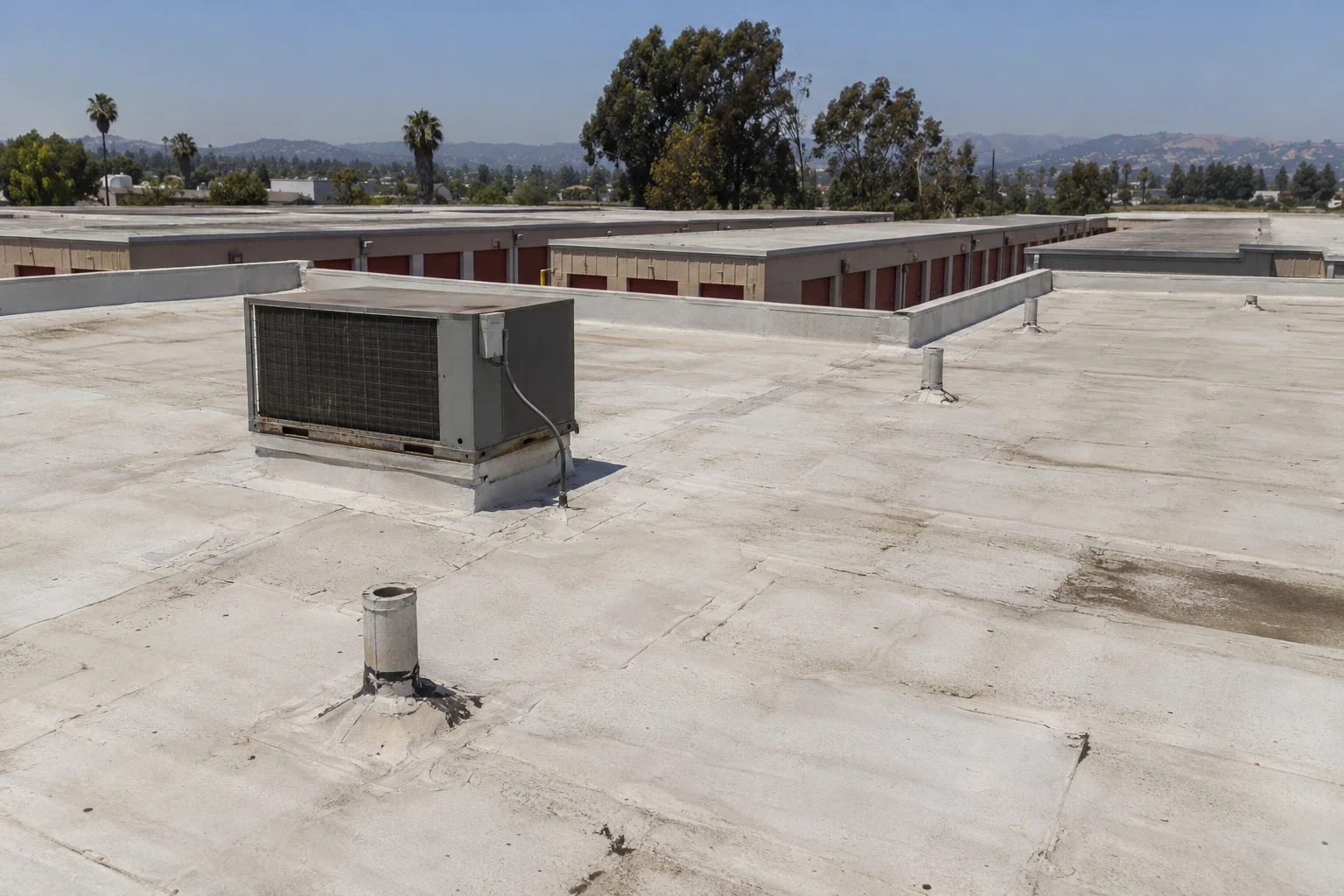
Identify vehicle routes, equipment staging, loading points, and any overhead work area before opening the roof. Move assets only when the authorized contact directs it. Protect the area below from falling debris and establish a clear route for material removal. If the work affects ventilation or a roof-mounted unit, coordinate the control with the facility staff and include it in the daily sequence.
Rialto's climate plan identifies heat, wildfire, flooding, and air pollution as citywide hazards, with hot days occurring regularly. Those conditions do not establish a local roof failure or a mission schedule. Check the actual surface and use the selected system's installation limits. Drainage corrections can be sequenced with other roof work when outlets need cleaning or repair.
How Do Contract Criteria Shape the Work?
Review the project documents before choosing a repair detail. Confirm membrane type, attachment, insulation, edge assembly, and any specified standard. Where the contract requires Unified Facilities Criteria for roofing, use the applicable criteria and approved submittals. Record the materials, preparation, and inspection points required for the section. Do not replace an installation detail with a generic repair just because it is faster to stage.
Rialto’s newer code cycle covers plans submitted after December 31, 2025; the 2025 California Building Standards became effective on January 1, 2026. That is local City code context and does not replace installation approvals. A repair scope can define an isolated defect, while a replacement review can frame a larger assembly decision for the authorized reviewer.
When Should the Roof Move to Capital Review?
An isolated loose flashing or puncture may support a contained repair. Repeated leaks in separate sections, wet insulation, unstable attachment, or widespread membrane failure may require more testing or replacement planning. Verify conditions that change quantities and state what remains inaccessible. The recommendation should identify the evidence, the next approval, and the operational controls needed for a larger scope.
Agua Mansa is a regional planning area that crosses portions of Rialto, Colton, and two counties; only its Rialto share belongs in this city's context. That named industrial district does not imply a specific service relationship with a military property. A base building roof review or hangar roof assessment may face similar access controls, but each facility's own criteria govern its work.
What Should the Facility Representative Receive?
Deliver the roof map, findings, photographs allowed by site rules, repair ticket, material record, and unresolved items to the authorized recipient. State which zones were inspected, where access was restricted, and whether temporary protection remains. Identify the daily escort route used and any action needed before a return visit. This gives the facility reviewer a traceable record without disclosing information outside the approved process.
Before the file is closed, reconcile approved scope against completed repair limits and note who accepted the finished section. If a submittal, photo, or inspection signoff remains pending, assign it to a named role and set the next action. The roof record should make clear what is complete, what is awaiting review, and what requires a new access request.
Keep each building identifier and roof-section label consistent across submittals, progress records, and closeout. If future work occurs in another area, confirm access again rather than carrying forward an old route by default. The maintenance team can then compare a new report to the prior repair history and decide whether to repeat a local correction, test another area, or request a capital review.
Commercial Roofing Questions
What information is needed to schedule an armory roof visit?
Provide the building identifier, approved sponsor, escort instructions, work hours, roof plan, and reported condition. We will map the route and list tools or equipment needed for approval.
Can a crew move between buildings during one visit?
Only if the authorized contact clears each route and building. We document the approved sequence and stop at any boundary that has not been released for entry.
How should roof work fit around readiness activities?
The facility representative identifies restricted periods and movement needs. We phase the work area, set a daily closeout point, and protect the section before the crew leaves.
What belongs in the repair record?
Keep the building and roof-zone labels, findings, approved photos, repair limits, material details, and open items together. Record any area that could not be inspected.
When is replacement review appropriate?
Consider it when tests or repair history show failures across multiple sections, wet insulation, or unstable attachment. We state the condition and required approval before expanding scope.
Related Roofing Work

Coordinate Access Before the Roof Walk
Share the approved building plan, escort steps, readiness calendar, and leak report. We will prepare a bounded inspection route and return the findings to the authorized contact.