
Choose the first roof work zone so resident paths and building operations stay clear. We begin with the reported leak, identify the roof section above it, and mark a safe inspection route before moving equipment. A senior living property may have occupied rooms, dining, care, and staff areas operating at once. The work order should identify what needs immediate containment, what requires a permanent repair, and which decisions can wait for a measured review.
Rialto's commercial areas include corridors along Foothill Boulevard, Riverside Avenue, and Valley Boulevard. The City's climate planning also identifies extreme heat as a local hazard and says hot days are regular. That context makes a practical access window and surface condition part of the visit plan, not an assumption about any individual roof. We connect those citywide conditions to what the inspection finds on the building.

Which Route Can Stay Clear?
Start from the ground plan. Identify resident entrances, accessible walks, staff circulation, dining deliveries, and emergency access before setting a ladder or lift. Choose the roof entry with the least conflict and keep tools, removed material, and cords inside a defined work zone. If a route must change, the site contact should know which doorway or path is affected and when the crew will restore it.
Inside, trace the reported water to the room or corridor without treating the stain as the roof defect. Protect furniture and equipment where needed, then record the area, time, and conditions reported by staff. A commercial roof inspection can map the section above the affected space. The route should serve the investigation first, then support a repair ticket with a clear limit and next action.
What Does the First Visit Need to Separate?
Separate active water control from permanent correction. At the roof, inspect the drain path, seams, penetrations, curb flashing, and edge details nearest the affected interior area. Look for displaced material, open laps, punctures, or a blocked outlet. Note any condition that could create a slip concern below and give the building contact a specific containment instruction while the repair is prepared.
Do not close a ceiling or return a room to service based only on a dry surface. Confirm the roof repair, check adjacent areas, and coordinate any interior review through the property team. A roof repair assessment turns the observed defect into a work order and records the repair boundary. Keep the temporary measure, permanent repair, and any follow-up inspection as separate entries so staff can act on each one.
How Should Roof Sections Be Recorded?
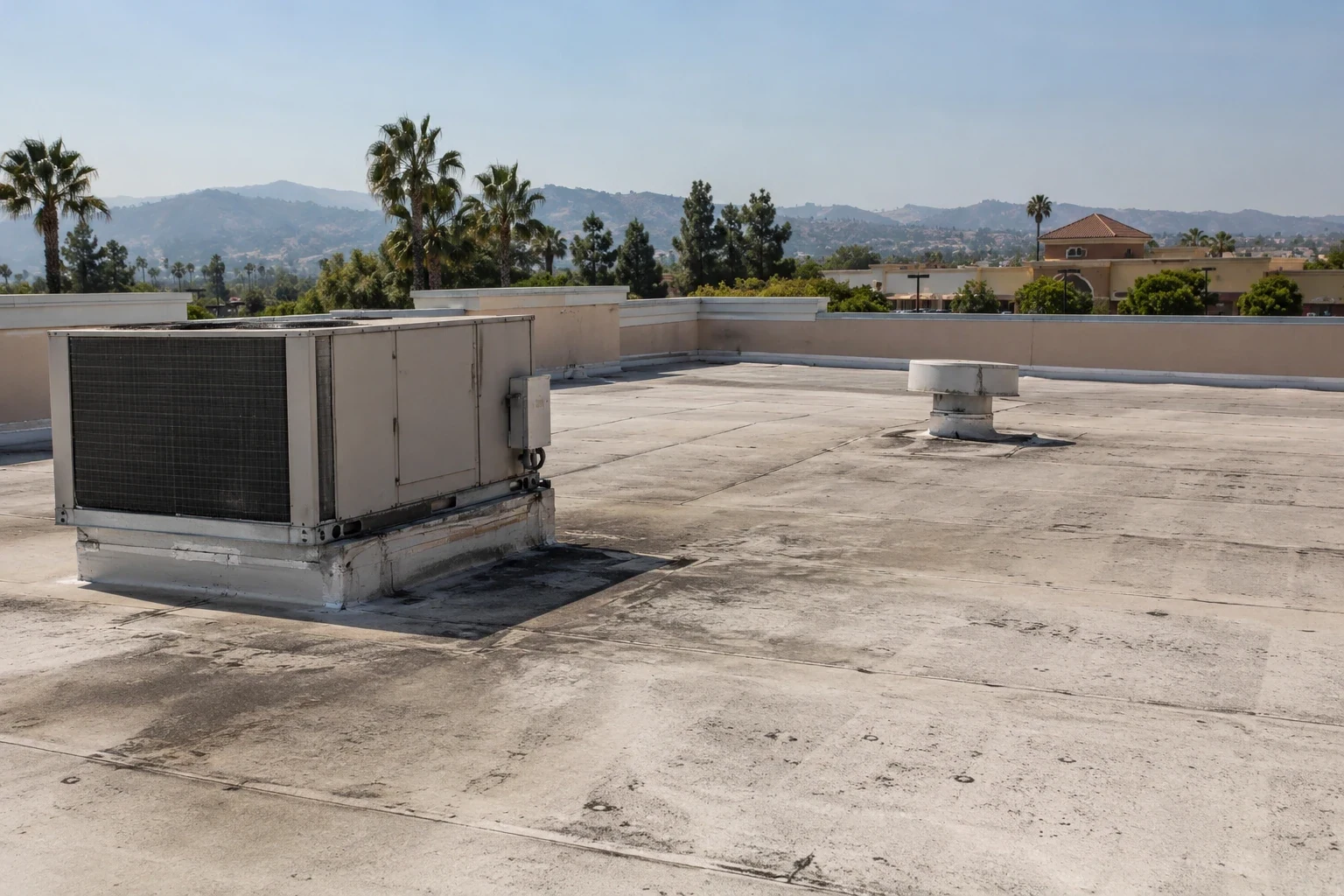
Give each roof section a name that staff can match to a plan or building wing. Record drains, roof access points, equipment, curbs, and changes in membrane type. Then attach each condition to a location rather than a broad label such as east roof. A consistent register helps the facilities lead compare repair tickets, spot recurring water paths, and decide whether one isolated correction or a larger capital review is appropriate.
Rialto's General Plan places commercial activity along named streets including Foothill Boulevard and the Riverside Avenue and Valley Boulevard corridors. Those areas include different building uses, so the plan does not tell us what a particular senior property contains. The inspection route does. The Foothill Central Specific Plan now combines former planning geographies and updates land use, mobility, and infrastructure policies. The Gateway map is another broad planning reference, with office, retail, freeway-commercial, and industrial designations. Neither replaces the roof survey. A Gateway-area inspection route still starts at the property. A condition report pairs marked sections with photographs and priorities.
When Can Repairs Fit the Daily Schedule?
Choose a work window around the property's actual routine. Confirm quiet periods, meal delivery, staffing changes, resident activities, and any access restrictions before staging. If repair materials create odor or require a hot-work control, identify those steps before the crew arrives. The sequence should name the active roof zone, the ground area below it, and how the crew will secure the route when work pauses.
Rialto's climate plan identifies wildfire, flooding, and air pollution among citywide hazards, along with heat. Those are planning conditions, not a forecast for a particular workday. The crew checks current roof conditions and the selected repair materials before proceeding. A work plan for occupied buildings can set daily boundaries, notification timing, and closeout checks without disrupting unrelated rooms or paths.
When Does a Repair Become a Capital Decision?
A single failed flashing or open seam may call for a focused correction. Repeated leaks in separate sections, wet insulation, widespread surface failure, or unstable deck conditions can change the scope. Confirm concealed conditions through targeted openings when they affect the recommendation. The record should distinguish observed damage from areas that still need testing, then state what would trigger repair, recover, or replacement planning.
For surface repairs, match the material and detail to the existing assembly and document the transition. When the roof has reached a broader decision point, compare repair history, current condition, access limits, and expected operating disruption. A replacement review can organize those choices. A maintenance route can track drains, seams, and prior repairs between major projects.
What Should Staff Receive at Closeout?
Closeout should identify the roof section visited, the defect confirmed, the repair performed, and anything left open for review. Include photographs with location labels, material information needed for future service, and the condition of the work area below. If the crew paused for access or weather, record the stopping point and protection in place. A short, usable record helps the next shift understand what changed and what still needs attention.
Near Riverside Avenue or Valley Boulevard, city planning context may help describe the property's broader commercial setting, but roof recommendations remain tied to the inspected assembly. Provide the site lead with a repair ticket, any follow-up date, and the contact for questions about room or route access. If the building sits in the broader Agua Mansa planning area, keep that district context separate from its roof record because the plan spans multiple jurisdictions. A regular maintenance program should use the same section names so observations remain comparable across visits. For related care properties, the inspection approach may also support a hospital roof review or a medical-office roof assessment.
Commercial Roofing Questions
Can roof repairs proceed while residents remain in the building?
Yes, when the work zone, access route, and daily schedule are defined with the property contact. We isolate the affected area, coordinate notices, and record any route change before work begins.
What should staff do when water appears in a room?
Move people and sensitive items from the affected area as site procedures require, then report the location and timing. We trace the roof section, document the defect, and separate immediate containment from permanent repair.
How do you handle repeated leaks in separate wings?
Map each report to its own roof section and compare the paths, drains, and details involved. A pattern may justify additional testing or a capital review, but the evidence must support that step.
Can maintenance be planned without closing resident areas?
Usually the route can be sequenced to keep unrelated paths open. The site team identifies restricted doors or activities, and the crew marks its work boundary and restores the route at the agreed point.
What belongs in the property roof record?
Keep the roof plan, section names, inspection photographs, repair tickets, material details, and unresolved conditions together. That record helps staff compare future observations without assuming the roof stayed unchanged.
Related Roofing Work

Set a Resident-Safe Inspection Route
Share the leak location, roof plan, access limits, and daily operating windows. We will map the affected section and return a repair scope the property team can schedule.