For a Chino property, the first roof decision is whether the reported condition stays within one section or continues into a connected detail. We locate the interior report, match it to the roof plan, and inspect the membrane, seams, drains, curbs, and perimeter. The initial work order notes what is visible and where a closer test could change the scope. That gives the facility manager a repair boundary tied to the building record, not an assumption based on an area name.
Chino's Eucalyptus Business Park Specific Plan covers a broad area along SR-71 with multiple holdings, ranging from small lots to parcels over 100 acres. The East Chino Specific Plan describes a separate planning area shifting from dairy and agricultural uses toward residential and commercial uses. Those plans do not establish the present use or roof system on an individual property. We confirm the owner's address, roof access, assembly, and operating window before setting the inspection route. For nearby Rancho Cucamonga properties, we keep separate work orders and section labels.
What does a multi-holding business park change?
The Eucalyptus plan covers multiple holdings along SR-71, so property records should distinguish one owner's roof from adjacent parcels. The City's acreage and parcel-size description is planning context, not a measurement of roof area or a count of buildings. We use the exact property identifier supplied by the facility team, then reconcile it with plans before recording the roof route. That avoids placing a repair ticket under the name of a district when the work is limited to one structure or section.
East Chino is a separate plan area with land-use transition described from dairy and agricultural uses toward residential and commercial development. The planning direction does not tell us what is built today or what membrane is installed. On the roof, we verify the actual assembly, note areas hidden by equipment, and identify any test opening before including concealed conditions in a proposal. A roof condition report can attach photos and test locations to the correct parcel record. A separate Jurupa Valley roof route uses that city's own plan context.
Which parts should the crew inspect first?
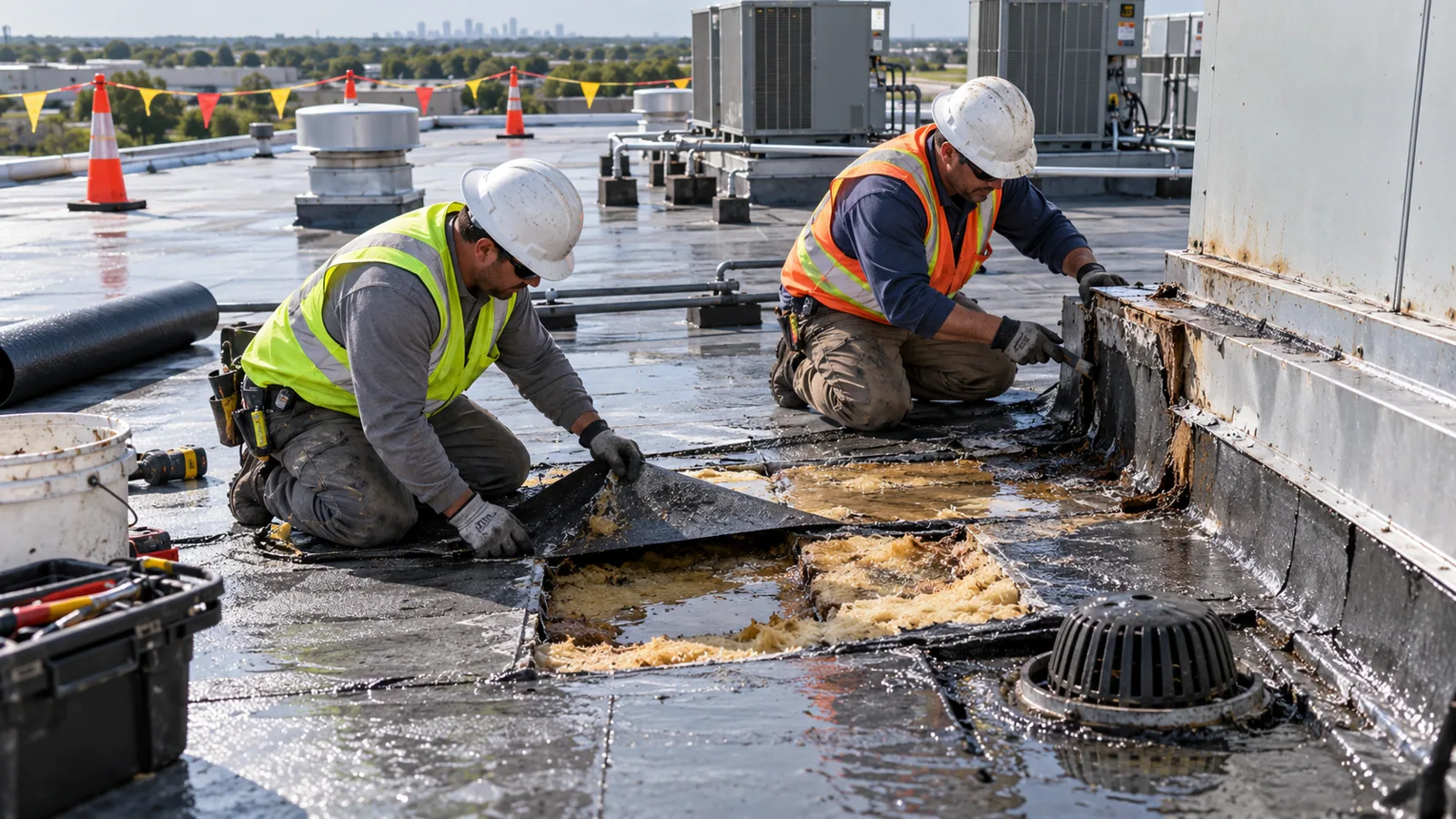
The first walk begins at the reported leak and follows the likely water path outward. We check field seams, flashing returns, curbs, penetrations, drains, and edge metal along the same route. A stain may be below a different point of entry, so the ticket records the observed route instead of stopping at the ceiling location. If a previous patch is nearby, we examine its preparation and perimeter for separation. Each photo receives a roof-section label that can be found during follow-up.
A broad plan area along SR-71 does not predict the condition of a Chino roof. We check the surface present at the property, including loose material, wet areas, open laps, exposed fasteners, and movement at transitions. If concealed moisture could change the correction, an infrared survey may help identify candidate points for physical verification under suitable conditions. A hands-on roof inspection documents the route and access limit, while any sample records the actual layers at its selected point.
For a multi-building record, we assign each roof its own section key and keep photographs with the matching work order. That small step prevents one inspection route from being mistaken for a complete portfolio review.
Where could runoff leave its path?
At a drain, we follow the roof slope into the bowl and inspect the connection between outlet and membrane. We note any blocked route, detached flange, overflow problem, or low area beside a seam. These items call for different actions. Cleaning does not repair a loose connection, and a membrane patch does not correct a slope that keeps water at the same point. The work order identifies which condition was observed and whether another test is needed before the repair boundary is final.
Perimeter details deserve the same measured approach. We check coping joints, edge-metal attachment, termination bars, and wall transitions, then compare the condition with nearby field seams. Drain and scupper repair can define outlet work. If the metal transition is open, edge-metal and coping service can be included in the crew sequence. For a reported flashing split, a flashing repair scope follows the connection instead of treating a single loose section as proof of failure along the full perimeter.

When is repair still a measured choice?
A contained repair makes sense when the defect has a clear edge and the surrounding roof can hold a compatible tie-in. We remove loose material, prepare sound surfaces, and check the finished connection. Where multiple sections show movement or a sample finds wet insulation, the boundary can extend beyond a patch. We show the owner the measurements and the finding that changes the recommendation before crews expand removal or material quantities.
Recover work requires dry, stable retained layers, a sound deck, and enough height at drains and curbs for the new assembly. If the roof does not meet those conditions, removal may be the more direct comparison. A repair ticket handles a verified local defect; a recover assessment checks retained materials; a replacement review maps tear-off and tie-in limits. The same roof-section labels should follow each option so a capital review compares like with like.
What should the Chino roof record preserve?
The closeout connects the original report to work completed. We record the roof section, observed condition, material and preparation, repair dimensions, photographs, and any test result. If the crew installed temporary protection, the ticket says whether a permanent correction remains open. We also identify inaccessible areas. This record lets the next facility contact see what was done and where to resume, instead of reopening the same leak investigation from the beginning.
For properties in the Eucalyptus Business Park or East Chino plan areas, keep the plan-area label separate from the building asset ID and roof-section names. The City land-use plans provide context for a property's setting; roof condition comes from drawings and field verification. A Perris roof file in the same portfolio should retain its own parcel labels and inspection history. Schedule a roof inspection or discuss active water entry; provide the plan, prior tickets, safe access point, and operating hours so we can set the first work order.
Commercial Roofing Questions
Does the Eucalyptus Business Park plan describe one roof?
No. It covers a multi-holding planning area along SR-71. The plan's acreage and parcel range are not roof measurements. We use the owner's specific asset ID and verify dimensions and assembly from the building records or inspection.
Can the East Chino plan establish a property's current use?
The plan describes a transition in land use, not the present condition of an individual parcel. We confirm what is operating at the property and inspect the actual roof before assigning a repair or replacement scope.
How does a leak ticket identify the right section?
We pair the interior report with the roof plan and follow the likely water path through seams, drains, curbs, and edges. The ticket and photos carry the roof-section label, so follow-up work returns to the same location.
When would a moisture test be worth adding?
A test is useful when concealed wet material could widen the repair or alter a recover decision. We mark a candidate point during the walk and explain what an infrared scan or physical sample can answer.
What records help with a Chino replacement review?
Provide the current roof plan, prior work orders, submittals, moisture findings, access rules, and any known layer history. We compare attachment, drainage, edge transitions, and measured sections before defining repair, recover, or removal options.
Related Roofing Work
Put the Chino roof condition on record
Send the property identifier, roof plan, leak report, previous repairs, and access instructions. We will inspect the affected section and prepare a documented next step.