
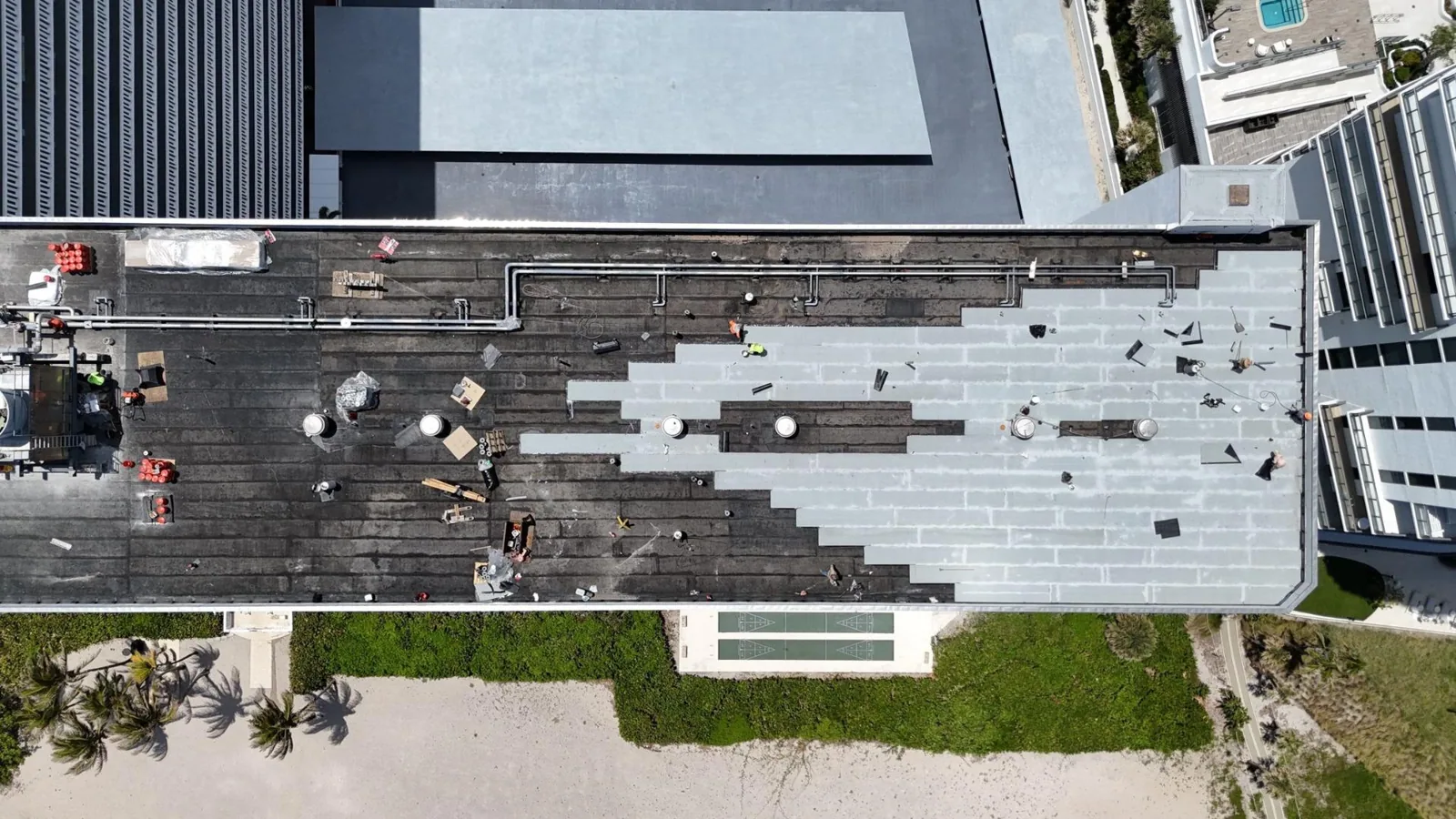
A roof section above a retail space can be ready for repair while another area remains in service. We confirm the work boundary, access route, and contact responsible for tenant or customer coordination before starting the roof walk. Then we trace the reported condition across nearby seams, drains, curbs, and edge details. The first report separates the repair area from sections that still need observation or testing.
Upland's General Plan calls for maintaining distinctive shopping centers and revitalizing existing strip-commercial properties into more coherent districts. City planning also identifies key commercial corridors and Downtown as areas for retail and mixed-use investment. These broad policies help explain why access and work sequencing matter, but they do not describe the roof system at an individual property. We verify the assembly, use, and operating hours with the owner. A Highland roofing route has separate planning facts; the Upland scope begins with the actual roof plan and authorized access.
How can roof work stay within a usable property boundary?
Before mobilization, we identify the roof entry, staging point, daily work limits, interior areas below the opening, and any route that must remain clear. A property contact confirms tenant notice requirements and which equipment or services cannot be interrupted. We mark the roof section where the crew can work and set a secure edge at the end of the shift. If the plan differs from the roof, we stop at the approved boundary while the site representative confirms the correct label.
Upland's planning policies call for reinvestment in shopping centers and strip-commercial properties, and separately identify Downtown and commercial corridors for retail and mixed use. Renovation activity may introduce access coordination, but it does not tell us what a particular roof contains. We check drawings, roof transitions, and maintenance records. A commercial property route in Ontario supports its own portfolio record, while phased reroofing can organize work at an Upland property by section and tie-in. The manager receives a scope that states what is included and what remains outside it.
What does the roof walk need to follow?
We start at the reported leak or planned repair area, then inspect the closest drain, seam, penetration, curb, wall, and perimeter transition. At the membrane, we look for open laps, surface damage, lifted repairs, or movement near attachment points. At each drain, we follow the plane into the outlet and examine the connection. At metal transitions, we check securement and sealant at joints. Photographs include the roof section and a recognizable nearby detail, not only a close-up with no location.
If a stain appears below Downtown's mixed-use area or along a commercial corridor, its position inside does not establish the roof opening above. We compare interior reports with the roof plan and likely water path. A commercial roof inspection documents direct observations; an infrared moisture survey may help select areas for physical testing where hidden water could change the work limit. We explain what the selected method can determine and leave untested areas identified as such. That record prevents a single observation from turning into a whole-roof conclusion.
How do climate context and field findings guide the repair?
Rialto, CA's adopted climate plan lists extreme heat with wildfire, flooding, and air pollution as citywide hazards and describes hot days as regular there. That information is not a site-level forecast for Upland. We keep it as regional scheduling context; the inspection notes the roof's observed membrane, sealant, edge, and drainage condition. If a repair is done during a limited work window, the crew records the tie-in and the conditions required before leaving the section exposed or closed.
For a stable, contained defect, a compatible patch may address the immediate issue. Recurrent leaks, wet insulation, or loose attachment can require further sampling or a larger removal boundary. A localized repair scope states the affected area; a recover evaluation checks whether the existing assembly can remain. If the roof needs more extensive work, replacement planning sets removal, protection, and daily completion points. Repair and capital options should follow the condition record, not a planning goal for commercial revitalization.

What affects the estimate and approval path?
Price and duration depend on the measured section, access equipment, removal depth, substrate condition, insulation, drainage adjustments, equipment curbs, interior protection, and the crew sequence. We list what is visible and the test or opening needed to confirm concealed layers. If a tenant schedule limits work to a shorter window, that can change staging and mobilization. The estimate identifies those drivers rather than assigning a cost based on the property category.
For a strip-commercial property, work limits can be staged by roof section without treating adjacent suites as one interior zone. The manager identifies which entrances remain open, where debris can be lowered, and who receives an update when an area is secure. If a project involves several roof planes, we list each tie-in and its daily completion point. That gives ownership a schedule it can share with tenants while preserving the crew's approved path.
Upland's commercial policies support shopping centers, corridor retail, and mixed-use investment in Downtown; they are not a substitute for review of a roof design. Rialto's local code office reviews proposed construction and inspects completed work against California Building Codes and City ordinances. Applications filed after December 31, 2025 move into the 2025 California Building Standards, effective January 1, 2026. For Upland work, applicable approvals come from its own jurisdiction and project documents. A capital review can compare the repair record with testing and replacement timing, and a photo-backed condition report preserves the roof sections and open decisions.
What should be recorded after each work visit?
The closeout identifies the repaired detail, material used, tie-in, photo references, and any temporary measure still in place. We note whether water flow was checked at the drain and whether access limits left another section uninspected. For a property with multiple tenants, the manager can attach the work-order ID and the interior area protected. A later crew can then locate the same transition and see whether the prior work is complete or still awaiting testing.
Before scheduling, share current roof plans, leak tickets, repair history, access instructions, tenant hours, and the person authorized to approve changes. A Rancho Cucamonga route keeps its own local planning facts separate from Upland. For this property, we leave the manager with a next action, a due point if known, and any condition that needs another decision. The file should follow the roof record rather than only the current tenant contact.
Commercial Roofing Questions
Can roofing be phased around tenants?
We establish the allowed access hours, staging plan, area below the work, and daily tie-in before sequencing sections. The manager coordinates tenant notices and identifies spaces that need protection.
Do Upland's commercial corridors determine roof condition?
No. Planning policies describe land-use goals. We inspect the actual assembly, repair history, drainage, and transitions at the property before recommending work.
When is a recover option worth checking?
It needs a stable, dry, securely attached existing assembly and finished elevations that work at edges, drains, and curbs. We verify those details before comparing a recover with removal.
What if the ceiling stain does not line up with a roof opening?
We trace the likely water path across the roof section and inspect nearby walls, curbs, laps, and outlets. Testing is proposed when concealed moisture could alter the boundary.
What should the property manager send before an inspection?
Provide the roof plan, leak report, prior repairs, tenant schedule, roof access instructions, and a contact who can approve entry or a change in scope.
Related Roofing Work
Plan a Upland roof work window
Share the roof plan, current issue, access route, tenant hours, and any open repair ticket. We will confirm the roof section and build a workable inspection or repair sequence.