
Pick the roof work window around the next gathering, not just the next open calendar slot. We identify the reported leak, confirm which room or roof section is involved, and map a safe path for the inspection. A church may use its sanctuary, classrooms, offices, and common rooms on different schedules. The work order should state which area needs containment, what repair is required, and when the space can return to normal use.
For broader commercial orientation, Rialto lists the Baseline/Riverside junction together with Valley Boulevard, Riverside Avenue, and Foothill Boulevard. The City also treats extreme heat as a climate hazard and notes that hot days recur. These facts frame the local workday, but they do not determine a church's roof condition. We inspect the assembly and plan access around the property calendar instead of assuming a standard weekday routine.
Which Dates Need a Clear Roof?
List services, classes, food distribution, community meetings, and building rentals before deciding when a crew can stage. Identify entrances that must remain open, then set a separate roof route for ladders, material, and debris. The property contact should confirm where visitors park and which exterior paths cannot be narrowed. If the repair needs a temporary closure, name the door or room and establish the period before work starts.
Confirm who can authorize roof entry and who can approve a change to the public route. If the building has separate keys or alarm procedures, arrange access before the visit. Keep the crew out of rooms that are not part of the inspection. A clear contact chain avoids delays without making staff repeat the same condition report.
During the first visit, follow the reported water to the interior area and mark the matching roof section. Check the drain path, penetrations, seams, flashing, and nearby edge details. Keep a temporary bucket or barrier separate from permanent correction. A roof inspection can create a condition record, while a repair assessment identifies the work needed to stop the entry point.
How Does Water Reach the Room?
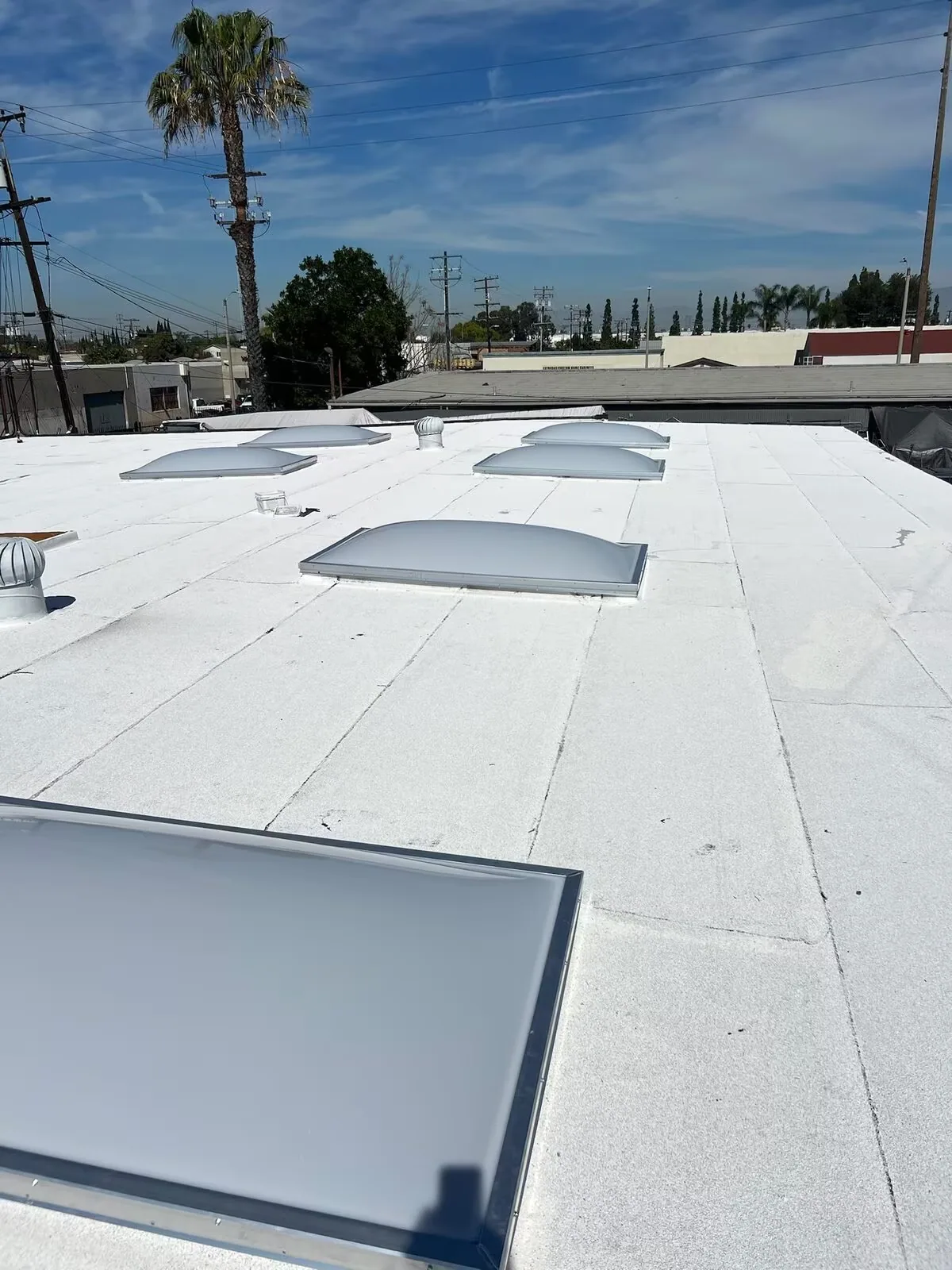
Water can travel along a deck or framing before it appears below. Begin above the stain, then inspect neighboring transitions and the direction of drainage. Look at the membrane laps, curb flashing, skylights, vents, and wall terminations that could feed the path. Record what is visible and mark concealed areas for confirmation rather than assigning the first nearby detail as the cause.
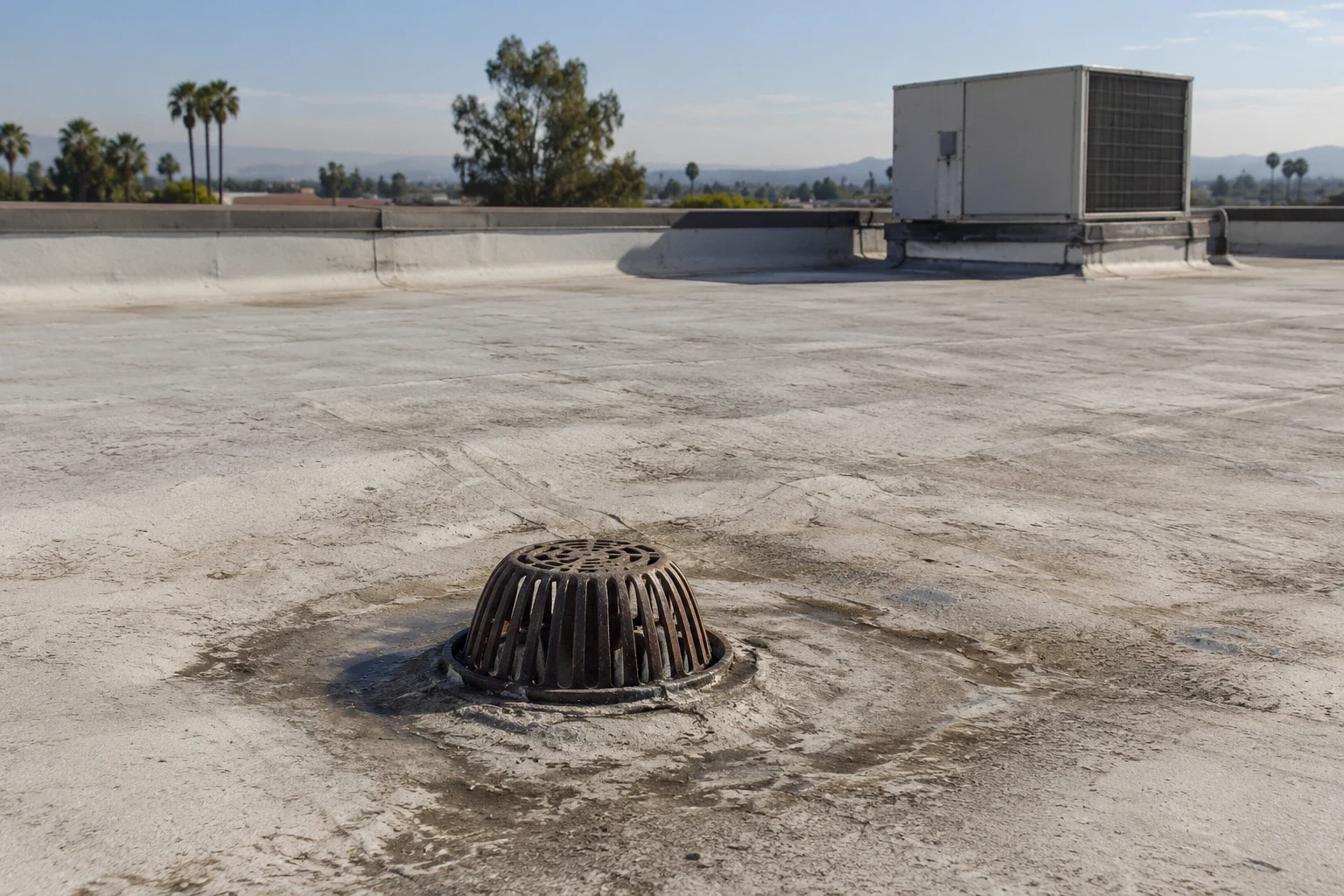
At a low point, remove only authorized debris and check whether the outlet itself is damaged or restricted. If water remains after drainage should have cleared, note its extent and ask when it was last observed. A drain and scupper review can define outlet work. When the assembly has hidden moisture, a moisture survey can help target verification openings and avoid unnecessary disturbance elsewhere.
What Roof Details Deserve Close Review?
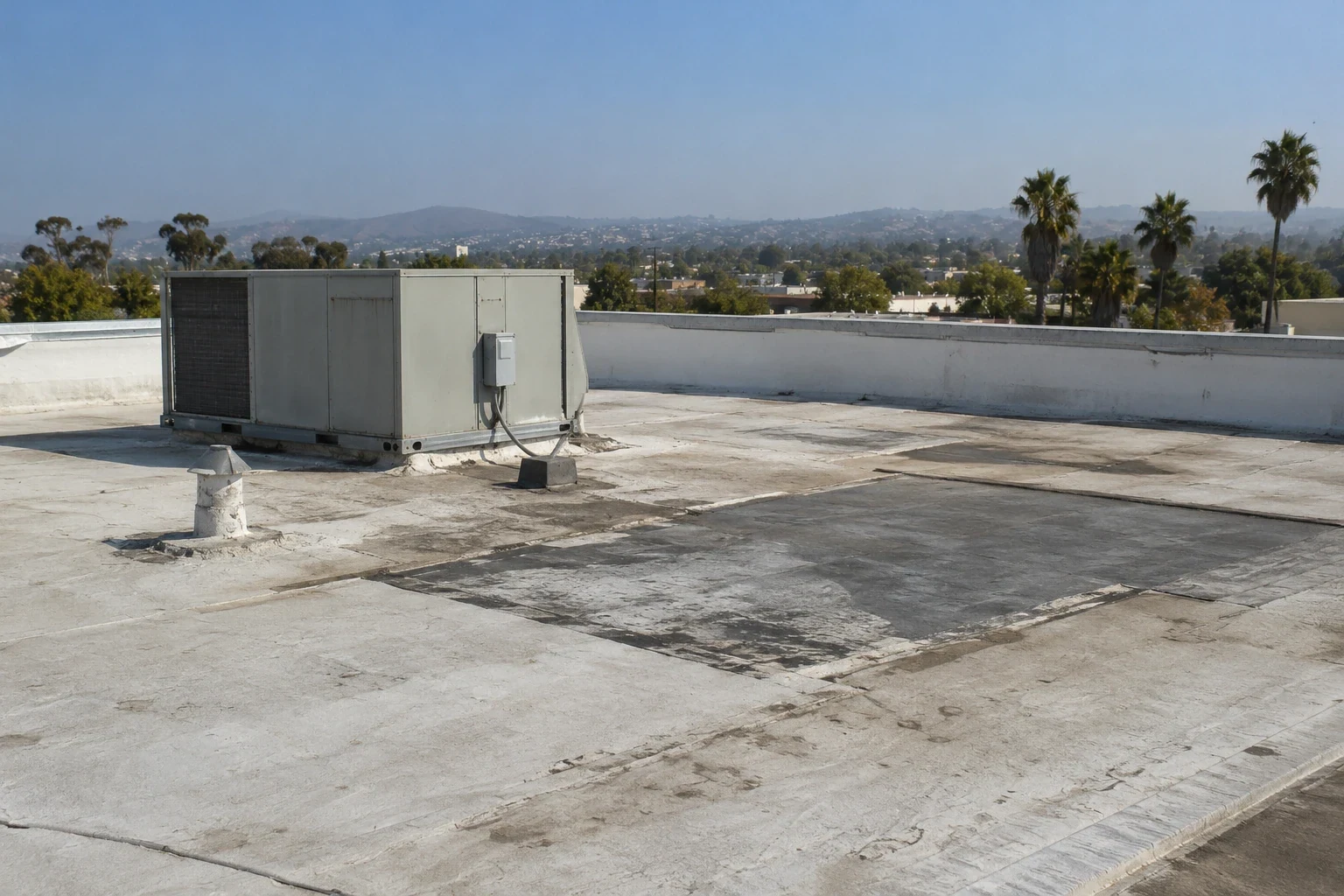
Inspect around roof curbs, pipe penetrations, exhaust equipment, parapets, and changes in roof height. Movement can stress sealant and flashing; debris can hide a split lap; and an earlier patch may not match the membrane. Photograph each detail with a roof-zone label. The record should tell the maintenance lead what was found, what was repaired, and whether nearby material still needs testing.
The Foothill Central plan now gathers the two former planning areas under one policy framework, with updated land-use, mobility, infrastructure, and implementation provisions. The Gateway map identifies office, retail-commercial, freeway-commercial, and industrial-park designations. Those are broad planning references, not descriptions of a specific congregation or building. A Foothill Central area inspection still needs a property-specific route and roof plan.
How Can the Crew Protect Active Spaces?
Mark the work zone both above and below the roof. Keep tools away from public paths, protect openings from falling debris, and confirm how the crew will enter and leave the building. For repairs involving heat, odor, or adhesives, identify the material handling controls and affected area before mobilization. The supervisor should know who can authorize an access change and how staff will receive a same-day update.
The citywide climate plan names wildfire, flooding, and air pollution in addition to heat. A planning hazard is not a roof-level prediction, so the property team still checks current conditions before approving work. A work sequence for occupied buildings can keep the active boundary clear while services continue elsewhere. Record each pause and the condition of exposed edges at shift end.
When Should the Scope Move Beyond a Patch?
A loose flashing corner or isolated puncture may be corrected locally if surrounding material is sound. Repeated leaks, wet insulation, widespread seam separation, or a soft deck may change the recommendation. Confirm concealed conditions before pricing a broad repair. The proposal should define the repair limits, any opening required, and what additional finding would cause the team to stop and revise the work order.
For an assembly that is reaching a larger decision point, compare repair history, roof age if documented by the owner, current condition, and disruption to scheduled use. A replacement review can organize those factors. A school roof plan or retail property review may involve different occupancy patterns, but the repair decision remains tied to each inspected roof.
What Belongs in the Handoff?
Return a marked roof plan, photographs of repaired details, the section inspected, and a list of conditions left for follow-up. Include the work date, material used, any temporary containment, and the route restored after the crew left. If water entered a room, note the interior area reported by staff and the repair location above it as separate entries. This gives the building lead a record that can be used during the next inspection.
Close any temporary barrier only after the property contact confirms the affected area is ready for use. If a room needs separate cleaning or interior work, list that assignment apart from the roof repair. Mark an open item with its owner and next check date, so it does not disappear inside a general maintenance note.
Agua Mansa planning spans land in Rialto and Colton as well as two counties, so this local context includes only property within Rialto. That district reference does not identify a particular church or roof. Keep the location label broad and the recommendation tied to the inspected property. A maintenance visit can then compare the same drain path, seam, and penetration without reopening the whole question.
Commercial Roofing Questions
Can repairs be scheduled between services?
Yes. We can sequence inspection and repair around the calendar the property provides. The site lead confirms access, entrances, and any room restrictions before we set the work zone.
What if a leak appears in a room used by several groups?
Record the room and time, protect occupants and contents under site procedures, and tell us which roof area is above it. We trace the path and separate containment from permanent repair.
Do you inspect the roof over every building wing?
The scope follows the reported condition and the agreed inspection route. We can extend it when findings indicate related risk, then label each additional roof section so the estimate is clear.
How should we handle roof access during a gathering?
Keep public entry routes and crew access distinct. The property contact identifies restricted periods and doors; we set staging and work boundaries before bringing equipment onto the site.
When does replacement make more sense than repair?
A broader review is appropriate when failures recur across sections or investigation finds wet insulation, unstable attachment, or deck concerns. We document the condition that supports that decision.
Related Roofing Work
Set a Work Window Around the Building Calendar
Share the roof plan, leak location, gathering schedule, and access limits. We will map an inspection route and identify the repair or replacement decision the property needs.