
A leak above a guest room needs a roof inspection tied to the room, floor, and roof section, with clear limits on occupied-space access. We review the reported condition, check the roof plan, and examine seams, drains, curbs, wall joints, and previous repair areas. Photos and notes distinguish a visible defect from a suspected path. The hotel's facilities lead receives a scope that identifies the next action and the coordination needed before crews arrive.
Rialto Commercial Corridors is a planning shorthand that groups several streets the City identifies as commercial areas; it does not pinpoint a hotel or establish service at a property. The separate Gateway Specific Plan Area map assigns broad zones for office parks, retail, freeway-oriented commerce, and industry. Neither boundary tells us the condition of a guest-room roof. A Rialto commercial-area overview can orient general planning, while the inspection follows the hotel's roof map and access rules.

How do we trace a report above an occupied room?
The facilities lead identifies the room or public area, when the condition appeared, and any access or guest-service requirements. We compare the report with building plans and prior tickets, then locate the roof zone overhead. The symptom indoors does not define the entry point: water may move across a membrane lap, insulation joint, curb, or deck before surfacing. We check the likely route and label every observation by roof area and interior reference.
Hotels may include guest wings, lobby spaces, meeting rooms, kitchens, laundry, mechanical rooms, and back-of-house areas. Each use can have different access restrictions and protection needs. We ask which rooms are occupied, what schedule limits apply, and who can authorize entry. A commercial roof inspection then records the route taken, visible conditions, and any area excluded from the visit. If concealed moisture is suspected, added testing is identified as a separate step, and its limitations are written into the recommendation.
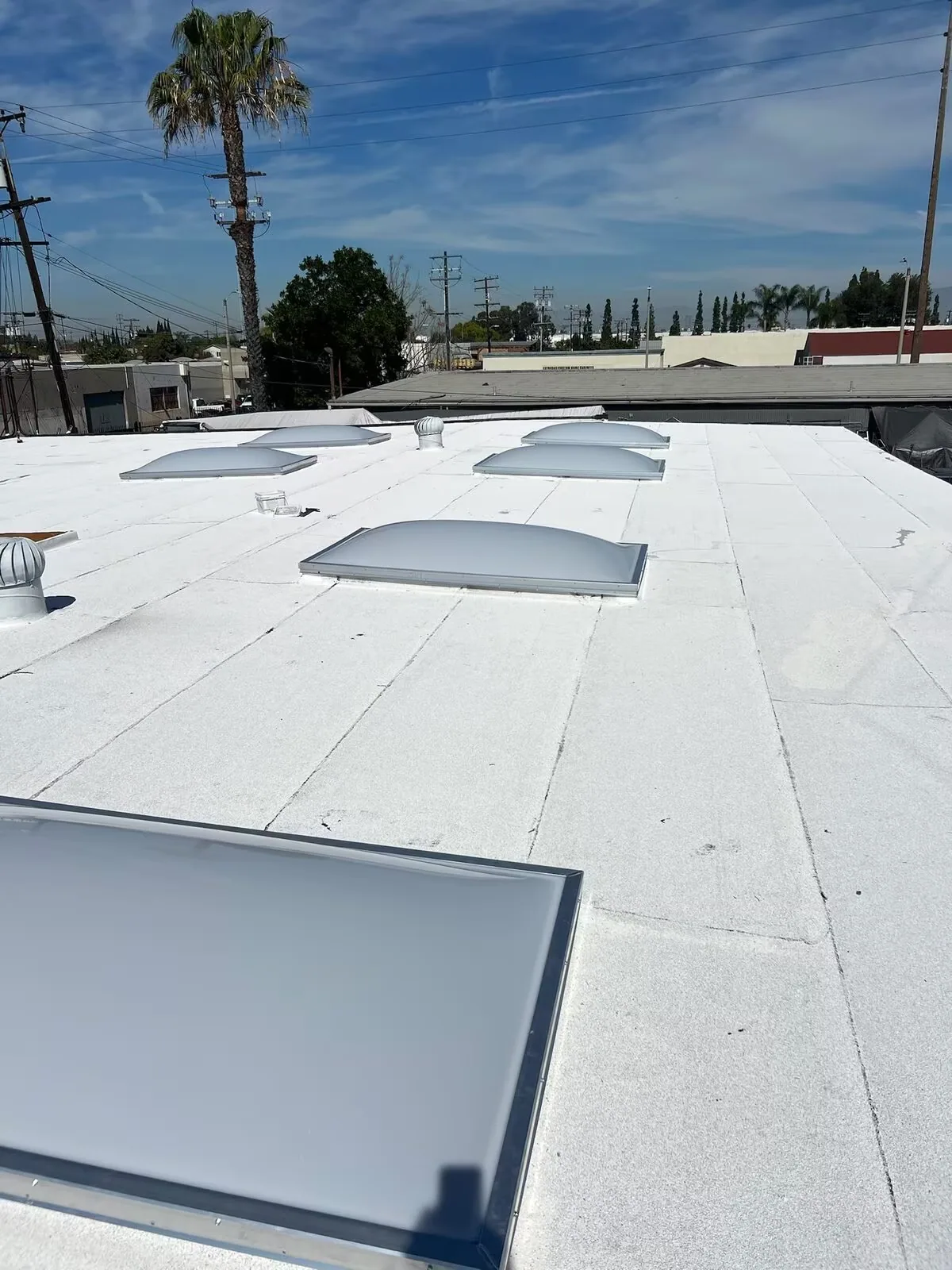
The roof walk checks membrane seams, penetrations, skylights, rooftop unit curbs, plumbing vents, wall transitions, coping, and edge metal. Where an earlier patch appears, we note its location and whether it remains intact. The report separates active openings from historic repairs and unconfirmed indications. This helps the hotel decide whether a return visit, targeted test, or immediate repair is appropriate.
Which roof details should be mapped first?
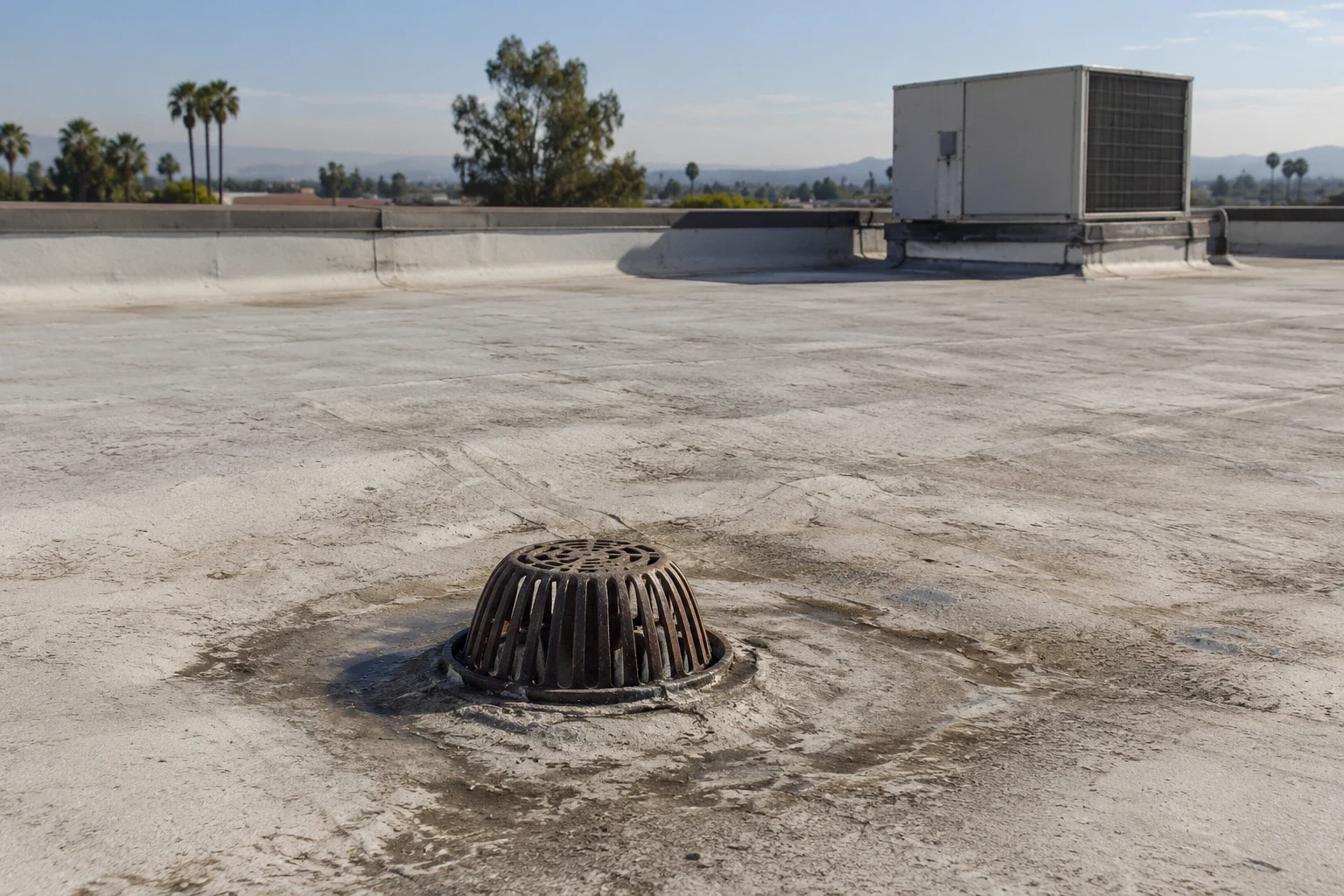
Drainage paths and equipment clusters can affect more than one room. We record drain bowls, scuppers, low areas, discharge routes, and visible obstructions, then inspect the adjacent membrane and flashing. Water standing at a location is an observation; the source and correction still require evaluation. A drainage inspection can define outlet maintenance or correction separately from a membrane repair.
Hotels often have rooftop equipment that must remain in operation. We locate curbs, pipe supports, condensate routes, conduit, and service clearances. The roofing scope identifies which details will be opened or reworked and which equipment tasks belong to another trade. Perimeter coping, edge metal, canopy interfaces, and walls are labeled as separate details so the proposed work does not combine unrelated conditions.
Rialto's climate adaptation material notes extreme heat among the City's climate hazards and describes hot days as a regular local condition. That is citywide information, not a prediction for a guest-room roof or a particular assembly. We document the actual surface, exposed edges, and past repairs observed during the inspection, then base maintenance advice on those records and the roof's identified materials.
How can roof work respect guest operations?
Before mobilization, the hotel designates a contact for roof access, a contact for guest or employee communication, and a person who can approve scope changes. We confirm equipment staging, service stairs, loading windows, waste paths, and any guest-facing area that needs a barrier. The work plan should state what activity may create noise, what portion of the building is below it, and when that activity will occur.
A small repair may be completed in one access window. Replacement work may need to move through several zones, with each section closed and reviewed before the next one opens. A phased reroof sequence connects roof boundaries to hotel operations. We identify daily protection, end-of-shift checks, material handling, and the communication path if conditions change. The hotel's management confirms room availability and service limits before the schedule is final.
Guest-room access should be minimized and arranged through the hotel's staff. Where a ceiling or interior surface needs protection, the project contact approves the method and verifies the room is ready. Crews should not assume that occupied rooms can be entered or that a temporary closure can be removed without notice. The closeout identifies completed sections, areas still protected, and the person responsible for follow-up.
What separates a repair from a larger roof project?
A localized flashing failure or puncture may support repair when nearby material and attachment remain sound. Repeated leaks across room wings, multiple wet areas, extensive seam separation, or deterioration at several roof edges may merit further evaluation. We map confirmed conditions, mark areas where sampling could help, and show the limits of what was accessed. Management can compare a targeted repair with a broader capital option on the same roof-zone basis.
A repair scope lists preparation, materials, tie-in details, protection, access, and the check that confirms completion. A replacement assessment should account for penetrations, equipment, drainage, guest operations, and a sequence that leaves a secure condition at each shift's end. If the hotel has multiple additions, document each assembly and repair history separately rather than assuming all sections share the same remaining service life.
For a construction proposal, the City's Building Division reviews drawings and inspects work against California codes and Rialto ordinances. Rialto’s code notice sets a cutoff at the end of December 31, 2025: later-received applications fall under the California standards edition effective January 1, 2026. This helps establish a schedule checkpoint, but does not determine which approvals an individual hotel project needs; that follows from the designed scope and City review.
What should the hotel keep in its roof file?
Keep the roof plan, section labels, guest-area reference, photographs, inspection notes, repair orders, and closeout documents together. Each record should state what was inspected, what was repaired, what remains uncertain, and whether temporary protection is still active. A new facilities employee should be able to locate the same seam or curb without guessing which wing the previous note described.
Before a visit, provide access procedures, room references, operating calendars, equipment locations, previous leak reports, and any rules for guest communication. A roof condition report can help organize recurring observations, while an apartment roof review may address different entry and occupancy patterns. A school roof inspection may have a different daily access plan. These records should identify the roof sections actually covered. Add the next check date and responsible contact so an interim recommendation does not disappear in the property file.
After the work, compare the completion photos with the original zone map and close the loop with the manager. If a repair depends on a later test or another trade, state that dependency in plain terms. The handoff should name the open item, the person assigned, and what evidence will show it is resolved.
Commercial Roofing Questions
Can inspection avoid guest-room entry?
The route can begin from the reported room and roof area, with access limits set by hotel management. If interior confirmation is needed, staff can arrange an approved entry window.
Can roof repair be scheduled during low-occupancy periods?
The hotel can identify preferred dates, access hours, and service limits. The contractor should confirm the sequence and protection plan before materials are delivered.
Does roof inspection include HVAC repair?
No, unless the proposal specifically includes that work. The roofing scope can inspect curbs and flashing while identifying equipment tasks for the appropriate trade.
How do you document a temporary repair?
The closeout notes its location, condition, and any monitoring or return work required. It should clearly state that the measure is temporary if the permanent tie-in is incomplete.
What makes a hotel reroof estimate usable?
It defines each roof section, assembly assumptions, equipment and access limits, guest-operation coordination, and end-of-shift protection. The hotel's contact can review dates and communication needs.
Related Roofing Work
Set a hotel roof scope with guest access in view
Share the room or area reference, roof plan, access procedures, equipment locations, and operating limits. We will define the inspection boundary and next step.